

Why Neutral Posture is the Foundation of Focus
Expert Note: This practical guide is developed from established ergonomic heuristics (drawing from OSHA and Cornell University guidelines) and our team's firsthand experience helping customers optimize their workstations. Reviewed by our resident product support specialists, it is designed as a rule-of-thumb checklist to improve daily comfort, rather than a medical directive.
An uncomfortable office chair isn't just a minor annoyance; it can be a persistent drain on your focus and energy. When your body is improperly supported, it sends a constant stream of distraction signals to your brain in the form of aches, stiffness, and the urge to fidget. This is often the physical root of lost productivity. We will explore the practical steps of fine-tuning your ergonomic chair to help minimize these physical distractions, sharpen your focus, and support a more productive workday.
The core principle of ergonomic seating is to achieve a "neutral body posture." As defined by the U.S. Occupational Safety and Health Administration (OSHA), this is a comfortable working posture in which your joints are naturally aligned. It's not about sitting ramrod straight, but about maintaining the natural S-curve of your spine, which minimizes stress on the musculoskeletal system. When your chair fights this posture, your muscles may work overtime to compensate, potentially leading to fatigue and a state of low-grade physical stress that competes for the cognitive resources you need for deep work.
A Step-by-Step Guide to Adjusting Your Ergonomic Chair
In our experience helping customers set up their workspaces, achieving a neutral posture isn't about randomly pulling levers. A systematic, sequential approach works best to dial in a comfortable fit. Making adjustments out of order, such as setting armrest height before seat height, can create a domino effect of poor posture. We generally recommend starting from the ground up. Before you begin, find all the adjustment controls on your chair. For a deeper look into the features that make a chair truly ergonomic, consider this guide on what makes an office chair truly ergonomic.
The "Neutral Posture" Mental Blueprint
Since every chair and body is different, use this mental checklist to visualize your target posture before adjusting the hardware:
- Lower Body: Feet flat on the floor, knees at roughly a 90–110° angle, with a 2-3 finger gap behind the knees.
- Upper Body: Spine maintaining its natural curve, shoulders relaxed, elbows resting near a 90° angle close to your torso.
Here is a proven, step-by-step method for a faster, more reproducible setup.
| Step | Adjustment | Rule of Thumb & Key Metrics |
|---|---|---|
| 1 | Seat Height | Your feet are flat on the floor, with thighs roughly parallel to the floor. Knees should be at a 90–110° angle. |
| 2 | Seat Depth | Leave a gap of about 2–3 finger-widths between the front edge of the seat and the back of your knees. |
| 3 | Lumbar Support | The support should fit into the natural curve (lordosis) of your lower back. Avoid placing it too high or low. |
| 4 | Armrest Height & Width | Shoulders should be relaxed, with elbows resting comfortably at a 90–110° angle, close to your body. |
| 5 | Recline Tension | The backrest should support you but allow for controlled recline and micro-movements with minimal effort. |
Step 1: Set Your Foundation with Seat Height
This is the anchor for your entire posture. Adjust the seat pan height until your feet are resting flat on the floor. Your thighs should be roughly parallel to the ground, with your knees bent at a comfortable 90 to 110-degree angle. If your feet dangle, it often creates pressure points on the back of your thighs; if your knees are too high, you may shift your weight onto your tailbone. Getting this right helps stabilize your pelvis, which serves as the foundation for a healthier spinal position.
Step 2: Calibrate Your Seat Depth
With your back firmly against the backrest, adjust the seat pan depth. A common rule of thumb is to leave a small gap of about two to three finger-widths between the front edge of the seat and the back of your knees (the popliteal fold). This simple check, recommended by ergonomics guides like the one from Cornell University's Ergonomics Web, is highly practical. Too much depth can press against the nerves and blood vessels behind your knees, while too little depth fails to support your thighs adequately. Our detailed guide to setting up your ergonomic chair provides further context for this step.
Step 3: Dial in Lumbar Support
The purpose of lumbar support is to fill and support the natural inward curve of your lower back, not to aggressively push it forward. Adjust the height of the support so it nestles into the small of your back. Some chairs also offer depth adjustment. A common mistake is setting it too high, which can cause your spine to extend unnaturally, or with too much prominence, creating a pressure point. Innovative designs can provide more adaptive support. For instance, the Flex, Dual-Backrests Ergonomic Office Chair features independently moving backrests that conform to each side of your spine, providing targeted support as you shift and move.

Step 4: Position Your Armrests
Armrests are not just for resting your arms; they play a helpful role in reducing strain on your neck and shoulders. Adjust the height so that your elbows rest at a 90 to 110-degree angle with your shoulders completely relaxed, not hunched. If the armrests are too high, you'll likely create shoulder tension. Too low, and you'll lose the support, causing you to lean. Adjust the width so your arms are close to your body, not splayed out.
Step 5: Fine-Tune Recline and Tension
Prolonged static posture is a known risk factor for musculoskeletal discomfort. A well-adjusted chair should encourage dynamic movement. Set the recline tension so that the backrest supports your posture but still moves back with a gentle push, returning to support you as you lean forward. This allows for the micro-movements that can help promote blood circulation and reduce muscle stiffness. As a general heuristic for focused work, a recline angle of 100–110° is common, while more relaxed tasks can be done at 110–125°.
Adjusting for Different Body Types
Standard guidelines don't fit everyone perfectly. Here are a few common workarounds we suggest based on user feedback:
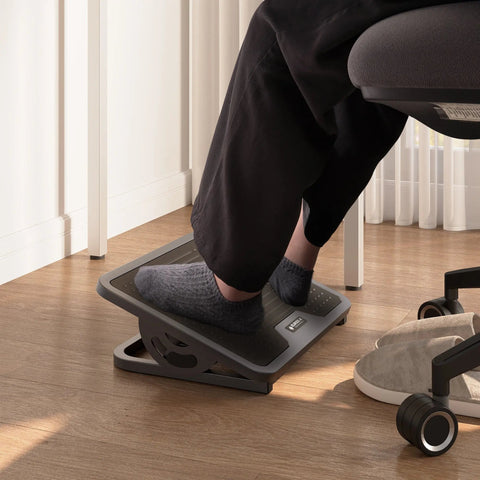
- Petite Users (Under 5'4"): If your chair's cylinder doesn't go low enough for your feet to rest flat, use a dedicated ergonomic footrest to establish a stable base.
- Tall Users (Over 6'2"): Pay extra attention to seat depth. You may need a chair with an extended seat pan to ensure your thighs are adequately supported without leaving more than a 3-finger gap.
Common Setup Mistakes and How to Fix Them
Even with the best intentions, users often make a few common errors. Proactively identifying these patterns can save you from days of unnecessary discomfort.
-
Myth: Armrests are unimportant and can be removed. Reality: In most setups, properly adjusted armrests help offload weight from your upper spine, neck, and shoulders. According to the Canadian Centre for Occupational Health and Safety (CCOHS), properly supported arms can help prevent Repetitive Strain Injuries (RSIs). If you experience neck strain after setting your armrests, it's often a sign they are too high, forcing your shoulders to shrug.
-
Myth: The lumbar support should push firmly into my back. Reality: The goal is support, not force. The lumbar cushion should fit the natural contour of your lumbar spine. If you feel a distinct or uncomfortable pressure point, the support is likely too prominent or misplaced. Try moving it down a centimeter or reducing its depth.
-
Myth: A little tingling in my legs is normal after sitting for a while. Reality: Tingling or numbness is a red flag. In many cases, it indicates that your seat pan is too high (lifting your feet) or too deep (compressing the area behind your knees). Revisit Step 1 and Step 2 to help restore proper circulation.
The Productivity Payoff: Translating Comfort into Output
Reducing physical discomfort is the first step, but a major benefit lies in reclaiming your cognitive resources. A 2018 systematic review published in Applied Ergonomics (Agarwal et al.) found a link between sit-stand desk interventions and reductions in low back pain discomfort among sedentary workers. While individual results vary, this illustrates a broader principle: when your brain isn't processing discomfort signals, that mental energy is freed up for concentration and problem-solving.
A properly adjusted chair also encourages a more dynamic workday. It facilitates small shifts in posture and micro-breaks that align with general recommendations from the World Health Organization (WHO) to reduce long periods of static behavior. By making it easier to shift between focused and relaxed postures, you can better combat the stiffness that accumulates during long sedentary periods. To better understand how to balance your day, you might find value in learning about the optimal sit-stand ratio.
To quantify the benefits for yourself, consider running a 7-14 day "adjustment trial." Make one adjustment at a time, and at the end of each workday, note your perceived comfort and task focus. This methodical approach helps you correlate specific ergonomic changes with your own personal comfort.
Key Takeaways
Your office chair is a tool that can either hinder or support your daily workflow. Achieving a neutral, supported posture is a dynamic process rather than a one-time fix. By following a systematic adjustment sequence—starting with your feet and moving up—you can help minimize the physical distractions that sap mental energy. Remember to address common mistakes, listen to your body's feedback, and use your chair's features to encourage movement.
Frequently Asked Questions (FAQ)
How often should I check my chair adjustments? It's a good practice to do a quick check every few weeks or whenever you change your primary task or footwear (e.g., switching from flat shoes to heels). A full recalibration is recommended if you start to feel any new discomfort.
I've made all the adjustments, but I still feel some back tightness. What should I do? First, double-check your lumbar support placement—it may be too high. Try moving it down slightly. Also, ensure your recline tension isn't too tight, as this can prevent your back muscles from relaxing during micro-movements. If discomfort persists, evaluate your overall workstation setup, including monitor height and keyboard position.
Is a mesh or leather chair better for long work sessions? This often comes down to personal preference and your environment. Mesh chairs, like the Lira, Ergonomic Office Chair, offer superior breathability, which is a significant advantage in warmer climates or for people who tend to run hot. Leather and PU leather offer a different tactile feel and are often easier to wipe clean.
Disclaimer: This article is for informational purposes only and does not constitute professional medical advice. If you have pre-existing musculoskeletal conditions, a history of spinal injury, or experience persistent pain, please consult a qualified physician or physical therapist to address your specific needs.
References
- OSHA eTools: Computer Workstations - Neutral Working Postures Applicability: General workplace heuristics and baseline standards for neutral posture.
- Cornell University Ergonomics Web — Workstation Guides Applicability: Practical, widely accepted rules of thumb for workstation setup.
- CCOHS: Office Ergonomics - Sit/Stand Desk Applicability: Occupational health guidelines regarding repetitive strain and desk setups.
- Agarwal et al., 2018 – Sit-Stand Desks & Low Back Discomfort (Systematic Review) Evidence Strength: Systematic review. Main finding: Sit-stand desk interventions can help reduce low back discomfort in sedentary workers.
- WHO 2020 Guidelines on Physical Activity & Sedentary Behaviour Applicability: Global public health recommendations on reducing static, sedentary behavior.




Leave a comment