
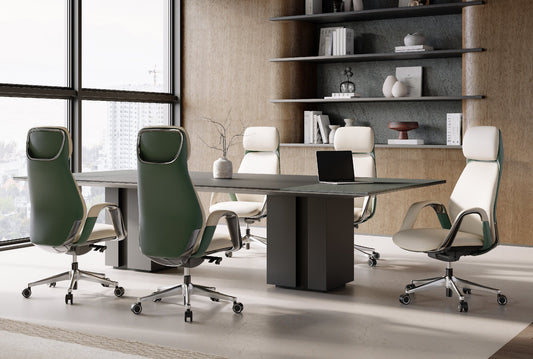
Discover how bulk office furniture purchases can save costs, simplify setup, and create a cohesive, ergonomic workspace. Learn smart planning tips to design a productive and stylish office that grows with your team.

Black Friday Desk Deals: Calculate the Cost of a Ready-to-Use Setup
A simple method for Black Friday shoppers: list the parts your workspace needs, sort what each offer includes, and total each deal on the same setup basis.

Black Friday Workspace Upgrade: Replace the Desk or Add an Accessory?
Find out if your home office desk is the real limit or if one compatible add-on fixes what bugs you, plus what to measure before Black Friday shopping starts.

Black Friday Desk Hutch or Separate Shelf: Choose Vertical Storage Deliberately
This guide covers attached and freestanding vertical storage: when a shelf fits your room, when a hutch fits better, and how to protect your work area.

Will a Black Friday Desk Fit Through Your Door and Into Its Final Spot?
Room measurements alone can mislead. Use box sizes for doors, halls, and stairs, assembled sizes for the spot, and know when fit is still unresolved.

Black Friday Lift Recliner Controls: Check Reach and Ease of Use
A practical guide to checking whether a lift chair's hand control suits the person using it, with in-person and online verification steps for holiday shopping.

Black Friday Office Chair Fit: Will the Armrests Clear Your Desk?
A step-by-step fit check for office chair armrests: where to measure under your desk, which chair specs to request, and how to read fit, no-fit, or unknown.

Black Friday Desk-and-Chair Bundle or Separate Purchases?
A practical Black Friday guide to testing desk and chair fit separately and comparing matched full totals, so you only pick a bundle when it truly pays off.

Renter-Friendly Home Office Furniture: Protect Floors, Walls, and Your Deposit
A practical guide to renting-safe office setups: check your lease, match floor protection to your surface, and plan reversible cables and moves.

How to Prioritize a Black Friday Home Office Furniture Budget
A step-by-step method for setting a firm spending ceiling, matching your first purchase to a workstation problem, and pricing any needed complement together.

Black Friday Recliner Sofa or Lift Recliner: Choose for Shared Seating Needs
Shared seating points to a recliner sofa, while one person's sit-to-stand need points to a documented seat lift. Learn how to handle both before sale shopping.

Black Friday Power Recliner: Plan Outlet Placement Before Choosing the Spot
A step-by-step room check for choosing where a power recliner goes, weighing documented cord routing and full recline space instead of outlet distance alone.

Black Friday Office Chair: Is a Headrest or Lumbar Adjustment More Useful?
A posture-based guide to choosing between a chair headrest and adjustable lumbar support, plus a three-step routine for checking listings before you buy.

Chair Too High for Your Feet? Set Up a Desk Footrest
A practical guide to deciding between a footrest and a furniture change when your office chair sits too high for your feet to rest comfortably.

Laptop Ergonomics: Separate Screen Height From Keyboard Height
This guide shows how to raise a laptop screen independently from typing height, then choose an external keyboard, monitor, tray, or footrest that fits.

Two Computers, One Desk: Share the Right Peripherals
A practical plan for running a work laptop and personal desktop on one desk, covering shared peripherals, switching choices, cable routing, and desk capacity.

When Desk and Chair Heights Conflict, Change This First
A decision-order guide for desk-and-chair height conflicts: what to adjust first, when to add a footrest or tray, and how to avoid changing everything at once.

Desk Reach Zones: Put Frequent-Use Accessories Where They Belong
Assign monitors, keyboards, mice, phones, CPUs, and storage to primary, secondary, or tertiary reach zones based on how often you use each one.

Standing Desk Video Calls: Align the Camera and Screen
A step-by-step guide to raising your monitor and camera for standing video calls while keeping your keyboard and mouse comfortable and usable throughout.

The 90/90/90 Desk Posture Rule: How to Adapt It to Your Setup
Use this practical guide to check the 90/90/90 desk posture rule, spot the limiting surface, and choose a small fix for high, low, or fixed desks.

Where to Place Your Desk for Better Video Calls
Position your desk around the camera view first, then test window light, background clutter, and everyday room access so your video-call setup stays practical.

How to Choose Furniture for a Shared Home Office
The best shared home office furniture plan starts with how people use the room. Match simultaneous, alternating, or mixed use to the right number of workstations, then map the room, fit each user, and solve storage, lighting, privacy, and cable conflicts before buying.
