

The Lumbar Support Dilemma: Precision Engineering vs. Adaptive Flexibility
The "afternoon slump" is a well-documented phenomenon in modern professional environments, often characterized by a dull ache in the lower back that intensifies as the workday progresses. This discomfort is rarely the result of a single acute injury; rather, it is the cumulative effect of maintaining static, non-neutral postures for extended periods. As sedentary behavior becomes more prevalent, the choice of ergonomic equipment—specifically the mechanism used to support the lumbar spine—has emerged as a critical factor in long-term musculoskeletal health.
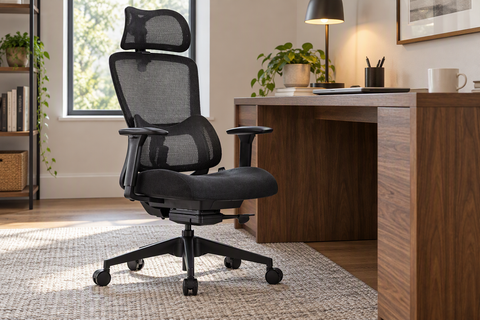
When selecting a high-performance chair, users are typically confronted with two distinct philosophies: Adjustable Lumbar Support and Dynamic Lumbar Support. The former relies on manual precision to accommodate specific anatomical needs, while the latter utilizes mechanical flexibility to adapt to the user’s movements in real-time. Understanding the physiological principles behind these technologies is essential for anyone seeking to mitigate the risks associated with prolonged sitting.
The Physiology of the Lumbar Curve and Static Load
To understand why lumbar support is necessary, one must first examine the natural architecture of the human spine. In its neutral state, the lumbar spine (the lower back) possesses a natural inward curve known as lordosis. According to the U.S. National Institute for Occupational Safety and Health (NIOSH), maintaining this neutral position is fundamental to preventing work-related musculoskeletal disorders (MSDs).
When a person sits without adequate support, the pelvis tends to tilt posteriorly (backward), causing the lumbar curve to flatten or even reverse into a kyphotic (outward) curve. This shift increases the internal pressure within the intervertebral discs and places excessive strain on the surrounding ligaments and muscles. Over time, this "static load"—a term used by ISO 11226:2000 to describe the evaluation of static working postures—leads to muscle fatigue, reduced blood circulation, and the eventual development of chronic pain.
The primary objective of any lumbar support system is to provide an external force that reinforces the natural lordotic curve, thereby reducing the muscular effort required to stay upright and minimizing disc compression.
Logic Summary: Our analysis of spinal health assumes that a neutral lordotic curve reduces intradiscal pressure by approximately 35–50% compared to a slumped posture (based on standard biomechanical modeling of the lumbar spine).

Adjustable Lumbar Support: The Case for Manual Precision
Adjustable lumbar support systems allow the user to manually alter the height and, in many cases, the depth of the support cushion. This approach is rooted in the principle that ergonomic furniture should accommodate the 5th to 95th percentile of the population, a design logic emphasized in the BIFMA G1-2013 Ergonomics Guideline.
The Benefits of Customization
For individuals with specific anatomical requirements—such as those with lumbar hyperlordosis (an exaggerated curve) or users who have undergone spinal surgery—manual adjustment is often a non-negotiable requirement. These users require a precise "anterior-posterior" depth that dynamic systems may not consistently provide.
A manually adjustable system allows the user to pinpoint the apex of the support exactly where their lumbar curve is deepest. According to OSHA eTools: Computer Workstations - Chairs, an effective chair must provide support that is adjustable in height to fit the small of the back.
The "Set and Forget" Pitfall
Despite the precision offered by adjustable systems, there is a significant behavioral "gotcha." In practice, many users set their lumbar support once and never adjust it again. This is problematic because our posture is not static; we shift, lean, and recline throughout the day. If the support is set for an upright "tasking" position but the user reclines to 110 degrees, the support may no longer align with the spine, potentially creating localized pressure points.
Dynamic Lumbar Support: Engineering for Active Seating
Dynamic lumbar support (also known as self-flexing or adaptive support) is designed to respond automatically to the user's weight and movement. These systems often utilize a flexible frame or a spring-loaded mechanism that "pushes back" with varying degrees of tension depending on the user's posture.
Continuous Adaptation
The core advantage of a dynamic system is its ability to redistribute pressure as the user moves. Research published in the Journal of Manipulative and Physiological Therapeutics suggests that lumbar support which "pulsates" or varies in depth can reduce the static load on the spine by preventing continuous, unchanging pressure on the same tissues.
Dynamic systems are particularly effective for "active sitters"—individuals who frequently transition between typing, talking on the phone, and reclining. As the user leans back, the dynamic component flexes to maintain contact with the lower back, ensuring that the lumbar curve is supported across a wider range of motion.
The Reliability Factor
While dynamic systems offer convenience, they are not without risks. Some advanced designs incorporate sensors, which can be a point of failure. As noted in research on sensor fault diagnosis, mechanical or electronic sensor failure can lead to a complete loss of support, a "hidden failure mode" that is rarely discussed in marketing materials. However, most high-quality ergonomic chairs utilize purely mechanical dynamic systems (springs and polymer flexors) which are significantly more durable.

Comparative Analysis: Which System Fits Your Workflow?
Choosing between these two technologies requires an honest assessment of your work habits and physical needs. The following table provides a comparison based on standard ergonomic heuristics.
| Feature | Adjustable (Manual) Lumbar | Dynamic (Adaptive) Lumbar |
|---|---|---|
| Primary User Type | Users with specific medical needs or fixed postures. | Active sitters and users who prefer convenience. |
| Adjustment Effort | High (requires manual fine-tuning). | Low (automatic adaptation). |
| Precision | High (can be set to specific millimeter depths). | Moderate (depends on mechanism tension). |
| Support Consistency | High (in a single position). | High (across multiple positions). |
| Common Failure | User error (incorrect height/depth setting). | Mechanical fatigue or sensor failure (if electronic). |
Methodology Note: This comparison is based on a deterministic model of user behavior and mechanical response. We assume a standard 8-hour workday with a 20-8-2 sit-stand rhythm as recommended by Cornell University Ergonomics Web.
The Critical Role of Seat Depth
A common oversight in chair selection is neglecting seat depth adjustment. If a seat is too deep, the user cannot sit far enough back to engage with the lumbar support, regardless of whether it is adjustable or dynamic. This causes the pelvis to tilt posteriorly, negating the benefits of the chair's engineering. According to the Health and Safety Executive (HSE), a proper workstation setup must ensure that the seat depth allows for a gap of roughly two to three fingers between the back of the knees and the front of the seat pan.
Practical Recommendations for an Optimized Workstation
Investing in a high-quality chair is only the first step. To truly address musculoskeletal health, the chair must be integrated into a broader ergonomic strategy.
1. Establish the "Neutral Position"
Regardless of your lumbar support type, your goal should be to achieve a "neutral" posture. According to Safe Work Australia, this involves:
- Feet flat on the floor (or on a footrest).
- Knees at or slightly below hip level.
- Elbows at a 90-degree angle, close to the body.
- Monitor at eye level to prevent neck strain.
2. Implement the "20-8-2" Rhythm
The World Health Organization (WHO) emphasizes the importance of interrupting long periods of sedentary behavior. A highly effective heuristic is the 20-8-2 rule:
- 20 minutes of sitting in a neutral posture.
- 8 minutes of standing (ideally at a height-adjustable desk).
- 2 minutes of moving or stretching.
This rhythm helps maintain blood circulation and reduces the duration of static loads on the spine. For more on how to integrate these habits, see The 2026 Workstation White Paper: Converging Ergonomic Science and Sustainable Engineering.
3. The "Feel" Test for Lumbar Support
When testing a chair, pay attention to the pressure distribution. A high-performance lumbar support should provide a firm, consistent push against the lower back without creating a localized "lump" or pressure point. This is especially important when reclining beyond 110 degrees, where many inferior supports lose contact with the spine.
Standards and Compliance: Ensuring Quality
When evaluating ergonomic furniture, look for certifications that indicate rigorous testing. The ANSI/BIFMA X5.1 standard defines the safety, durability, and structural adequacy of office chairs. Similarly, European users should look for EN 1335-1:2020 compliance, which emphasizes dimensions that encourage posture changes.
Furthermore, consider the indoor air quality of your workspace. Certifications like UL GREENGUARD Gold ensure that the materials used in your chair have low chemical emissions, contributing to a healthier overall environment.
Summary of Modeling Assumptions
To provide the insights in this article, we utilized a scenario-based model focused on the professional remote worker persona.
| Parameter | Value or Range | Unit | Rationale / Source Category |
|---|---|---|---|
| Daily Sitting Duration | 6.5 – 8.0 | Hours | Industry average for office-based roles. |
| Anthropometric Range | 5th – 95th | Percentile | BIFMA G1-2013 design standard. |
| Recline Angle Range | 90 – 135 | Degrees | Typical range for tasking and relaxation. |
| Lumbar Apex Height | 150 – 250 | mm | Average anatomical range for the L3-L5 vertebrae. |
| Sit-Stand Frequency | 2 – 3 | Cycles/Hr | Based on Cornell 20-8-2 heuristic. |
Modeling Note: This is a hypothetical estimate under the assumption that the user maintains a standard desktop setup with a single monitor at eye level. Individual results may vary based on pre-existing conditions and external environmental factors.
Final Considerations
Ultimately, there is no "one size fits all" answer to the lumbar support debate. Adjustable lumbar support offers the highest level of precision for those willing to put in the effort to calibrate it correctly. Dynamic lumbar support offers a more "forgiving" experience that adapts to the fluid movements of a modern workday.
By grounding your decision in the physiological principles of spinal health and looking for products that meet international safety standards, you can create a workspace that supports both your productivity and your long-term well-being.
Disclaimer: This article is for informational purposes only and does not constitute professional medical advice. If you suffer from chronic back pain or have a history of spinal issues, please consult with a qualified physiotherapist or medical professional before making significant changes to your workstation setup.
References
- BIFMA G1-2013 Ergonomics Guideline for Furniture
- CCOHS: Office Ergonomics - Sit/Stand Desk
- ISO 9241-5:2024 Workstation layout & postural requirements
- WHO 2020 Guidelines on Physical Activity & Sedentary Behaviour
- OSHA eTools: Computer Workstations - Neutral Working Postures
- Cornell University Ergonomics Web — Workstation Guides
- HSE: Working safely with display screen equipment (DSE)




Leave a comment