

It’s a familiar feeling for anyone who spends hours at their desk: that growing warmth and dampness on your back. Known informally as "swamp back," this uncomfortable, sticky sensation is more than just a minor annoyance. It’s a distraction that can pull you out of a deep work session or an intense gaming match. The core of the problem isn't you—it's your chair. This guide explains the science behind why your back gets sweaty and how choosing a chair engineered for breathability can permanently solve the problem, keeping you cool, dry, and focused.
The Science of Swamp Back: Why Your Chair is the Culprit
When you sit for extended periods, your body naturally generates heat. According to research on the health effects of prolonged static sitting from EU-OSHA, a static posture restricts airflow and can lead to a variety of musculoskeletal issues. When your chair’s backrest is made from non-breathable materials like PU leather or dense, closed-cell foam, that heat has nowhere to go. Your body’s natural cooling mechanism—sweat—kicks in, but the moisture also becomes trapped.
This creates a microclimate of heat and humidity between your back and the chair. The results are predictable:
- Physical Discomfort: A damp shirt and sticky skin are distracting and unpleasant.
- Loss of Focus: Instead of concentrating on your work or game, you’re constantly shifting to find a cool spot, breaking your flow.
- Skin Irritation: Trapped moisture can lead to clogged pores and skin irritation over time.
- Material Degradation: The combination of sweat and heat can cause materials like PU leather to crack and peel prematurely.
I’ve seen this countless times in workstation assessments. A user complains of back pain, and while poor posture is often a factor, their discomfort is amplified by a chair that traps heat. They are forced to constantly adjust their position, which prevents them from ever settling into a healthy, neutral posture.

The Engineering of Airflow: What Makes a Chair Breathable?
The solution lies in materials and designs that promote continuous air circulation. Modern ergonomic chairs are not just about support; they are also about thermal comfort. This is where breathable mesh and other innovative materials come into play.
The Power of Mesh
The most effective material for preventing heat buildup is a high-quality, tensioned mesh. Unlike solid backrests, a mesh design allows air to pass freely, wicking away heat and moisture before they can accumulate. However, not all mesh is created equal.
- Myth Debunked: "Mesh chairs aren't supportive." A common misconception is that mesh chairs feel like a flimsy hammock and lack the firm support of a traditional chair. This is only true for low-quality, poorly tensioned mesh. A well-engineered chair uses a high-density, elastomeric mesh that is tensioned across the frame to provide firm, responsive support that rivals a padded backrest, all while maximizing airflow.
When I evaluate a mesh chair, I check for a firm yet flexible surface with about 10-20 mm of give under hand pressure. This indicates the tension is sufficient to support the spine without creating pressure points.
Material Breathability Comparison
To understand the difference, consider how various materials perform in terms of airflow and heat management.
| Material Type | Airflow & Breathability | Heat Trapping | Long-Session Comfort | Maintenance |
|---|---|---|---|---|
| Tensioned Mesh | Excellent | Very Low | High | Easy to clean, durable |
| Spacer Fabrics | Good | Low | High | Can require deeper cleaning |
| Natural Fabric | Moderate | Moderate | Moderate to High | Varies by weave and foam |
| PU / Bonded Leather | Very Low | Very High | Low | Prone to peeling, traps heat |
| Dense Foam | Low | High | Low to Moderate | Compresses over time, traps heat |
Beyond the Mesh: Other Design Factors
Breathability isn't just about the backrest material. Thoughtful design elements also contribute to a cooler sitting experience:
- Air-Channel Foam: Some chairs use a mesh back but have a foam seat. High-quality versions of these incorporate air channels cut into the foam cushion to encourage airflow and reduce heat buildup under the legs.
- Perforated Shells: The structural frame of the backrest might feature a perforated or "rib" design, further enhancing air circulation around and through the mesh.
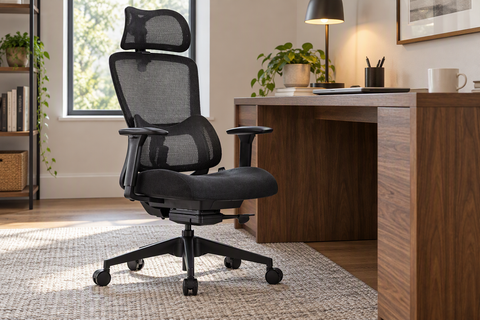
For a great example of effective, no-frills breathable design, consider a chair like the Onyx, Ergonomic Office Chair. Its classic mesh back provides excellent airflow, keeping you cool and comfortable, which is essential for maintaining focus during long workdays.

Choosing Your Breathable Chair: A Practical Guide
Switching to a breathable chair is one of the best upgrades you can make for your workspace. But with so many options, it’s important to look beyond just the material and consider the complete ergonomic system.
Case Study: Upgrading a Home Office Setup
Let’s consider a common scenario: a remote worker, "Alex," who spends 8-10 hours a day at their desk. Alex has been using a basic PU leather "executive" chair and constantly struggles with a sweaty back and lower back pain by mid-afternoon. The dense foam has compressed, and the non-breathable material is causing constant discomfort.
Alex's Goals:
- Eliminate "swamp back."
- Improve lower back support.
- Find a chair that adapts to different tasks (focused work vs. leaning back).
Analysis of Options:
- Option A: Basic Mesh Chair: A simple mesh chair would solve the breathability issue. However, many entry-level models lack adjustable lumbar support and may use lower-quality mesh that could sag over time.
- Option B: Hybrid Chair (Mesh Back, Foam Seat): This is a good compromise, offering a breathable backrest with a cushioned seat. The key here is the quality of the foam—it must be resilient and preferably designed with air channels.
- Option C: Fully-Featured Ergonomic Mesh Chair: A chair like the Lira, Ergonomic Office Chair represents a more comprehensive solution. It combines a high-quality, supportive mesh back with a full suite of adjustments. The ability to fine-tune the lumbar support, seat depth, and armrest position allows Alex to create a personalized fit that solves both the thermal and postural problems.
Recommendation: For a user spending a full workday at their desk, Option C is the most effective long-term solution. The investment in superior adjustability and materials pays off in sustained comfort and productivity.
Key Features to Look For:
- Adjustable Lumbar Support: A breathable back is great, but it must also support the natural curve of your spine. Look for a lumbar pad that is height-adjustable so you can position it correctly at the L3-L4 level, where most people need it.
- Seat Pan Design: If the chair has a foam seat, check for a "waterfall" edge to reduce pressure on the back of your knees. The foam should be high-density but not overly firm.
- Backrest Recline and Tension: A good chair should allow you to recline. As a general rule, a recline of 100°-120° is ideal for focused work, while 120°-135° is better for relaxed meetings or breaks.
Maximizing Comfort: Setup, Usage, and Maintenance
Even the best chair won't feel right if it's not set up correctly. Proper ergonomic alignment is crucial for reaping the full benefits of your breathable chair.
Your Ergonomic Setup Checklist
Follow these guidelines from ergonomic authorities like the U.S. Occupational Safety and Health Administration (OSHA) to dial in your fit:
- Feet Flat on the Floor: Adjust your seat height so your feet are flat on the floor and your knees are at a roughly 90 to 100-degree angle.
- Level Seat Pan: Start with the seat pan level or tilted slightly forward (0° to -5°). This can help open up your hip angle and improve posture.
- Position Lumbar Support: Adjust the lumbar pad so it fits comfortably into the small of your back.
- Set Armrest Height: Your armrests should be at a height where your shoulders are relaxed and your elbows are at a roughly 90-degree angle when typing.
Adopt a Dynamic Rhythm
A breathable chair makes sitting for long periods more tolerable, but it doesn't eliminate the need to move. Static postures are a primary risk factor for musculoskeletal disorders.
I always recommend the "20-8-2" rule, popularized by Cornell University's Ergonomics Web: for every 30 minutes, aim to sit for 20 minutes, stand for 8 minutes, and move or stretch for 2 minutes. This simple rhythm promotes blood circulation and prevents the stiffness that comes from sitting or standing for too long.
Keeping Your Chair in Top Condition
Mesh chairs are generally low-maintenance, but a little care goes a long way:
- Clean Regularly: Wipe down the mesh with a damp cloth and mild detergent to remove dust, oils, and salts from sweat, which can degrade the material over time.
- Check Tension: If you notice the mesh starting to sag, check if your chair has a mechanism for re-tensioning it.
- Inspect Cushions: For hybrid chairs, check the seat cushion periodically for visible compression or unevenness. A worn-out cushion can create pressure points and should be replaced.
Wrapping Up
"Swamp back" is a direct result of poor chair design, not an inevitable consequence of long hours at a desk. By trapping heat and moisture, non-breathable materials create a cycle of discomfort and distraction. The solution is to choose a chair engineered for airflow.
High-quality mesh chairs offer a powerful combination of thermal comfort and ergonomic support, allowing air to circulate freely while still providing the firmness your spine needs. When you combine a breathable chair with proper ergonomic setup and a routine of regular movement, you create a workspace that supports your well-being and enhances your focus. It’s time to end the era of the sweaty back and embrace a cooler, more comfortable way to work and play.
Disclaimer: This article is for informational purposes only and does not constitute professional medical advice. If you have pre-existing health conditions or chronic pain, consult with a qualified physician or physical therapist to determine the best ergonomic solutions for your needs.




Leave a comment