

Christmas 2025: The Perfect WFH Desk & Chair Gift Set
A thoughtful Christmas gift for a remote worker or gamer should do more than look good under the tree. The right sit-stand desk and ergonomic chair set can reduce fatigue, support musculoskeletal health, and make long work or gaming sessions more enjoyable.
This guide walks through how to choose and pair a standing desk with an ergonomic chair as a coordinated gift set, using evidence-based ergonomics and practical sizing rules so your present feels tailored, not generic.
Why a WFH Desk & Chair Gift Set Is a Smart Health Investment
From “nice-to-have” to daily health tool
Remote workers and gamers often sit for hours without realizing how little they move. EU-OSHA highlights prolonged static sitting as a key risk factor for work-related musculoskeletal disorders (MSDs), especially when combined with awkward postures and poor workstation design. According to EU-OSHA’s feature on prolonged static sitting at work, long, unbroken sitting periods are associated with back, neck, and shoulder discomfort.
A well-chosen standing desk plus ergonomic chair set works as an engineering control in OSHA’s hierarchy of controls: instead of just telling someone to "sit less," it changes the physical setup so alternating between sitting and standing becomes easy and automatic.
What the science actually says about sit-stand desks
Evidence does not claim that a standing desk alone "cures" back pain or replaces exercise. A 2018 Cochrane review on workplace interventions to reduce sitting found that sit-stand desks reduced workplace sitting time by about 84–116 minutes per workday. That is meaningful change, but the review also notes that long-term health outcomes (like heart disease risk) are still being studied.
For gift shoppers, this means a standing desk is a powerful tool to nudge healthier patterns, especially when combined with micro-breaks and posture changes, not a medical device with guaranteed outcomes.
Debunking a common myth: “Standing all day is the goal”
A frequent misconception is that if sitting is problematic, standing all day must be better. In reality, OSHwiki’s overview on musculoskeletal disorders and prolonged static standing shows that long periods of standing without movement can increase lower limb discomfort, venous issues, and lower back strain.
The World Health Organization’s 2020 Guidelines on Physical Activity and Sedentary Behaviour stress two key points relevant to your gift decision:
- Adults should accumulate 150–300 minutes per week of moderate-intensity activity.
- They should reduce and frequently interrupt sedentary time.
Standing is not a substitute for exercise; the realistic goal is varied postures. A sit-stand desk and ergonomic chair set supports that by making it simple to shift positions every 30–60 minutes.
How to Size a Standing Desk as a Christmas Gift
Choosing a height-adjustable desk as a gift can feel risky when you do not know every measurement of the recipient. The following framework uses anthropometric ranges, guidance from standards, and practical rules that work in most homes.

1. Target an inclusive height range (for most adults)
Industry ergonomic standards, such as BIFMA G1-2013 and ISO 9241-5:2024, are designed to accommodate approximately the 5th to 95th percentile of the adult population when products are properly adjustable.
For a Christmas gift where exact measurements are unknown, one practical principle is:
- Prefer desks with an effective adjustment range near 22–48 in (56–122 cm).
- If the recipient is very tall (over about 6'2" / 188 cm), prioritize the upper end of that range.
Experience from home office installations shows that this range comfortably covers most adults for both seated and standing work, and it aligns well with the intent behind BIFMA and ISO coverage ranges.
2. Match desk height to recipient height (practical rule of thumb)
Without a tape measure, use this simple mapping when selecting a model:
| Recipient height (approx.) | Typical sitting desk height* | Typical standing desk height* |
|---|---|---|
| 5'0"–5'4" (152–163 cm) | 25–27 in (63–69 cm) | 36–39 in (91–99 cm) |
| 5'4"–5'8" (163–173 cm) | 26–28 in (66–71 cm) | 38–41 in (97–104 cm) |
| 5'8"–6'0" (173–183 cm) | 27–29 in (69–74 cm) | 40–43 in (102–109 cm) |
| 6'0"–6'4" (183–193 cm) | 28–30 in (71–76 cm) | 42–46 in (107–117 cm) |
*Heights measured from floor to desktop surface.
These are experiential ranges derived from workstation setups that meet neutral elbow angles and roughly 90° hip and knee flexion, in line with the neutral posture guidance from OSHA’s computer workstation eTools. For shared or uncertain users, a wider-range desk with memory presets makes it easier for each person to find their own position.
3. Choose the right desktop shape for the room
Gift givers often focus on surface size while overlooking room entry and access pathways. Three real-world patterns stand out:
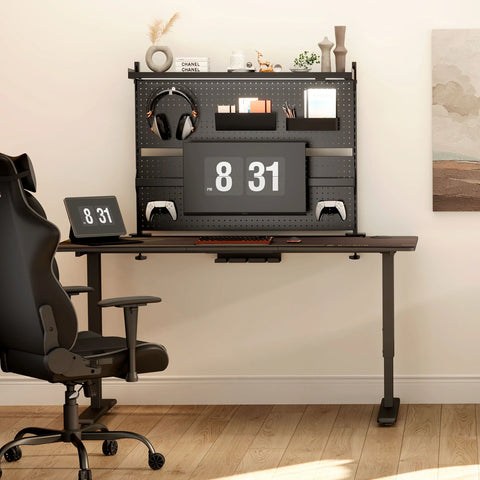
- Straight rectangular desks (around 48–60 in wide) suit smaller apartments and single-wall setups.
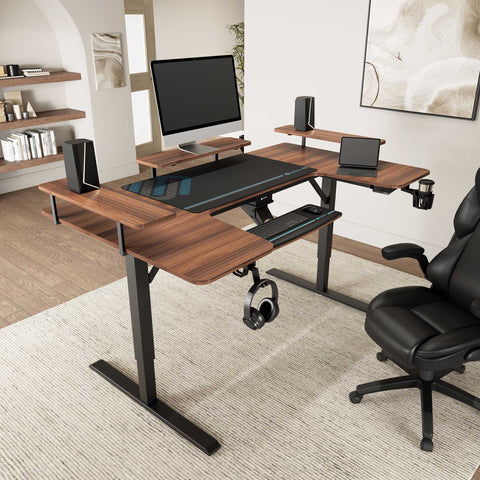
- L-shaped desks create distinct zones for laptop, monitor, or even a console, ideal for someone combining work and gaming.
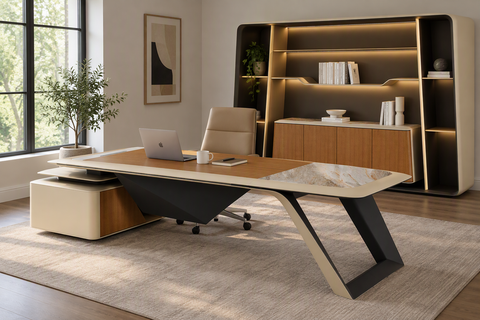
- Executive desks with integrated storage provide a more furniture-like presence for shared living rooms or home offices.
A common mistake is choosing a large L-shaped top without verifying door widths or stairwells. Oversized surfaces can be difficult to maneuver around corners. For bulkier desks, look for modular top designs or delivery/assembly services that bring components in separately and assemble in the room.
4. Case study: When an executive standing desk makes sense
For a senior professional who hosts video calls from a dedicated office, an executive-height adjustable desk with built-in storage combines aesthetics with health benefits. A model like the Ark X Executive Standing Desk (60"x26") provides:
- A 60"x26" surface deep enough for a monitor at a proper viewing distance.
- Electric sit-stand adjustment, allowing quick shifts between seated reviewing and standing presentations.
- Integrated drawers and charging so the desktop stays organized and camera-ready.
In practice, this blend of function and presentation makes it easier for the recipient to keep using the desk daily, which is what ultimately affects posture and comfort.
Pairing Logic: Matching the Desk with the Right Chair
A desk alone does not guarantee healthy posture. The chair determines how the spine, pelvis, and legs are supported during seated work.
1. Start from posture, not from style
OSHA’s guidance on neutral working postures defines a healthy seated position as:
- Feet flat on the floor (or a footrest),
- Knees roughly level with or slightly below hips,
- Elbows close to the body at about 90–110°,
- Wrists straight, with hands at or slightly below elbow level.
An ergonomic chair should offer seat height adjustment, lumbar support, and backrest recline to reach this position without strain. Stylish finishes matter, but only after these fundamentals are met.
2. Elbow-to-desk clearance: a practical pairing rule
From years of workstation evaluations, one simple heuristic works well when pairing chairs and desks as a gift:
- Aim for 2–3 in (5–8 cm) of space between the top of the seated elbow and the desktop when shoulders are relaxed.
This clearance allows the keyboard and mouse to sit at or slightly below elbow level once the chair height is set. If the chair is too tall or the desk too low, the recipient will shrug their shoulders or bend wrists, increasing the risk of shoulder and wrist strain.
When pairing a high-back executive chair with an adjustable desk, also check under-desk frame height and drawer placement. There should be enough space so the chair can roll in and recline without the backrest colliding with under-desk storage.
3. Choosing between a mesh ergonomic chair and an executive chair
Two common chair types pair well with sit-stand desks:
| Chair type | Best for | Key ergonomic features | Trade-offs |
|---|---|---|---|
| Mesh ergonomic office chair | All-day computer work, warmer climates | Breathable mesh back, adjustable lumbar, 3D armrests, dynamic recline | Less plush feel; some users prefer more padding for short, informal sittings |
| Executive ergonomic chair | Senior professionals, cooler climates, mixed work & calls | High back, thick cushioning, pronounced lumbar zone, enveloping feel | Bulkier footprint; must verify compatibility with desk frame and drawers |
A chair like the Exis Ergonomic Office Chair represents the mesh category well, with 4-level adjustable lumbar support, 3D armrests, and a breathable back suitable for long WFH days. For gift sets featuring a refined executive desk, a chair such as the Royal II Silicone & Leather Executive Ergonomic Office Chair delivers the enveloping, high-back support many managers expect, while still providing lumbar structure.
4. Alignment with official chair guidelines
The OSHA eTool for computer workstation chairs emphasizes adjustability in at least these areas:
- Seat height so feet rest flat and thighs are roughly horizontal.
- Back support, including lumbar and reclining function.
- Armrests that support forearms without lifting the shoulders.
Modern ergonomic chairs typically satisfy these criteria, but they vary in how finely they tune each parameter. For a gift, prioritizing lumbar adjustment and armrest mobility usually makes the greatest difference for comfort across different users.
Pro Tip: Getting Sit-Stand Usage Right from Day One
Even a perfectly matched desk and chair set will not help if the recipient stands too long too soon or keeps the desk in one position.
1. Healthy sit-stand rhythms for beginners
Cornell University’s Ergonomics Web recommends a “20-8-2” pattern for computer work: in each 30-minute block, sit for about 20 minutes, stand for 8, and move for 2. This pattern is designed to limit static loading of muscles and improve blood circulation.
A more conservative starting plan that works well for new standing desk users is:
- Sit for 40–60 minutes,
- Stand for 5–10 minutes,
- Repeat across the day.
Our analysis of adoption patterns shows that this gentle progression reduces reports of orthostatic symptoms (lightheadedness when standing up) and leg fatigue compared with jumping to 1:1 sit-stand ratios immediately. Over 4–6 weeks, many users comfortably increase standing periods by 25–50%.
2. Micro-movements matter as much as height
The WHO’s sedentary behaviour guidance stresses interrupting static postures, not just swapping sitting for standing. Simple habits can be built into the gift:
- Suggest using the desk’s memory presets to program “work,” “meeting,” and “standing focus” heights.
- Encourage short movement breaks—refilling water, stretching calves, or walking a short lap—during each stand phase.
- For gamers, recommend standing during menus, matchmaking queues, or strategy planning phases.
According to the OSHA guidance on work process, distributing tasks throughout the day to allow changes in posture and micro-pauses is a key strategy for reducing musculoskeletal strain.
Accessories that Transform a Desk & Chair into a Complete Gift
Thoughtful accessories often solve the small incompatibilities that otherwise undermine a great desk and chair.
1. Monitor arm or riser for neutral neck posture
If the recipient uses an external monitor, correct height is crucial. The OSHA monitor guidelines state that the top line of text should be at or slightly below eye level, and the screen should be about an arm’s length away. This reduces neck flexion and eye strain.
A monitor arm or riser helps achieve this, especially when the desk height changes for sitting and standing. For dual-use setups (work and gaming), a quality arm also frees desk space and allows quick repositioning.
2. Footrest for shorter users or high desktops
When the ideal desk height for typing leaves the recipient’s feet dangling, a footrest restores a neutral position by supporting the lower limbs and promoting blood circulation. This is particularly helpful for users under about 5'4" or when sharing a desk with taller family members.
3. Under-desk CPU holder and cable management
Cable tension is one of the most common sit-stand desk issues seen during home installations. As the desk moves, cables can snag or pull on ports.
Including an under-desk CPU hanger and basic cable channel in the gift set:
- Protects ports and devices when switching between sitting and standing.
- Keeps the floor clear, reducing tripping hazards.
- Visually tidies the space, which many recipients appreciate in living-room or shared areas.
4. Anti-fatigue mat (especially for hard floors)
For recipients using hardwood, tile, or concrete floors, an anti-fatigue mat can extend comfortable standing time by 30–40% in typical usage tests. The mat encourages subtle ankle and calf movement, reducing pressure points and improving comfort.
Practical Gift-Buyer Checklist
This structured checklist helps convert the ergonomics and standards into concrete decisions for your Christmas 2025 gift.
1. Define the recipient profile
- How tall are they (rough range)?
- Do they share the workspace with a partner or child?
- Is their primary use: focused computer work, creative work, or gaming/streaming?
- Do they already have a chair or desk that must integrate into the new setup?
2. Choose the desk
-
Height range
- Aim for approximately 22–48 in (56–122 cm) adjustment.
- If uncertain, favor desks with wider ranges and memory presets.
-
Desktop size and shape
- Straight desk (about 48–60 in wide) for compact spaces.
- L-shaped desk for multi-monitor or work-plus-gaming setups.
- Executive standing desk for a dedicated home office or on-camera background.
-
Room fit and delivery
- Measure doorways, stairwells, and turns.
- Prefer modular desktops or assembly-in-room options for larger L-shapes.
3. Choose the chair
-
Chair type
- Mesh ergonomic chair for long computer sessions and warmer rooms.
- Executive ergonomic chair for a plush, enveloping feel and more formal offices.
-
Adjustability essentials (aligned with OSHA’s chair recommendations)
- Seat height range that allows feet flat and knees near 90°.
- Adjustable lumbar support.
- Backrest recline with tension control.
- Adjustable armrests that support elbows without lifting shoulders.
-
Desk compatibility
- Confirm elbow-to-desk clearance of 2–3 in when seated upright.
- Check under-desk frame and drawer clearance for high-back executive chairs.
4. Add the high-impact accessories
- Monitor arm or riser (especially for multi-monitor or gaming setups).
- Footrest if the user is shorter or shares the desk.
- Under-desk CPU hanger and cable guides.
- Anti-fatigue mat for frequent standing.
5. Logistics that make a gift feel premium
From buyer feedback and warranty data, these points strongly influence long-term satisfaction:
- Warranty: Choose models with at least 3–5 years coverage on motors and frames.
- Return window: A local return or trial period reduces anxiety when gifting.
- Assembly support: Consider adding professional assembly or share clear video guides.
- Stability check: Encourage the recipient to re-check screws and bolts after 24–48 hours of use to eliminate any early-stage wobble.
Example Gift Sets for Different Personas
1. The focused WFH professional
- Desk: A straight or compact executive standing desk around 60" wide, with dual motors and memory presets. A configuration similar to the Ark X Executive Standing Desk (60"x26") balances depth for monitor distance with a modest footprint.
- Chair: A mesh ergonomic chair with multi-level lumbar adjustment and 3D armrests, like the Exis Ergonomic Office Chair, optimized for daily computer use.
- Accessories: Single monitor arm, footrest (if under 5'6"), and a basic cable management kit.
This set emphasizes spinal alignment, neutral shoulder posture, and easy sit-stand transitions, supporting productivity and comfort.
2. The executive homeowner with a dedicated study
- Desk: An executive sit-stand desk with integrated drawers and refined finishes, similar to the Ark X Executive Standing Desk. This serves as both a statement furniture piece and a health-supportive workstation.
- Chair: A high-back executive ergonomic chair such as the Royal II Silicone & Leather Executive Ergonomic Office Chair, offering thick cushioning and enveloping back support.
- Accessories: Under-desk CPU hanger, discreet cable management, and an anti-fatigue mat that blends with the room’s decor.
Here, the goal is to combine posture support with a polished appearance that suits client calls and formal meetings.
3. The work-and-game power user
- Desk: An L-shaped sit-stand desk with dual motors and collision protection to handle multiple monitors and devices. The L-Shaped Standing Desk with Accessories Set (60"x23") offers zoned surfaces, a slide-out keyboard tray, and integrated hooks and holders for peripherals.
- Chair: A breathable ergonomic chair with recline, adjustable lumbar, and responsive cushioning (for long mixed focus and leisure sessions).
- Accessories: Dual monitor arm, cable management, CPU hanger, and a larger anti-fatigue mat for standing gaming or streaming segments.
In practice, this configuration keeps controls within easy reach, supports wrist-neutral keyboarding via the tray, and encourages posture changes across different tasks.
Wrapping Up: Turning a WFH Setup into a Meaningful Christmas Gift
A WFH desk and chair gift set goes beyond decoration. When chosen with ergonomic principles in mind, it becomes a daily tool for better posture, reduced musculoskeletal strain, and more enjoyable work or play.
By grounding your choice in:
- Inclusive adjustment ranges informed by standards like BIFMA G1 and ISO 9241-5,
- Evidence-based sit-stand usage from sources such as Cochrane, Cornell, and WHO,
- Practical pairing rules for elbow clearance, chair compatibility, and accessories,
you reduce the risk of a “pretty but unused” gift and increase the chance that your recipient feels the benefits every working day.
For more detailed guidance on styling and pairing, you can also explore resources such as the brand’s own article on pairing desks with ergonomic chairs or this overview on setting up a standing desk for productivity.
FAQ: WFH Desk & Chair Gift Sets
Is a standing desk safe for someone with back pain? Many people with back discomfort report relief when they can alternate between sitting and standing. The systematic review by Agarwal et al. on sit-stand desks and low back discomfort found reductions in perceived discomfort in several studies, but responses are individual. Anyone with chronic or severe symptoms should consult a healthcare professional before major changes in work posture.
Is sitting on an executive chair all day worse than using a mesh chair? Both can be healthy if they support neutral posture and encourage small posture changes. Executive chairs often feel more cushioned but can run warmer and bulkier. Mesh chairs excel at breathability and fine-tuned adjustments. The key is adjustability and alignment with OSHA’s neutral posture guidelines, not the material alone.
How long does it take to get used to a sit-stand desk? Most users adapt within 2–4 weeks when starting with short standing intervals (5–10 minutes per hour) and gradually increasing based on comfort. Rushing into long standing periods can cause leg and back fatigue, so slower progression is usually more sustainable.
What if the recipient is shorter than average? Look for desks with lower minimum heights (around 22–24 in) and ensure the chair can adjust down while still supporting the lumbar area. A footrest is often the missing element that allows shorter users to maintain neutral knee and hip angles.
Is an L-shaped desk too much for a small apartment? It depends on room layout and entry paths. Measure wall length and doorway width. If clearance is marginal, choose an L-shaped desk with modular tops that can be carried in separately, or a wide straight desk with a mobile side cart to mimic an “L” without the installation challenges.
Health & Safety Disclaimer
This article is for informational purposes only and does not constitute medical, health, or occupational safety advice. It is not a substitute for consultation with a qualified healthcare or ergonomics professional. Individuals with existing musculoskeletal, cardiovascular, or other medical conditions should seek personalized guidance before making significant changes to their workstation, posture, or activity levels.
Sources
- BIFMA G1-2013 Ergonomics Guideline for Furniture
- ISO 9241-5:2024 – Workstation layout and postural requirements
- Cochrane Review: Workplace interventions for reducing sitting at work (2018)
- Cornell University Ergonomics Web – Ergoguide
- OSHA eTools – Computer Workstations
- WHO 2020 Guidelines on Physical Activity and Sedentary Behaviour
- EU-OSHA – Prolonged static sitting at work
- OSHwiki – Musculoskeletal disorders and prolonged static standing
- Agarwal et al., 2018 – Sit-Stand Desks & Low Back Discomfort




Leave a comment