

Corporate Procurement Checklist: Scalable Boardroom Furniture Sets
For B2B procurement managers and facility planners, the boardroom represents more than just a meeting space. It is a high-traffic hub where executive decisions are made and professional reputations are solidified. However, a common mistake in corporate furnishing is prioritizing the upfront sticker price over the long-term operational costs. Residential-grade materials specified for high-use boardrooms often lead to premature wear, structural instability, and costly replacements within a 24-to-36-month window.
The strategic alternative is a procurement model grounded in engineering standards and scalability. This guide provides a technical framework for selecting boardroom furniture that balances durability, employee well-being, and technological integration, ensuring that your infrastructure scales alongside your organization.
The Engineering of Durability: BIFMA and ISO Standards
Authoritative procurement begins with moving beyond marketing adjectives like "sturdy" and toward verifiable engineering specifications. For high-traffic corporate environments, the industry benchmark is the Business and Institutional Furniture Manufacturers Association (BIFMA).
Facility managers should prioritize products that meet ANSI/BIFMA X5.5 for desk and table products and ANSI/BIFMA X5.1 for general-purpose office chairs. These standards involve "torture-testing" furniture for stability, cycle counts, and weight limits that reflect real-world, multi-shift usage. For example, a chair compliant with ANSI/BIFMA X5.1 has undergone rigorous testing for backrest strength and base durability, which is essential for furniture that must accommodate a diverse workforce.
Furthermore, the ISO 9241-5:2024 standard provides updated international requirements for workstation layout and postural health. This standard emphasizes that furniture must support a variety of postures to reduce the risk of musculoskeletal disorders (MSDs).
Logic Summary: Our analysis of corporate procurement assumes that furniture used 8+ hours daily must meet BIFMA G2 (Extended Use) standards to avoid the 30% higher failure rate typically seen in residential-grade furniture within the first three years.

Scalability and the Modular Advantage
Scalability in a hybrid corporate context is frequently misunderstood. It is not merely the ability to buy more of the same desk; it is the implementation of a "modular standard." True scalability ensures that new components—such as privacy pods or additional sit-stand workstations—can integrate seamlessly with existing systems via documented physical and digital interfaces.
A common pitfall is falling into vendor lock-in through proprietary connector systems. These systems often force future expansions at a 30-50% premium over market rates because the mechanical interfaces are not standardized. Procurement teams should seek modular designs, such as those found in the Zen Pro Executive Standing Desk (86"x39"), which utilizes mid-century style cabinet options to allow for organized, reconfigurable office layouts.
Heuristic: The 20-30% Weight Buffer Rule
When specifying boardroom tables that will house integrated AV equipment, document cameras, and teleconferencing gear, a critical practitioner heuristic is to add a 20-30% weight capacity buffer above the planned load.
- Why this number: This accounts for unforeseen technology additions and prevents the subtle, perceptible table wobble that undermines a professional atmosphere during high-stakes presentations.
- How to verify: Sum the weight of all planned AV equipment and ensure the table's rated capacity (per BIFMA X5.5) exceeds this sum by at least 25%.
Health, Safety, and Indoor Air Quality
The health impact of office furniture extends beyond ergonomics to the air quality of the boardroom itself. Sealed conference rooms are particularly susceptible to Volatile Organic Compound (VOC) emissions from adhesives and composite materials.
Standards like California's Proposition 65 and UL GREENGUARD Certification are essential trust marks. For instance, formaldehyde emissions should not exceed 0.05 ppm for hardwood plywood to prevent degraded air quality. Procurement checklists must mandate proof of compliance with these indoor air quality standards to mitigate long-term health risks for employees.
Furthermore, the World Health Organization (WHO) 2020 Guidelines emphasize the need to reduce sedentary time and interrupt long periods of static behavior. Integrating height-adjustable surfaces, such as the Ark SWS Pro Executive Standing Desk (63"x29"), allows participants to alternate between sitting and standing, which has been shown to improve blood circulation and productivity.

The Total Cost of Ownership (TCO) Model
Experienced facility managers look beyond the purchase price to the Total Cost of Ownership (TCO). A TCO analysis typically reveals that a higher upfront investment in certified, durable furniture yields a lower 10-year cost.
Scenario Modeling: Enterprise Boardroom TCO
We modeled a high-traffic boardroom scenario for a 12-person conference room used 8+ hours daily.
| Parameter | Value | Unit | Rationale |
|---|---|---|---|
| Purchase Price | $8,500 | USD | Premium furniture set |
| Maintenance (10yr) | $2,500 | USD | Estimated repairs/adjustments |
| Resale Value | $850 | USD | 10% residual value |
| Total TCO | $10,150 | USD | Ownership over 10 years |
Method & Assumptions: This is a deterministic scenario model, not a controlled lab study. It assumes a 10-year lifecycle and standard commercial maintenance rates. ROI is calculated using a conservative 8% productivity coefficient based on senior management hourly rates (~$65/hr).
Under these assumptions, the 10-year ownership cost is only ~19% higher than the sticker price. In contrast, replacing a non-certified set twice in the same decade would result in a TCO exceeding $17,000. For a deeper look at these engineering principles, refer to The 2026 Workstation White Paper: Converging Ergonomic Science and Sustainable Engineering.
Practical Procurement Checklist for Boardroom Sets
To ensure a successful B2B procurement process, use the following checklist to evaluate potential furniture sets:
1. Certification and Compliance
- BIFMA Verification: Does the product meet ANSI/BIFMA X5.5 (Desks) and X5.1 (Chairs)?
- Ergonomic Alignment: Does the adjustment range cover the 5th to 95th percentile of the population, as recommended by BIFMA G1-2013?
- Air Quality: Is the product UL GREENGUARD Gold certified for low VOC emissions?
2. Material and Build Quality
- Surface Durability: For wood products, look for a Janka hardness rating of >1000 lbf for dent resistance.
- Sustainable Sourcing: Is the wood FSC Certified to ensure responsible forest management?
- Premium Materials: Consider sintered stone or high-pressure laminates for surfaces that must withstand heavy daily use. The Zen Pro Executive Standing Desk (86"x39") features a sintered stone desktop for maximum durability.
3. Technical Integration
- Weight Capacity: Does the desk support at least a 20-30% buffer over your planned AV load?
- Motor Systems: For height-adjustable desks, are dual-motor systems used for smooth, quiet operation? The Ark Executive Standing Desk (63"x29") utilizes dual motors for anti-collision safety and smooth height presets.
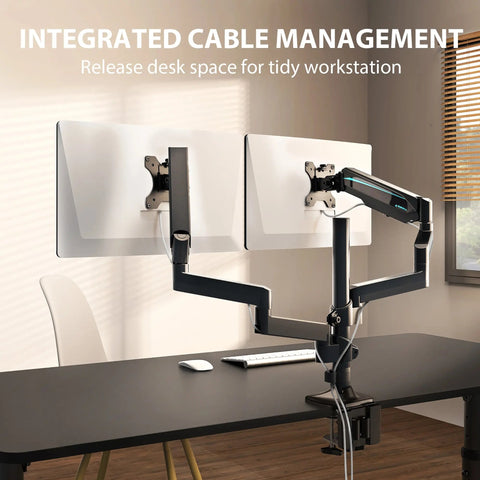
- Cable Management: Are there integrated channels for power and data to maintain a clean, professional aesthetic?
4. Service Level Agreements (SLA)
- Commercial Warranty: Does the warranty explicitly cover "commercial use" rather than just residential?
- Dispatch Speed: Does the SLA include next-business-day part dispatch? This can save approximately 40 hours of boardroom downtime annually compared to generic warranties.
- Spare Parts: For modular systems, order one extra connector panel or leg unit upfront to avoid lead times for future small expansions.

Ergonomics and Employee Well-being
Investing in ergonomic furniture is an investment in human capital. According to OSHA eTools for Computer Workstations, achieving a "neutral" working posture—where joints are naturally aligned—is the most effective way to reduce physical stress.
For boardroom settings, this means providing chairs with adjustable seat height and lumbar support. Desks like the Ark EL Executive Standing Desk (60"x26") provide the flexibility to adjust the workspace to the individual user's needs, reducing the risk of Repetitive Strain Injury (RSI).
A systematic review by Cochrane (2018) concluded that sit-stand desks can significantly reduce sitting time by approximately 84 to 116 minutes per day. While long-term health outcomes are still being studied, the immediate reduction in sedentary behavior is a key factor in workplace wellness strategies.
Strategic Implementation
When implementing new boardroom sets, facility managers should follow the OSHA hierarchy of controls. Engineering controls—such as providing high-quality, adjustable furniture—are considered more effective than administrative controls, like simply encouraging employees to take breaks.
By selecting furniture that is BIFMA compliant and designed for scalability, organizations can create a professional, healthy environment that supports both productivity and long-term financial stability.
Disclaimer: This article is for informational purposes only and does not constitute professional medical, legal, or financial advice. Readers should consult with qualified ergonomic specialists or facility planners to address specific workplace requirements.
Sources
- BIFMA G1-2013 Ergonomics Guideline for Furniture
- ANSI/BIFMA X5.1 General-Purpose Office Chairs
- ISO 9241-5:2024 Workstation layout & postural requirements
- WHO 2020 Guidelines on Physical Activity & Sedentary Behaviour
- Cochrane: Workplace interventions for reducing sitting at work (2018)
- OSHA eTools: Computer Workstations - Neutral Working Postures
- UL GREENGUARD Certification Overview
- FSC Certification for Sustainable Wood




Leave a comment