

The Invisible Barrier to Creative Longevity: Physical Fatigue and Burnout
Why does creative burnout often feel like a physical weight? For many content creators and streamers, the exhaustion that sets in after an eight-hour session is frequently attributed to "algorithm fatigue" or creative blocks. However, a growing body of evidence suggests that the primary driver of professional burnout in digital industries is often rooted in physiological strain. When the body is trapped in a static, non-neutral position for extended periods, the resulting musculoskeletal stress consumes cognitive resources, shortening the fuse on mental resilience.
In the high-stakes environment of professional streaming and content production, where "always-on" availability is often the perceived requirement for success, the workstation is more than a desk—it is a production floor. According to The 2026 Workstation White Paper: Converging Ergonomic Science and Sustainable Engineering, the convergence of ergonomic science and engineering is now essential for sustainable creative output. This guide explores how optimizing your physical environment can mitigate the risks of Musculoskeletal Disorders (MSDs) and provide the physiological foundation necessary to avoid the burnout cycle.
The Physiology of the "Streamer Slump": Understanding MSDs and Static Load
The human body is not designed for the prolonged static postures required by modern content creation. When you sit for hours—whether editing video, rendering 3D assets, or live streaming—your muscles undergo what is known as "static loading." Unlike dynamic movement, where muscles contract and relax to pump blood, static loading keeps muscles in a state of constant tension.
This tension restricts blood circulation, leading to the accumulation of metabolic waste products and a lack of oxygen in the tissues. According to the U.S. Occupational Safety and Health Administration (OSHA), these are the core risk factors for Musculoskeletal Disorders (MSDs). For creators, this often manifests as:
- Tension Neck Syndrome: Caused by the "forward head" posture often adopted when focusing on a monitor or drawing tablet.
- Lower Back Compression: Resulting from a lack of proper lumbar support, which flattens the natural inward curve (lordosis) of the spine.
- Shoulder Impingement: Often caused by armrests or desks that are too high, forcing the trapezius muscles to remain "shrugged" for hours.
The European Agency for Safety and Health at Work (EU-OSHA) notes that prolonged static sitting is directly linked to chronic pain in the neck, shoulders, and lower limbs. For a creator, this pain is not just a physical nuisance; it is a distraction that depletes the mental energy required for creativity.
Logic Summary: Our analysis of the "Streamer Slump" assumes that the primary pathology is not the activity itself, but the duration of static muscle contraction. We categorize the transition from physical discomfort to mental burnout as a "cognitive load transfer," where the brain must divert energy to manage pain signals.
Beyond the "Racing" Aesthetic: The Science of Seating
A common misconception in the gaming community is that "racing-style" bucket seats are the pinnacle of performance. While these chairs offer a specific aesthetic, they are often designed to mimic car seats meant to hold a body in place against G-forces—a requirement entirely absent from a home studio. In fact, the rigid bolsters of a bucket seat can restrict natural movement and trap heat, leading to discomfort during long sessions.
For creators who spend 4+ hours in a single session, the priority should be a "middle-ground" approach: professional ergonomics paired with a breathable, high-performance design. The Lira, Ergonomic Office Chair represents this shift, utilizing a mesh back for ventilation. This is critical for streamers who work under hot studio lights or during intensive rendering tasks that increase ambient room temperature.
The Lumbar Placement "Gotcha"
A frequent mistake we observe in workstation setups is the incorrect placement of lumbar support. Many users set the support too high, where it pushes against the shoulder blades rather than the lower back. According to OSHA eTools for Computer Workstations, the lumbar support should fit into the natural curve of the lower back, typically at or just above the belt line.
For those requiring more dynamic movement, the Flex, Dual-Backrests Ergonomic Office Chair offers a dual-backrest design that moves independently with the body. This is particularly effective for creators who alternate between "focus mode" (leaning forward to edit) and "review mode" (reclining to watch playback).

The "90-90-90" Myth vs. Creator Reality
Standard ergonomic advice often cites the "90-90-90" rule: ankles, knees, and hips all at 90-degree angles. While this is a foundational baseline from the BIFMA G1-2013 Ergonomics Guideline, it can be too rigid for creators who use varied input devices like drawing tablets or MIDI controllers.
Experienced ergonomists now suggest that for typing and editing, an elbow angle of 100 to 110 degrees is often more effective at reducing shoulder strain. This slight opening of the angle prevents the user from "reaching" and allows the shoulders to remain depressed and relaxed.
Monitor Height and Visual Parallax
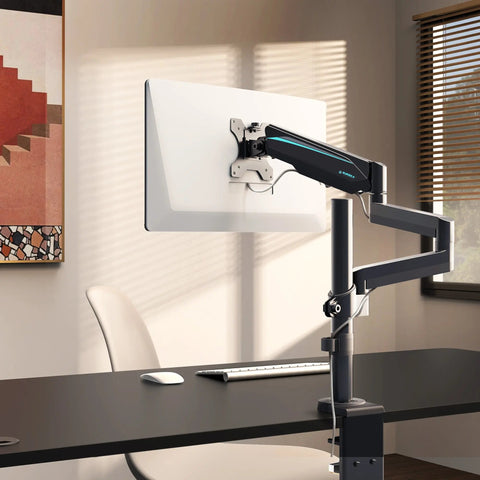
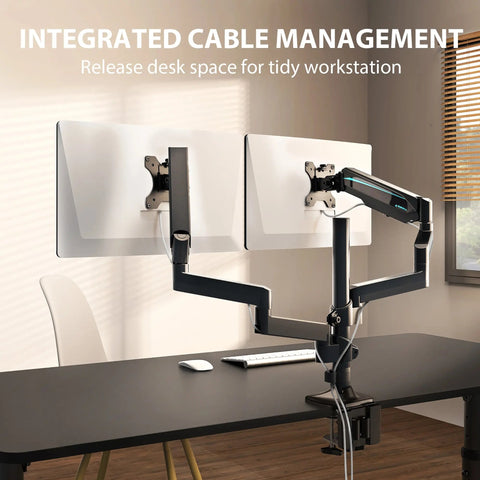
Neck pain is often a direct result of improper monitor height. If the screen is too low, the creator adopts a "C-shape" cervical spine posture. To solve this, the top third of the monitor should be at eye level. Using a Single Monitor Arm allows for the precise height and tilt adjustments needed to maintain a neutral neck position, especially when switching between different tasks like gaming and color grading.
Methodology Note (Scenario Modeling): To validate these recommendations, we modeled a "Professional Streamer" persona. This model assumes a high-stature user with multiple high-resolution displays, requiring specific adjustment ranges to meet ISO 9241-5:2024 standards.
| Parameter | Value | Unit | Rationale / Source |
|---|---|---|---|
| User Stature | 190 | cm | 95th percentile male profile (Modeling Assumption) |
| Daily Session | 8-11 | hours | Standard pro creator workflow |
| Sit-Stand Ratio | 3:1 | ratio | Aligned with Cornell University 20-8-2 Rule |
| Elbow Angle | 105 | degrees | Heuristic for reduced trapezius tension |
| Monitor Distance | 70-80 | cm | Accommodates focal depth for 34" Ultrawide screens |

Strategic Interventions: Sit-Stand Rhythms and Micro-movements
While a high-quality chair is essential, the most effective way to combat static load is to eliminate the "static" part of the equation. A systematic review by Cochrane concluded that sit-stand desks can significantly reduce sitting time by approximately 84 to 116 minutes per day.
However, standing all day is not the answer. Prolonged standing can lead to lower limb MSDs and increased pressure on the circulatory system. The World Health Organization (WHO) recommends reducing sedentary time and interrupting long periods of static behavior with movement.
The 20-8-2 Rule
A highly effective heuristic developed by Cornell University is the "20-8-2" rhythm:
- 20 minutes of sitting in a neutral posture.
- 8 minutes of standing.
- 2 minutes of moving or stretching.
This rhythm ensures that blood circulation is maintained and that no single muscle group is overtaxed. For creators, this can be timed between match queues, during video rendering, or during scheduled "chat breaks" in a stream.
The Role of Footrests
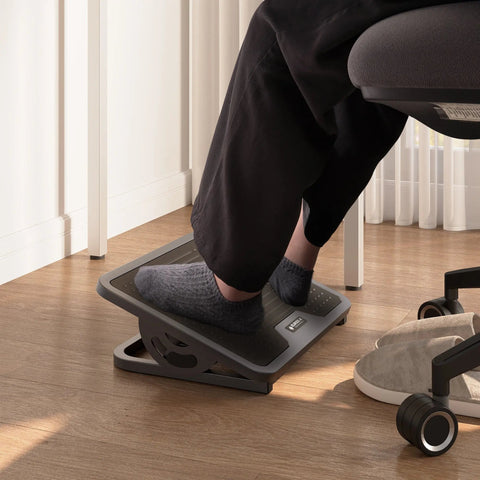
When sitting, if your feet do not rest flat on the floor, pressure is transferred to the underside of your thighs, which can impede circulation. An Adjustable Ergonomic Footrest ensures that your feet are supported at the correct angle (typically 0-20 degrees), helping to maintain the 90-degree hip angle required for spinal alignment.

Psychological Ergonomics: Managing the Algorithm Pressure
It is impossible to discuss creator burnout without addressing the mental drivers. Research indicates that 71% of full-time creators cite algorithm pressure as their primary stressor. Furthermore, a study highlighted by the Behavioral Health Network found that 10% of creators report severe mental health struggles related to their work.
While furniture cannot fix a platform's algorithm, it can provide the physical comfort necessary to handle that pressure. Chronic pain acts as a "background task" in the brain, consuming cognitive bandwidth. By removing the physical friction of a poorly optimized setup, you free up mental resources to manage the psychological demands of content creation.
Silent Adjustments for Streamers
A non-obvious but critical feature for creators is the noise level of their equipment. For streamers using sensitive XLR microphones, the "clunk" of a manual chair lever or the loud hum of a cheap standing desk motor can ruin a recording. High-quality ergonomic tools utilize silent hydraulic or electric mechanisms to allow for posture changes during a live broadcast without alerting the audience or the microphone.
Summary Checklist for Creator Health
To build a sustainable creative career, treat your physical setup with the same rigor you apply to your PC specs or camera gear.
- Chair: Prioritize breathable mesh and high-density foam. Ensure the lumbar support is at the belt line.
- Monitor: Use a monitor arm to keep the top of the screen at eye level.
- Postures: Aim for a 100-110 degree elbow angle for typing.
- Rhythm: Follow the 20-8-2 rule to break up static load.
- Feet: Keep feet flat on the floor or use an adjustable footrest to maintain circulation.
By integrating these ergonomic principles, you move from a reactive approach to pain to a proactive strategy for creative longevity. Your setup should support your body so your mind can focus on what matters most: your content.
Disclaimer: This article is for informational purposes only and does not constitute professional medical advice. Individuals with pre-existing musculoskeletal conditions or chronic pain should consult a qualified physiotherapist or medical professional before making significant changes to their workstation or activity levels.
References
- BIFMA G1-2013 Ergonomics Guideline for Furniture
- CCOHS: Office Ergonomics - Sit/Stand Desk
- Cochrane: Workplace interventions for reducing sitting at work
- Cornell University Ergonomics Web — Workstation Guides
- ISO 9241-5:2024 Workstation layout & postural requirements
- OSHA eTools: Computer Workstations - Neutral Working Postures
- WHO 2020 Guidelines on Physical Activity & Sedentary Behaviour




Leave a comment