

In the modern corporate landscape, the physical environment of the office is no longer viewed merely as a backdrop for daily operations. Instead, facility managers and HR executives increasingly recognize the workspace as a critical lever for employee well-being, talent retention, and corporate social responsibility (CSR). However, a pervasive problem remains: the "afternoon slump" and rising rates of chronic discomfort among office staff are often direct consequences of poorly specified furniture and neglected indoor air quality.
Traditional office procurement often prioritizes upfront costs over long-term physiological impact. This approach frequently results in the installation of workstations that fail to support natural human movement or, worse, introduce harmful chemical emissions into the closed office environment. For B2B decision-makers, choosing eco-friendly, ergonomically certified standing desks is not just a trend; it is a strategic investment in the company’s most valuable asset—its human capital.
The Physiological Cost of Static Loading
The human body is biologically designed for movement. When employees remain in a seated, static position for hours, they experience what ergonomists call "static loading." According to EU-OSHA research on musculoskeletal disorders and prolonged sitting, static posture leads to increased pressure on the intervertebral discs and restricts blood circulation to the muscles. This lack of movement triggers a cascade of pathophysiological mechanisms, including reduced nutrient supply to spinal tissues and the accumulation of metabolic waste products, which eventually manifest as chronic back pain and repetitive strain injuries (RSI).
The Canadian Centre for Occupational Health and Safety (CCOHS) notes that while sitting reduces the load on the lower limbs, it significantly increases the load on the neck and shoulders, especially when monitors and input devices are poorly positioned. The goal of a modern workstation is to facilitate a "Neutral Position"—a posture where joints are naturally aligned, reducing stress on the musculoskeletal system.
The Invisible Hazard: VOCs and Secondary Emissions
While physical posture is a visible concern, the chemical composition of office furniture presents a more subtle threat to productivity. Volatile Organic Compounds (VOCs), such as formaldehyde, are commonly found in the resins and adhesives used in composite wood products (MDF and particleboard). The U.S. Environmental Protection Agency (EPA) has established strict emission standards for these materials, but compliance is more complex than it appears on a spec sheet.
An often-overlooked "friction point" in sustainable procurement is the issue of secondary emissions. While a desktop panel might be EPA-certified, the adhesives used for edge-banding or the solvent-based glues used in final assembly can undermine the air quality goals. Research published on ResearchGate regarding VOC emissions reveals that emissions are dynamic; they can increase significantly as office temperatures rise or as products age. This means a desk that meets standards in a cold warehouse may exceed safe limits in a sun-drenched, high-rise office.
For the B2B sector, the impact of poor air quality on the bottom line is quantifiable. A study cited by OECD indicates that even minor increases in particulate matter and pollutants can lead to a 0.55% reduction in labor productivity. Conversely, improving indoor air quality through low-emission furniture can lead to an estimated 18.5% reduction in sick leave.
Sustainable Engineering: Beyond the Desktop
True eco-friendly desks address these hazards through rigorous material selection and engineering. When evaluating furniture, decision-makers should look for the following "Gold Standards":
- FSC-Certified Wood: The Forest Stewardship Council (FSC) ensures that wood is sourced from responsibly managed forests that provide environmental, social, and economic benefits.
- GREENGUARD Gold Certification: This is one of the most stringent standards for chemical emissions. Products with this certification are tested for over 10,000 VOCs and are deemed safe for use in sensitive environments like schools and healthcare facilities.
- Dual-Motor Lifting Systems: For B2B environments, dual-motor desks are the standard. They offer higher load capacities (typically around 120 kg) and operate more quietly than single-motor alternatives, ensuring they can handle heavy triple-monitor setups without mechanical strain.

Technical Standards and Compliance Framework
To ensure a "fits most users" design logic, professional office furniture must adhere to international ergonomic dimensions. The BIFMA G1-2013 Ergonomics Guideline provides dimensions that accommodate the 5th to 95th percentile of the population. This range is critical for corporate environments where a single desk model must accommodate employees of varying heights.
| Standard | Focus Area | Business Benefit |
|---|---|---|
| ISO 9241-5:2024 | Postural requirements | Ensures workstations support healthy joint angles and movement. |
| ANSI/BIFMA X5.5 | Desk safety and durability | Guarantees the desk can withstand 24/7 commercial use. |
| UL 962 | Electrical safety | Essential for motorized desks to prevent fire hazards and electrical failure. |
| EN 1335-1 | Dimensions (EU Market) | Ensures compliance with European workplace safety regulations. |
As detailed in The 2026 Workstation White Paper: Converging Ergonomic Science and Sustainable Engineering, the convergence of these standards creates a "blueprint" for a safe, high-performance office.
The B2B Business Case: Calculating the ROI of Wellness
Investing in high-quality standing desks is often met with questions regarding Return on Investment (ROI). However, the data supports a rapid payback period when accounting for health and productivity gains.
Based on metabolic equivalents (METs), an employee standing for three hours a day instead of sitting can burn an additional 29,531 kcal per year. More importantly, the Cochrane Library suggests that sit-stand desks significantly reduce total sedentary time, which is linked to lower risks of cardiovascular disease and improved focus.
Theoretical ROI Calculation for a Single Workstation:
- Employee Hourly Wage: $45.00
- Estimated Productivity Uplift: 15% (derived from reduced fatigue and improved concentration)
- Annual Productivity Value Gain: $5,062.50
- Average Desk Cost: $1,200.00
- Payback Period: 0.24 Years (Approximately 3 months)
This calculation demonstrates that ergonomic furniture pays for itself within the first quarter of use through improved output alone, before even factoring in the reduction in healthcare costs or absenteeism.

Practical Recommendations for Implementation
Transitioning a corporate office to an ergonomic, eco-friendly model requires more than just purchasing hardware. It requires a behavioral shift.
The "20-8-2" Rhythm
Developed by Cornell University Ergonomics Web, the 20-8-2 rule is the gold standard for workstation behavior:
- 20 Minutes Sitting: Maintain a neutral posture.
- 8 Minutes Standing: Shift weight occasionally to maintain circulation.
- 2 Minutes Moving: A brief walk or stretch to reset the musculoskeletal system.
Phased Rollout Strategy
For large organizations, a full-scale replacement can be disruptive. A common expert recommendation is a phased rollout starting with high-traffic or "high-intensity" areas, such as design studios or call centers. This allows facility managers to monitor employee feedback and air quality metrics in a controlled environment. Real-time monitoring often reveals a significant reduction in reported headaches and eye strain, validating the investment before full-scale deployment.
Monitor and Peripheral Alignment
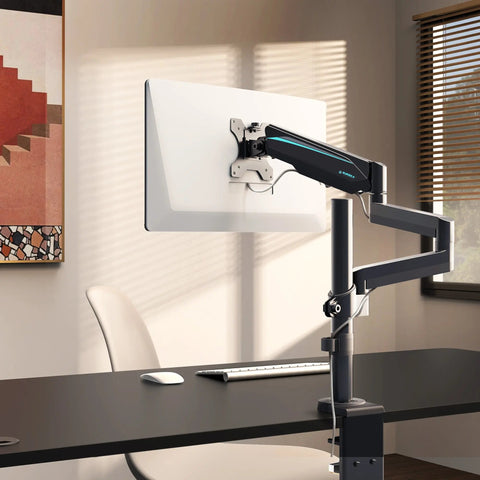
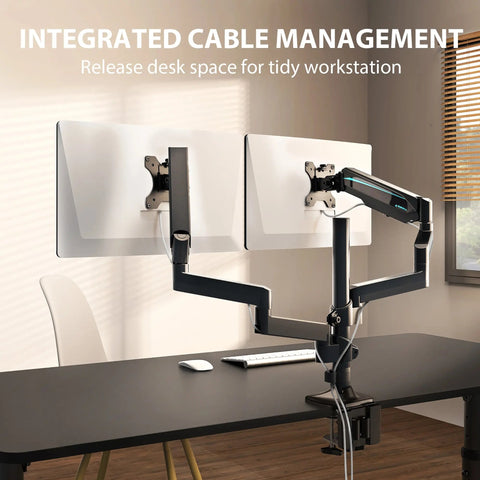
A standing desk is only as effective as its configuration. According to OSHA eTools for Computer Workstations, the top line of text on a monitor should be at or slightly below eye level. Using a Dual Monitor Arm is often necessary to achieve this height without sacrificing desk space or forcing the user into a "turtleneck" posture.
Selecting the Right Materials for Longevity
When specifying furniture, consider the "Scenario Stress-Test." A standard home-office desk may not survive the rigors of a B2B environment.
- For High-Traffic Areas: Opt for high-pressure laminates or sustainably sourced hardwoods with a water-based, low-VOC finish. These materials resist the "wear and tear" of multiple users and cleaning cycles.
- For Executive Suites: Consider wood veneers or stone-wood hybrids that provide a professional aesthetic without compromising on GREENGUARD standards.
- The "Gotcha" of Recyclability: Many "eco" desks use laminated particleboard which, while made of recycled content, is difficult to recycle at the end of its life due to the glues used. Specifying desks with modular components (where the motor or frame can be replaced independently of the top) significantly extends the product lifecycle and reduces the total carbon footprint.
Strategic Conclusion for Decision-Makers
The shift toward eco-friendly and ergonomic workstations is a response to the clear scientific link between the physical environment and corporate performance. By prioritizing products that meet BIFMA standards and GREENGUARD Gold certifications, organizations protect their employees from the dual threats of musculoskeletal disorders and poor indoor air quality.
The data is clear: the cost of inaction—measured in sick leave, reduced productivity, and employee turnover—far outweighs the initial investment in high-quality, sustainable furniture. As workplaces continue to evolve, the integration of ergonomic science and sustainable engineering will remain the hallmark of a forward-thinking, high-performance organization.
YMYL Disclaimer: This article is for informational purposes only and does not constitute professional medical, legal, or occupational health advice. The ergonomic recommendations provided are based on general industry standards and may not be suitable for individuals with pre-existing musculoskeletal conditions. Always consult with a qualified medical professional or a certified ergonomics specialist before making significant changes to your workstation or physical activity routine.
References
- BIFMA G1-2013 Ergonomics Guideline for Furniture
- ISO 9241-5:2024 Workstation layout & postural requirements
- CCOHS: Office Ergonomics - Sit/Stand Desk
- EU-OSHA: Musculoskeletal disorders and prolonged static sitting
- EPA: Formaldehyde Emission Standards for Composite Wood Products
- Cornell University Ergonomics Web — Workstation Guides
- OSHA eTools: Computer Workstations - Neutral Working Postures





Leave a comment