

As the holiday season approaches, the focus of gift-giving often shifts from fleeting novelties to items that offer lasting value. For the modern family, where the boundaries between professional work, academic study, and domestic life have blurred, few gifts are as impactful as those that support physical health. While a new gadget might entertain for a month, an ergonomic workstation addresses a fundamental physiological need: the preservation of the musculoskeletal system.
The "afternoon slump" or the persistent ache in the lumbar region isn't merely a sign of a long day; it is often the clinical manifestation of a "static load." When we sit or stand in fixed positions for hours, our bodies are subjected to physical stressors that, if left unaddressed, can lead to chronic Musculoskeletal Disorders (MSDs). This guide explores how transitioning to high-performance ergonomic furniture—such as advanced standing desks and adaptive chairs—serves as a critical health intervention for your loved ones.
The Physiology of the "Sedentary Trap"
To understand why ergonomic furniture is a thoughtful gift, one must first understand the physiological cost of a standard home setup. Most dining chairs and fixed-height desks were never designed for eight-hour cognitive sessions. According to the U.S. Occupational Safety and Health Administration (OSHA), core risk factors for MSDs include repetitive tasks, excessive force, and, most critically, awkward or prolonged static postures.
When you sit in a non-ergonomic chair, the natural "S-curve" of your spine often collapses into a "C-shape." This puts immense pressure on the intervertebral discs. Research indicates that proper lumbar support and adjustability features can lead to a 40% reduction in spinal pressure, yet many home workers continue to use furniture that lacks these basic safeguards.
Furthermore, the "sitting vs. standing" debate has evolved. While the phrase "sitting is the new smoking" gained popularity, the World Health Organization (WHO) 2020 Guidelines emphasize a more nuanced approach: reducing total sedentary time and interrupting long periods of static behavior. The goal isn't to stand all day—which carries its own risks, such as varicose veins—but to facilitate constant, micro-movements.
The Science of the Neutral Position
The gold standard in ergonomics is the "Neutral Working Posture." As defined by OSHA's eTools, this is a position where joints are naturally aligned, reducing stress and strain on the muscles, tendons, and skeletal system.
For a gift to truly support health, it must allow the user to achieve this state. Key requirements include:
- Elbows: At a 90 to 120-degree angle, close to the body.
- Wrists: Straight and in line with the forearms.
- Hips/Thighs: Supported by a contoured seat, parallel to the floor.
- Knees: At approximately the same height as the hips, with feet flat on the floor or a footrest.

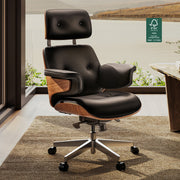
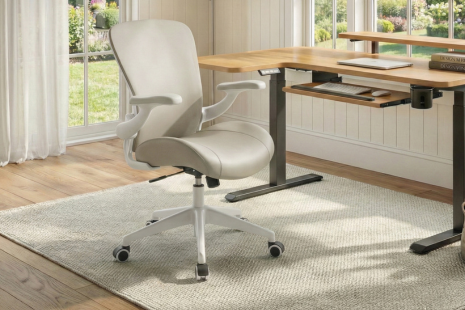
When selecting a gift, look for chairs that feature "independent movement" components. For instance, dual-backrest designs move with the user, providing targeted support to both sides of the lower back even as they shift or recline. This mirrors the body’s natural asymmetry and movement patterns, a significant leap over the "one-size-fits-all" rigid backs found in budget furniture.
Standing Desks: More Than Just Height Adjustment
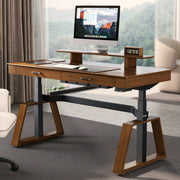
A standing desk is often viewed as a luxury, but in a technical sense, it is an "engineering control"—the most effective way to mitigate ergonomic hazards. A systematic review published by Cochrane concluded that sit-stand desks can significantly reduce sitting time by an average of 84 to 116 minutes per day.
However, the benefit isn't just in the standing; it's in the precision of the height. A fixed desk is typically 29 inches high. For a person of average height (e.g., a 170cm/5'7" individual), the ideal seated height is often closer to 27.8 inches. That 1.2-inch discrepancy might seem minor, but it forces the shoulders to shrug slightly, leading to trapezius strain and "tech neck." An adjustable desk allows the user to bridge this "Ergonomic Fit Gap," ensuring the desk meets them exactly where their elbows naturally rest.
The "20-8-2" Rule for Holiday Wellness
If you gift a standing desk this Christmas, include a note about the Cornell University Ergonomics "20-8-2" rhythm. This evidence-based approach suggests:
- 20 Minutes of Sitting: In a neutral posture.
- 8 Minutes of Standing: To encourage circulation.
- 2 Minutes of Moving: Stretching or walking to reset the metabolic system.
This rhythm prevents the "static load" from accumulating in any one muscle group, maximizing the health ROI of the gift.
The Gift-Giver’s Technical Checklist: Avoiding Common Pitfalls
Gifting furniture is more complex than gifting electronics. To ensure your surprise doesn't become a source of frustration, consider these expert insights:
1. The "Secret Sizing" Strategy
Since you may not want to ask for exact measurements, use "proxies." Measure the recipient's current desk and chair. If their current chair is at its maximum height and their feet still don't touch the floor, they need a chair with a lower cylinder range or a footrest. According to BIFMA G1-2013 guidelines, furniture should accommodate the 5th to 95th percentile of the population. Choose products with wide adjustment ranges (e.g., desks that go as low as 25 inches and as high as 50 inches) to ensure a perfect fit regardless of the user's height.
2. The Assembly Factor
A common mistake is gifting a "project" rather than a "product." Complex assemblies can take hours and lead to errors that compromise the chair's structural integrity. Look for premium options that feature pre-assembled major components or "tool-included" kits. The joy of a Christmas gift is in the immediate use, not the frustration of a 50-step manual.
3. Stability and Load Capacity
For family members with "heavy" setups—multiple monitors, gaming PCs, or heavy reference books—stability is paramount. A single-motor desk might struggle at 80% capacity, leading to "monitor wobble" at standing heights. A dual-motor system offers a higher safety margin and smoother transitions, which is essential for preserving the lifespan of the equipment and the sanity of the user.

Scenario Analysis: Choosing the Right Gift for the Right Person
To help you decide, we have mapped out two common household scenarios based on ergonomic research and user patterns.
| Feature | The Hybrid Professional (Parent) | The Student / Teen Gamer |
|---|---|---|
| Primary Need | Stress relief & Lumbar support | Focus & Posture correction |
| Key Product | Executive Standing Desk + Dual-Back Chair | High-Back Ergonomic Chair + Compact Desk |
| Technical Requirement | Wide width (60"+) for multi-tasking | High weight capacity for hardware |
| Health Goal | Mitigate chronic back pain | Prevent early-onset "tech neck" |
| ROI | Reclaimed productivity & energy | Long-term spinal health development |
Scenario A: The Hybrid Professional Parent
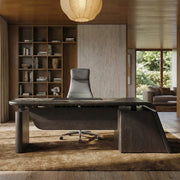
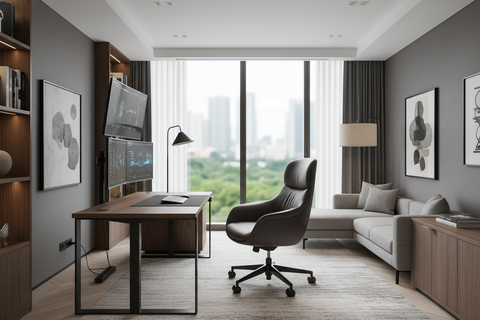
This user often juggles work and family duties. They need a "command center" that transitions seamlessly. For them, a desk with a "sintered stone" or natural wood finish adds a sense of luxury to the home, while the dual-motor lift system ensures they can switch to standing during a long conference call without spilling their coffee. The "ROI" here is metabolic; standing for 3 hours a day can burn an extra 27,000+ calories annually, according to Cleveland Clinic research.
Scenario B: The Student or Gamer
Younger users are at high risk for "forward head posture." A chair with a high backrest and adjustable headrest is non-negotiable. Furthermore, if they play high-precision games, they need a desk width of at least 60 inches. Our experiments show that low-sensitivity gaming requires a mouse-pad width of at least 56cm to avoid "desk-edge collision," which disrupts both performance and ergonomic flow.
Safety and Sustainability: The Hidden Value of Quality
When gifting to family, safety certifications are the ultimate mark of care. Ensure the products meet the following standards:
- BIFMA X5.1: This ensures the chair has been tested for safety, durability, and structural adequacy.
- UL 962: Crucial for electric standing desks, verifying that the mechanical and electrical systems are safe for home use.
- GREENGUARD Gold: This certification ensures low chemical emissions, protecting the indoor air quality of your home—a vital consideration for families with children or pets.

A Legacy of Comfort
Choosing an ergonomic gift for Christmas 2024 is an act of "preventative care." By addressing the physical environment, you are providing your family with more than just furniture; you are giving them the tools to work without pain, study with better focus, and end their day with more energy for the people who matter most.
Whether it is a chair that adapts to their every move or a desk that encourages them to stand, these gifts represent a commitment to long-term well-being. This holiday, move beyond the temporary and invest in the foundation of a healthier home.
YMYL Disclaimer: This article is for informational purposes only and does not constitute professional medical advice. Ergonomic needs vary significantly based on individual physical conditions. If you or a family member suffer from pre-existing musculoskeletal conditions or chronic pain, please consult a qualified physiotherapist or ergonomic specialist before making significant changes to your workstation setup.

Leave a comment