

The Ultimate Gift for Gamers This Holiday: Health and Comfort
The holiday season is synonymous with marathon gaming sessions. Whether it's unwrapping a new console or diving into a long-awaited game release, hours can melt away in front of the screen. But with that extended playtime often comes an unwelcome guest: physical discomfort. The nagging lower back pain, the stiff neck, the sore wrists—these are not badges of honor for a dedicated gamer. They are warning signs of a setup that is working against the body.
This year, consider giving a gift that extends far beyond the virtual world. The most impactful present for the gamer in your life isn't just another title; it's an investment in their health and well-being. Building an ergonomic gaming setup is the ultimate power-up, transforming their command center into a space that supports comfort, focus, and long-term musculoskeletal health. This guide will walk you through the core principles and practical steps to create a gaming station that is truly a gift.
The Science of Play: Why Ergonomics is a Gamer's Best Ally
Before we adjust any hardware, it's crucial to understand why ergonomics is so vital. When we sit for long periods in a fixed or awkward position, our bodies are under constant strain. According to occupational health experts, this prolonged static posture is a primary risk factor for musculoskeletal disorders (MSDs). The U.S. Occupational Safety and Health Administration (OSHA) identifies repetitive motions, awkward postures, and contact stress as key hazards—all of which are common in gaming.
The goal of ergonomics is to achieve a "neutral posture," a position where your joints are naturally aligned, and your muscles are not over-exerted. For a gamer, this means:
- Spine: Maintaining its natural "S" curve, supported by a good chair.
- Head and Neck: Balanced directly over the shoulders, not craning forward.
- Shoulders: Relaxed and down, not hunched or elevated.
- Elbows: Bent at roughly a 90-degree angle, close to the body.
- Wrists: Straight and in line with the forearms, not bent up, down, or to the sides.
- Feet: Flat on the floor or supported by a footrest.
Achieving this posture reduces the physical stress on the body, allowing for longer, more comfortable gaming sessions and mitigating the risk of long-term injury.
Debunking a Common Myth: "Gaming Chairs Are Just for Looks"
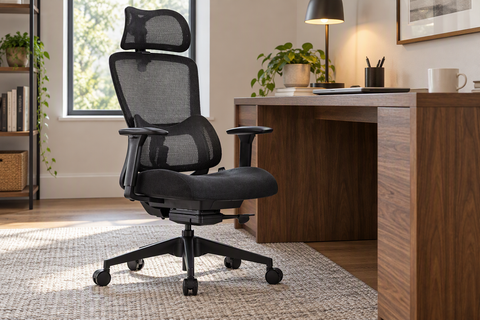
A prevalent misconception is that ergonomic or "gaming" chairs are primarily about flashy aesthetics. While style is a factor, a true ergonomic chair is a sophisticated piece of engineering designed for adjustability. Standards from organizations like the Business and Institutional Furniture Manufacturers Association (BIFMA) focus on performance, durability, and, most importantly, the ability to fit a wide range of body types. The key isn't the color scheme; it's the chair's capacity to be tailored to your specific body, enabling a neutral posture.
The Command Center: Setting Up the Desk for Peak Performance
The desk is the centerpiece of any gaming setup. It dictates the position of all your critical gear. Getting its height and layout right is the first and most important step.

The Most Common Mistake I See
In setting up hundreds of workstations, the single most frequent error is adjusting the desk height to match the chair's armrests. This almost always results in a desk that is too high. The user then compensates by raising their chair, lifting their feet off the floor, or shrugging their shoulders to reach the keyboard and mouse. Both scenarios create significant strain on the shoulders, neck, and wrists.
The correct method is to always start with your chair and feet. Once you are seated correctly, you bring the desk to the proper height for your arms.
The Correct Desk Setup Protocol
- Adjust Your Chair: Sit with your back against the backrest and your feet flat on the floor. Your knees should be at approximately a 90-degree angle.
- Find Your Elbow Height: Let your arms hang relaxed at your sides. Bend your elbows to a 90-degree angle. The height of your forearms is your ideal work surface height.
- Adjust the Desk: If you have a height-adjustable desk, move it up or down until the surface is level with your forearms. For a fixed-height desk, like the Full-Surface Mousepad Gaming Desk (60"x27"), you will need to adjust your chair height to meet the desk, and then use a footrest if your feet no longer touch the floor.
A large, stable surface is also non-negotiable. The expansive desktop of the GIP 60" provides ample room for wide mouse movements, preventing the wrist deviation that can occur on smaller pads. Its full-surface mousepad ensures smooth, consistent tracking without awkward edges.
The Pilot's Seat: A Checklist for Perfect Chair Adjustment
An ergonomic chair is useless if not adjusted properly. Use this checklist to dial in the settings for a perfect fit, based on principles outlined in OSHA's Computer Workstation eTool.
| Feature | Adjustment Goal | How-To |
|---|---|---|
| Seat Height | Feet flat on the floor, knees at ~90°. | Raise or lower the seat until your thighs are parallel to the floor. |
| Seat Depth | 2-3 finger widths between the back of your knees and the seat edge. | Slide the seat pan forward or backward to ensure proper spacing. This prevents pressure on nerves and blood vessels. |
| Lumbar Support | Fills the natural curve of your lower back. | Adjust the support's height and depth until you feel firm but comfortable pressure in the small of your back. |
| Backrest Angle | A slightly reclined posture of 100-110°. | Unlock the recline and lean back slightly. This opens your hip angle and reduces pressure on your spinal discs. |
| Armrests | Shoulders are relaxed, and forearms are supported. | Adjust armrest height so they just touch your elbows when bent at 90°. Your shoulders should not be hunched. |
The Finishing Touches: Accessories That Complete the Ergonomic Picture
With the chair and desk set, the final step is to arrange your peripherals. These accessories are not luxuries; they are essential tools for fine-tuning your posture and preventing strain.
Monitor Placement: The Key to a Happy Neck
Incorrect monitor placement is a leading cause of neck and shoulder pain. I used to get persistent neck strain by 3 PM every day until I realized my monitor was just two inches too low. According to the Canadian Centre for Occupational Health and Safety (CCOHS), your monitor should be positioned so the top of the screen is at or slightly below eye level. It should also be about an arm's length away.
For multi-monitor setups or fixed-height desks, achieving this can be difficult. A high-quality monitor stand is the solution. The Carbon Fiber Dual Monitor Stand not only elevates screens to the correct height but also provides valuable desk space for organization.

Essential Ergonomic Add-Ons
- Footrest: If adjusting your chair to the right desk height leaves your feet dangling, an Adjustable Ergonomic Footrest is a must. It provides a stable base, ensuring proper leg posture and circulation.
- CPU Holder: An often-overlooked accessory is a CPU holder. For standing desk users, it's critical for preventing cables from being pulled taut or disconnected. A product like the Knob-operated Adjustable CPU Holder keeps the PC tower moving with the desk, simplifying cable management and protecting your hardware.
- Keyboard and Mouse: Position your keyboard and mouse close together and directly in front of you. Your wrists should remain straight while typing and gaming. Avoid anchoring your wrist on the desk and pivoting; use your whole arm for larger movements.

Wrapping Up: The Gift That Keeps on Giving
Building an ergonomic gaming setup is a gift of foresight. It’s about recognizing that a passion for gaming should support a person's health, not detract from it. By focusing on the core principles of neutral posture, proper adjustment, and supportive equipment, you can create a space that enhances performance, increases comfort, and prevents the aches and pains that can cut a gaming marathon short. This holiday season, give the gamer in your life the ability to play better, and feel better, for years to come.
Frequently Asked Questions (FAQ)
How long should I stand vs. sit while gaming?
While standing desks are excellent, the key is movement. A good starting point, recommended by experts at Cornell University, is the "20-8-2" rule: for every 30 minutes, sit for 20, stand for 8, and move around for 2. For gaming, you might adapt this to standing during less intense moments like managing inventory or watching cutscenes.
Is a footrest really necessary?
A footrest is an essential ergonomic tool if your feet cannot rest flat on the floor after adjusting your chair to the correct height for your desk. It provides the stability needed to maintain a healthy posture.
What's the single most common setup mistake to avoid?
Setting your desk height incorrectly. Always adjust your chair and posture first, with feet flat on the floor. Then, adjust your desk (or chair height and footrest) to meet your arms, ensuring your elbows are at a 90-degree angle and your shoulders are relaxed.
Do I need a special "gaming" desk for it to be ergonomic?
Not necessarily. The most important factor is that the desk is at the correct height and is large and stable enough to hold your equipment properly. A desk with a large, single-surface mousepad like the GIP 60" is advantageous because it eliminates edge interference and supports smooth, full-arm movements, which is better for your wrist.
Disclaimer: This article is for informational purposes only and does not constitute professional medical advice. If you have pre-existing health conditions or experience persistent pain, please consult with a qualified healthcare professional or a certified ergonomist to design a solution tailored to your specific needs.
References
- Canadian Centre for Occupational Health and Safety (CCOHS): Office Ergonomics - Sit/Stand Desk
- Cornell University Ergonomics Web: Workstation Guides
- U.S. Occupational Safety and Health Administration (OSHA): Computer Workstations eTool
- U.S. Occupational Safety and Health Administration (OSHA): Ergonomics - Identify Problems




Leave a comment