

The Hidden Cost of Discomfort: How Presenteeism Drains Productivity
Your team is in the office, but are they truly working? The phenomenon of "presenteeism"—employees being physically present but mentally absent and underperforming—is a silent drain on a company's bottom line. It shows up as missed deadlines, a drop in creative problem-solving, and a general lack of engagement. While factors like burnout and low morale contribute, a primary and often-overlooked cause is persistent physical discomfort stemming from an improper work setup.
Day-long battles with back pain, neck strain, and wrist fatigue are more than just a nuisance; they are significant cognitive distractions. When an employee is constantly shifting to find a comfortable position, their focus is fragmented. The mental energy spent ignoring pain is energy that isn't being channeled into their work. This is the crux of the ergonomic problem: a poorly designed workspace actively works against the focus it is meant to support.
Investing in ergonomics is not about office perks; it is a direct strategy to combat presenteeism. By reducing physical discomfort, you free up your team's cognitive resources, enabling deeper focus, higher engagement, and ultimately, a more productive and resilient workforce.
The Science of How We Work: Discomfort, Distraction, and MSDs
To understand why an uncomfortable employee is an unproductive one, we need to look at the physiology of work. The human body is not designed for static postures, whether sitting or standing, for eight hours a day. The U.S. Occupational Safety and Health Administration (OSHA) identifies prolonged static postures as a core risk factor for Work-Related Musculoskeletal Disorders (MSDs). These disorders are injuries to muscles, nerves, tendons, and joints, and they represent a massive, often hidden, cost to businesses.
When an employee holds a non-neutral posture—like hunching toward a screen or craning their neck—their muscles are under a constant, low-level strain. This "static load" restricts blood flow, leading to muscle fatigue, inflammation, and pain. This physical stress sends a continuous stream of distraction signals to the brain. The result? A significant portion of an employee's mental bandwidth is consumed by managing this discomfort, leaving less available for complex tasks, creative thinking, and attention to detail.
According to a 2019 report by the European Agency for Safety and Health at Work (EU-OSHA), MSDs are the leading cause of work-related health problems in the EU, affecting millions of workers and costing employers billions in lost productivity. This is the tangible business impact of presenteeism fueled by poor ergonomics.

Engineering a Solution: Why Ergonomic Furniture is a Superior Control
To effectively solve this, OSHA promotes a "hierarchy of controls" model. The most effective solutions are engineering controls—changes that physically remove the hazard. In the context of office work, ergonomic furniture is a primary engineering control. It is fundamentally more effective than administrative controls, which rely on people remembering to change their behavior (e.g., "take a break every hour").
An adjustable sit-stand desk, for instance, engineers the ability to vary posture directly into the workstation. This tackles the root cause of static loading. However, this leads to a common misconception.
Myth Debunked: A Standing Desk is Not a Magic Bullet
A common myth is that buying a standing desk automatically solves all ergonomic problems. In reality, standing all day is just as harmful as sitting all day, leading to lower back pain and lower limb fatigue. The true benefit comes from movement and variation. A landmark Cochrane systematic review found that sit-stand desks are effective at reducing sitting time, but their success hinges on using them correctly to create a dynamic routine.
This is where a complete ergonomic setup comes into play:
- The Adjustable Desk: This is the foundation. It allows you to transition between sitting and standing heights that are correct for your body. For professionals managing multiple projects, a large surface like the L-Shaped Standing Desk with Accessories Set (60"x23") provides ample room to create distinct zones for different tasks while offering the core benefit of height adjustability. Look for dual-motor systems that provide smooth, stable lifting, especially for heavier multi-monitor setups.
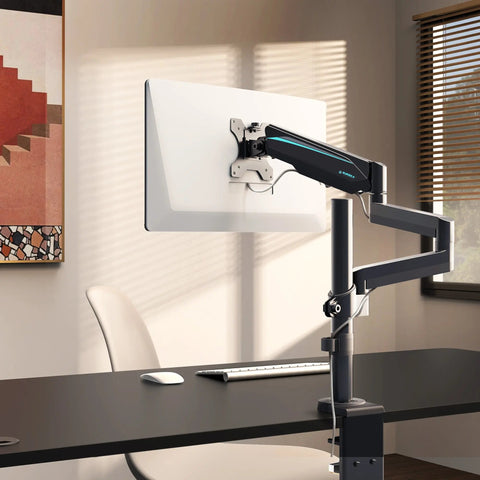
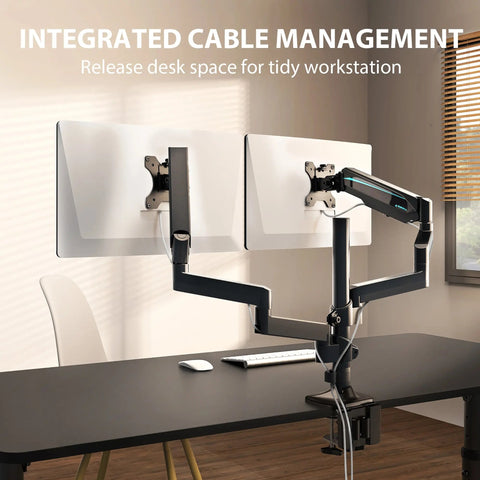
- Monitor Placement: According to the Canadian Centre for Occupational Health and Safety (CCOHS), your monitor should be positioned so the top of the screen is at or slightly below eye level. Using a laptop flat on a desk is one of the most common causes of neck and shoulder pain. A simple accessory like a Carbon Fiber Dual Monitor Stand corrects this immediately by elevating screens to the proper height.

A Practical Guide to Implementation and ROI
Deploying ergonomic equipment without training is a frequent mistake. To achieve a real return on investment, you need a clear implementation strategy that empowers employees to use their new tools correctly.
Checklist: The 4-Step Ergonomic Setup
Use this sequence to establish a neutral, low-stress posture. Adjust for both sitting and standing positions.
- Start with Your Chair: Adjust your seat height so your feet are flat on the floor and your knees are at roughly a 90-degree angle. Your back should be firmly against the lumbar support.
- Bring the Desk to You: Adjust your desk height (sitting or standing) until your elbows are at a 90-degree angle when your hands are on the keyboard. Your shoulders should be relaxed, not hunched.
- Position Your Monitor(s): The top of your screen should be at or just below eye level, and about an arm's length away. This prevents you from tilting your head up or down.
- Align Keyboard & Mouse: Place your keyboard and mouse close to you and at a height that allows for neutral, straight wrists. Avoid reaching.
The Ideal Sit-Stand-Move Rhythm
Consistency is key. Instead of long, static periods of sitting or standing, aim for regular transitions. This approach aligns with recommendations from the World Health Organization (WHO) to interrupt sedentary time frequently.
| Activity | Recommended Duration | Rationale & Practical Tip |
|---|---|---|
| Sitting (Focused Work) | 40-60 minutes | Best for tasks requiring deep concentration. Tip: Use this time for writing, coding, or data analysis. Ensure your chair provides firm lumbar support to prevent slouching. |
| Standing (Active Tasks) | 20-40 minutes | Increases blood flow and energy. Ideal for calls, video meetings, or reviewing documents. Tip: An anti-fatigue mat can significantly increase comfort and extend standing time. |
| Micro-Breaks & Movement | 2-5 minutes (hourly) | Prevents the health risks of static posture. Tip: Walk to get a glass of water, do a few simple stretches, or just march in place. Set a timer to remind yourself. |
Simulated Case Study: A Pilot Program's ROI
- Scenario: A 50-person marketing department reported significant afternoon productivity slumps and rising complaints of back and neck pain. Project error rates were increasing, and morale was dipping.
- Intervention: The company initiated a pilot program with 15 employees, providing them with adjustable standing desks and ergonomic chairs. The rollout included a 30-minute training session on the 4-step setup and the sit-stand-move rhythm. Programmable height presets on the desks were configured during training to make transitioning effortless.
- Simulated Results: Simple weekly surveys were used to track progress. After one month, the pilot group reported a 30% reduction in physical discomfort and a self-assessed 20% increase in afternoon focus. Based on these productivity gains, the company projected a full return on its investment in under 16 months, a calculation that didn't even include the long-term savings from reduced injury claims and lower employee turnover.
Wrapping Up: From Investment to Culture
Combating presenteeism requires more than just new furniture; it requires a cultural shift toward prioritizing well-being as a driver of performance. Ergonomics is the foundation of that shift.
By viewing ergonomic equipment as a strategic tool rather than an expense, businesses can directly address the physical discomfort that undermines focus and engagement. The process begins with providing the right equipment, such as adjustable desks and monitor stands, but must be supported by practical training on proper setup and healthy work rhythms.
Ultimately, an investment in ergonomics is an investment in your people's ability to do their best work. It sends a clear message that their well-being matters, fostering a more focused, productive, and resilient organization prepared to meet modern challenges.
Disclaimer: This article is for informational purposes only and does not constitute professional medical advice. You should consult a qualified healthcare professional for advice on your specific circumstances, especially if you have pre-existing health conditions.




Leave a comment