

Why Your Environment is Killing Your Ergonomic Chair: A Technical Guide to Longevity
Why does a high-performance ergonomic chair feel supportive in January but noticeably less resilient by the following August? While most users attribute chair fatigue to heavy usage or mechanical wear, a significant and often overlooked driver of material failure is environmental. Fluctuations in humidity and temperature do more than just affect your personal comfort; they initiate chemical and physical transformations in synthetic leathers, high-density foams, and mesh textiles. Based on material aging models, these stressors can reduce a chair's effective lifespan by over 50% in extreme conditions.
For professionals and gamers in North America and Europe, where seasonal shifts can move indoor relative humidity (RH) from 20% to over 70%, understanding these environmental stressors is critical. An ergonomic chair is a significant investment in musculoskeletal health, designed to maintain a neutral spinal position and facilitate blood circulation. However, when the materials providing that support begin to degrade due to climate-driven factors like hydrolysis or plasticizer migration, the chair's ability to help mitigate the risk of Repetitive Strain Injury (RSI) and other Musculoskeletal Disorders (MSDs) may be compromised.
The Chemistry of Decay: Hydrolysis and Thermal Stress
The most common failure mode in premium seating is the "peeling" or "flaking" of polyurethane (PU) leather. This is rarely a result of friction alone. Instead, it is frequently caused by a chemical reaction known as hydrolysis. According to research published in Polymers (2025), the urethane bonds in polyester-based PU leathers are susceptible to breaking when exposed to moisture. This process accelerates sharply when indoor humidity exceeds 60% and temperatures rise above 30°C (86°F).
Hydrolysis essentially "un-zips" the polymer chains that give the material its flexibility and strength. Once these bonds are weakened, the simple act of sitting—which applies a mechanical load—causes the top coating to delaminate and crack. This isn't just an aesthetic issue; a cracked surface can create uneven pressure points and, in humid environments, may harbor bacteria or allergens, impacting the overall hygiene of the workstation.
Thermal cycling adds a second layer of stress. Many home offices are situated near HVAC vents or windows. The constant expansion and contraction caused by direct sunlight or blasts of forced air leads to material embrittlement. In our observations of workstation longevity, chairs placed directly under south-facing windows often show signs of "plasticizer migration"—where the chemicals that keep the material soft evaporate—long before the color begins to fade.
Table 1: Calculated Material Failure Thresholds
Note: These thresholds are derived from industry heuristics and building science aging models.
| Environmental Factor | Threshold | Primary Impact | Biomechanical Consequence |
|---|---|---|---|
| High Humidity | >60% RH | Foam Hydrolysis & Softening | Loss of lumbar support; increased static load on spine. |
| Low Humidity | <30% RH | Plasticizer Loss (PU/Vinyl) | Material cracking; increased friction on skin/clothing. |
| Direct UV/Heat | >35°C (95°F) | Polymer Chain Scission | Embrittlement of mesh; loss of tensile strength. |
| Thermal Cycling | $\Delta$15°C/day | Adhesive Failure | Joint instability; frame creaking and potential misalignment. |
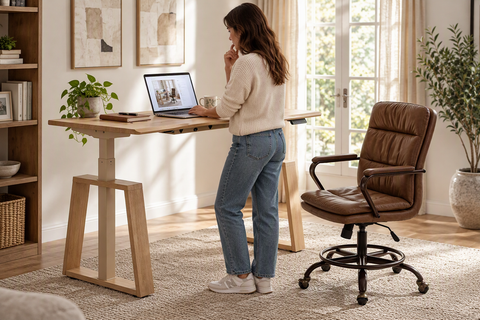
 Figure 1: High-quality fabric chairs often provide better breathability in high-humidity zones, reducing the risk of hydrolysis compared to standard PU leather.
The Microclimate Trap: Why Your Room Sensor Lies
A common misconception is that if your room's hygrometer reads a healthy 45% humidity, your chair is safe. However, the "micro-environmental" thresholds at the material surface are what actually govern degradation. According to the Building Science Corporation's report on relative humidity, condensation and material decay risks jump when surface RH exceeds 70%, even if the room-average is much lower.
When a user sits for several hours, the contact area between the body and the chair (the thighs and lower back) creates a closed micro-environment. This area traps body heat and perspiration, often reaching 33–35°C with local RH levels that can approach 90–100%. This "warm salt-fog" effect is a catalyst for material breakdown. For mesh chairs, this combination of heat and moisture can weaken the polyester yarn's tensile strength over several years, leading to a permanent "sag" that standard tension adjustments cannot rectify.
This phenomenon explains why chairs in humid regions like the Southeastern United States or coastal Europe may show foam seat collapse within 18 to 36 months. The foam isn't failing because of weight alone; it is softening because moisture is chemically affecting the cell walls of the polyurethane foam. As noted in the HSE guide on working safely with display screen equipment, a chair that no longer provides adequate support may force the user into awkward postures, increasing the risk of lower back discomfort.
Regional Audit: Modeling Material Life Across Climates
To provide a clearer picture of how geography dictates chair longevity, we can look at projections based on regional climate data. These models assume a standard high-quality ergonomic chair used for 40 hours per week.
Scenario 1: The Humid Tropical/Coastal Zone (e.g., Miami, Barcelona)
In regions where humidity frequently stays above 70%, the primary threat is hydrolysis and microbial growth. Maintaining an ideal indoor climate of 40-55% RH in these areas can be energy-intensive; in commercial settings, HVAC and dehumidification costs can represent a significant portion of facility overhead. Without climate control, PU leather may begin to delaminate in as little as 3-4 years. For users in these zones, breathable mesh or specialized moisture-resistant fabrics are often more durable choices.
Scenario 2: The Dry Desert Zone (e.g., Phoenix, Madrid)
The challenge here is extreme dryness. When RH drops below 30%, synthetic materials lose moisture and become brittle. This leads to "stress-point cracking" along the seams of the seat and armrests. The failure mode here is physical rather than chemical. Regular application of material-specific conditioners is often necessary to prevent the material from becoming brittle.
Scenario 3: The Temperate Continental Zone (e.g., Chicago, Berlin)
These regions face the highest degree of thermal cycling. A chair may experience a 20-degree temperature swing between a sunny afternoon and a cold winter night. This cyclic stress is particularly hard on the adhesives used in foam bonding. According to the ISO 9241-5 standard, stability is paramount; in temperate zones, a quarterly mechanical audit is essential to catch loosened bolts or frame fatigue caused by these shifts.
The Financial Impact: Productivity ROI vs. Material Failure
The cost of environmental degradation isn't just the price of a replacement chair; it’s the potential decline in user productivity. When chair materials fail—whether through foam softening or mesh sagging—the user's comfort decreases, leading to increased micro-adjustments and physical fatigue.
Modeling the Cost of Discomfort: Based on ergonomic studies correlating material resilience loss to cognitive focus (e.g., Hedge, 2004), a degraded chair can contribute to a 5% to 10% decline in task efficiency due to distraction and the need for frequent breaks.
- Example Calculation: For a professional earning $60,000/year, a 5% productivity loss represents a hidden cost of $3,000 annually.
- The ROI: Investing in a climate-resilient chair or a $300 dehumidifier pays for itself within months by preserving the "comfort window" required for deep work.
As highlighted in the Cochrane review on workplace interventions, tools like ergonomic chairs are most effective when they maintain their structural integrity. If the hardware is failing due to environmental stress, behavioral interventions (like the "20-8-2" sit-stand rhythm recommended by Cornell University) become much harder to sustain.
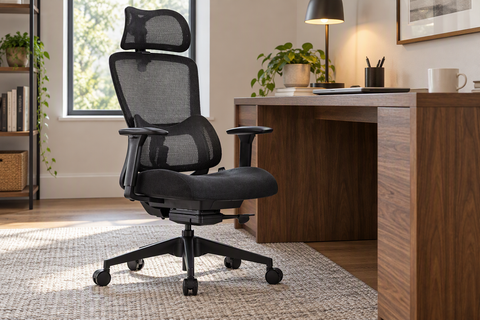
 Figure 2: Mesh backrests are highly recommended for temperate and humid climates to prevent the "Microclimate Trap" of trapped body heat.
Proactive Protection: The 5-Minute Mechanical Audit
To maximize the lifespan of your ergonomic investment, we recommend a proactive maintenance schedule.
1. Control the Microenvironment
Maintain indoor relative humidity between 40% and 55%. This range is generally considered the "Goldilocks zone" for both human respiratory health and material preservation.
2. Strategic Placement
Avoid placing your chair in "thermal kill zones":
- Direct Sunlight: UV radiation combined with heat drives plasticizer loss. Use UV-blocking window films or blinds.
- HVAC Vents: Constant air movement accelerates moisture loss and causes localized thermal stress.
3. The Quarterly Inspection
Every three months, perform a "Mechanical Audit":
- Check the Stitching: Look for material swelling or separation.
- Test Foam Resilience (The 2-Second Rule): Press firmly into the seat pan. If it takes more than 2 seconds to return to its original shape, hydrolysis may be softening the internal structure. This is a common workshop heuristic for identifying foam fatigue.
- Tighten Fasteners: Temperature swings can loosen bolts. A quick turn of an Allen wrench can prevent long-term frame misalignment.
4. Material-Specific Care
Never use a leather conditioner on PU leather. PU requires water-based cleaners; oil-based conditioners can actually accelerate the breakdown of synthetic coatings. For mesh, periodic vacuuming prevents acidic skin oils and dust from weakening the fibers.
Quick Decision Matrix: Choosing for Your Climate
| Climate Type | Recommended Material | Primary Maintenance Task |
|---|---|---|
| Humid/Coastal | High-grade Mesh | Dehumidification & Monthly Vacuuming |
| Dry/Arid | Fabric or Top-Grain Leather | Humidification & UV Shielding |
| Temperate/Variable | Fabric or Hybrid Mesh | Quarterly Bolt Tightening & Foam Checks |
Frequently Asked Questions
Can I fix PU leather that has already started to peel? Once hydrolysis has caused delamination, the chemical bonds are permanently broken. While repair kits provide a temporary cosmetic fix, they do not restore structural integrity. Prevention is the most effective strategy.
Is mesh more durable than PU leather in humid climates? In most cases, yes. Mesh allows for better airflow, which helps prevent the "warm salt-fog" microclimate from forming. However, mesh must still be kept away from direct UV to prevent fiber embrittlement.
How often should I clean my chair? A monthly cleaning is recommended to remove skin oils and salts, which can react with material coatings over time. Use a damp, lint-free cloth and avoid harsh solvents.
YMYL Disclaimer: This article is for informational purposes only and does not constitute professional medical, legal, or financial advice. Ergonomic needs vary significantly based on individual health conditions. If you have pre-existing musculoskeletal conditions or chronic pain, please consult a qualified healthcare professional or a certified ergonomist.
References
- BIFMA G1-2013 Ergonomics Guideline for Furniture
- ISO 9241-5:2024 Workstation Layout & Postural Requirements
- OSHA eTools: Computer Workstations - Chairs
- Building Science Corporation: RR-0203 Relative Humidity and Material Decay
- Polymers 2025: Natural Aging Behaviors and Degradation of Polyurethane
- Cornell University Ergonomics Web — Workstation Guides




Leave a comment