

Tempered Glass Desktops vs. Carbon Fiber Texture: Which Desk Surface Should You Choose?
Your desk surface is more than just a place to put your keyboard; it’s the centerpiece of your entire setup. It defines the aesthetic, influences your performance, and sets the tone for your workspace or battle station. When it comes to modern desk materials, two contenders consistently stand out: the sleek, reflective style of tempered glass and the aggressive, matte finish of carbon fiber texture.
This isn’t just about looks. The choice you make impacts everything from mouse tracking and maintenance to how your RGB lighting pops. We’re diving deep into a head-to-head comparison to help you decide which surface truly matches your style, your games, your workflow, and your budget. We'll explore the pros and cons of each, reference relevant industry standards, and add practical tests you can replicate at home, so you can invest in a desk that you’ll love for years to come.
Simple At-Home Tests You Can Replicate
Before we get into each material, here are a few easy, repeatable tests you (or any reader) can perform to compare surfaces. These are not lab-grade measurements but give you practical, comparable results.
1. Glare and Reflection Check
Goal: Compare how much each surface reflects light and whether it creates distracting glare.
What you need:
- Your desk (glass vs. carbon fiber texture)
- A desk lamp or ceiling light you can keep at a fixed position
- Your phone’s camera
Method:
- Place the light source at a consistent height and position relative to the desk.
- Sit in your normal working or gaming position.
- Take a photo from eye level of each surface under the same lighting.
- Compare how clearly you can see the light source and your own reflection on each surface.
What you’ll notice in practice:
- Tempered glass will typically show distinct reflections of the light and your monitor.
- Carbon fiber texture will diffuse reflections, resulting in a more uniform, matte appearance.
If reflections are clearly visible and distracting in the photos, you’ll likely notice them during long sessions.
2. Mouse Tracking Consistency Test
Goal: Check how well your mouse tracks on each surface in everyday use.
What you need:
- Your regular gaming or office mouse
- Mouse software or an online mouse test site with a tracking or aim trainer grid
- Glass surface and carbon fiber textured surface
Method (no advanced settings needed):
- Turn off any mouse acceleration in your OS or mouse software.
- Open a simple drawing app or an aiming trainer with a grid.
- On each surface without a mousepad, slowly move the mouse horizontally and vertically while drawing straight lines.
- Repeat with faster swipes.
What you’ll usually see in real use:
- On bare glass, many optical/laser sensors will jitter, skip, or fail to register small movements.
- On carbon fiber texture, lines will generally appear smoother and straighter, and micro-adjustments (like aiming in FPS games) feel more predictable.
If your mouse skips or jitters on glass during this test, you should plan on a full-desk mousepad when using a glass top.
3. Everyday Scratch and Wear Check (Non-destructive)
Goal: Get a sense of how each surface handles typical wear.
What you need:
- A metal key or metal USB drive
- A ceramic mug
- A book or monitor stand with a slightly rough underside
Method (be gentle):
- Do not press hard. Lightly drag a keycap or metallic USB connector across a small, hidden corner of the desk.
- Slide a ceramic mug and a book/stand in a small circle as you would during normal use.
- Check in strong light for any visible marks.
Typical real-world outcome:
- Quality tempered glass often shrugs off light, everyday contact without visible scratching.
- Carbon fiber texture usually resists light wear but can show thinner, shinier lines over time if the laminate is soft or if grit is trapped under objects. Edge areas are more vulnerable.
If you’re very protective of pristine surfaces, you’ll likely want coasters or desk mats regardless of which material you choose.
Tempered Glass Desktops: Modern Style and Functionality
The Allure of Tempered Glass: A Clean, Luminous Aesthetic
There's no denying the immediate visual impact of a tempered glass desk. It exudes a clean, premium, and almost futuristic vibe. For anyone building a setup centered around a vibrant RGB ecosystem, a glass surface can dramatically change the overall look.

Aesthetics and RGB Behavior
The primary draw of glass is its interaction with light. Instead of absorbing light, it reflects it, making your RGB peripherals appear more vivid. The glow from your keyboard, mouse, and PC case fans spreads across the surface, creating an immersive sea of color that a matte surface doesn’t easily replicate.
High-end models like the GTG-G55, Glass Desktop Gaming Standing Desk (55"x23") build RGB directly into the glass with touch controls, turning the entire desktop into a controllable lighting element.
The reflective quality can also make smaller spaces feel larger and more open because the surface visually "disappears" compared to a solid, opaque top.
Durability and Safety Considerations
A common hesitation with glass is the fear of it shattering. The tempered glass used in quality desks is engineered for safety and durability. During manufacturing, it is heated and then rapidly cooled, increasing its strength compared with standard (annealed) glass. Published data from glass manufacturers and building codes generally describe tempered glass as significantly stronger than ordinary glass of the same thickness; however, the exact multiplier depends on the specific process and test method, so it’s best to treat “four times” as an approximate figure rather than a universal rule.
A good quality tempered glass top, typically in the 6–8 mm range for consumer desks, is:
- Resistant to everyday scratches from common items like pens, mice, and cups (though sharp, abrasive objects can still cause damage).
- Heat-tolerant for typical desk use (warm mugs, laptops), within normal household temperature ranges.
- Non-porous and waterproof, so spills don’t soak in or stain the surface.
For office furniture in general, many manufacturers design and test frames and tops with reference to standards from organizations like the Business and Institutional Furniture Manufacturers Association (BIFMA) (for example, ANSI/BIFMA X5 series for desks and tables). These standards describe durability and stability tests (load, impact, fatigue), but each product’s actual test results will depend on the manufacturer.
If breakage does occur, tempered glass is designed to crumble into small, less sharp pieces rather than large, jagged shards—still a mess, but generally less hazardous than standard glass. Avoid hard point impacts (e.g., dropping a heavy metal object edge-first) and follow the manufacturer’s weight and mounting guidelines.
Practical Considerations and Common Mistakes
While beautiful, glass desktops require a bit more mindfulness.
- Maintenance: Glass shows fingerprints, smudges, and dust easily. If you touch the desk a lot, expect to keep a microfiber cloth and glass cleaner handy for frequent wipe-downs.
-
Glare: The reflective surface can cause glare from overhead lights or windows. You can manage this by:
- Positioning the desk so bright light sources aren’t directly behind you.
- Using dimmable or indirect lighting.
- Using matte monitor screens or anti-glare filters if needed.
- Mouse Tracking: Most optical and laser mice struggle on transparent or highly reflective surfaces. In practice, a full-surface mousepad is almost always necessary for reliable gaming performance on glass, especially for FPS titles or design work that requires pixel-level control.
- Weight and Frame Requirements: Glass is heavy. This means you need a robust frame, especially for a standing desk. A common mistake is pairing a heavy glass top with an underpowered single-motor frame, which can lead to slow adjustments and more noticeable wobble. For most users, a dual-motor frame with a rated load in the ~220–300 lb range (including desktop, monitors, and accessories) offers a safer margin.
The Performance Edge of Carbon Fiber Texture
If glass is all about bright, clean aesthetics, carbon fiber texture is its dark, tactical counterpart. It’s a finish that emphasizes performance and practicality and is heavily favored in the gaming community.
Myth Debunked: Is It Real Carbon Fiber?
The "carbon fiber" on a desk is almost always a laminate or printed film applied over a wood-composite core (such as MDF or particleboard), not the woven carbon fiber composite used in aerospace or racing components.
This is actually beneficial for desk use:
- You get the visual pattern and subtle texture at a much lower cost.
- The wood-composite core provides stable weight and feel suitable for office and gaming environments.
- Repairs or replacement are generally easier and less expensive than true carbon fiber composites.
When comparing desks, look closely at:
- Laminate thickness and hardness (thicker, more robust laminates resist wear better).
- Edge bonding quality (poorly sealed edges are where peeling or chipping often starts).
Aesthetics and Tactile Feel
A carbon fiber textured desk offers a matte, non-reflective surface that minimizes visual distractions and hides fingerprints and light dust much better than glass.
The subtle surface pattern provides:
- A slightly grippy feel, so items don’t slide as easily.
- A more muted look that pairs well with dark or “stealth” themed setups.
If you want your monitors and RGB to stand out without the desk itself becoming a mirror, this finish fits well.
Functionality and Gaming Performance
This is where carbon fiber texture often shines in day-to-day use.
The micro-textured surface is typically friendly to modern gaming mice, providing good tracking and control even without a traditional mousepad. Combined with a large desk, this allows for:
- Wide, low-sensitivity mouse swipes in shooters.
- Better fine control for design, editing, and productivity tasks.
In contrast with glass, the matte finish also significantly reduces reflections. Controlling glare and reflections from screens and surfaces aligns with ergonomic guidance from occupational health bodies like the U.S. Occupational Safety and Health Administration (OSHA), which recommend minimizing direct and reflected glare in computer workstations.
Note: Even though the surface works well for many gaming mice, some users still prefer a dedicated mousepad for a specific glide or feel. Treat the bare surface as a usable baseline, not a guarantee that you’ll never want a pad.
Durability and Care
A good-quality carbon fiber texture laminate is designed to handle:
- Repeated contact with keyboards, mice, and controllers.
- Light bumps from accessories.
- Basic cleaning with a soft cloth and mild cleaner.
However, compared with glass:
- Sharp objects can cut or gouge the laminate more easily.
- Prolonged exposure to high heat (e.g., a very hot device) may mark or deform some finishes.
- Cheap laminates are more prone to edge delamination or bubbling if moisture seeps in.
Simple preventative steps—using coasters, not dragging metal objects, and wiping spills quickly—go a long way toward keeping the surface looking new.
Head-to-Head Comparison: Glass vs. Carbon Fiber Texture
To make the decision easier, here’s a direct comparison of the key differences.
| Feature | Tempered Glass | Carbon Fiber Texture |
|---|---|---|
| Aesthetics | Sleek, modern, premium, bright | Aggressive, tactical, stealthy, matte |
| RGB Behavior | Strong reflections can make RGB more visually pronounced. | RGB appears more controlled and subtle against a dark, matte background. |
| Mouse Tracking | Often poor on bare glass; a full mousepad is usually needed. | Generally good for most modern mice, even without a pad. |
| Maintenance | High. Shows fingerprints, smudges, and dust easily. Requires frequent cleaning. | Low to moderate. Hides fingerprints and dust well. Easy to wipe clean. |
| Durability | Very resistant to common scratches and spills; tempered for added safety. | Durable for everyday use; watch for edge wear or delamination on low-quality models. |
| Glare & Reflections | High potential for glare from ambient light sources and screens. | Low. Matte surface absorbs and diffuses light, minimizing reflections. |
| Weight | Heavier top; needs a stronger frame and motors. | Typically lighter; easier on frames and easier to move. |
| Best For | Users prioritizing aesthetics and vivid RGB, and who are happy to use a mousepad and clean more often. | Gamers and users prioritizing performance, low maintenance, and a distraction-free surface. |
Ergonomics and Building Your Complete Setup
Regardless of the surface you choose, the desk must function as part of an ergonomic system. The goal is a neutral posture that reduces strain on your neck, shoulders, back, and wrists over long sessions.
According to the Canadian Centre for Occupational Health and Safety (CCOHS), good practice includes:
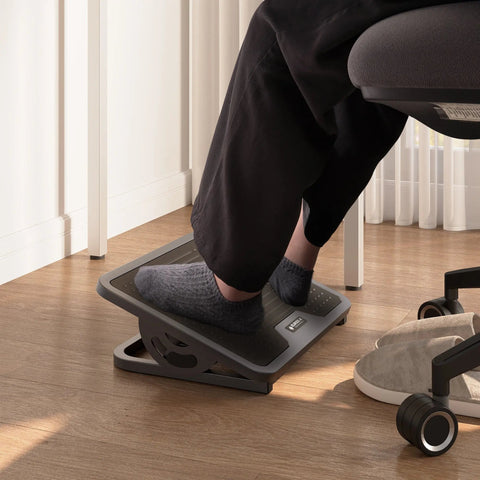
- Feet flat on the floor (or on a footrest).
- Knees and hips at comfortable angles.
- Elbows near 90°, with forearms roughly parallel to the floor.
- Monitor top at or slightly below eye level, at arm’s length.
A standing desk can help you alternate between sitting and standing. When choosing one—especially with a heavy glass top—consider:
- Lift capacity and motor configuration: A dual-motor frame usually handles heavier tops and multi-monitor setups more smoothly than basic single-motor designs.
- Stability: Wider feet, a robust crossbar, and proper installation are key.
- Safety features: Anti-collision detection helps protect your gear if something is left under the desk while it moves.
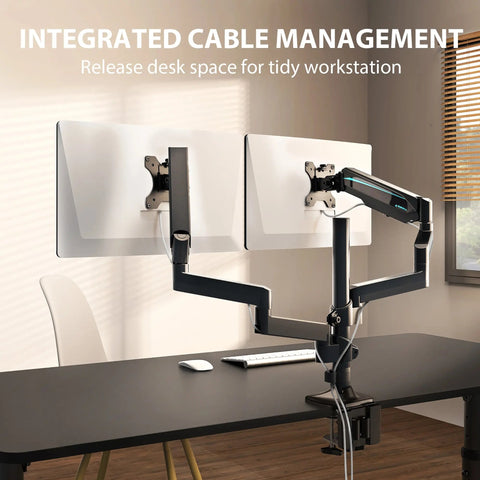
Finally, no surface looks good when it’s covered in cables. Simple tools like Magnetic Cable Tie or cable trays help maintain a clean, functional workspace.
A Step-by-Step Decision Guide
Use this quick framework to narrow down your choice.
Step 1: Set Your Budget
Under ~$300 total for desk + accessories
- Prioritize a stable frame and functional surface over built-in lighting.
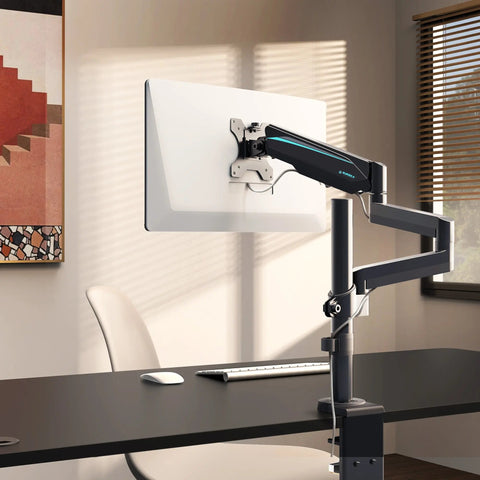
- Carbon fiber texture tops are often more budget-friendly and leave money for a good chair or monitor arm.
Around $300–$600
- Either surface is possible. Decide whether you want the styling and integrated RGB of glass or the performance and simplicity of carbon fiber.
- In this range, look for dual-motor frames or well-rated single-motor frames with realistic load ratings.
$600 and above
- You’re in the range for premium frames, integrated RGB glass, more robust laminates, and larger sizes.
- At this budget, focus on ergonomics (frame quality, adjustability, accessories) as much as surface material.
(Prices vary widely by region and sales; treat these bands as rough planning brackets rather than strict tiers.)
Step 2: Rank What Matters Most
Assign each category a priority from 1 (low) to 3 (high):
- Visual impact / RGB showcase
- Mouse performance and control
- Low maintenance / easy cleaning
- Glare control and eye comfort
- Weight and frame demands
Then match your priorities:
- If visual impact is 3 and RGB is 3 → Lean Tempered Glass.
- If mouse performance and low maintenance are 3 → Lean Carbon Fiber Texture.
- If glare control is 3 and your room has bright lights or windows → Carbon fiber texture usually wins.
Step 3: Use This Quick Checklist
Choose Tempered Glass if:
- [ ] You want a stunning, high-end aesthetic that showcases lighting.
- [ ] You regularly use or plan to use a full-desk mousepad.
- [ ] You don’t mind frequent cleaning to keep the surface spotless.
- [ ] Your frame can safely handle the extra weight of a glass top.
Choose Carbon Fiber Texture if:
- [ ] You prioritize gaming performance and consistent mouse tracking.
- [ ] You want a low-maintenance, fingerprint-resistant surface.
- [ ] You prefer a stealthy, matte look with minimal reflections.
- [ ] You want to reduce demands on your desk frame and make moves or reconfigurations easier.
If you find yourself checking boxes from both lists, consider a hybrid approach: for example, a carbon fiber textured main desk for performance and a smaller glass side table or shelf purely for visual impact and display.
Wrapping Up: The Final Verdict
So, glass or carbon fiber texture? The best choice comes down to your personal priorities, space, and budget.
- Tempered glass excels at delivering a premium, luminous aesthetic and can make RGB-heavy setups truly stand out. It demands a bit more from your frame and your cleaning routine and effectively requires a mousepad for serious play.
- Carbon fiber texture focuses on reliable performance, low glare, and low maintenance. It’s easier to live with day-to-day and is often kinder to your budget and your desk frame.
By understanding how each surface behaves in real use—and by running a few simple tests yourself—you can confidently select the desktop finish that will not only look great, but also support the way you work and play.
Disclaimer: This article is for informational purposes only and does not constitute professional medical advice. Proper ergonomics can vary based on individual needs. Please consult with a qualified healthcare professional or an ergonomics specialist if you have pre-existing conditions or experience discomfort.
References
- BIFMA Standards Overview and ANSI/BIFMA Desk/Table Standards (e.g., X5 Series): https://www.bifma.org/page/StandardsOverview
- OSHA Computer Workstation Environment Guide (glare and lighting considerations): https://www.osha.gov/etools/computer-workstations/workstation-environment
- CCOHS Sit/Stand Desk Guidelines (neutral posture and workstation setup): https://www.ccohs.ca/oshanswers/ergonomics/office/sit_stand_desk.html




Leave a comment