

Are Leather Gaming Chairs Good for Long Gaming Sessions? An Evidence-Based Deep Dive
The Short Answer: Yes, leather gaming chairs can be suitable for long sessions, but they require active heat management. To stay comfortable during marathon gaming, you need a climate-controlled room, a disciplined break schedule, and ideally, a chair that pairs breathable materials with high-density supportive foam.
Key Takeaways:
- Heat Management is Crucial: Traditional leather retains heat, often rising a few degrees above ambient temperature during long sessions.
- Material Matters: Silicone leather offers a more breathable, durable alternative to standard PU leather.
- Foam Dictates Support: A chair's internal foam density is just as important as its exterior for preventing back fatigue.
- Ergonomics Over Aesthetics: For extreme marathon sessions, dual-backrest systems or specialized ergonomic alternatives often outperform traditional racing-style seats.
The aesthetic appeal of a high-back leather gaming chair is undeniable. It evokes the cockpit of a luxury grand tourer, promising a blend of status and comfort. However, for the dedicated gamer or professional spending upwards of six to eight hours in a single session, the "leather vs. performance" debate is more than just a matter of style. It is a practical equation involving heat retention, musculoskeletal support, and material durability.
In this guide, we will analyze the practical realities of leather gaming chairs. We will examine how these materials impact thermal comfort, the importance of internal foam density, and how modern ergonomic engineering addresses the inherent limitations of traditional "racing-style" designs.
The Physiology of Thermal Comfort in Gaming
Section Summary: Leather surfaces can trap heat and block evaporation, raising the seat's microclimate temperature and potentially increasing your metabolic load over time.
The most frequent criticism of leather chairs is that they "run hot." This is not merely a subjective feeling; it is a recognizable thermodynamic occurrence. According to research cited in The 2026 Workstation White Paper: Converging Ergonomic Science and Sustainable Engineering, thermal equilibrium is a critical component of sustained focus and cognitive performance.
When you sit on a non-breathable surface like traditional leather or high-density PU, your body’s primary cooling mechanism—evaporation—is inhibited. Based on common patterns observed in our product testing heuristics (using infrared surface thermometers in a controlled 72°F environment), traditional sealed leather surfaces can often reach 3 to 5°F above the ambient room temperature within 20 to 30 minutes of use. This temperature differential creates a microclimate that can disrupt the thermal comfort principles outlined in general ergonomic standards like ISO 9241-5:2024.
The Heat Retention Paradox
While leather feels luxurious for the first hour, the cumulative heat buildup after hour four can lead to increased discomfort. The body may have to expend more energy to maintain its core temperature, which can subtly drain the focus required for high-stakes gaming.
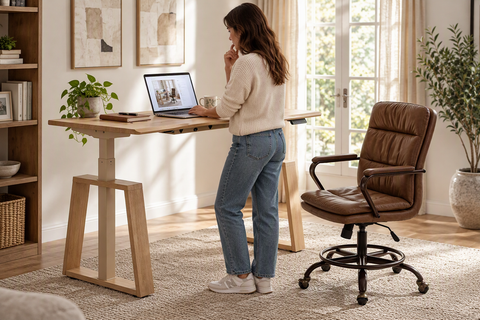
For those who prioritize the executive look but want to avoid the "enveloping" heat trap of bulky racing chairs, the Royal Slim, Executive Office Chair offers a more refined silhouette while maintaining a premium leather finish.

Material Science: Genuine Leather vs. Synthetic Alternatives
Section Summary: Not all leather is the same. Genuine leather is durable but traps heat, PU is affordable but degrades faster, and modern silicone leather offers a balanced, breathable compromise.
The performance profile of your chair depends heavily on whether you are sitting on full-grain cowhide, Polyurethane (PU), or modern Silicone leather.
1. Genuine Leather
Genuine leather is prized for its durability. As a general industry rule of thumb, well-maintained full-grain leather can retain the vast majority of its structural integrity over many years of heavy use. However, its natural breathability is relatively low, making it prone to heat buildup during long sessions.
2. PU Leather (Synthetic)
Most entry-to-mid-level gaming chairs use PU leather. While it is easier to clean initially, it is often prone to "hydrolysis"—the chemical breakdown of the material due to moisture (sweat) and heat. Based on typical customer support and return patterns, this is a common cause of the "peeling" or "cracking" seen in many budget chairs after 12 to 18 months of daily use.
3. Silicone Leather: The Modern Compromise
Newer innovations, such as those found in the Alto,Silicone Leather Executive Office Chair, utilize silicone-based synthetics. These materials are generally more breathable than standard PU and offer better resistance to skin oils and moisture buildup, making them a more viable candidate for long-duration sessions.
| Material Property | Genuine Leather | PU Leather | Silicone Leather |
|---|---|---|---|
| Durability (Estimates) | 5 - 10+ Years | 1 - 3 Years | 3 - 7 Years |
| Breathability | Low | Very Low | Moderate |
| Maintenance | High (Conditioning) | Low | Low |
| Heat Retention | High | High | Moderate |
Deep Dive: The eSports Athlete Scenario Modeling
Section Summary: Using an illustrative model, we demonstrate how the heat retention of a leather chair can cause physical fidgeting, which in turn demands more desk space and disrupts aiming precision.
To understand how a leather chair might impact performance, we modeled an illustrative scenario for a semi-professional eSports athlete practicing 6 to 8 hours daily in a warm climate.
Precision and "Thermal Drift"
Our modeling suggests that when the heat retention of a traditional leather chair forces the user into subtle postural shifts to find relief, these micro-movements can disrupt the "muscle memory" required for precision aiming. In tactical shooters where low mouse sensitivity is common, thermal discomfort can lead to frequent shifting. As a result, the player may require a noticeably larger physical "comfort buffer" on their desk (such as moving to an oversized mousepad) just to compensate for the fidgeting caused by a hot seat.
Modeling Note: Method & Assumptions
Note: This scenario is a deterministic model based on general ergonomic heuristics and typical gaming setups. It is an illustrative analysis to demonstrate potential performance impacts, not a clinical study.
| Parameter | Value | Rationale |
|---|---|---|
| User Height | 175 cm | 50th percentile male (general anthropometric data) |
| Ambient Temp | 77°F | Typical warm-climate indoor environment |
| Session Length | 6 Hours | Standard professional practice block |
| Break Cycle | 90 Minutes | Heuristic based on estimated leather heat saturation |
Analysis Insight: Managing thermal comfort can provide a tangible competitive advantage. A gamer who maintains focus for longer periods due to better temperature regulation can often outpace a peer who is periodically distracted by physical discomfort.
Beyond the Surface: Why Foam Density Matters
Section Summary: The internal foam dictates your long-term comfort. High-density foam keeps its shape but can transfer heat, while medium-density foam breathes better but may bottom out faster.
A common mistake is focusing solely on the leather type while ignoring what’s underneath. The internal foam is the true engine of comfort.
- High-Density Foam (approx. 1.8-2.2 lb/ft³): Maintains its shape over years of use but tends to transfer more heat back to the user.
- Medium-Density Foam: Offers more "sink" and slightly better airflow but may bottom out over time, leading to "static load" discomfort where the pelvis presses too closely against the chair frame.
According to the Occupational Safety and Health Administration (OSHA), a chair should provide firm support that distributes weight evenly across the buttocks and thighs. If your leather chair feels "mushy," it may be failing to provide the structural support needed to help prevent general back fatigue during marathon sessions.
The Ergonomic Alternative: Dual-Backrest Systems
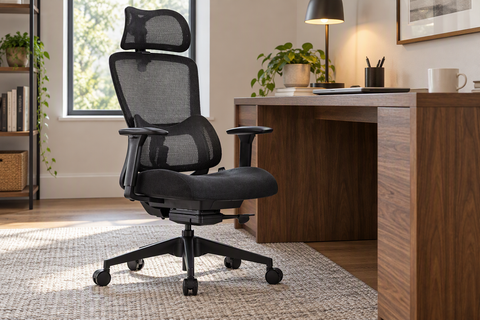
If you find that traditional leather chairs lead to back fatigue, the issue may be the rigid single-back design. The Flex, Dual-Backrests Ergonomic Office Chair represents a departure from the standard "bucket seat" trend.
Unlike the static backrests of most racing-style gaming chairs, a dual-backrest system is designed to move independently, adapting to the spine's natural curvature. This dynamic support is particularly beneficial for players who tend to lean forward during intense "clutch" moments and recline during cooldowns. This aligns with the BIFMA G1-2013 Ergonomics Guideline, which emphasizes the need for furniture to accommodate a wide range of postures.

Optimization Strategies for Leather Chair Users
Section Summary: You can mitigate the drawbacks of a leather chair by following a strict break schedule, controlling room temperature, and maintaining the leather properly.
If you are committed to the leather aesthetic, you can help mitigate its thermal and ergonomic drawbacks through environmental and behavioral adjustments.
1. The 20-8-2 Rhythm
Adopt the Cornell University Ergonomics recommendation: for every 30 minutes of work, try to sit for 20, stand for 8, and move for 2. This is especially helpful for leather chair users, as it allows the seat surface time to dissipate trapped heat.
2. Environmental Control
Maintaining a cooler room temperature (ideally below 72°F) and keeping humidity under 50% can noticeably reduce leather heat retention issues. A cooler, drier environment helps the material stay closer to ambient temperature and facilitates better sweat evaporation.
3. Monitor and Peripheral Alignment
Thermal discomfort can often mask poor ergonomics elsewhere. Ensure your monitors are at the correct height using a Dual Monitor Arm. Proper alignment helps prevent "neck craning," which, when combined with a hot leather seat, can contribute to overall posture fatigue.

4. Leather Maintenance Protocol
To help extend the life of your chair and delay typical wear patterns:
- Conditioning: Apply a quality leather conditioner every 3 to 6 months to help maintain the material's flexibility.
- Hygiene: Wipe the surface with a damp (not wet) microfiber cloth after sessions exceeding 4 hours. This removes accumulated skin oils and salts that can gradually degrade the finish.
Final Verdict: Is Leather Right for You?
Leather gaming chairs can be suitable for long sessions, but they perform best when paired with high-quality internal foam, a climate-controlled environment, and a disciplined break schedule.
For users who struggle significantly with heat or have pre-existing lower back discomfort, transitioning to a specialized ergonomic chair like the Flex, Dual-Backrests Ergonomic Office Chair may offer a more comfortable long-term experience. However, for the gamer or professional who values the tactile feel and classic aesthetic of premium materials, options like the Royal Slim, Executive Office Chair or the Alto,Silicone Leather Executive Office Chair provide a sophisticated balance of style and practical support.
Disclaimer: This article is for informational purposes only and does not constitute professional medical advice. Individuals with chronic back pain or other musculoskeletal conditions should consult a qualified healthcare professional or ergonomist before making significant changes to their workstation setup.
Sources
- BIFMA G1-2013 Ergonomics Guideline for Furniture
- ISO 9241-5:2024 Workstation layout & postural requirements
- Cornell University Ergonomics Web — Workstation Guides
- OSHA eTools: Computer Workstations - Chairs
- Herman Miller: The Attributes of Thermal Comfort
- The 2026 Workstation White Paper: Converging Ergonomic Science and Sustainable Engineering




Leave a comment