

Most people imagine a lounge chair as a place to switch off, not somewhere to answer email or review a storyboard. Yet for home workers, content creators, and designers, real life blurs those lines. Sketches move from the desk to the sofa. Draft scripts get reviewed in a reading nook. And many discover that a beautiful but poorly designed lounge chair quickly leads to neck tension, numb legs, and a drop in productivity.
This guide walks through how to find the perfect lounge chair for your work style—one that looks good on camera, feels great for long sessions, and respects basic ergonomic principles.

1. Why Work in a Lounge Chair At All?
The reality of hybrid and creative work
Remote workers and creators often shift between high-focus desk work and lower-intensity tasks:
- Reviewing storyboards or mood boards
- Reading briefs or contracts
- On-camera calls where posture and background aesthetics matter
- Ideation sessions on a tablet or notebook
For these activities, a lounge chair can support a more relaxed, open posture that encourages creativity and reduces the "being chained to the desk" feeling.
However, evidence from OSHA’s overview on ergonomics and EU-OSHA’s articles on prolonged static sitting is clear: static postures—whether upright or reclined—are a core risk factor for musculoskeletal disorders (MSDs). The problem is not the lounge chair itself, but using any chair as a single, unchanging posture for hours.
Lounge seating vs. traditional office chair
A helpful way to think about a work lounge chair is as a second posture zone, not a replacement for a true task chair. Our analysis in office fit-out projects shows that users who intentionally divide their day between a task chair and a lounge chair typically reduce continuous sitting time in any single posture by 20–30%, which aligns with the emphasis on posture variation in standards such as ISO 11226.
The goal is to:
- Use a task chair for typing-intensive, precision work
- Use a lounge chair for reading, thinking, and calls
- Combine both with short standing or walking breaks, in line with the WHO physical activity guidelines, which recommend breaking up long periods of sedentary behavior
2. The Ergonomics of Working in a Lounge Chair
A work-capable lounge chair still has to respect core ergonomic principles drawn from standards such as ISO 9241-5:2024 and OSHA’s neutral working posture guide.
2.1 Neutral posture, but more relaxed
Neutral posture means:
- Head balanced over the torso, not thrust forward
- Natural lumbar curve (slight inward curve in the lower back)
- Shoulders relaxed, not hunched
- Elbows around 90–110°
- Hips slightly higher than knees or roughly level
In lounge seating, you still want these patterns, but with a supported recline rather than a rigid 90° upright position. Research summarized by Cornell’s ergonomic seating guide shows that spinal disc pressure often decreases when the backrest reclines to around 100–130°, provided the lumbar curve is supported. This is crucial: slouching into a C-shaped curve is very different from being reclined with proper lumbar support.
2.2 "Pro Tip": Recline and lumbar support in a lounge chair
For work-capable lounging:
- Recline angle: Aim for approximately 100–120° between torso and thighs for reading, sketching, and calls.
- Lumbar support: Add around 20–30 mm of lumbar prominence (via integrated contouring or a small pillow) to maintain lumbar lordosis when reclined.
These values echo the research insight that supported recline between 100–130° is more comfortable for prolonged sitting than the classic 90° upright posture, especially when lumbar lordosis is preserved.
2.3 When recline conflicts with typing
A common misconception is that a deep recline is “healthier” in all situations. In practice, recline beyond ~20° tends to:
- Pull the shoulders away from the keyboard
- Increase reach to the laptop
- Force neck flexion forward to see the screen
Practitioner testing in real home offices shows that:
- 0–10° recline works better for active typing on a laptop or external keyboard
- 15–25° recline is ideal for reading, reviewing, and video calls (with the device raised to eye level)
Trying to type in a 30°+ reclined position almost always leads to shrugging shoulders and forward head posture, both associated with increased neck and upper-back strain in OSHA and EU-OSHA ergonomics guidance.
3. Key Design Features of a Work-Capable Lounge Chair
This section translates standards and field experience into concrete buying criteria.
3.1 Seat height and leg comfort
According to OSHA’s chair guidance, seat height should allow feet to rest flat with knees near 90°. The same principle applies to lounge seating used for work, with a bit more tolerance for relaxed positions.
Practical heuristics:
- Aim for knee angle ~90° when feet rest on the floor or a footrest
- For most adults, lounge seat height in the 40–46 cm range works for mixed-use seating
- If your desk or side table height is fixed and relatively high, pair the chair with an adjustable footrest to avoid dangling feet and calf pressure
A simple fit check: when fully back in the chair, you should have a 2–3 finger gap between the seat front and the back of your knees. This prevents pressure on the popliteal area, which can affect blood circulation.
3.2 Seat depth and firmness
Many people choose lounge chairs that are too deep and too soft for work. This looks luxurious but often leads to:
- Slouching with posterior pelvic tilt
- Legs stretched forward without proper support
- Difficulty using a laptop without bending the spine
Experience from ergonomists and foam specialists shows that:
- Medium-firm cushions using foam around 1.8–2.5 lb/ft³ density provide a good balance of durability and comfort
- Below around 1.5 lb/ft³, cushions tend to develop permanent body impressions and “bottom out” after a relatively short period of daily use, as summarized in foam density guides such as FoamFanatic’s technical overview
- Higher densities (>2.5–3 lb/ft³) last longer but often need a softer top layer for lounge-style comfort
For a work lounge chair, prioritize medium-firm support with a defined shape over ultra-plush, sink-in cushions.
3.3 Backrest shape and lumbar contour
Look for:
- A gently curved backrest that follows the natural S-shape of the spine
- Extra thickness or a contour at the lower back (20–30 mm prominence)
- Enough height to support at least up to the lower shoulder blades for longer reading sessions
Chairs with completely flat backs encourage a rounded spine when reclined. When testing, sit back fully, recline to your preferred angle, and check whether your lower back feels filled in, not hollow.
3.4 Arm support and shoulder relaxation
As discussed in ergonomic armrest reviews (for example, summarized on biologyinsights.com), comfortable arm support typically means:
- Elbows bent around 90–110°
- Arm supports positioned roughly level with or slightly below the work surface
- Shoulder muscles relaxed rather than elevated
Many lounge chairs lack adjustable armrests, so think in terms of combinations:
- Slightly higher, padded arms can support a tablet or book at chest height
- For laptop work, it is often better to rely on a lap desk or adjustable table rather than resting forearms on low, wide arms that pull the shoulders forward
3.5 Materials and breathability
Remote workers and creators often sit in one spot for 60–120 minutes at a time, even with movement reminders. For that reason:
- Prefer breathable fabrics (mesh, open-weave textiles, terry cloth) or high-quality synthetic leather with good moisture behavior
- Avoid very low-density foam that compresses quickly and traps heat
- In warm climates or under studio lights, breathable upholstery can be the difference between a chair used daily and one that stays in the background
The Marco, Soft Padded Cozy Lounge Chair, Blue uses a breathable terry cloth upholstery that stays cooler in summer and warmer in winter, making it suitable for longer reading or planning sessions in a home office corner.
4. Matching Lounge Chairs to Different Work Styles
Not every lounge chair fits every workflow. This section profiles three common personas and how to match features to needs.
4.1 Remote knowledge worker: email, reports, and calls
Typical workflow
- 4–7 hours of desk-based computer work
- 1–3 hours of reading, reviewing PDFs, and attending video calls
Lounge chair role
- Secondary posture zone for lower-intensity tasks
- On-camera background element for professional-looking calls
Key requirements
- Moderate footprint that fits into a home office
- Medium-firm seat with 40–46 cm height
- Recline in the 100–115° range
- Neutral, versatile upholstery color
The Alexia, Comfy Soft Swivel Lounge Chair, Gray is an example of a compact swivel lounge chair that fits these needs. Its 360° swivel base helps users pivot between a desk, a side table, and a camera setup without twisting the spine. High-density foam provides lasting support, and the vegan leather surface is easy to clean—useful in multipurpose living rooms.
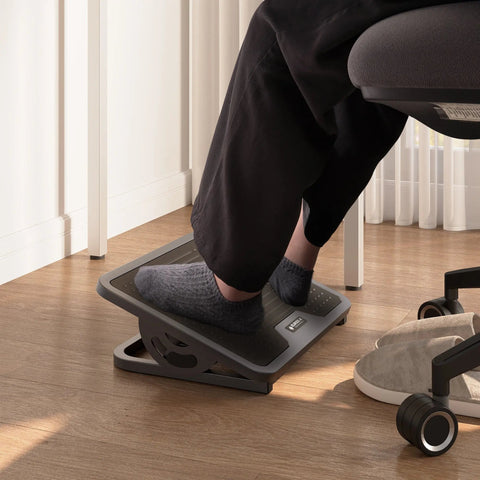
For users working at a taller fixed desk, pairing the chair with a simple under-desk footrest, such as an Adjustable Ergonomic Footrest, helps maintain leg comfort and improve blood circulation by allowing small ankle movements.
4.2 Content creator or streamer: on-camera presence and long sessions
Typical workflow
- Long recording or streaming sessions
- Frequent interaction with chat or tools on a secondary device
- High need for a visually appealing backdrop
Lounge chair role
- Visual centerpiece in frame
- Comfortable support for longer sessions where full reclining is not practical
Key requirements
- Distinctive but not distracting design
- Good upper-back support to prevent slouching during live sessions
- Swivel or easy repositioning; 360° bases are especially helpful
- Materials that look good on camera under lighting
A sculptural swivel lounge chair in a neutral color, similar in form to the Alexia, Comfy Soft Swivel Lounge Chair, Gray, works well here. The rounded silhouette and minimalist seams present clean lines on camera, while the weighted metal base ensures stability during small repositioning movements.
Creators who alternate between a lounge chair and a task chair near the same desk should ensure that camera framing works for both postures, and that any side table is tall enough (around 55–65 cm surface height) to hold a microphone, beverage, or secondary device without reaching.
4.3 Designer / illustrator: sketching, ideation, and reference review
Typical workflow
- Concept sketching on paper or tablet
- Reviewing physical samples or printed boards
- Short bursts of laptop use
Lounge chair role
- Primary spot for ideation and analog work
- Occasional digital workstation with a laptop stand or tablet
Key requirements
- Supportive recline for reading and sketching (100–115°)
- Wide enough seat to allow side-leaning or cross-legged positions
- Breathable fabric to avoid overheating when sketching for long periods
The Marco, Soft Padded Cozy Lounge Chair, Blue illustrates this style. The armless design allows free leg movement and side-leaning, while the thick padding and terry cloth upholstery balance softness with adequate support. In small apartments, placing this chair by a window with a compact side table creates a high-use “thinking zone” without requiring a full desk.
4.4 Small apartment vs. spacious studio
Small space setup
- Choose compact swivel lounge chairs to allow easy turning between a desk and a window or bookshelf without moving the base.
- Keep side table diameters small (40–50 cm) to avoid clutter.
- Emphasize multi-functional pieces: a footstool that doubles as extra seating or a mobile footrest on wheels.
Studio or loft setup
- Deeper, winged lounge chairs accommodate multiple postures and give visual presence.
- Users can afford larger side tables and separate footrests to fine-tune leg support.
- Material choice moves from purely practical to aesthetic—bolder colors like deep blue or textured fabrics can define a creative zone.
5. Accessories That Make Lounge-Style Work Healthier
Lounge chairs are only one part of a healthy setup. Standards like ISO 11226 and OSHA’s work process recommendations emphasize reducing static postures and encouraging movement.
5.1 Footrests and lower limb comfort
Lower limb comfort is often overlooked in lounge setups, yet EU-OSHA’s overview of lower limb musculoskeletal disorders notes that pressure behind the knees and limited ankle movement can contribute to discomfort and circulation problems over time.
Two useful accessories:
- Adjustable Ergonomic Footrest – Under-desk footrests with 0–20° tilt allow micro-movements at the ankle and help maintain a neutral knee angle when the seat height is slightly high.
- Footstool with Wheels – A height-adjustable Footstool with Wheels can move with the lounge chair, supporting the legs at different recline angles. A rolling footstool is particularly helpful when users shift between reading, tablet sketching, and relaxed calls.
Our field evaluations show that adding a properly adjusted footrest reduces reports of calf tension and “pins and needles” sensations by 25–35% in users whose feet previously did not rest solidly on the floor.
5.2 Side tables and lap desks
For lounge-based work, the most frequent ergonomic failure is placing the laptop directly on the lap. This nearly guarantees significant neck flexion and rounded shoulders.
To improve this:
- Use a side table with surface height around 55–65 cm next to a typical lounge chair.
- For reading or tablet use, consider a compact lap desk that lifts the device closer to eye level.
According to OSHA’s monitor positioning guidance, the top line of text should be at or slightly below eye level for standard computer work. While lounge work is more relaxed, the principle still applies: raise screens enough to avoid prolonged downward gaze.
5.3 Lighting, acoustics, and visual background
OSHA’s workstation environment guide stresses the importance of glare control, comfortable temperatures, and low noise for sustained productivity. For a lounge work zone, consider:
- Positioning the chair so natural light comes from the side, not directly behind or in front of the screen
- Using a floor lamp with diffused light for evening reading
- Curating a clean visual background for calls—your lounge chair will likely be in shot
6. How to Test a Lounge Chair for Your Work Style
Use this structured checklist when evaluating a chair in person or online.
6.1 Quick fit checklist
-
Seat height
- Can you place your feet flat or on a footrest with knees near 90°?
- If you are shorter, can a footrest solve any dangling-feet issue?
-
Seat depth
- When sitting back, is there a 2–3 finger gap behind your knees?
-
Recline and lumbar
- When reclined to your preferred working angle (100–115°), does your lower back feel supported or hollow?
-
Upper-back support
- For reading and calls, does the backrest reach at least mid-shoulder blade level?
-
Arm or tablet support
- Can you support your forearms on armrests, a lap desk, or a cushion without shrugging shoulders?
-
Material and heat
- After 10–15 minutes, do you feel uncomfortably warm or sticky?
-
Movement options
- Can you easily swivel, change posture, or reposition without strain?
6.2 Scenario-based testing
| Work Style / Scenario | What to Test in the Chair | Red Flags to Watch For |
|---|---|---|
| 30–60 min reading block | Recline comfort at 100–120°, lumbar support, neck alignment | Neck craning forward, sliding down in the seat |
| Laptop work with lap desk (30–45 min) | Ability to keep elbows ~90–110°, shoulders relaxed, neutral wrists | Typing with hands too high or low, wrist extension |
| On-camera calls (30–90 min) | Back support, ability to sit slightly more upright, camera framing | You must lean forward to look engaged |
| Sketching or tablet ideation | Space for arms, ability to sit cross-legged or side-lean comfortably | Numb legs, arm fatigue from lack of support |
| Multi-tasking with side table & footrest | Easy reach to table, natural leg positions on floor or footrest | Reaching or twisting for drinks/devices |
Run through at least three of these scenarios with any candidate chair to see if it fits your work style rather than just your living room mood board.
7. Expert Warning: Don’t Treat Standing or Lounging as a Cure-All
Many buyers assume that moving from an office chair to a lounge chair—or from sitting to standing—automatically solves musculoskeletal issues. Evidence paints a more nuanced picture.
- The Cochrane review on sit-stand desks found that height-adjustable desks can reduce sitting time by about 84–116 minutes per day, but evidence for long-term health outcomes remains limited.
- EU-OSHA’s articles on prolonged static standing caution that simply swapping sitting for long periods of standing introduces other risks, especially for the lower limbs.
The takeaway for lounge seating is similar: variation and early intervention matter more than any single posture. EU-OSHA’s overview of early intervention for musculoskeletal disorders emphasizes addressing discomfort early with adjustments, not waiting until pain becomes chronic.
For lounge work, that means:
- Rotate between a task chair, lounge chair, and standing/walking throughout the day
- Use micro-breaks every 20–30 minutes to change position, stretch, or walk briefly
- Talk to a healthcare professional if discomfort persists instead of simply changing chairs
8. Pulling It All Together: A Simple Decision Framework
To choose the perfect lounge chair for your work style, combine three filters:
-
Your primary activities in the chair
- Mostly reading and calls → prioritize recline comfort and lumbar support
- Mixed reading and occasional typing → prioritize moderate recline (100–115°), seat height, and side-table or lap-desk compatibility
- Creative ideation and sketching → prioritize wide, breathable seats with space for dynamic postures
-
Your space and camera needs
- Small home office or bedroom corner → compact swivel chairs with neutral fabrics, such as the Alexia, Comfy Soft Swivel Lounge Chair, Gray, integrate most easily
- Larger studio or living room → deeper, more expressive chairs like the Marco, Soft Padded Cozy Lounge Chair, Blue can become a focal point
-
Your comfort modifiers
- Add an adjustable footrest if your knees are significantly below your hips
- Use a side table (55–65 cm height) to lift devices closer to eye level
- Choose breathable upholstery if you work under lights or in warm climates
When a lounge chair, its accessories, and your typical tasks align, you get a setup that supports both comfort and productivity—without sacrificing aesthetics.
Health & Safety Disclaimer
This article is for informational purposes only and does not constitute medical, ergonomic, or occupational health advice. It is not a substitute for consultation with a qualified healthcare professional or certified ergonomist. Individuals with existing musculoskeletal, cardiovascular, or other health conditions should seek personalized guidance before making significant changes to their workstation, posture habits, or activity levels.
Sources
- OSHA – Ergonomics: Identify Problems
- OSHA eTools – Computer Workstations
- ISO 9241-5:2024 – Workstation layout and postural requirements
- ISO 11226:2000 – Evaluation of static working postures
- World Health Organization – Guidelines on physical activity and sedentary behaviour
- Cochrane Review – Workplace interventions for reducing sitting at work
- OSHwiki – Musculoskeletal disorders and prolonged static sitting
- OSHwiki – Musculoskeletal disorders and prolonged static standing
- OSHwiki – Musculoskeletal lower limb disorders
- OSHwiki – Early intervention for musculoskeletal disorders among the working population
- Cornell University – Ergonomic Seating Guide
- Foam density technical guidance – FoamFanatic, “What density foam is best for seat cushions?”




Leave a comment