

The Hidden Respiratory Burden of the Modern Workstation
For many remote professionals, the mid-afternoon "slump" is often attributed to caffeine withdrawal or a lack of sleep. However, for those living with asthma or seasonal allergies, the source of fatigue and respiratory irritation might be closer than expected. While we focus heavily on air purifiers and hypoallergenic bedding, the office chair—an item we contact for eight or more hours a day—often remains a neglected reservoir for environmental triggers.
The Bottom Line: In most home office environments, high-performance mesh chairs are superior to traditional fabric-and-foam chairs for allergy management. Mesh limits the "bellows effect" (the mechanical pumping of dust), prevents moisture-driven dust mite growth, and is easier to decontaminate. However, the effectiveness of this choice depends on maintaining indoor relative humidity below 50% and a consistent cleaning routine.
Disclosure: This article is provided by Eureka Ergonomic and contains insights from our product design team alongside established ergonomic and indoor air quality standards. Product links directed to our store are marked accordingly.
The "Bellows Effect": A Conceptual Model for Allergen Cycling
To understand why traditional upholstery can be problematic for sensitive users, we must look at the physical composition of dust and the mechanical action of a seat cushion. According to research on dust composition, indoor dust is a complex mixture of dead skin cells, soil, pet dander, and dust mites.
The Mechanism of Accumulation
In our engineering analysis, we utilize the "bellows effect" as a heuristic model to describe how upholstered furniture interacts with air. When a user sits on a fabric-covered foam cushion, the foam compresses, forcing air out through the fabric pores. When the user stands up, the foam expands, creating a vacuum that can draw ambient air—and microscopic particles—deep into the cushion's core.
Over months of use, internal foam can become a concentrated reservoir of allergens. Unlike a hard surface, the porous nature of open-cell Polyurethane foam makes it difficult to extract these particles once embedded. Every time you sit down, you may effectively "pump" a portion of these trapped particles back into your immediate breathing zone.
Heuristic Model: Allergen Retention Comparison This table represents a theoretical comparison based on material permeability and common maintenance patterns; it is not a report of controlled clinical trials.
Parameter Fabric/Foam Baseline Mesh Baseline Rationale Surface Area for Dust High (3D Fibers) Low (Monofilament) Woven yarns provide more "hooks" for particulates Moisture Retention High (Absorbent) Low (Hydrophobic) Moisture is the primary driver of dust mite growth Airflow Velocity Low (Restricted) High (Passive) Mesh allows air to pass through rather than trapping it Cleaning Depth Surface Only Total Mesh has no "hidden" core to harbor mites Humidity Threshold Often >50% (Local) Ambient Breathability prevents humid micro-climates
Dust Mite Proliferation and Humidity
Dust mites are a leading source of indoor allergens, and their survival is highly dependent on relative humidity. According to the World Health Organization (WHO), maintaining a healthy indoor environment is key to long-term well-being. Dust mites typically require a relative humidity (RH) above 50% to thrive. Fabric and foam can trap body heat and perspiration, potentially creating a warm, humid micro-climate within the seat that exceeds ambient RH. Mesh seating allows for constant thermal regulation, keeping the surface dry and less hospitable to mite colonies.
Material Science: Breathability as a Health Metric
When evaluating chairs for an allergy-friendly setup, it is important to distinguish between different types of mesh and upholstery.
Mesh vs. Fabric vs. Leather
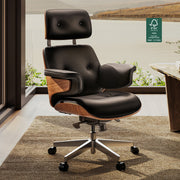
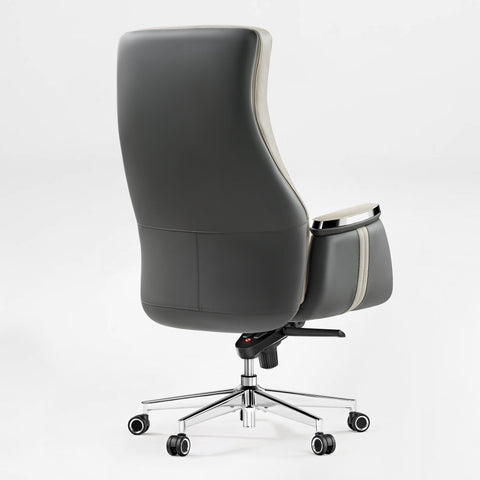
While leather is often easier to wipe down than fabric, it is non-porous. This means it traps body heat, which can lead to localized sweating and skin irritation for some users.
High-performance mesh, such as that used in the Exis Ergonomic Office Chair (Brand Product Page), offers a strategic alternative. Professional-grade mesh is typically woven from polyester or nylon monofilaments and elastomeric yarns. This construction provides:
- Passive Airflow: Continuous circulation helps prevent the buildup of heat and moisture.
- Low Surface Energy: Synthetic mesh fibers are generally less "sticky" for dust compared to natural fibers.
- Chemical Safety: Quality mesh chairs often meet UL GREENGUARD Certification standards, ensuring low volatile organic compound (VOC) emissions.

The Role of VOCs and Formaldehyde
For users with asthma, the "new furniture smell" can be a sign of off-gassing. Many budget-tier chairs use adhesives that release formaldehyde. It is a best practice to look for furniture that complies with ANSI/BIFMA X5.1 standards for safety. For more details, see our Office Chairs Formaldehyde Safety Guide (Brand White Paper).
The Ergonomic Connection: Reducing Static Load
Musculoskeletal support and respiratory health are more linked than they appear; poor posture can compress the diaphragm, leading to shallower breathing.
Neutral Positioning
According to OSHA's eTools on Neutral Working Postures, keeping the joints naturally aligned reduces stress on the skeletal system. A chair like the Exis Ergonomic Office Chair (Brand Product Page) facilitates this through:
- 4-Level Adjustable Lumbar Support: Adapts to the spine's natural curve, preventing the "slump" that restricts lung expansion.
- 3D Adjustable Armrests: Allows for relaxed shoulders, reducing tension in the neck and chest muscles.
Improving Circulation
The ISO 11226:2000 standard highlights the importance of avoiding prolonged static positions. Mesh chairs often feature a "waterfall" seat edge, which reduces pressure on the thighs. To further support circulation, especially for shorter users, an Adjustable Ergonomic Footrest (Brand Product Page) is recommended to maintain the hips at a healthy angle.

Maintenance and the HEPA Strategy
Choosing mesh is the first step, but the following "Applicability Boundaries" define when these benefits actually manifest:
Applicability & Scope of Effectiveness
- Humidity Range: The anti-mite benefits of mesh are most effective when room RH is kept between 30% and 50%.
- Cleaning Frequency: Benefits are significantly reduced if the chair frame and the floor beneath it are not vacuumed at least bi-weekly.
- Material Quality: These conclusions apply to high-tenacity synthetic mesh; low-quality "fabric-mesh" blends may still harbor significant dust.
The Weekly Hygiene Routine
Based on common patterns observed in high-use office environments, we recommend:
- Weekly Wipe-Down: Use a damp microfiber cloth on the mesh and frame. Avoid harsh chemicals that could degrade the synthetic fibers.
- Vacuuming: Use a soft brush attachment to vacuum the underside of the seat and the lumbar mechanism once a month.
- HEPA Pairing: Pairing a mesh chair with a desk-level HEPA air purifier is highly effective. According to HEPA Filter Efficiency Standards, these filters capture 99.97% of particles as small as 0.3 microns—catching the dust that the chair's mesh allows to pass through rather than trapping it in a cushion.
Practical Recommendations: Setting Up Your Workspace
The 20-8-2 Rhythm
Cornell University’s Ergonomics Web suggests a "20-8-2" rhythm: sit for 20 minutes, stand for 8, and move for 2. This movement helps keep the lungs clear by encouraging deeper breathing, as supported by the postural requirements in ISO 9241-5:2024.
Monitor Height and Neck Strain
According to the HSE's DSE guidelines, the top of your screen should be at or slightly below eye level. Using a Single Monitor Arm (Brand Product Page) allows for precise adjustment, preventing neck craning that can tighten chest muscles and impede comfortable breathing.

Checklist for an Allergy-Friendly Setup
- Material: Opt for high-tenacity mesh over thick foam cushions.
- Certification: Check for UL GREENGUARD or BIFMA compliance.
- Posture: Ensure adjustable lumbar support to keep the chest "open."
- Airflow: Avoid placing the desk in stagnant corners where dust settles.
- Tools: Use monitor arms to maintain an upright, respiratory-friendly posture.
Disclaimer: This article is for informational purposes only and does not constitute professional medical advice. Individuals with chronic respiratory conditions or severe allergies should consult with a healthcare professional before making significant changes to their workspace.
Sources
- BIFMA G1-2013 Ergonomics Guideline
- OSHA eTools: Computer Workstations - Neutral Working Postures
- ISO 9241-5:2024 Workstation layout & postural requirements
- UL GREENGUARD Certification for Indoor Air Quality
- HEPA Filter Efficiency Standards & Testing
- Cornell University Ergonomics Web — Workstation Guides
- HSE: Working safely with display screen equipment (DSE)

Leave a comment