

Quick Reference: Key Takeaways for Procurement
For facilities managers and procurement leads, selecting seating for shared environments involves balancing inclusivity with long-term structural integrity.
- Look Beyond Static Ratings: A chair’s weight rating (e.g., 250 lbs) often reflects laboratory static loads. Real-world "dynamic" forces (sitting down quickly) can double or triple the stress on components.
- Prioritize BIFMA X5.11: For diverse workforces, specify the ANSI/BIFMA X5.11 standard (Large Occupant), which tests up to 400 lbs, rather than the general X5.1 standard.
- Inspect "Secondary" Failure Points: Maintenance issues most often arise in caster stems, base diameters, and plastic lumbar tracks, rather than the main frame.
- Universal Design: Ensure adjustment ranges (seat depth and height) accommodate both the 5th percentile female and 95th percentile male to maintain ergonomic support across the team.
The Structural Gap: Why Standard Seating Fails in Shared Environments
In the modern corporate landscape, shared workstations and "hot-desking" models have become the standard. While these configurations offer flexibility, they present a significant challenge for facilities management: the "one-size-fits-all" approach to office seating can experience accelerated wear when subjected to a diverse workforce. It is a common observation for maintenance teams to find chairs with broken casters or wobbly bases, even when the products carry a weight rating that appears to cover the user population.
This discrepancy often stems from a misunderstanding of how weight capacity is tested versus how it is experienced in high-traffic, shared environments. A chair rated for 250 lbs may pass a static load test in a laboratory, but it may lack the structural resilience to handle the dynamic forces generated by a wide range of users over years of continuous use. For procurement specialists, the goal is moving toward ensuring long-term durability and inclusive comfort for every employee, regardless of body type.
Failure to address these structural requirements can lead to increased replacement costs and potential safety risks. According to data from the CPSC’s National Electronic Injury Surveillance System (NEISS), there are over 46,000 chair-related injuries annually in the United States. Tipping incidents, often related to stability issues under high loads, represent approximately 37% of these reported injuries. To build a safer workspace, we must evaluate the engineering beneath the surface.
The Physiology of Support: Static Loads and Musculoskeletal Health
To understand why structural integrity is a health consideration, we must examine the physiological principles of sitting. When a person sits, weight is concentrated on the ischial tuberosities (the "sit bones") and surrounding soft tissue. In a neutral spinal position, the chair’s structure should distribute this pressure while supporting the natural curvature of the spine.
For users with higher body mass, the physics of sitting change. Increased mass raises the static load on the chair’s foam, which can lead to "bottoming out"—where cushioning compresses fully, leaving the user supported by the hard structural plate. This can create localized pressure points that may impede circulation.
The pathophysiological mechanisms of musculoskeletal disorders suggest that prolonged static loading on tissues leads to reduced oxygenation. In chairs with insufficient structural support, users often adopt compensatory postures—slouching or leaning—to avoid discomfort. These positions increase strain on lumbar discs, potentially contributing to chronic pain or Repetitive Strain Injury (RSI).
Modeling the Dynamic Impact Factor
A critical oversight in many procurement evaluations is the difference between static and dynamic loads. A static load is the weight of a person sitting still. A dynamic load is the force generated when a person sits down, shifts, or reaches.
Procurement Heuristic: The Dynamic Force Model Note: The following values are based on common industry stress-testing simulations and internal mechanical modeling; they serve as a risk-assessment guide rather than a universal laboratory standard.
Parameter Value/Range Unit Rationale Static Weight 300 lbs Representative heavy-weight user Impact Multiplier 2.5 - 3.0 x Estimate for "hard seating" impact forces Resultant Peak Force 750 - 900 lbs Estimated peak load on gas lift/base Safety Factor 1.5 x Recommended buffer for material fatigue Design Target 1,350 lbs Heuristic target for high-traffic longevity Applicability Boundary: This model is most relevant for high-use environments (24/7 call centers or shared hot-desks). For light-duty or single-user home offices, these safety buffers may exceed practical requirements.

Decoding the Standards: BIFMA X5.1 vs. X5.11
For North American procurement, the Business and Institutional Furniture Manufacturers Association (BIFMA) provides the primary safety framework. However, standards vary by intended user demographic:
- ANSI/BIFMA X5.1 (General-Purpose): The industry baseline, based on 95th percentile male weight data from several decades ago (approx. 253 lbs). It is suitable for average users but may not account for modern demographic shifts.
- ANSI/BIFMA X5.11 (Large Occupant): The benchmark for inclusive seating, specifically addressing users up to 400 lbs (181 kg). Testing involves higher drop-test weights and more demanding lateral stress tests.
- BIFMA X5.41 (Public and Lounge Seating): A 2021 standard addressing shared areas (reception/touchdown spots). It emphasizes anti-tip mechanisms critical for users unfamiliar with a chair's specific limits.
According to the BIFMA Standards Overview, there is a 147-pound gap between the standard office chair benchmark (253 lbs) and the large occupant requirement (400 lbs). In shared spaces, selecting chairs that meet X5.11 helps ensure the furniture remains functional for the widest possible range of users.
Beyond Weight Ratings: Evaluating Secondary Failure Points
In practice, the chair frame is rarely the first component to fail. Facilities managers consistently report that "secondary components" are the true indicators of real-world capacity.
1. The Caster Stem and Base Diameter
The most frequent failure point in heavy-use seating is the caster—specifically the metal stem. Under lateral stress (e.g., pushing off a desk), the stem can bend.
- Maintenance Insight: Based on aggregated repair logs from high-traffic corporate environments, caster and base failures account for a significant portion of seating-related maintenance tickets within the first 36 months of service.
- Technical Heuristic: For every 50 lbs of capacity required above 250 lbs, look for at least a 25% increase in base diameter. A wider base (27-28 inches) improves tipping stability.
2. Continuous vs. Segmented Bases
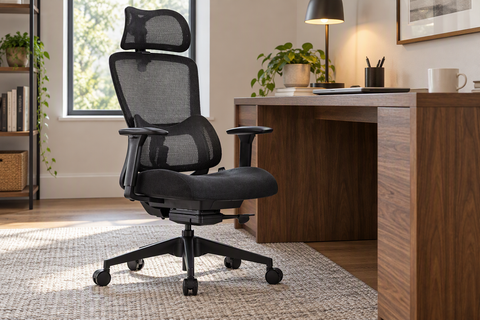
Chairs with continuous 5-star bases (single cast aluminum or reinforced nylon) typically show less "wobble" over time than segmented designs. Segmented bases, where legs are bolted into a central hub, have multiple mechanical joints that can loosen under heavy dynamic loads, potentially compromising the user's neutral position.
3. Lumbar Support Mechanisms
In many designs, lumbar tension is managed by plastic tracks. Under high-pressure loads, these can crack or slip. When evaluating for inclusive spaces, prioritize "integrated" systems that rely on the backrest frame's tension.
Transparency Note: As discussed in The 2026 Workstation White Paper (a manufacturer resource by Eureka Ergonomic), the convergence of structural engineering and ergonomics is most evident in how a chair manages back support under varying loads without mechanical failure.
Implementation: The Procurement Checklist
To ensure a successful rollout, procurement teams should move toward a data-driven evaluation:
- Step 1: Verify Certification. Do not rely on "Tested to BIFMA standards." Request the full test report or look for BIFMA Compliant® products in the official registry.
-
Step 2: Evaluate Adjustment Range. Referencing the BIFMA G1-2013 Ergonomics Guideline, ensure the chair offers:
- Seat Height: 15 to 20 inches.
- Seat Depth: 15 to 19 inches (crucial for leg circulation).
- Step 3: Assess Material Durability. For commercial zones, a minimum of 50,000 to 100,000 "Double Rubs" (Wyzenbeek test) is recommended to prevent premature tearing.
| Component | Standard Requirement | Inclusive Workspace Recommendation |
|---|---|---|
| Weight Capacity | 253 lbs (BIFMA X5.1) | 400 lbs (BIFMA X5.11) |
| Base Material | Nylon / Plastic | Polished Aluminum or Reinforced Steel |
| Caster Type | Standard 2" Plastic | Heavy-duty 2.5" - 3" with Steel Stems |
| Gas Lift | Class 3 | Class 4 (Heavy-duty wall thickness) |
Practical Setup: Ensuring Correct Usage
Even a durable chair cannot prevent MSDs if set up incorrectly. According to the Canadian Centre for Occupational Health and Safety (CCOHS), workstations should be adjusted for every new user.
- Neutral Position: Adjust seat height so feet are flat and thighs are parallel to the ground.
- The Two-Finger Rule: Maintain a two-finger gap between the seat edge and the back of the knees to ensure circulation.
- Armrest Alignment: Set armrests so shoulders are relaxed and elbows are at a 90-degree angle.
Maintenance Tip: Providing a QR code on the chair linking to a setup video, such as the Safe Work Australia Workstation Set-up Infographic, can reduce reported discomfort.
Building for the Long Term
Investing in high-capacity, structurally superior seating is a strategic decision that can impact the bottom line through extended furniture lifecycles and improved employee well-being. By evaluating the engineering of casters, bases, and supports, procurement teams can create a workspace that is truly inclusive.
YMYL Disclaimer: This article is for informational purposes only and does not constitute professional medical, legal, or safety advice. Ergonomic requirements vary based on individual health and workplace environments. Consult with a certified professional ergonomist or healthcare provider before making significant changes. Ensure all procurement complies with local regulations (e.g., OSHA, EU-OSHA).
Sources
- BIFMA G1-2013 Ergonomics Guideline for Furniture
- ANSI/BIFMA X5.11 Large Occupant Office Chairs
- CPSC NEISS Injury Data System
- OSHwiki: Pathophysiological mechanisms of musculoskeletal disorders
- The 2026 Workstation White Paper: Eureka Ergonomic (Manufacturer White Paper)
- Safe Work Australia: Workstation set-up (2023)
- ISO 9241-5:2024 Workstation layout & postural requirements
- CCOHS: Office Ergonomics - Sit/Stand Desk




Leave a comment