

The Foundation of Focus: Why Ergonomics Matters for Growing Bodies
As parents, we often see our children hunched over a tablet on the sofa or sprawling across the kitchen table to finish their homework. While this might seem harmless, these improvised workspaces can contribute to poor postural habits that have long-term consequences. The principles of ergonomics—designing an environment to fit the person—are not just for adults in corporate offices. They are fundamental for children, whose growing bodies are actively developing the musculoskeletal patterns they will carry into adulthood.
Prolonged static postures, whether sitting or standing, place a continuous load on muscles, tendons, and the skeletal system. According to the U.S. Occupational Safety and Health Administration (OSHA), sustained awkward postures are a primary risk factor for developing musculoskeletal disorders (MSDs). For a child, this can manifest as neck pain, backaches, and wrist discomfort, which can distract from learning and create a negative association with study time.
Common Homework Setups and Their Hidden Risks
Let's examine a few typical homework scenarios and the ergonomic problems they create:
- The Kitchen Table: Often too high, forcing a child to raise their shoulders and arms to reach the surface, leading to neck and shoulder strain. The chair is usually a standard dining chair, offering no adjustability or lumbar support.
- The Sofa or Bed: This encourages a slouched, C-shaped spinal posture. Laptops used here are typically far below eye level, causing significant neck flexion or "tech neck."
- An Adult's Desk: These are frequently too deep and too high. A desk depth greater than 24 inches (60 cm) can cause a child to over-reach for items, leaning forward and abandoning the support of their chair's backrest.
Debunking a Common Misconception: "They're Kids, They'll Be Fine"
A pervasive myth is that children are resilient enough to bounce back from any physical strain. While they are adaptable, the habits they form during their developmental years create a blueprint for their adult posture and health. Failing to provide a properly configured workspace means we are normalizing postures that can lead to chronic issues later in life. The goal is not just to avoid pain today but to instill healthy habits that support well-being for a lifetime.
A Parent's Checklist for the Ideal Homework Station
Creating an ergonomic homework station is a systematic process. It's not about finding one "perfect" desk or chair, but about creating a system where each component is adjusted to fit your child's specific body dimensions. Always start by measuring the child, not the furniture.
The Adjustable Desk: Your First and Most Important Investment
For a growing child, an adjustable-height desk is non-negotiable. It is the only way to ensure the workspace can adapt to their rapid growth spurts, providing a perfect fit from elementary school through their teenage years.

-
1. Set the Correct Desk Height: This is the cornerstone of good posture.
- For Sitting: Have your child sit with their feet flat on the floor and arms relaxed at their sides. Adjust the desk height until the surface is at or slightly below their resting elbow level. Their elbows should form an angle of 90 degrees or slightly more open when their hands are on the keyboard.
- For Standing: With your child standing straight, the desk should be positioned at elbow height. This allows their forearms to rest parallel to the floor, preventing wrist extension.
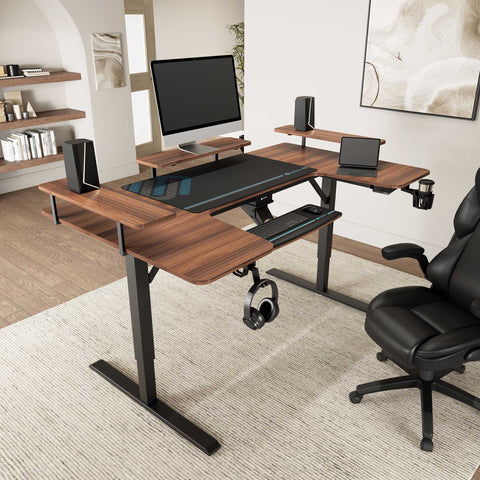
- 2. Choose the Right Desk Depth: Avoid oversized, executive-style desks. A depth of 23-24 inches is ideal for most children and teens, as it keeps the monitor, keyboard, and other essential tools within easy reach without forcing them to lean forward.
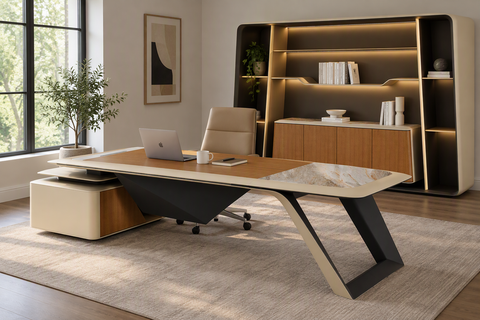
- 3. Prioritize Stability and Safety: Look for desks with a sturdy base and a smooth, reliable lifting mechanism. For electric models, an anti-collision sensor is a crucial safety feature, especially in a home with younger children. A well-built desk like the Ark EL Executive Standing Desk provides a stable, expansive surface that can be precisely adjusted to match your child's needs as they grow.
The Supportive Chair: The Command Center for Learning
A chair's role is to support a healthy, neutral spinal posture. Before adjusting the desk, always start with the chair.
- 4. Adjust Chair Height for Foot Position: The first step is to adjust the chair's height so your child's feet are resting flat on the floor. Their knees should be bent at approximately a 90-degree angle. If their feet cannot reach the floor even at the chair's lowest setting, use a stable footrest. Avoid letting their legs dangle or tuck under the chair, as this can restrict blood circulation.
- 5. Check the Seat Depth: There should be a small gap of about two to three fingers' width between the front edge of the seat and the back of your child's knees. This prevents the seat from pressing against nerves and blood vessels.
- 6. Ensure Proper Lumbar Support: The chair's backrest should have a curve that supports the natural inward curve of your child's lower back. This is critical for preventing slouching and reducing strain on the lumbar spine. For a deeper understanding of these adjustments, you can review this helpful guide to adjusting your ergonomic chair correctly.
The Screen: Your Window to Learning
Incorrect screen placement is a primary cause of neck and shoulder pain. Whether your child uses a monitor, laptop, or tablet, the goal is to bring the screen to their eye level.

- 7. Position the Monitor at Eye Level: According to Cornell University's Ergonomics Web, the top of the viewable screen should be at or slightly below eye level. This allows the user to look slightly downward without dropping their head. I’ve seen many parents make the mistake of placing the monitor too low, forcing the chin to tuck and straining the neck muscles.
- 8. Set the Right Viewing Distance: The screen should be about an arm's length away. A good rule of thumb is that your child should be able to comfortably touch the screen with their fingertips when sitting back in their chair.
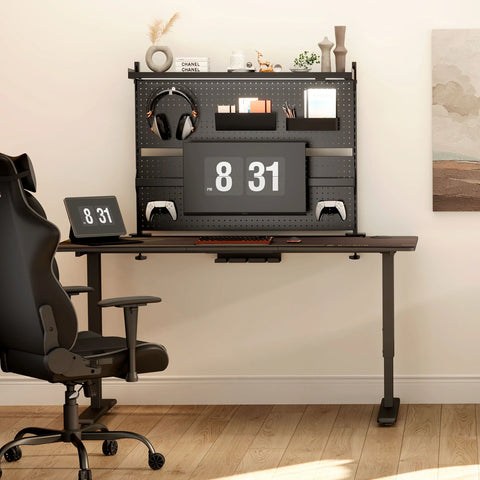
- 9. Elevate Laptops and Tablets: Laptops and tablets are notorious for promoting poor posture because the screen and keyboard are connected. Always use a separate stand to raise the screen to eye level and an external keyboard and mouse. A monitor stand, such as the Carbon Fiber Dual Monitor Stand, can elevate screens to the correct height while also providing organizational space to keep the desk uncluttered.
Building a Rhythm of Movement and Focus
An ergonomic setup is only half the equation. The human body is not designed to remain static for long periods. The World Health Organization's guidelines emphasize the importance of reducing sedentary time and breaking up long periods of sitting.
The Sit-Stand Routine for Young Learners
Children, even more than adults, benefit from frequent changes in posture.
- Alternate Positions: Encourage your child to change between sitting and standing every 20-40 minutes during focused tasks. This simple act engages different muscle groups, improves blood circulation, and can help maintain energy levels.
- Use Timers: A simple timer can serve as a friendly reminder to switch positions. This builds a routine where movement becomes a natural part of the homework process.
Expert Insight: Combine the Right Tools with the Right Habits
While the body of research on pediatric-specific ergonomic workstations is still growing, evidence from school-based programs suggests a clear benefit. An ergonomics intervention study with schoolchildren found that education on proper posture and the encouragement of movement were effective at reducing musculoskeletal discomfort. The key takeaway is that the best results come from combining an adjustable environment with an understanding of why and how to use it. The furniture is a tool; the habit of movement is the skill.
Micro-Breaks for a Macro Impact
In addition to alternating between sitting and standing, encourage short "micro-breaks." Every 20 minutes, your child should take 30-60 seconds to stand up, stretch, look out a window, or walk around the room. These brief pauses rest the eyes and muscles, preventing the buildup of static load and mental fatigue.
Organizing the Workspace for Efficiency
A well-organized desk reduces unnecessary reaching and twisting, which are themselves ergonomic risk factors.
The "Working Radius" and Keyboard Placement
Keep the most frequently used items—pens, notebooks, and the mouse—within a primary working radius of about 12-16 inches (30-40 cm). This is the area that can be comfortably reached without leaning forward or stretching the arm.
The keyboard should be positioned directly in front of the user, close to the edge of the desk, so the elbows can remain close to the body at that ideal 90-degree angle. If achieving this position is difficult, a Pull-out Keyboard Tray can be an excellent solution. It allows you to position the keyboard at a lower, more comfortable height while freeing up valuable desktop space.

Cable Management is Safety Management
Loose cables are not just untidy; they are a trip hazard. Use cable trays, ties, or sleeves to bundle and route wires away from the floor and the user's feet. This creates a safer, more organized, and distraction-free environment conducive to focused work.
Wrapping Up: An Investment in Lifelong Health
Creating an ergonomic homework station is one of the most impactful investments you can make in your child's health and academic success. It goes far beyond buying a new piece of furniture; it's about building a supportive environment that fosters good habits, prevents physical discomfort, and allows them to focus on what truly matters: learning.
By following this checklist—prioritizing an adjustable desk, a supportive chair, correct screen placement, and a routine of regular movement—you are laying the foundation for a healthier, more productive, and more positive relationship with their studies that will serve them well into the future.
Frequently Asked Questions (FAQ)
1. At what age should my child get an ergonomic setup? You can start implementing ergonomic principles as soon as your child begins sitting at a desk for any regular activity, typically around ages 5-6. The key is adjustability, as a setup for a first-grader will be very different from one for a middle-schooler.
2. Is a standing desk really necessary for a child? While not strictly necessary, a height-adjustable desk is the most effective way to ensure a perfect ergonomic fit over many years of growth. It also uniquely enables the ability to alternate between sitting and standing, which is highly recommended for breaking up sedentary time and improving focus.
3. What if I can't afford a whole new setup? What's the most important piece? If you have to prioritize, start with an adjustable chair and a good footrest. This allows you to at least control the relationship between your child's posture and the floor. The next most critical item would be a laptop/monitor stand and an external keyboard to address neck and wrist strain.
4. How do I get my child to use their new setup correctly? Lead by example and make it a collaborative process. Set up the workstation together and explain the "why" behind each adjustment in simple terms (e.g., "This helps your back stay strong," or "This keeps your eyes from getting tired"). Use timers and gentle reminders to encourage movement until it becomes a habit.
Disclaimer: This article is for informational purposes only and does not constitute professional medical advice. Please consult with a qualified healthcare professional or a certified ergonomist if your child has pre-existing health conditions or experiences persistent pain.
References
- Cornell University Ergonomics Web: ergo.human.cornell.edu/ergoguide.html
- Occupational Safety and Health Administration (OSHA), Ergonomics: https://www.osha.gov/ergonomics/identify-problems
- World Health Organization (WHO), 2020 Guidelines on Physical Activity and Sedentary Behaviour: https://www.who.int/publications/i/item/9789240015128
- Ergonomics intervention programme for preventing musculoskeletal disorders in school children: https://core.ac.uk/download/pdf/188770566.pdf




Leave a comment