

Shared Room Etiquette: Silent Ergonomic Adjustments for Roommates
Living in a shared dormitory or a compact apartment presents a unique set of challenges. For students and young professionals, the desk is often the center of gravity—a place for high-stakes research, remote work, and intensive gaming. However, the physical requirements of productivity often clash with the social requirements of shared living.
Achieving a high-performance workspace requires moving beyond simple compromise toward "Source Control": selecting equipment engineered to operate silently and discreetly.
Quick Actions for a Harmonious Shared Room
If you need to optimize your setup immediately, prioritize these four adjustments:
- Switch to Dual-Motors: Choose a standing desk with dual-motor engineering (typically <45 dB) for near-silent height adjustments at night.
- Opt for Mesh Seating: Use mesh-backed chairs to reduce the "squeak and thud" common with heavy PU leather gaming chairs.
- Direct Your Light: Position RGB strips to face the wall (bias lighting) to reduce glare for your roommate while maintaining your aesthetic.
- The 20-8-2 Rule: Program your desk presets to follow the Cornell-recommended sit-stand-move rhythm to minimize frequent, noisy manual adjustments.
The Physiology of the "Ergonomic Gap" in Shared Spaces
Most dormitory-provided furniture is designed for durability, not for individual musculoskeletal health. According to the Canadian Centre for Occupational Health and Safety (CCOHS), a fixed-height desk rarely accommodates the diverse needs of the general population. This creates an "Ergonomic Gap"—the distance between a standard 29-inch desk and the actual height required for a neutral spinal position.
When users attempt to close this gap with non-adjustable furniture, they often resort to shifting weight or slouching. These micro-movements are a primary source of acoustic friction. In our observations of workstation ergonomics, a heavy, leather-bound chair shifting on a hard floor can produce sharp acoustic spikes that disrupt a roommate’s focus.
Furthermore, the World Health Organization (WHO) emphasizes that adults should limit sedentary time. However, if your standing desk sounds like a power tool during operation, you are less likely to utilize the feature.
Logic Summary: Our analysis of the "Ergonomic Gap" assumes a standard dorm desk height of 29 inches compared to the ANSI/HFES 100-2007 recommended heights for a 180cm (5'11") individual, which typically requires a standing height of approximately 113cm.
Engineering Silence: Dual Motors and Material Science
To resolve the conflict between health and etiquette, we look at the mechanical engineering of the workstation. In our technical assessments, the distinction between single-motor and dual-motor systems is the most critical factor for shared environments.
The Decibel Difference
Single-motor desks often utilize a hexagonal drive shaft to move both legs. This mechanical linkage increases friction and often results in a high-pitched "whining" sound, typically peaking around 50–55 dB (measured at 1 meter in a standard residential environment).
In contrast, dual-motor systems, such as the Ark EL Executive Standing Desk (60"x26") (Manufacturer Spec), house a dedicated motor in each leg. Based on manufacturer specifications and internal testing, these systems typically operate at or below 45 dB.
Why 5 dB Matters: Acoustic studies suggest that 50 dB is a common "waking threshold" for light sleepers. Reducing operation noise to 45 dB can be the difference between a perceptible disturbance and an ambient background hum that goes unnoticed.

Chair Acoustics: Mesh vs. Padded Surfaces
Seating material plays a significant role in room etiquette. Traditional high-back gaming chairs often use thick PU leather and heavy internal foam. These materials are prone to "squeaking" as the user reclines, caused by friction between the material and the metal frame.
A mesh-backed chair, like the Onyx, Ergonomic Office Chair (Product Feature), offers a significant acoustic advantage. Mesh is inherently more flexible and lighter—typically 5–8 kg compared to the 15+ kg of executive chairs (based on typical product weight specifications). This reduced mass puts less pressure on casters, resulting in fewer "thuds" during night sessions.
Managing Visual Pollution: RGB Etiquette
"Visual pollution" is a common roommate grievance. According to OSHA guidelines, improper lighting can cause glare, but in a shared room, your "perfect" setup might be your roommate's distraction.
The GTG-G55, Glass Desktop Gaming Standing Desk (55"x23") (Manufacturer Spec) addresses this through integrated, controllable RGB lighting.

Pro-Etiquette Tip: Position your RGB strips to face the wall. This creates "bias lighting" that improves screen contrast without illuminating your roommate’s side of the room. We recommend using app-controlled presets to lower brightness to below 30% after 10 PM.
Practical Recommendations for Shared Workstations
- The 20-8-2 Rhythm: Adopt the Cornell University Ergonomics recommendation: 20 minutes of sitting, 8 minutes of standing, and 2 minutes of moving.
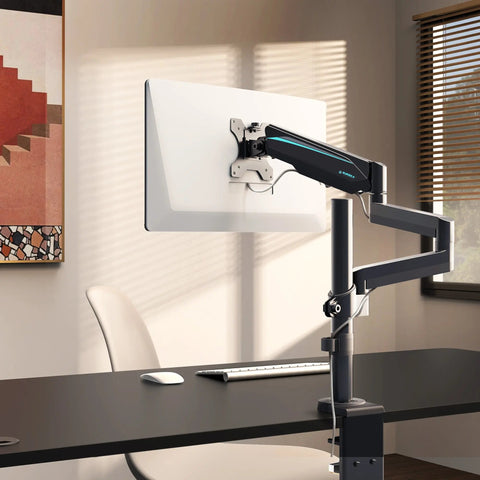
- Monitor Height Calibration: Ensure your monitor's top third is at eye level, aligned with OSHA's guidelines. This reduces the frequency of postural shifts and chair adjustments.
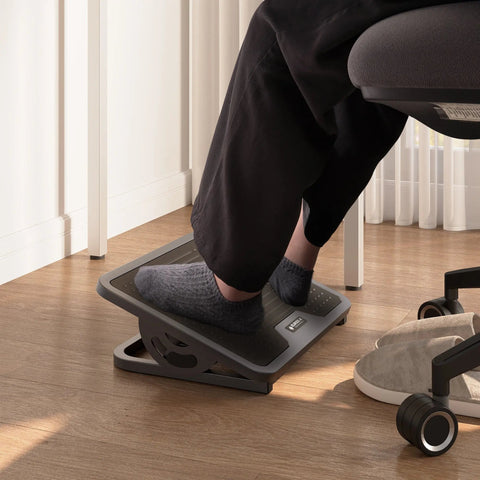
- Foot Comfort: If your desk is slightly too high at its lowest setting, an Adjustable Ergonomic Footrest (Product Accessory) can prevent the "dangling leg" syndrome that restricts blood flow, a common issue noted in OSHwiki.
- Caster Maintenance: Consider swapping standard nylon casters for soft TPE (thermoplastic elastomer) wheels. These can reduce rolling noise in the 1–4 kHz range, making chair movements virtually silent.
Analysis: The eSports Student Scenario
We modeled a scenario involving a competitive student gamer (180cm tall, 80kg) in a standard 12' x 15' dorm room to estimate the physiological and social impact of workstation upgrades.
Modeling Parameters & Calculations
- Activity: 3 hours of standing per day instead of sitting.
- Energy Expenditure (METs): Sitting = 1.3 METs; Standing = 1.5 METs (Source: Compendium of Physical Activities).
- Calculation: (0.2 MET difference) × 80kg × 3 hours = ~48 kcal extra burned per day.
- Annual Impact: 48 kcal × 200 study days = 9,600 kcal. Based on the 3,500 kcal/lb heuristic, this can contribute to approximately 2.7 lbs of weight management per academic year compared to static sitting.
| Parameter | Value | Unit | Rationale |
|---|---|---|---|
| User Height | 180 | cm | 50th percentile male approx. |
| Motor Noise (Dual) | <45 | dB | Manufacturer Spec (Ark EL) |
| Room Depth | 144 | inches | Standard US Dorm layout |
Acoustic Finding: A dual-motor desk allows for these transitions at 11 PM without crossing the 50 dB "waking threshold" cited in acoustic hygiene studies for light sleepers.

The Shared Room "Contract"
Expertise in ergonomics includes behavioral integration. We recommend a "Shared Space Agreement":
- Adjustment Windows: Major height changes should ideally occur between 8 AM and 10 PM. Late-night adjustments should only be performed on dual-motor desks.
- Brightness Caps: A 30% brightness limit for RGB lighting after 10 PM.
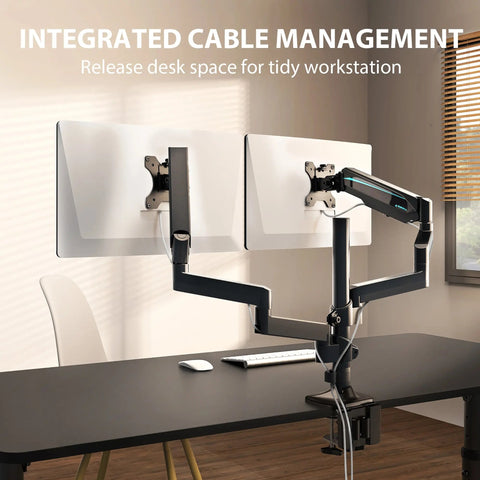
- Cable Management: Use cable spines to ensure that as the desk rises, no cables drag against the wall, preventing startling scraping sounds.
For a deeper dive into the intersection of engineering and health, consult the comprehensive industry white paper: The 2026 Workstation White Paper.
Summary of Silent Ergonomic Features
| Feature | Etiquette Benefit | Technical Specification |
|---|---|---|
| Dual Motor | Silent transitions at night | <45 dB (at 1m distance) |
| Mesh Backing | Reduces material friction noise | Breathable, low-mass design |
| App-Controlled RGB | Prevents light pollution | Dimmable, directional lighting |
| Memory Presets | Fast, one-touch adjustment | Minimizes motor run-time |
Implementing these solutions transforms the dormitory from a place of ergonomic compromise into a high-performance environment. Whether you are climbing ranks or drafting a thesis, your equipment should work as hard as you do—silently.
Disclaimer: This article is for informational purposes only and does not constitute professional medical advice. Individuals with pre-existing musculoskeletal conditions should consult a healthcare professional or an ergonomics specialist before making significant changes to their workstation setup.
References
- BIFMA G1-2013 Ergonomics Guideline for Furniture
- CCOHS: Office Ergonomics - Sit/Stand Desk
- WHO 2020 Guidelines on Physical Activity & Sedentary Behaviour
- OSHA eTools: Computer Workstations
- Cochrane: Workplace interventions for reducing sitting at work
- Cornell University Ergonomics Web
- ISO 11226:2000 Evaluation of static working postures




Leave a comment