

The "Posture Tax": Why Standard Desks Fail the Developing Student
For many parents, the image of a child hunched over a laptop or textbook late into the afternoon is a familiar—and concerning—sight. While academic rigor is a priority, the physical environment in which that learning occurs often goes overlooked. Most school-aged children and teenagers spend between six and ten hours a day in a seated position. When this behavior is paired with standard, fixed-height furniture, it creates what ergonomists call a "posture tax."
The human spine is not designed for prolonged static loading. In adolescents, whose musculoskeletal systems are still in a state of rapid development, the risks are magnified. Static sitting for extended periods can lead to Musculoskeletal Disorders (MSDs), characterized by persistent discomfort in the neck, shoulders, and lower back. According to the U.S. Occupational Safety and Health Administration (OSHA), poor posture is a primary risk factor for these conditions, which can transition from acute discomfort to chronic issues if not addressed early.
The problem is fundamentally one of geometry. Standard desks are typically manufactured at a fixed height of 29 inches (approximately 73.7 cm). This height is designed for the "average" adult, yet students vary wildly in height during puberty. For a student who doesn't fit this specific mold, the body must compensate. A desk that is too high forces the shoulders to shrug; a desk that is too low forces the spine into a kyphotic (hunched) curve.
The Physiology of Sedentary Study Sessions
To understand why a standing desk is a critical health investment, one must look at the physiological impact of static sitting. When a student sits for hours, blood circulation slows, and the metabolic rate drops. More importantly, the "static load" on the intervertebral discs increases.
Research compiled by EU-OSHA on musculoskeletal disorders and prolonged sitting indicates that static sitting increases pressure on the lumbar spine and leads to muscle fatigue in the trunk and neck. For a teenager, this isn't just about temporary pain; it is about the structural integrity of the growing spine.
The "Glass Box" Analysis: The 190cm Student Scenario
To demonstrate the "posture tax" in concrete terms, consider a simulation of a tall teenage male (190 cm / 6'3"). In a typical home study environment, the mismatch between his body and a standard fixed desk is stark.
| Ergonomic Metric | Ideal Setting (Sitting) | Standard Fixed Desk | The "Gap" / Deficit |
|---|---|---|---|
| Desk Height | 78.5 cm (30.9 in) | 73.7 cm (29 in) | -4.8 cm (-1.9 in) |
| Elbow Angle | 90° - 100° | > 110° (Slouching) | Forces spinal flexion |
| Viewing Distance | 111.5 cm (43.9 in) | 61 cm (24 in) | -50.5 cm (-19.9 in) |
| Standing Height | 116.5 cm (45.9 in) | N/A | Requires adjustability |
Note: Calculations based on standard anthropometric ratios for a 95th percentile male adolescent.
In this scenario, the student faces a nearly 2-inch height deficit while sitting. To reach the keyboard, he must either slouch his spine or drop his shoulders forward, accelerating the development of "tech neck." Furthermore, the visual distance deficit is critical. Using a 27-inch monitor on a standard 24-inch deep desk forces the student to sit too close, increasing eye strain and instinctively causing them to lean forward, further compromising the "spinal neutral position."
The Solution: Engineering Movement into the Study Routine
The introduction of a height-adjustable standing desk serves as an "engineering control"—the most effective level of hazard prevention according to the OSHA hierarchy of controls. Rather than relying on the student to "remember" to sit up straight (an administrative control that frequently fails), an adjustable desk modifies the environment to fit the student.

Beyond Standing: The Goal of Dynamic Posture
It is a common misconception that standing all day is the "cure" for sitting. In reality, prolonged static standing carries its own risks, including increased venous pressure in the lower limbs. The World Health Organization (WHO) 2020 Guidelines emphasize reducing sedentary time and interrupting long periods of static behavior, but they also clarify that standing is not a substitute for physical activity.
The goal is dynamic posture—the frequent switching between sitting and standing. A systematic review published in the Cochrane Library found that sit-stand desks can reduce sitting time by 84 to 116 minutes per day. For a student, this reduction in sedentary behavior translates to improved blood flow, higher oxygen levels to the brain, and a significant reduction in the cumulative load on the spine.
Metabolic and Academic Gains
While the primary focus is musculoskeletal health, the secondary benefits of a standing desk for students are measurable.
- Caloric Expenditure: Standing for three hours during a study session burns approximately 102 extra calories compared to sitting. While this seems minor, over a school year, this totals over 25,000 calories—equivalent to roughly 7.3 pounds of fat loss for a teenager. This is a valuable tool for weight management during puberty.
- Cognitive Performance: Studies, including those cited by Texas A&M University, suggest a 10% to 15% uplift in productivity and cognitive engagement when using standing desks. This is likely due to increased heart rate and blood flow, which helps maintain focus during demanding tasks like exam preparation or complex problem-solving.
Practical Implementation: The Expert Guide to Setup
Gifting a standing desk is only the first step. To ensure the investment pays off in health, the setup must be precise. Parents should guide their children through the following "Expert Checklist" derived from BIFMA G1-2013 Ergonomics Guidelines.
1. The Elbow Rule (The Golden Metric)
When the student is standing, the desk height should allow the elbows to be at a 90-degree angle, with the forearms parallel to the floor. If the desk is too high, the student will shrug their shoulders, leading to trapezius strain. If it is too low, they will lean forward, straining the lower back.
2. The 20-8-2 Rhythm
Adopting the "Cornell University 20-8-2" rule is highly recommended:
- 20 Minutes Sitting: Maintain a neutral posture with lumbar support.
- 8 Minutes Standing: Switch to a standing position to re-energize.
- 2 Minutes Moving: Stretch or walk to stimulate circulation.
3. Visual Ergonomics
The top of the monitor should be at or slightly below eye level. This prevents the student from tilting their head up or down, which is a leading cause of neck pain. According to the HSE guide on working with display screen equipment, the screen should be positioned to avoid glare from windows or overhead lights, which can cause the student to adopt awkward postures to see clearly.

Technical Considerations for Parents: Durability and Safety
When selecting a desk for a student, the technical specifications matter as much as the ergonomics. Students are often less careful with furniture than adults, and their study habits involve "fidgeting," leaning, and heavy equipment.
- Dual-Motor Systems: For teenagers, a dual-motor system is essential. It provides the necessary torque to lift heavy monitor setups smoothly and, more importantly, offers superior stability. Single-motor desks often exhibit "wobble" at higher elevations, which can be distracting during fine-motor tasks like writing or drawing.
- Stability at Height: High-quality desks should meet ANSI/BIFMA X5.5 standards for desk products. This ensures the frame can handle the lateral forces of a student leaning against it without tipping or excessive shaking.
- Safety Features: Look for "anti-collision" technology. If the desk encounters an obstacle (like a chair or a pet) while lowering, it will automatically stop and reverse. This is a non-negotiable safety feature for a home environment.
- Indoor Air Quality: Ensure the desk carries UL GREENGUARD Gold Certification. This certification ensures that the materials used in the desktop and frame have low chemical emissions (VOCs), protecting the air quality in the student's bedroom or study area.
Common Pitfalls and How to Avoid Them
Even with the best equipment, the transition to a standing desk can fail if not managed correctly.
- The "All-or-Nothing" Mistake: Many students try to stand for four hours on the first day. This leads to foot and leg fatigue, causing them to abandon the desk. Start with 15-minute intervals.
- The "Lock-Knee" Habit: Students often lock their knees when standing, which cuts off circulation and strains the joints. Encourage "active standing"—shifting weight from foot to foot or using an anti-fatigue mat.
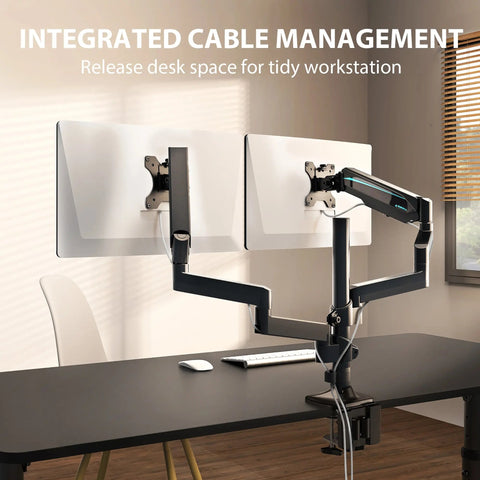
- Cable Tension: Ensure that all monitor and power cables have enough "slack" to reach the desk's maximum height. A common "gotcha" is a cable snagging and pulling a monitor over as the desk rises.
A Legacy of Health
Investing in a standing desk for a student is more than a seasonal gift; it is a commitment to their long-term well-being. By addressing the "posture tax" early, parents can help prevent the musculoskeletal issues that plague so many adults today. As children grow, their furniture should grow with them, providing a customizable, dynamic environment that supports both their academic ambitions and their physical health.
YMYL Disclaimer: This article is for informational purposes only and does not constitute professional medical advice. The ergonomic recommendations provided are based on general industry standards. If your child has a pre-existing musculoskeletal condition, such as scoliosis or chronic back pain, please consult a qualified healthcare professional or physical therapist before making significant changes to their study environment.
References
- BIFMA G1-2013: Ergonomics Guideline for Furniture. Link
- CCOHS: Office Ergonomics - Sit/Stand Desk. Link
- Cochrane Library: Workplace interventions for reducing sitting at work (2018). Link
- Cornell University: Ergonomics Web — Workstation Guides. Link
- ISO 9241-5:2024: Workstation layout & postural requirements. Link
- WHO: 2020 Guidelines on Physical Activity & Sedentary Behaviour. Link
- OSHA: Ergonomics - Solutions to Control Hazards. Link
- UL GREENGUARD: Certification for low chemical emissions. Link




Leave a comment