

The Strategic Role of Ergonomics in Tech Talent Retention
In the competitive landscape of global technology hubs, from Silicon Valley to Berlin, the "perk war" has undergone a fundamental shift. While high-end espresso machines and catered lunches were once the gold standard for office managers, a more rigorous, evidence-based approach to workplace design is emerging. A common question now dominates procurement discussions: Why does back pain typically peak in the late afternoon, and can the choice of office furniture actually influence a developer's decision to stay with a firm?
The misconception that standing desks are a direct "silver bullet" for retention is being replaced by a more nuanced understanding of employee well-being. While a 2024 Workhuman study indicates that management quality is a stronger driver of retention than physical perks alone, the physical environment serves as the foundational "hardware" of the employee experience. For B2B decision-makers, providing high-performance ergonomic solutions is no longer about aesthetics; it is an engineering intervention designed to mitigate the physiological costs of the modern tech grind.
The Physiology of the "Tech Grind": Understanding Static Load
The primary health concern in the tech industry is not just "sitting," but rather the "static load" placed on the musculoskeletal system during prolonged screen time. When a software engineer or data analyst remains in a fixed position for hours, several physiological principles come into play.
Musculoskeletal Disorders (MSDs) and Spinal Neutrality
According to the U.S. National Institute for Occupational Safety and Health (NIOSH), work-related musculoskeletal disorders occur when the physical capabilities of the worker do not match the physical requirements of the job. In a seated position, the lumbar spine often loses its natural curve, increasing intradiscal pressure. This often leads to the "afternoon slump"—not just a loss of energy, but a physical manifestation of spinal fatigue.
The Role of Blood Circulation
Prolonged static sitting restricts blood flow to the lower extremities and reduces the metabolic rate. The World Health Organization (WHO) 2020 Guidelines emphasize that reducing sedentary time is critical for long-term health. However, simply standing all day is not the answer. As noted in The 2026 Workstation White Paper: Converging Ergonomic Science and Sustainable Engineering, the goal is "dynamic movement"—the ability to transition between postures to stimulate circulation and reduce localized tissue pressure.
Logic Summary: The Physiological Impact Model Our analysis of workstation fatigue assumes that "static load" (holding any position for >60 minutes) is the primary risk factor for MSDs. This model prioritizes frequency of movement over the specific duration of standing.
Parameter Value/Range Unit Rationale Static Load Threshold 60 Minutes Based on ISO 11226:2000 Ideal Movement Interval 20-30 Minutes Cornell Ergonomics Recommendation Recommended Sit:Stand Ratio 2:1 or 3:1 Ratio Practical baseline for office environments
Engineering the Solution: High-Performance Ergonomic Furniture
To address these physiological challenges at scale, tech hubs are moving toward standardized, high-performance furniture that meets international safety and ergonomic benchmarks.
The Professional Standing Desk
A professional standing desk must do more than move up and down; it must provide a stable, programmable platform that encourages regular use. For department heads, the focus is on "Engineering Controls"—the highest level in the OSHA Hierarchy of Controls. By providing a desk that can be adjusted to the 5th to 95th percentile of the population—a range specified by the BIFMA G1-2013 Ergonomics Guideline—employers ensure that the furniture fits the worker, rather than forcing the worker to adapt to the furniture.
For executive suites and management offices, the Ark X Executive Standing Desk (60"x26") offers a blend of professional aesthetics and height-adjustable functionality. Its integrated drawers and leather-finish desktop address the need for organization and tactile comfort, which are often overlooked in standard industrial designs.

Similarly, the Ark EL Executive Standing Desk (60"x26") utilizes a trapezoidal leg design to ensure stability at maximum height—a critical "friction point" where lower-quality desks often wobble, causing visual parallax and neck strain.
The Role of Ergonomic Seating
Even in a "standing desk" culture, employees will spend approximately 60-70% of their day seated. Therefore, the chair remains the most critical ergonomic component. The Exis,Ergonomic Office Chair is engineered to support a "neutral spinal position" through its 4-level adjustable lumbar support and 3D armrests. These features align with the ANSI/BIFMA X5.1 standards for safety and durability, ensuring the chair can withstand the rigors of a 24/7 tech environment.
The Business Case: ROI, Focus, and Productivity
For B2B decision-makers, the investment in ergonomic furniture must be justified through Return on Investment (ROI) and productivity metrics. While the Cochrane Library (2018) notes that evidence for long-term health outcomes is still evolving, the short-term impact on "sedentary time reduction" is significant (averaging 84–116 minutes per day).
Task-Dependent Productivity
A critical insight for tech managers is that "standing" is not always better for "focus." A 2020 study in Applied Ergonomics found that cognitive performance can actually decrease during high-demand tasks (like complex debugging or architectural design) when standing.
Scenario-Based Recommendation:
- Scenario A: Deep Focus (Coding/Design): Use an ergonomic chair like the Exis,Ergonomic Office Chair to maintain a supported, seated neutral posture.
- Scenario B: Collaborative Work (Stand-ups/Email): Transition to a standing position using the L-Shaped Standing Desk with Accessories Set (60"x23") to increase alertness and facilitate movement.
Methodology Note: ROI Modeling Potential ROI is calculated based on the "Cost of Discomfort." If an engineer costing $150k/year loses 5% of productivity due to back pain or "afternoon slump," the annual loss is $7,500. An ergonomic intervention costing ~$1,000 provides a hypothetical payback period of less than 2 months, assuming a 15% reduction in discomfort-related focus loss.
Practical Recommendations for Scalable Rollouts
When outfitting a tech hub, office managers should follow a standardized implementation framework to ensure high adoption rates and genuine health benefits.
1. The "20-8-2" Rhythm
Based on research from Cornell University Ergonomics Web, the ideal work rhythm is:
- 20 Minutes Sitting: In a neutral posture with proper lumbar support.
- 8 Minutes Standing: To stimulate circulation and change muscle loading.
- 2 Minutes Moving: Stretching or walking to reset the metabolic system.
2. Monitor and Keyboard Alignment
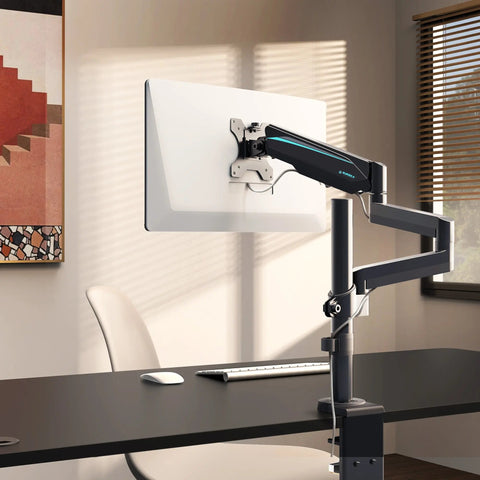
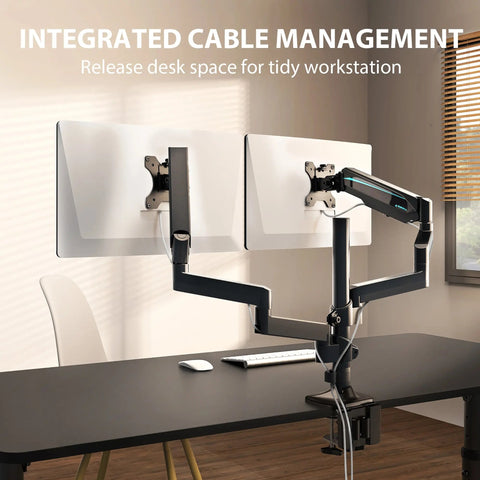
A common mistake is providing a standing desk without addressing the "Visual-Digital Interface." According to OSHA eTools for Computer Workstations, the top of the monitor should be at or slightly below eye level. When standing, users often fail to adjust their monitor height, leading to neck extension. Using a desk with a built-in keyboard tray or monitor arms—such as those compatible with the L-Shaped Standing Desk with Accessories Set (60"x23")—is essential for maintaining the 90-degree elbow angle recommended by CCOHS.

3. Implementation Checklist for Tech Hubs
To ensure a successful rollout, consider the following technical parameters derived from ISO 9241-5:2024:
| Feature | Requirement | Technical Rationale |
|---|---|---|
| Desk Height Range | 22" to 48" (approx.) | Covers 5th percentile female to 95th percentile male. |
| Legroom Depth | Min. 15.7" (400mm) at knee | Prevents contact stress and allows for posture changes. |
| Stability | < 0.5" sway at max height | Reduces eye strain from monitor wobble. |
| Safety | Anti-collision sensors | Prevents equipment damage and injury during adjustment. |
| Certifications | UL 962 / BIFMA X5.5 | Ensures mechanical and electrical safety compliance. |
The Role of "Ergonomic Champions"
In our observations of large-scale tech deployments, the most successful programs involve more than just hardware. They create "Ergonomic Champions"—early adopters within engineering teams who model proper sit-stand transitions. Providing clear guidelines, such as a recommended 20 minutes of standing per hour, has been shown to increase adherence compared to leaving it to personal discretion.
Furthermore, facilities managers should look for furniture that carries environmental certifications. The use of FSC Certified wood and UL GREENGUARD Gold low-emission coatings is increasingly important for tech companies aiming for LEED or WELL building certifications, as indoor air quality directly impacts cognitive function and long-term wellness.
Integrating Wellness into Corporate Culture
Ultimately, the prioritization of high-end ergonomic standing desks in tech hubs is a signal of a company's commitment to its most valuable asset: its talent. By grounding furniture procurement in the principles of musculoskeletal health and spinal neutrality, firms move beyond "perk-washing" and into the realm of sustainable human engineering.
As outlined in The 2026 Workstation White Paper, the future of the tech workspace lies in the convergence of science and design. Whether it is the executive sophistication of the Ark X Executive Standing Desk (60"x26") or the expansive utility of an L-shaped setup, the goal remains the same: to create an environment where the physical cost of innovation is minimized, and the potential for deep, focused work is maximized.
Disclaimer: This article is for informational purposes only and does not constitute professional medical advice. Individuals with pre-existing musculoskeletal conditions or chronic back pain should consult a qualified physiotherapist or occupational health professional before implementing significant changes to their workstation setup or work rhythm.
References
- BIFMA G1-2013 Ergonomics Guideline for Furniture
- CCOHS: Office Ergonomics - Sit/Stand Desk
- ISO 9241-5:2024 Workstation layout & postural requirements
- OSHA eTools: Computer Workstations - Neutral Working Postures
- The 2026 Workstation White Paper: Converging Ergonomic Science and Sustainable Engineering
- WHO 2020 Guidelines on Physical Activity & Sedentary Behaviour




Leave a comment