

The Hidden Risks of Under-Desk Power
Choosing a power strip often feels like a minor decision. You grab one, plug it in, and hide it. However, when placing a power strip under a desk—especially a height-adjustable standing desk—the stakes are significantly higher. A simple mistake in selection or installation can lead to strained cables, damaged equipment, or even create a serious electrical hazard.
Many users encounter this problem right after setting up a new ergonomic workspace. The desk itself is perfect, but a nest of cables underneath creates a constant source of frustration and risk. This is because an under-desk environment is dynamic. With a sit-stand desk, cables must flex and move thousands of times over the life of the desk. A power strip that is improperly secured or a cord that is too short can get snagged, unplugging your entire setup or, worse, causing premature wear and tear on the electrical cords.
Debunking the "Set It and Forget It" Myth
A common misconception is that any power strip can be mounted under a desk and forgotten. In reality, this approach is a recipe for problems. Field installers frequently report that the most common failure point is cable strain. A power strip mounted flush against the underside of the desk without leaving slack for movement will inevitably lead to cord fatigue. This is why a thoughtful approach to under-desk power is not just about tidiness; it’s a crucial component of a safe and functional workstation.
Choosing the Right Power Strip: Key Features for Under-Desk Use
Not all power strips are created equal, particularly for the unique demands of an under-desk setup. Here are the critical features to evaluate before you make a purchase.
Mounting Options and Durability
The ability to securely mount the power strip is non-negotiable. Look for models with built-in mounting features:
- Keyhole Slots: These allow you to slide the power strip onto pre-installed screws. When installing, orient the strip so the cord exit points toward the nearest wall outlet to avoid sharp bends.
- Mounting Brackets: Some professional-grade strips include detachable brackets. These are often more robust and can allow for quicker detachment if you need to reconfigure your setup.
Outlet Orientation and Spacing
Examine the layout of the outlets. Many electronic devices use large transformer bricks or "wall warts" that can easily block adjacent sockets. Look for power strips that offer:
- Widely Spaced Outlets: Provides room for bulky adapters without sacrificing usable ports.
- Rotated Outlets: Outlets oriented perpendicular to the strip's length can accommodate adapters more efficiently. A common installer trick is to rotate the strip so that large transformer bricks hang vertically, preventing them from pressing against the desk or other plugs.

Cord Length and Plug Type
Measure the distance from your desk to the wall outlet at both sitting and standing heights. The power strip’s cord must be long enough to accommodate the full range of motion without being pulled taut. A right-angle plug can also be a significant advantage, as it sits flush against the wall, allowing furniture to be placed closer to it and reducing the risk of the plug being accidentally knocked out.
Surge Protection and Electrical Certifications
Power strips do more than just add outlets; they protect your valuable electronics. For any setup involving a computer, monitor, and other sensitive devices, surge protection is essential.
- Joule Rating: This measures how much energy the surge protector can absorb before it fails. A higher number indicates better protection. For a typical workstation with a PC and monitors, a common rule of thumb is to choose a strip with a rating of at least 1500–2000 joules. It is critical to replace the surge protector after any major electrical event, like a nearby lightning strike, as its protective capacity is finite.
- Safety Certifications: Always choose power strips that have been tested and certified by a recognized third-party laboratory. In the U.S., look for the UL mark. For height-adjustable desks, standards like UL 962 specifically cover the safety of the entire system, including mechanical and electrical components, ensuring they are designed to withstand the rigors of repeated movement.
The Definitive Guide to Safe Installation
Proper installation is just as important as choosing the right hardware. Following these steps, drawn from the experience of professional installers, ensures a safe, reliable, and clean setup.
Step 1: Calculate Your Power Load
Before plugging anything in, understand the power demands of your equipment. A standard home office power strip is typically rated for 15 amps, which translates to 1800 watts at 120 volts. A safe practice is to keep the continuous load under 80% of this rating, or around 1440 watts.
A practical heuristic for estimating your load:
- High-Draw Devices (PC, large monitor, space heater): 500–1200W each
- Low-Draw Devices (Laptop charger, phone charger, lamp): 25–100W each
Sum up your devices and ensure the total is well within the safety margin. Crucially, never plug high-draw appliances like space heaters or kettles into a standard desk power strip. These should always be plugged directly into a wall outlet.
Step 2: Master the "Service Loop"
For a sit-stand desk, creating a "service loop" is the single most important step. This means leaving a deliberate amount of slack in the power strip’s main cord to accommodate vertical movement. The cord should form a gentle, downward "S" curve away from the desk legs. A service loop of 20–30 cm (about 8-12 inches) is typically sufficient to prevent any strain as the desk moves from its lowest to its highest position.
Step 3: Implement Advanced Cable Routing
Once the power strip is mounted and the service loop is in place, you can manage the individual device cords. The goal is to guide them cleanly from the device to the power strip. Flexible cable conduits or sleeves can bundle multiple cords into a single, neat package. For precise control, use adhesive-backed clips or reusable ties to anchor cables to the underside of the desk.
For a clean and adaptable solution, consider products like the Magnetic Cable Tie. Unlike traditional zip ties, these can be easily repositioned, and their magnetic nature prevents the accumulation of dust and hair that often plagues velcro-style ties.

Safety and Installation Best Practices Checklist
Use this table as a final check to ensure your setup is both safe and optimized. This framework is based on guidelines from safety organizations like the U.S. Occupational Safety and Health Administration (OSHA) for creating a properly organized workstation.
| Check Area | Best Practice | Why It Matters |
|---|---|---|
| Power Load | Keep total continuous wattage below 80% of the strip's rating (e.g., <1440W on an 1800W strip). | Prevents overheating and tripping the circuit breaker. |
| Slack (Sit-Stand) | Create a 20-30 cm service loop in the main power cord. | Eliminates cable strain and fatigue from desk movement. |
| Mounting | Secure the strip firmly with screws or brackets. Avoid double-sided tape. | Prevents the strip from falling, which could unplug devices or create a hazard. |
| Ventilation | Leave at least 5 cm of clearance around the strip. Do not cover it or place it in an enclosed cabinet. | Dissipates heat generated during operation, reducing fire risk. |
| Cord Path | Route all cords away from moving parts, heat sources, and walkways. | Prevents snagging, abrasion, and tripping hazards. |
| Adapter Spacing | Use a strip with wide or rotated outlets to accommodate all plugs without obstruction. | Ensures you can use all outlets and avoids putting physical stress on the plugs. |
| Certification | Only use power strips certified by a recognized body (e.g., UL, ETL). | Confirms the product has been tested for safety against established standards. |
Beyond the Strip: Creating a Holistic Power System
A truly ergonomic and safe workspace considers power management as an integrated part of the system, not an afterthought. Modern office furniture often includes features to facilitate this.
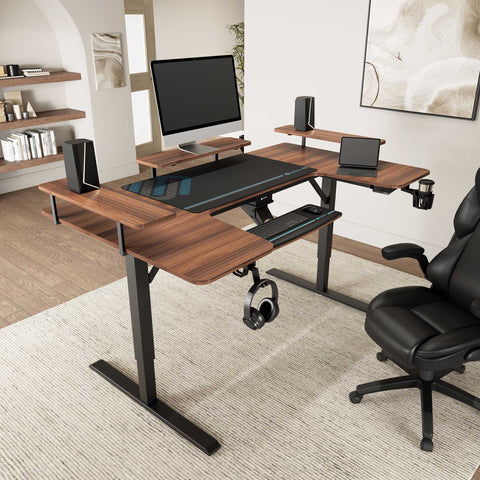
For instance, desks like the L-Shaped Standing Desk with Accessories Set (60"x23") come equipped with a dedicated "Socket Holder," providing a purpose-built location for mounting a power strip cleanly and securely. This small design feature signals a deep understanding of user needs, simplifying the entire process of cable management.
Regular Maintenance and Inspection
Your work is not done after the initial installation. A safe workstation requires periodic checks. Every six months, or after any major desk reconfiguration, perform a quick inspection:
- Check Connections: Ensure all plugs are firmly seated in the power strip.
- Inspect Cords: Look for any signs of abrasion, pinching, or discoloration on the cord jackets. A soft or discolored plastic casing is a sign of overheating.
- Verify Mounting: Confirm that the power strip is still securely mounted to the desk.
This proactive approach aligns with guidance from safety authorities like the U.S. Consumer Product Safety Commission (CPSC), which emphasizes that product safety relies on both proper design and correct ongoing use.
Environmental Factors
Finally, consider the environment where your desk is located. For setups in areas that may be prone to moisture, such as a basement or garage office, it is highly advisable to plug your power strip into an outlet protected by a Ground-Fault Circuit Interrupter (GFCI). This device can quickly shut off power if it detects a short circuit, providing an essential layer of protection against electric shock.
Key Takeaways
Elevating your workspace with a standing desk introduces new variables for power management. Moving beyond the "set it and forget it" mindset is crucial for safety and functionality. By focusing on a few core principles, you can create a setup that is clean, reliable, and secure.
First, choose the right tool for the job. Select a certified, mountable power strip with adequate surge protection and a layout that accommodates your devices. Second, install with care. Calculate your power load, provide a service loop for movement, and ensure the strip is well-ventilated. Finally, commit to regular inspections. A brief check every few months can prevent minor issues from becoming major hazards.
By treating your under-desk power setup with the attention it deserves, you protect your equipment, enhance your productivity, and ensure your ergonomic workspace remains a safe space.
Disclaimer: This article is for informational purposes only and does not constitute professional electrical advice. Electrical work can be dangerous. Always prioritize safety and consult a qualified electrician if you are unsure about any aspect of your installation, especially if it involves modifying wiring or working with your home's electrical system. Follow all local electrical codes and manufacturer instructions.





Leave a comment