

The Science of Spinal Relief: Understanding the 135-Degree Recline Heuristic
Why does back pain often intensify as the workday progresses, even for those who consciously attempt to "sit up straight"? The traditional 90-degree posture—long touted as the gold standard for office ergonomics—is increasingly scrutinized by musculoskeletal experts. For many professionals, this rigid, upright position contributes to a phenomenon known as static loading, where the muscles of the trunk remain in a state of constant contraction to fight gravity, leading to premature fatigue and increased intradiscal pressure.
The search for a more sustainable way to sit has led to the emergence of the "135-degree rule." This concept suggests that reclining the torso to a specific angle can help alleviate the mechanical stress placed on the lumbar spine. However, applying this rule effectively requires more than just leaning back; it necessitates an understanding of the physiological principles of disc decompression and the mechanical limitations of standard office furniture.
Quick Take: Core Conclusions & Action Checklist
- The 135° Rule is a Heuristic: It is a practical guide for load minimization, not a clinical prescription.
- Dynamic Movement is Key: Use the 20-8-2 rhythm (20 mins sitting, 8 mins standing, 2 mins moving).
- Hardware Matters: Look for synchro-tilt mechanisms and adjustable headrests to prevent neck strain.
- Eye Level: Always adjust your monitor height when changing your recline angle.
The Physiology of Intradiscal Pressure and Static Load
To understand why recline matters, one must first understand the mechanics of the intervertebral discs. These fibrocartilaginous cushions act as shock absorbers between the vertebrae. Unlike most tissues, discs are largely avascular, meaning they lack a direct blood supply. They rely on a process called "imbibition"—a pump-like mechanism driven by pressure changes—to receive nutrients and expel waste.
When a person sits in a strict 90-degree position, the weight of the upper body creates a significant axial load. According to the U.S. Occupational Safety and Health Administration (OSHA), poor posture is a core risk factor for work-related musculoskeletal disorders. In an upright seated position, the lumbar spine often loses its natural inward curve (lordosis), causing the discs to compress unevenly. This sustained pressure can hinder the nutrient exchange process, potentially leading to disc degeneration over time.
Furthermore, static working postures—those held for long periods without movement—can lead to reduced blood circulation. The International Organization for Standardization (ISO) 11226:2000 provides specific limits for static postures, emphasizing that the duration of a hold is just as critical as the angle itself. Prolonged sitting increases the hydrostatic pressure within the disc nucleus, which can push fluid out and reduce disc height by the end of the day.
Deconstructing the 135-Degree Rule: Fact vs. Heuristic
The "135-degree rule" gained prominence following biomechanical studies that used magnetic resonance imaging (MRI) to measure spinal disc movement and pressure. Early research, such as the often-cited work by Nachemson (1999), suggested that a reclined position could reduce intradiscal pressure compared to sitting upright or slouching.
However, modern expertise suggests that 135 degrees should be viewed as a heuristic (a practical rule of thumb) rather than a universal law. While Agarwal et al. (2018) confirmed that sit-stand workstations and adjustable recline can help alleviate low back discomfort, the idea of a single "perfect" angle is an oversimplification.
The Mechanism of Load Minimization
It is more accurate to describe the 135-degree recline as "load minimization" rather than "true decompression." True spinal decompression typically requires clinical intervention, such as traction. In a seated environment, reclining to approximately 135 degrees works by:
- Shifting the Center of Gravity: A portion of the upper body weight is transferred from the spine to the backrest of the chair.
- Reducing Muscle Activity: The muscles of the lower back (erector spinae) may not have to work as hard to maintain an upright posture against gravity.
- Opening the Trunk-Thigh Angle: Increasing the angle between the torso and the thighs helps maintain the natural lumbar curve, which may reduce the posterior "pinching" of the discs.
Method & Assumptions for Postural Modeling
The following table provides a comparison of postural loads. These figures are illustrative estimates intended to show relative differences between positions, not clinical thresholds.
| Parameter | 90° Posture (Upright) | 110° Posture (Tasking) | 135° Posture (Relaxed) | Rationale |
|---|---|---|---|---|
| Lumbar Load | High (100% Baseline) | Moderate (~80%) | Low (~65%) | Estimated IDP reduction |
| Muscle Activity | Continuous | Intermittent | Minimal | General EMG patterns |
| Disc Compression | Maximum | Moderate | Minimum | Axial load distribution |
| Recommended Use | Short-term typing | Standard focal work | Recovery/Deep thought | Workflow integration |
| Primary Support | Seat pan | Lumbar curve | Full backrest | Mechanical contact area |
Modeling Assumptions: These values are heuristic estimates based on anthropometric datasets for a 175cm (5'9") user with a standard BMI (18.5–24.9) using a chair with adequate lumbar support. Actual physiological response and "feel" will vary based on individual spinal morphology, chair quality, and specific measurement methods (e.g., sensor placement).

The "Gotchas": Common Pitfalls of the Reclined Position
While the 135-degree angle offers theoretical benefits, practical application reveals several "friction points" where users may inadvertently cause new strains.
1. The "Turtle Neck" Effect
A frequent mistake we observe in ergonomic audits is reclining the chair back while keeping the head forward to view a monitor. This creates a significant shear force on the cervical spine (the neck). If the monitor is not adjusted in tandem with the recline, the benefits to the lower back are often negated by the strain on the upper back and neck.
2. Lack of Pelvic Support
For recline to be effective, the pelvis must remain stable. Effective disc load minimization requires the pelvis to be maintained in a neutral position. If a chair lacks a synchronized tilt mechanism—where the seat pan rises slightly as the back reclines—the user may feel as though they are sliding out of the chair, leading to "perch sitting" which increases spinal tension.
3. Static Reclining
Just as static upright sitting is problematic, static reclining can lead to muscle stiffness. The World Health Organization (WHO) 2020 Guidelines emphasize reducing total sedentary time. Recline should be used as a dynamic recovery point, not a permanent "set and forget" position.
Engineering the Solution: Essential Chair Features
To achieve the benefits of the 135-degree rule, furniture should meet specific technical standards. The Business and Institutional Furniture Manufacturers Association (BIFMA) G1-2013 Ergonomics Guideline provides a framework for the adjustable ranges required to fit the 5th to 95th percentile of the population.
Synchronized Tilt Mechanisms
A high-performance executive chair should feature a "synchro-tilt" mechanism. This ensures that the seat and backrest move in a specific ratio (often 1:2). As you recline 20 degrees, the seat pan tilts up by approximately 10 degrees. This keeps your feet on the floor and your pelvis supported, facilitating a natural movement that promotes blood circulation.
Adjustable Lumbar and Headrest
As the body reclines, the point of contact with the lumbar support shifts. A chair should allow for vertical adjustment of the lumbar cushion to ensure it remains nestled in the small of the back. Similarly, an adjustable headrest is highly recommended for the 135-degree position to prevent the "turtle neck" effect.

Practical Recommendations for the Workday
Implementing a healthier office rhythm involves more than just buying the right chair; it requires behavioral intervention. As detailed in The 2026 Workstation White Paper, the integration of science and engineering is key to long-term wellness.
The 20-8-2 Rule
Developed by researchers at Cornell University, this rhythm is a practical way to manage static load:
- 20 Minutes of Sitting: Use a standard tasking recline (approx. 105-110 degrees) for focused work.
- 8 Minutes of Standing: Use a height-adjustable desk to transition to a standing posture. The Canadian Centre for Occupational Health and Safety (CCOHS) provides excellent guidance on setting up these workstations.
- 2 Minutes of Movement: Stretch or walk to promote blood circulation and lymphatic drainage.
Setting Your Recline Angle
- Find Your Baseline: Sit with your feet flat on the floor and your hips back in the seat.
- Adjust the Tension: Ensure the recline tension is firm enough to support you but flexible enough to allow movement.
- Lock for Focus: If your chair has a locking mechanism, use it during periods of deep thought or reading to maintain a consistent angle.
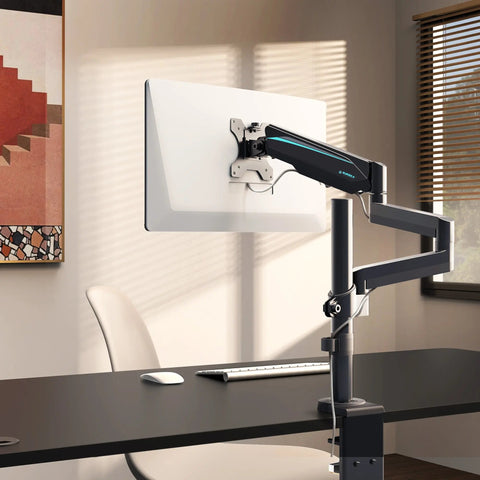
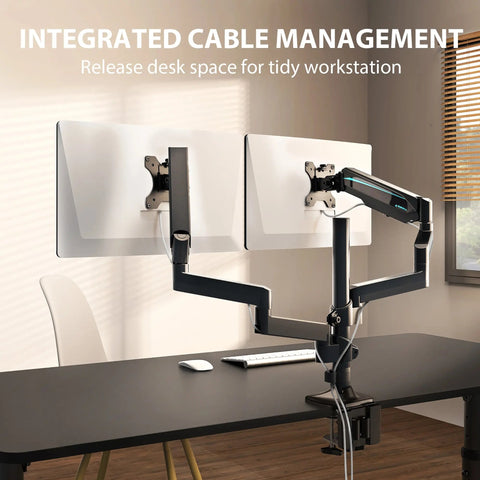
- Monitor Alignment: If you recline to 135 degrees, your monitor must be lowered or tilted upward to maintain a neutral gaze. Using a Dual Monitor Arm can facilitate these quick adjustments.

The Role of the Workstation Environment
Ergonomics does not end with the chair. The entire environment must support the user's postural changes. For example, the Health and Safety Executive (HSE) suggests that workstation setup checklists should include glare reduction and adequate legroom, both of which become more complex when a user reclines.
A height-adjustable executive desk allows the user to maintain the 135-degree recline for reading or attending virtual meetings while providing the option to stand for high-energy tasks. This "dynamic workstation" approach is supported by ISO 9241-5:2024, which specifies layout and postural requirements for modern office environments.

Summary of Best Practices for Disc Health
Achieving spinal relief is a multi-faceted process. Based on common patterns from customer support and ergonomic audits (not a controlled lab study), the most successful users follow these three principles:
- Prioritize Movement Over Perfection: Do not obsess over achieving exactly 135 degrees. Instead, focus on changing your posture every 20-30 minutes.
- Ensure Full-Body Alignment: If you recline, your headrest and monitor must move with you. A supported neck is just as important as a supported lower back.
- Invest in Adjustability: Furniture that meets ANSI/BIFMA X5.1 standards ensures that the mechanical components will support your weight reliably through thousands of recline cycles.
By moving away from the "90-degree myth" and embracing a more dynamic, reclined, and movement-rich workday, professionals can help reduce their risk of chronic back pain and improve their overall well-being.
Disclaimer: This article is for informational purposes only and does not constitute professional medical advice. Individuals with pre-existing spinal conditions, herniated discs, or chronic pain should consult a qualified healthcare professional or physiotherapist before making significant changes to their workstation setup or adopting new postural habits.
Sources
- BIFMA G1-2013 Ergonomics Guideline
- ISO 9241-5:2024 Workstation layout & postural requirements
- OSHA eTools: Computer Workstations - Neutral Working Postures
- Cochrane: Workplace interventions for reducing sitting at work
- WHO 2020 Guidelines on Physical Activity & Sedentary Behaviour
- The 2026 Workstation White Paper: Converging Ergonomic Science and Sustainable Engineering




Leave a comment