

For content creators, the transition from a single display to a triple-monitor setup is often viewed as a rite of passage. It represents the shift from a hobbyist workspace to a professional studio capable of handling complex video timelines, live stream dashboards, and real-time community engagement. However, this expansion often introduces a hidden cost: a progressive increase in neck, shoulder, and eye strain.
While the productivity gains of a multi-monitor environment are documented, the physiological reality is that most desks are not designed to accommodate the sheer physical breadth of three 27-inch displays. When screens are improperly positioned, the user is forced into a state of "static load," where muscles must remain tensed to support repetitive or awkward head movements. This guide examines the ergonomic principles required to build a high-performance, three-monitor workstation that preserves long-term musculoskeletal health.
The Physiology of Multi-Screen Fatigue
The primary ergonomic risk in a triple-monitor configuration is excessive lateral head rotation. According to the Occupational Safety and Health Administration (OSHA), repetitive tasks and poor posture are core risk factors for Musculoskeletal Disorders (MSDs). In a three-monitor setup, the "gotcha" is often the sternocleidomastoid muscle—the large muscle running along the side of the neck.
When monitors are spread too wide, the user frequently rotates their head beyond 30 degrees to view the outer edges of the side displays. This exceeds the "primary viewing zone," leading to localized muscle fatigue and, over time, chronic tension headaches. According to ISO 11226:2000, which evaluates static working postures, maintaining these angles for extended periods places an unacceptable load on the cervical spine.
Furthermore, the "Digital Eye Strain" or Computer Vision Syndrome (CVS) becomes a significant factor. With three screens, the eyes are bombarded with light from a wider arc, forcing the ciliary muscles to work harder to refocus as the gaze shifts between screens of potentially different depths or resolutions.
The Desk Depth Dilemma: A Quantitative Analysis
A common misconception among creators is that any wide desk can support three monitors. In reality, the critical dimension is not width, but depth. Most standard office desks feature a depth of 24 inches (61 cm). For a triple 27-inch setup, this depth is fundamentally insufficient.
Based on our theoretical simulations of a professional creator setup, a standard 24-inch desk creates a "Viewing Distance Deficit." The Society of Motion Picture and Television Engineers (SMPTE) suggests a viewing distance that maintains a 30° field of view for optimal immersion and comfort. For a 27-inch 4K monitor, this ideal distance is approximately 43.9 inches. At a 24-inch desk depth, the user is sitting nearly 20 inches too close to the screen.
This proximity forces the side monitors to be angled sharply inward, creating a "cramped arc" that necessitates more head movement rather than simple eye tracking. To resolve this, a deeper work surface or an adjustable arm system is required to push the displays further back.
Table 1: Viewing Distance and Field of View (Theoretical Estimates)
| Monitor Size | Desk Depth | Actual Viewing Dist. | Recommended Dist. (SMPTE) | Deficit |
|---|---|---|---|---|
| 24" (1080p) | 24" | ~22" | 32" | 10" |
| 27" (4K) | 24" | ~22" | 43.9" | 21.9" |
| 32" (4K) | 30" | ~28" | 52" | 24" |
Note: Values are estimated based on standard user seating positions and industry viewing standards.
To accommodate this depth, an L-shaped configuration is often the superior choice. The GTG - L60, L-Shaped Glass LED Gaming Desk (60"x40") provides a 40-inch side depth that allows for a more natural monitor arc, ensuring that even the peripheral screens remain within a comfortable focal range without forcing the user against the wall.

Structural Integrity: Load Capacity and Motor Safety
Content creators often underestimate the total weight of a triple-monitor rig. A professional setup typically includes three monitors (approx. 10–15 lbs each), three heavy-duty monitor arms (3–5 lbs each), a high-end PC, and studio peripherals like audio interfaces and microphones.
When choosing a height-adjustable desk, the motor's utilization rate is a critical safety factor. Following the principles outlined in the BIFMA Standards (ANSI/BIFMA X5 series), furniture should be tested for long-term durability under load. A single-motor desk with an 80 kg (176 lbs) capacity might technically hold a 77 kg load, but it operates at 96% utilization. This leads to increased "wobble" at standing heights and premature motor failure.
In contrast, a dual-motor system typically offers a 120 kg (265 lbs) capacity, allowing the same setup to run at roughly 64% utilization. This provides the structural headroom necessary for stability during high-precision tasks like video editing or competitive gaming.
Table 2: Equipment Load Utilization (Simulated Scenario)
| Component | Estimated Weight (kg) | Single Motor (80kg Cap) | Dual Motor (120kg Cap) |
|---|---|---|---|
| 3x 27" Monitors + Arms | 24 kg | -- | -- |
| Full Tower PC | 25 kg | -- | -- |
| Tabletop + Peripherals | 28 kg | -- | -- |
| Total Load | 77 kg | 96% Utilization | 64% Utilization |
| Stability Rating | -- | Low (High Risk) | High (Safe Margin) |
For those prioritizing structural stability in a traditional rectangular footprint, the Gaming Desk with Z Shaped Legs (61"x25") utilizes a reinforced frame design to minimize lateral movement, though users must still be mindful of the 25-inch depth constraint when mounting triple arms.

The Strategic Setup: Arranging Three Monitors
Achieving a "Neutral Position" is the ultimate goal of any ergonomic intervention. As defined by the Canadian Centre for Occupational Health and Safety (CCOHS), a neutral posture allows the joints to be naturally aligned, reducing stress on the muscles and tendons.
1. The Symmetrical Arc
For creators who use all three monitors equally (e.g., sim-racing or immersive editing), a symmetrical arc is preferred. The center monitor should be directly in front of the user, with the side monitors angled inward so that the distance from the user's eyes to each screen remains constant. This minimizes the need for the eyes to re-focus when switching views.
2. The Primary/Secondary Hierarchy
If one monitor is used for primary tasks (editing/gaming) and the others for secondary tasks (chat/system monitoring), the side monitors should be placed in a way that minimizes head rotation. A useful heuristic: ensure you can see the outer edges of your side monitors by moving only your eyes. If you must turn your chin to see the edge, the monitors are too far apart.
3. Monitor Arm Integration
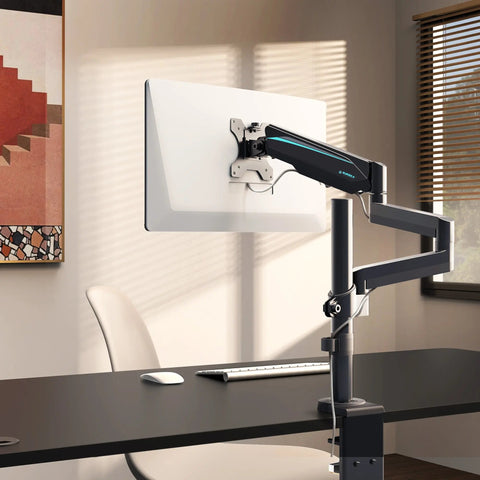
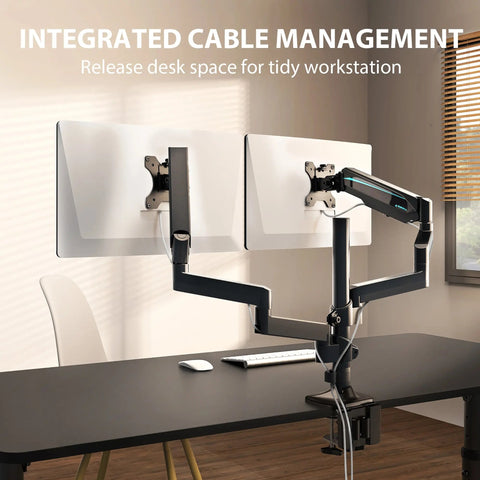
Standard monitor stands are rarely sufficient for triple setups because they occupy too much desk real estate and offer limited height adjustment. A Dual Monitor Arm combined with a single arm allows for precise "top-bezel alignment." When mixing monitor sizes, always align the top edges of the screens. This maintains a consistent horizontal sightline and prevents the "vertical head tilting" that leads to upper trapezius strain.

4. Cable Management as a Safety Protocol
A triple-monitor setup involves at least six video/power cables, often more with USB hubs. This tangle is more than an aesthetic issue; it is a mechanical hazard. Cables that are too tight can restrict the movement of a sit-stand desk, potentially damaging ports or tipping monitors. Investing in deep cable trays and using Convertible Desktop Shelves, set of 2 can help route cables away from the primary workspace, keeping the underside of the desk clear for leg movement.
[[related_products_2]]
Practical Recommendations for the Workday
Hardware is only half of the ergonomic equation; behavior is the other. Even the most perfectly aligned workstation cannot offset the risks of "prolonged static sitting."
- The 20-8-2 Rhythm: Developed by Cornell University Ergonomics Web, this guideline suggests sitting for 20 minutes, standing for 8 minutes, and moving/stretching for 2 minutes. This rhythm encourages blood circulation and prevents the "static load" that leads to MSDs.
- Monitor Height: The HSE (UK) guidelines for Display Screen Equipment recommend that the top of the screen should be at or slightly below eye level. For creators, this often means raising the monitors higher than a standard stand allows to account for a slightly reclined, "neutral" seating posture.
- The "Arm's Length" Rule: Your monitors should be roughly an arm's length away (20–30 inches). If you find yourself leaning forward to read text, increase the font scaling in your OS settings rather than moving the monitor closer. Leaning forward ("turtling") is a primary cause of lower back and neck pain.
Identifying Boundaries and Risks
While these recommendations apply to the majority of users, ergonomics is not a "one size fits all" science. Individuals with pre-existing conditions, such as cervical disc herniations or chronic repetitive strain injuries, should exercise caution. A 1:1 sit-stand ratio might be too aggressive for someone with lower-limb circulatory issues, while a high-arc monitor setup might exacerbate certain types of vision impairment.
The principles discussed here are based on the 2026 Workstation White Paper: Converging Ergonomic Science and Sustainable Engineering, which emphasizes that a workstation must adapt to the user, not vice versa. If you experience persistent numbness, tingling, or sharp pain, consult a physical therapist or ergonomic specialist to tailor your setup to your specific anthropometric needs.

Summary of Best Practices
To transform a triple-monitor setup from a health hazard into a productivity powerhouse, creators should focus on three pillars: Depth, Stability, and Movement.
- Prioritize Desk Depth: Ensure your desk is at least 30 inches deep, or use monitor arms to maximize viewing distance and reduce neck rotation.
- Verify Load Capacity: For heavy triple-monitor rigs, a dual-motor height-adjustable desk provides the necessary stability and motor longevity.
- Manage the Visual Field: Align monitors in a tight arc, matching top bezels to create a seamless sightline.
- Interrupt Static Postures: Use the 20-8-2 rule to keep blood flowing and muscles engaged throughout the session.
By applying these research-backed principles, content creators can ensure that their technical infrastructure supports their creative output without compromising their physical well-being.
Disclaimer: This article is for informational purposes only and does not constitute professional medical advice. Always consult with a qualified healthcare provider or ergonomic specialist before making significant changes to your workstation, especially if you have pre-existing musculoskeletal conditions.
References
- BIFMA G1-2013 Ergonomics Guideline for Furniture
- CCOHS: Office Ergonomics - Sit/Stand Desk
- Cornell University Ergonomics Web — Workstation Guides
- HSE: Working safely with display screen equipment (DSE)
- ISO 11226:2000 Evaluation of static working postures
- OSHA eTools: Computer Workstations - Neutral Working Postures
- The 2026 Workstation White Paper: Converging Ergonomic Science and Sustainable Engineering




Leave a comment