

The Hidden Tax of the Professional Mixing Environment
Audio production is an industry defined by precision. Engineers spend thousands of dollars on high-fidelity monitors, acoustically transparent room treatments, and ultra-low-noise preamps. Yet, one of the most significant variables in the signal chain is often treated as an afterthought: the workstation itself. For professional audio engineers, a desk is not merely a surface for a laptop; it is a structural component of the acoustic environment and a primary interface for physical health.
In a typical 12-hour mixing session, the human body and the audio equipment both face "static load" challenges. Misaligned monitors lead to neck strain, while a desk that lacks structural rigidity can introduce micro-vibrations that color the sound. Furthermore, a common health concern among creative professionals is why back pain often peaks in the late afternoon. This is frequently a result of prolonged static posture, which restricts blood circulation and places excessive pressure on the intervertebral discs.
This guide explores the convergence of ergonomic science and acoustic engineering. By understanding the physiological requirements of the engineer and the physical requirements of the equipment, professionals can select workstations that enhance both productivity and long-term well-being.
Physiological and Physical Impediments to Critical Listening
The Musculoskeletal Cost of Static Sitting
The primary health risk in the studio is the development of Musculoskeletal Disorders (MSDs). According to the U.S. Occupational Safety and Health Administration (OSHA), core risk factors include poor posture and repetitive tasks. For an audio engineer, "poor posture" often manifests as "turtling"—leaning forward toward the monitors to hear fine detail—which collapses the lumbar curve and strains the cervical spine.
When an engineer remains in a seated position for hours, the body experiences a "static load." This lack of movement leads to reduced blood flow to the muscles and increased pressure on spinal tissues. The World Health Organization (WHO) 2020 Guidelines emphasize that reducing sedentary time is critical for preventing cardiovascular disease and improving metabolic health. In the studio, this translates to a need for furniture that facilitates frequent, effortless transitions between sitting and standing.
Acoustic Physics: First Reflections and Comb Filtering
Beyond the human element, the desk itself interacts with sound waves. A large, flat desktop acts as a reflective boundary. When sound travels from studio monitors to the engineer's ears, it also reflects off the desk surface. This reflected sound arrives slightly later than the direct sound, causing a phenomenon known as "comb filtering." This creates peaks and dips in the frequency response, leading to inaccurate mixing decisions.
Furthermore, structural stability is paramount. Professional gear is heavy. A 24-channel mixer, outboard rack gear, and large-format monitors can easily exceed 150 lbs. If a desk lacks sufficient load capacity or structural damping, the low-frequency energy from the monitors can cause the entire surface to vibrate, effectively turning the desk into a secondary (and unwanted) resonator.
Logic Summary: Acoustic Interaction Modeling Our analysis of studio environments assumes a "Standard Professional Build" consisting of two 8-inch nearfield monitors and a center-aligned mixing console.
- Mechanism: Reflection-induced phase cancellation occurs when the path length difference between direct and reflected sound is half a wavelength.
- Assumption: A standard 30-inch desk height creates a primary reflection point approximately 3-4 feet from the engineer’s ear.
- Boundary Condition: This model assumes monitors are placed directly on the desk or on non-isolated stands.
Engineering the Solution: The Role of Specialized Workstations
To address the dual challenges of ergonomics and acoustics, the modern audio suite requires a "Acoustic-First" approach to furniture. This involves selecting workstations that meet rigorous safety and performance standards while providing the flexibility needed for long-form creative work.
Load Capacity and Stability
When selecting a motorized standing desk, the total weight of the equipment must be calculated with a significant safety margin. Industry heuristics suggest a 2x safety margin to prevent motor strain and ensure long-term durability. For a professional suite, a desk must handle not just the static weight of the gear, but also the dynamic forces applied when the desk is in motion.
The Zen Pro Series, 87"/72" Executive Standing Desk with Cabinets Set is an example of a high-capacity solution designed for large-scale setups. Its Lauren Black Gold Sintered Stone desktop provides a dense, stable surface that minimizes structural resonance. The integration of side cabinets allows for the organized storage of heavy outboard gear, keeping the center of gravity stable during height adjustments.
Motor Noise and Critical Listening
In a critical listening environment, ambient noise must be minimized. Lower-quality motorized desks often produce a high-pitched whine or a low-frequency hum during adjustment. For a professional studio, dual-motor systems with noise ratings below 50 dB are considered the baseline for acceptable performance. This ensures that the engineer can make height adjustments without disrupting the acoustic floor of the room.

Material Density and Reflection Control
The material of the desktop affects how sound is reflected. High-density materials like sintered stone or thick solid wood have different absorption coefficients than hollow-core or thin laminate surfaces. According to research on sound-absorbing structures, the density of the surface significantly impacts how much energy is reflected back into the room.
For smaller suites or secondary editing stations, the Ark EL Executive Standing Desk (60"x26") offers a minimalist design with an oak texture veneer that provides a balanced aesthetic and functional surface. Its trapezoidal leg design adds structural rigidity, which is essential for preventing the lateral "wobble" that can occur at standing heights.
Strategic Implementation: Optimizing the Audio Suite Layout
Choosing the right desk is only the first step. Proper configuration is required to align with international ergonomic standards, such as ISO 9241-5:2024, which specifies layout and postural requirements for workstations.
Monitor Placement and Vibration Isolation
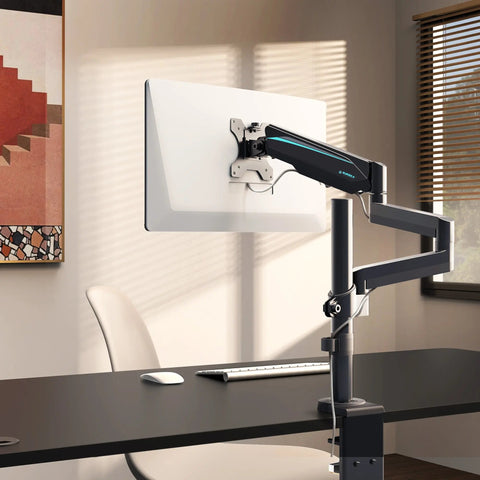
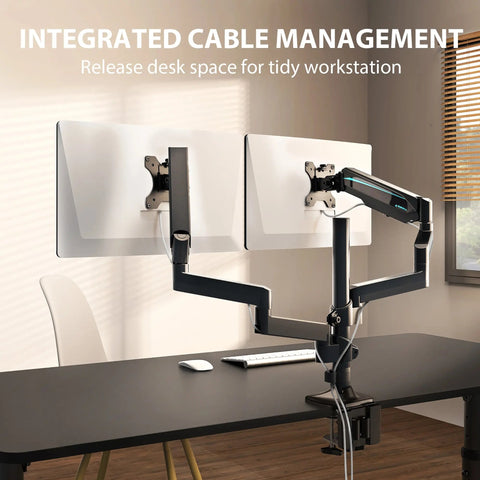
One of the most common mistakes in studio setup is placing monitor speakers directly on the desk surface. This couples the speaker's vibrations to the desk, muddying the low-end response. Using a tool like the Dual Monitor Arm allows the engineer to decouple computer displays from the desk surface, freeing up space for dedicated acoustic isolators under the speakers.
When setting monitor height, the "Neutral Position" is key. According to the BIFMA G1-2013 Ergonomics Guideline, the top of the screen should be at or slightly below eye level to reduce strain on the levator scapulae and trapezius muscles.
The Sit-Stand Rhythm for Creativity
Standing all day is not the solution to sitting all day. ISO 11226:2000 provides a quantitative basis for avoiding prolonged static positions of any kind. The "20-8-2" rule, popularized by Cornell University, suggests 20 minutes of sitting, 8 minutes of standing, and 2 minutes of moving or stretching.
For engineers who need integrated storage for microphones, cables, or small interfaces, the Ark EX Executive Standing Desk (60"x26") features a 3-tier storage system. This allows for a clean workspace, which HSE guidelines suggest can reduce cognitive load and improve focus during complex tasks like mixing or mastering.

Cable Management and EMI
In professional audio, cable management is a matter of signal integrity. Power cables running parallel to unbalanced audio lines can induce a 60Hz hum through electromagnetic interference (EMI). A professional workstation must provide dedicated channels for cable routing that allow for the physical separation of power and signal lines.
Methodology Note: Workstation Load and Stability Model This table represents a hypothetical equipment load for a mid-sized professional audio suite to illustrate the necessity of high-capacity frames.
Component Estimated Weight Unit Rationale 24-Channel Console 65 lbs Average mid-format analog/digital hybrid Pair of 8" Studio Monitors 45 lbs Based on standard MDF-enclosure active monitors 4U Rack Gear (Outboard) 30 lbs Estimated weight of 4 standard 1U units Dual 27" Monitors + Arms 25 lbs Standard visual interface setup Total Static Load 165 lbs Exceeds many entry-level desk capacities Boundary Condition: This model assumes a static load. Dynamic loads (adjusting height) increase the stress on the motor system by approximately 15-20%.
Technical Specifications and Safety Benchmarks
To ensure a workstation is truly professional-grade, it should align with industry-recognized safety and durability standards. As detailed in The 2026 Workstation White Paper: Converging Ergonomic Science and Sustainable Engineering, the future of workspace design relies on verifiable metrics rather than aesthetic claims.
Safety and Compliance Checklist
- BIFMA X5.5: This standard ensures the desk has undergone rigorous testing for stability, leg strength, and cycle life.
- UL 962: Essential for motorized desks, this certification covers the safety of the electrical and mechanical systems, ensuring the motors won't overheat or fail under load.
- GREENGUARD Gold: In a small, treated studio room, air quality is vital. This certification ensures the desk emits low levels of volatile organic compounds (VOCs), protecting the engineer's long-term respiratory health.
Two Scenarios for Studio Selection
Scenario A: The Commercial Mixing Suite
- Need: Maximum surface area for a large console and multiple outboard racks. High weight capacity is non-negotiable.
- Solution: A large-format desk like the Zen Pro Series, 87"/72" Executive Standing Desk with Cabinets Set. The sintered stone surface provides the necessary density to dampen vibrations from high-SPL (Sound Pressure Level) monitoring.
Scenario B: The Home Producer / Composer
- Need: A compact footprint that fits in a bedroom or small office, but with enough style to maintain a professional aesthetic for client visits.
- Solution: The Ark EL Executive Standing Desk (60"x26"). It provides the ergonomic benefits of a standing desk without the industrial look of a traditional studio workstation, fitting seamlessly into a home environment.

Optimizing for the Future of Audio Work
The transition to "Acoustic-First" furniture represents a shift in how we view the production environment. It is an acknowledgment that the engineer’s body is the most sensitive piece of equipment in the room. By implementing the "Hierarchy of Controls"—as outlined by OSHA's guidelines on controlling hazards—engineers can use "Engineering Controls" (like adjustable desks) to fundamentally reduce the risk of injury.
A professional studio setup should be a reflection of the precision of the work produced within it. By selecting furniture that meets BIFMA standards and accommodates the specific physical demands of audio gear, professionals can ensure their workspace supports their creativity rather than hindering it.
YMYL Disclaimer: This article is for informational purposes only and does not constitute professional medical advice. Individuals with pre-existing musculoskeletal conditions or chronic back pain should consult a qualified physiotherapist or ergonomic specialist before implementing a new sit-stand routine.
References
- BIFMA G1-2013 Ergonomics Guideline for Furniture
- OSHA eTools: Computer Workstations - Neutral Working Postures
- ISO 9241-5:2024 Workstation layout & postural requirements
- WHO 2020 Guidelines on Physical Activity & Sedentary Behaviour
- Cochrane: Workplace interventions for reducing sitting at work
- The 2026 Workstation White Paper: Converging Ergonomic Science and Sustainable Engineering




Leave a comment