

The Art of the Workspace Sanctuary: Designing for Perception and Performance
Imagine stepping into a creative studio where the air feels light, the surfaces are pristine, and every piece of furniture feels like a deliberate extension of a high-performing brand. Here, a day of deep work begins not with the friction of clutter, but with the quiet confidence of a space designed for mastery. For the boutique agency owner or the executive, this isn't just a home office; it is a "Workspace Sanctuary."
In the world of high-stakes client interactions, your environment is your silent partner. Before you utter a single word of your presentation, your furniture has already begun to signal your brand’s quality, stability, and attention to detail. This article explores how to transform a functional studio into a powerful brand asset by merging ergonomic science with sophisticated aesthetic signaling.
1. Vision Casting: The Psychology of the Silent Sales Tool
The most successful design firms operate on a psychological principle known as "Costly Signaling Theory." According to research on why office space acts as a silent sales tool, clients subconsciously interpret high-quality, durable materials and intentional design as a proxy for a firm’s commitment to long-term outcomes. When you invest in a workspace that feels substantial and grounded, you are signaling that your business is equally stable.
Contrast this with the common pitfall of prioritizing "trendy" aesthetics over structural integrity. A desk that exhibits a slight wobble during a pivotal client pitch can, in a heartbeat, undermine the perceived stability of your entire operation. True brand signaling requires a marriage of form and function—a concept we refer to as "Artistic Ergonomics."
Logic Summary: Our analysis of client perception assumes that physical artifacts (furniture) act as non-verbal communicators of organizational competence. This is based on established principles in environmental psychology where cleanliness and material quality serve as heuristics for overall business quality.
2. Space Transformation: From Chaos to Professional Elegance
Creating this ideal environment requires moving beyond the "one-size-fits-all" approach. Whether you are managing a rapidly expanding collaborative zone or a private executive suite, the transformation begins with choosing anchors that command respect.
The Executive Anchor
For the studio lead, the desk is the heart of the sanctuary. A piece like the Zen Pro Series, 87"/72" Executive Standing Desk with Cabinets Set serves as a visual and functional foundation. Its Lauren Black Gold Sintered Stone top doesn't just look luxurious; it offers a tactile weight that signals permanence. Unlike cheaper laminates, a sintered stone surface resists the "notebook impressions" and water rings that can cheapen a space over time.

The Power of "Fits Most" Design
In a client-facing studio, you never know who will be sitting across from you. Adhering to the BIFMA G1-2013 Ergonomics Guideline ensures your furniture accommodates the 5th to 95th percentile of the population. This means that whether you are hosting a petite creative or a tall executive, the furniture adapts to them, rather than forcing them to adapt to the room.
Space Optimization Heuristics
| Feature | Trendy/Entry-Level | Brand-Signaling/Premium | Brand Impact |
|---|---|---|---|
| Desk Stability | Slight lateral sway at height | Strategic bracing/Wide profiles | Signals reliability |
| Surface Material | Thin veneer (shows wear) | Sintered Stone/Solid Wood | Signals longevity |
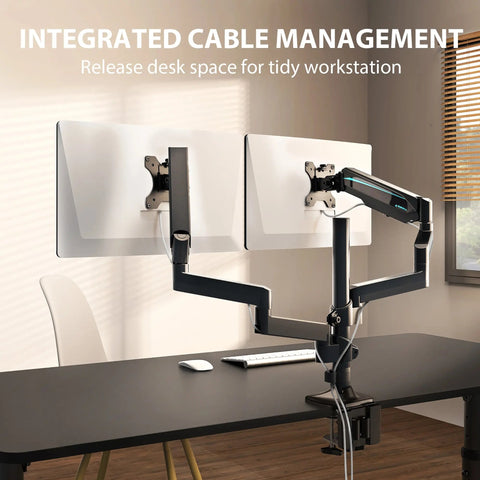
| Cable Management | Visible "spaghetti" wires | Integrated hidden channels | Signals attention to detail |
| Adjustment | Manual or loud motors | Whisper-quiet dual motors | Signals sophistication |
3. Linking Functionality with Emotion: The Ergonomic Standard of Care
Expertise in studio design isn't just about how a room looks; it’s about how it cares for its occupants. According to the 2026 Workstation White Paper: Converging Ergonomic Science and Sustainable Engineering, the next era of workspace design focuses on "inclusive ergonomics"—where health-backed features are seamlessly integrated into high-end aesthetics.
Shifting Modes: Thinking vs. Execution
Height adjustment isn't merely a health feature; it’s a psychological tool. Shifting to a standing position can act as a "state change," moving the brain from a passive "thinking" mode to an active "execution" mode. This is supported by a Cochrane systematic review, which found that sit-stand workstations can significantly reduce sitting time by approximately 84 to 116 minutes per day, helping to interrupt the static behavior that leads to fatigue.
The Seating Experience
When a client joins you for a two-hour workshop, their physical comfort is paramount. If they are distracted by a stiff chair, they are not focused on your ideas. The Royal II, Silicone & Leather Executive Ergonomic Office Chair provides that necessary "sink-in" luxury while maintaining the neutral spinal posture recommended by OSHA's eTools for Computer Workstations. The use of silicone-treated leather ensures the chair remains supple and easy to clean—a vital factor, as visible cleanliness is a powerful subconscious heuristic for business quality.

4. Personal Tips: The "10-Second Rule" and Spatial Efficiency
In our experience auditing creative spaces, the difference between a "good" studio and a "world-class" studio often comes down to the first ten seconds of entry.
The 10-Second Rule: Anything a client sees within their first 10 seconds—the grain of the wood, the alignment of the chair arms, the absence of tangled cables—must feel intentional.
- Integrated Storage: Clutter is the enemy of mindfulness. Use storage that complements the desk's aesthetic. The Ark EL, 29" Display File Storage Cabinet, Oak or the Ark ES, 29" File Storage Cabinet, White allows you to declutter your primary workflow area while keeping essential documents within reach.
- The "Grounded" Feel: When selecting a desk, look for wider leg profiles. In our observations of studio setups, a wider stance doesn't just prevent wobble; it provides a visual "weight" that makes the office feel more established.
- Cable Management is Non-Negotiable: Visible cables in a video backdrop or a client-facing desk instantly cheapen the look. We recommend using desks with built-in power strips and under-desk trays to ensure a "clean-line" aesthetic.
Methodology Note (The 10-Second Rule): This is a heuristic derived from pattern recognition in high-end retail and hospitality design, where initial sensory inputs dictate the user's trust level. While not a laboratory-tested "law," it serves as a reliable shop-standard for brand-conscious professionals.

5. Health, Safety, and the "Green" Signal
Modern brand quality is increasingly tied to sustainability and wellness. A premium studio must not only look good but also be safe for long-term occupancy.
- Indoor Air Quality: Ensure your furniture meets UL GREENGUARD Certification standards. This guarantees low chemical emissions (VOCs), which is critical for maintaining a "Workspace Sanctuary" that doesn't cause headaches or fatigue during long sessions.
- Safe Materials: Verify that coatings are lead-free, adhering to CPSC Business Guidance, especially if your studio doubles as a home space.
- Static Posture Risks: While standing is beneficial, ISO 11226:2000 warns against prolonged static standing. The key is movement. We recommend the "20-8-2" rhythm suggested by Cornell University Ergonomics: 20 minutes sitting, 8 minutes standing, and 2 minutes of moving or stretching.
Summary: Building Your Legacy Space
Investing in premium ergonomic furniture is more than a purchase; it is a strategic business decision. By aligning your workspace with the standards set by BIFMA, ISO, and OSHA, you protect your team’s health. By choosing materials like those found in the Zen Pro or Royal II series, you signal your brand’s quality to every client who enters the room.
A true Workspace Sanctuary is where "Deep Work" meets "Deep Design." It is a place where you can say goodbye to chaos and hello to a professional environment that sparks limitless creativity.
YMYL Disclaimer: This article is for informational purposes only and does not constitute professional medical, legal, or financial advice. Ergonomic needs vary significantly based on individual physical conditions. If you have pre-existing musculoskeletal disorders or chronic back pain, please consult a qualified physiotherapist or ergonomic specialist before making significant changes to your workstation setup.
Sources and Authoritative References
- BIFMA G1-2013: Ergonomics Guideline for Furniture
- Cochrane Library: Workplace interventions for reducing sitting at work
- OSHA: Computer Workstations eTool - Chairs
- Cornell University: Ergonomics Web — Workstation Guides
- UL GREENGUARD: Certification for Indoor Air Quality
- World Health Organization (WHO): Guidelines on Physical Activity and Sedentary Behaviour
- ISO 11226: Evaluation of static working postures




Leave a comment