

The Vision: A Workspace Sanctuary for the Multi-Hyphenate Creator
Imagine a home office that sparks your limitless creativity—a space where the transition from a high-resolution digital canvas to the tactile grit of a charcoal sketchbook feels as natural as breathing. For the modern hybrid artist, the day doesn't exist in a single medium. It begins with a morning of deep work, sketching raw concepts in an analog journal, and evolves into a marathon of digital rendering, color grading, and client calls.
Too often, this fluid workflow is interrupted by the "desk shuffle"—the frustrating dance of pushing aside a keyboard to make room for a drawing tablet, or worse, burying a beautiful physical reference under a mountain of cables. We believe your desk should be a silent partner in your process, not a hurdle. By applying the principles of ergonomic science and spatial zoning, you can transform your studio from a cluttered workshop into a refined Workspace Sanctuary.
The Science of the Switch: Why Zoning Matters
In our observations of creative workflows, the most significant "friction point" isn't a lack of space; it’s cognitive and physical context-switching fatigue. When your drawing tablet is placed directly in front of your monitor, it creates peripheral clutter that forces your brain to work harder to maintain focus.
According to The 2026 Workstation White Paper: Converging Ergonomic Science and Sustainable Engineering, the convergence of digital and physical tools requires a layout that respects "non-overlapping zones." This isn't just an aesthetic choice; it’s rooted in biomechanics.
The 12-18 Inch "Clear Sweep" Heuristic
We recommend a "clear sweep" area of at least 12 to 18 inches between your digital and analog zones. This physical buffer acts as a mental pallet cleanser, signaling to your brain that you are shifting gears between mediums.
Logic Summary: The Zoning Efficiency Model Our recommendation for a 12-18 inch buffer is a heuristic based on the "Reach Envelopes" defined in the BIFMA G1-2013 Ergonomics Guideline.
Parameter Value/Range Unit Rationale Primary Zone Reach 14–16 Inches Based on 5th percentile female arm reach Transition Buffer 12–18 Inches Heuristic for mental context-switching Secondary Zone Depth 18–24 Inches Required for A3-sized physical media Monitor Distance 20–40 Inches OSHA eTools: Monitors Standing Interval 8–20 Minutes Cornell 20-8-2 Sit-Stand Rhythm

Building the Digital Hub: Precision and Posture
For the digital portion of your workflow, ergonomics is paramount. Long sessions of digital painting or 3D modeling can lead to significant neck and shoulder strain if the workstation isn't properly calibrated.
We often see artists hunching over their tablets, a posture that violates the "Neutral Working Posture" guidelines established by OSHA. To combat this, we suggest prioritizing monitor height and distance first. Using a high-performance desk like the Zen Pro Series, 87"/72" Executive Standing Desk with Cabinets Set provides the expansive surface area (up to 87 inches) needed to keep your digital peripherals—like your Cintiq, keyboard, and mouse—from encroaching on each other.
The "Push-Back" Strategy
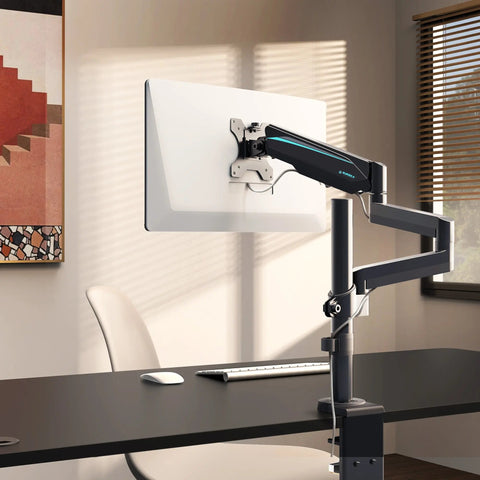
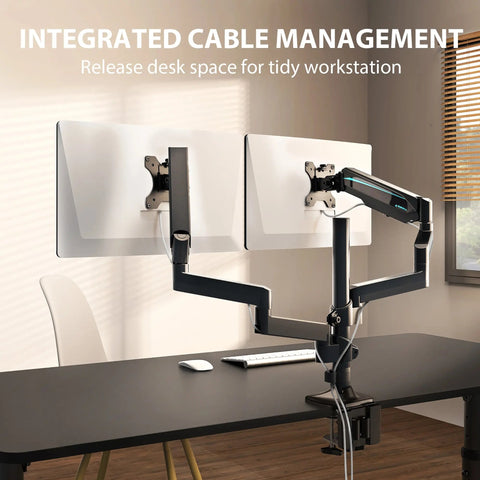
One expert tip we’ve discovered is using a monitor arm that allows the screen to be pushed back significantly when you are drawing traditionally. This prevents the "visual parallax" error where users set their monitor too close, leading to eye strain. According to the ISO 9241-5:2024 standard, maintaining a flexible viewing distance is key to long-term visual health.
To further declutter this zone, consider Convertible Desktop Shelves, set of 2. By elevating your secondary monitors or reference speakers, you reclaim the "prime real estate" on your desk surface for your hands and tools.

The Analog Anchor: Honoring Traditional Media
The most common mistake in a hybrid studio is treating the analog space as an afterthought. If you have to "set up" your sketchbook every time you want to use it, you won't use it. Successful setups use the desk's geometry—such as the long leg of an L-shaped desk or a dedicated side cabinet—as a permanent analog zone.
For those with a smaller footprint, the Standing Desk with Drawers, Wood Finish (47'' /55'') offers a brilliant solution. The integrated drawers allow you to keep physical references, pens, and sketchbooks within arm's reach but tucked away to maintain that clean, minimalist aesthetic.
Vertical Storage: The Secret to Spatial Efficiency
Integrating storage within arm's reach is more effective than desktop organizers, which inevitably eat into your transition zone. A vertical solution like the Ark EL, 71'' Display Bookshelf with Storage Cabinet, Oak serves as both a functional tool library and an inspirational display for your finished works.
Safety Note: When installing tall storage like the Ark EL, ensure it is properly anchored. We align our designs with the CPSC STURDY / 16 CFR Part 1261 standards to prevent tip-over accidents, ensuring your sanctuary remains a safe environment for your family and your art.

Movement as a Creative Catalyst: The Sit-Stand Rhythm
Standing isn't just about health—it’s a way to shift between "thinking" and "execution" modes. Many creators find that standing is better for broad, physical movements (like painting on a large canvas), while sitting supports the fine motor control required for digital detailing.
The World Health Organization (WHO) 2020 Guidelines emphasize reducing sedentary time to improve cardiovascular health. However, as noted in a systematic review by Cochrane (2018), sit-stand desks are most effective when combined with behavioral changes.
The 20-8-2 Rule
We recommend the Cornell University Ergonomics Web "20-8-2" rhythm:
- 20 Minutes Sitting: For intensive, focused digital work.
- 8 Minutes Standing: For sketching, brainstorming, or physical media work.
- 2 Minutes Moving: Stretching or walking to reset your circulation.
This rhythm prevents the "static load" on your muscles that ISO 11226:2000 warns against. By using the programmable memory presets on a desk like the Zen Pro Series, 87"/72" Executive Standing Desk with Cabinets Set, you can transition between these modes with a single touch, maintaining your creative flow without manual interruption.
Curating Your Ambiance: Lighting and Mindfulness
A true Workspace Sanctuary appeals to all the senses. Lighting is often the "hidden" factor in creative productivity. Avoid harsh overhead lights that cause glare on your digital screens. Instead, use layered lighting:
- Task Lighting: A focused, adjustable lamp for your analog zone.
- Ambient Lighting: Warm, indirect light to reduce eye strain.
- Natural Light: Position your desk perpendicular to a window to catch the sun without direct glare.
Adding greenery is another simple way to boost inspiration. Plants not only improve air quality but also provide a "soft" visual focus that helps reduce mental fatigue during deep work sessions.
Designing Your Future Workflow
Building a hybrid workspace is an investment in your long-term creative health and professional output. By moving away from the "one-size-fits-all" desk mentality and embracing a zoned, ergonomic approach, you create an environment where your best work can flourish.
Whether you are rendering a 3D environment or sketching a character in ink, your space should adapt to you. Start by defining your zones, prioritizing your posture, and choosing tools that support the rhythmic nature of your art. Your future self—and your art—will thank you.
Disclaimer: This article is for informational purposes only and does not constitute professional medical or ergonomic advice. If you have pre-existing musculoskeletal conditions, please consult a qualified healthcare professional or a certified ergonomist before making significant changes to your workstation setup.
References
- BIFMA G1-2013 Ergonomics Guideline for Furniture
- OSHA eTools: Computer Workstations
- WHO 2020 Guidelines on Physical Activity & Sedentary Behaviour
- Cornell University Ergonomics Web — Workstation Guides
- ISO 9241-5:2024 Workstation layout & postural requirements
- Cochrane: Workplace interventions for reducing sitting at work (2018)
- The 2026 Workstation White Paper: Converging Ergonomic Science and Sustainable Engineering




Leave a comment