

The Myth of the 90-Degree Posture: Why Static Sitting Fails
For decades, the standard advice for office ergonomics was rigid: sit with your back at a 90-degree angle to your thighs, feet flat on the floor, and arms at your sides. However, many professionals find that even after meticulously following this "perfect" setup, they still experience a dull ache in the lumbar region by mid-afternoon. The reason is physiological: static sitting, even in a theoretically correct position, is inherently taxing on the human body.
According to the Canadian Centre for Occupational Health and Safety (CCOHS), prolonged static postures lead to muscle fatigue and reduced blood circulation. When you hold a single position, your muscles undergo "static loading," where they remain contracted to support your weight without the benefit of movement to flush out metabolic waste. Furthermore, research indicates that a strict 90-degree seated posture can increase intradiscal pressure by up to 40% compared to a slightly reclined position. This pressure compresses the spinal discs, potentially leading to long-term Musculoskeletal Disorders (MSDs).
To combat these issues, modern ergonomic theory has shifted toward "Active Sitting." This approach uses the chair not as a static throne, but as a dynamic tool that encourages micro-movements throughout the day. The two most critical, yet often misunderstood, features for achieving this are recline tension and the tilt lock.
The Physiology of the Recline: Reducing Spinal Load
The human spine is not designed to remain vertical for eight hours. The lumbar spine has a natural inward curve (lordosis) that is often flattened when sitting, especially if the chair does not facilitate a proper hip-to-torso angle. By utilizing the recline function, you effectively shift a portion of your upper body weight from the spine to the chair's backrest.
As detailed in The 2026 Workstation White Paper: Converging Ergonomic Science and Sustainable Engineering, the convergence of mechanical support and physiological needs requires a workstation that facilitates movement. When you recline, the angle between your pelvis and your torso opens. This "open hip angle" (typically between 100 and 115 degrees) reduces the strain on the hip flexors and allows the lumbar spine to maintain its natural curvature with less effort.

Logic Summary: Our analysis of spinal load assumes a standard user mass and a neutral gaze point. The 100–115 degree recline range is identified as the "sweet spot" for reducing intradiscal pressure while maintaining visual focus on a monitor (based on standard ergonomic modeling).
Mastering Recline Tension: The "Core-First" Calibration
The most common mistake users make with high-adjustability chairs is setting the recline tension too high. Many people tighten the tension knob until the backrest feels like a solid wall, believing that "stiff" equals "supportive." In reality, a tension setting that is too high functionally disables the chair’s dynamic features, forcing the user into a static posture.
The goal of recline tension is to create a state of "weightlessness" or balanced equilibrium. You should be able to recline by simply leaning back and breathing deeply, without having to "push" off the floor with your feet. Conversely, the chair should not be so loose that it drops you backward the moment you relax your core.
The Heuristic for Tension Calibration
To find your ideal setting, follow this professional calibration sequence:
- Start at Zero: Turn the tension knob (usually located under the seat) toward the "minus" or "loose" direction until it reaches its limit.
- The Core Test: Sit in a neutral position. Try to recline using only your core muscles—do not use your legs. If the chair snaps back aggressively, it is still too tight.
- Incremental Adjustment: Tighten the knob slowly until you find the point where the chair supports your weight in an upright position but yields immediately when you lean back intentionally.
- The Breath Check: You should be able to initiate a micro-recline just by taking a deep diaphragmatic breath and slightly shifting your center of gravity.
Modeling Note (Reproducible Parameters): This calibration model assumes a user within the 5th to 95th percentile of body mass as defined by BIFMA G1-2013.
Parameter Value/Range Unit Rationale User Weight 130–250 lbs Standard range for office seating Tension Resistance ~5–12 lbs of force Required for core-initiated movement Recline Initiation < 5 Degrees Movement triggered by breathing shift Return Force 1:1 Ratio Backrest follows the spine during return
The Strategic Use of Tilt Lock: Beyond "On" and "Off"
While recline tension manages the ease of movement, the tilt lock manages the range of movement. Most users treat the tilt lock as a binary switch: either locked fully upright for work or fully reclined for a break. However, the most effective way to use this feature for productivity is to utilize intermediate locking positions.
The 110-Degree Work Angle
Locking the chair in a slight recline—approximately 10 to 15 degrees back from the vertical—is often more beneficial for focused work than a 90-degree lock. This angle opens the hip-to-torso relationship, which ISO 11226:2000 (Evaluation of static working postures) suggests is critical for reducing the load on the lower limbs and back. In this position, the chair provides "passive support," allowing your postural muscles to relax while the backrest takes the weight of your torso.

Active vs. Passive Locking
- Active Mode (Unlocked): Keep the tilt lock disengaged when performing tasks that require frequent movement, such as reaching for items on your desk or switching between multiple monitors. This encourages "dynamic sitting" and helps maintain blood circulation as recommended by the World Health Organization (WHO).
- Passive Mode (Locked): Use the tilt lock at an intermediate angle when you are in a "deep work" phase, such as writing or analyzing data. Locking the angle prevents you from slowly sliding into a slouch as your muscles tire.
Archetypes of Adjustment: Navigating Your Chair’s Controls
Understanding how to adjust your chair is just as important as knowing why. Most professional ergonomic chairs fall into one of three control archetypes. Identifying yours is the first step toward proper tuning.
1. The Multi-Lever System
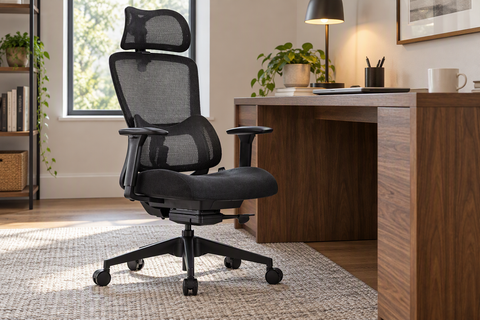
Common in traditional high-end office chairs, this system uses separate levers for seat height, backrest angle, and tilt lock.
- The "Gotcha": Users often confuse the tilt lock lever with the backrest angle lever. The tilt lock controls the movement of the entire "bucket" (seat and back together), while the backrest angle lever only moves the back. For the best ergonomics, use the tilt function to maintain a consistent angle between your seat and back.
2. The Single-Lever Synchronous Tilt
Many modern chairs use a "synchro-tilt" mechanism where one lever controls both height and lock. Pushing the lever in or pulling it out usually toggles the tilt lock.
- The "Gotcha": These chairs often have a fixed ratio (e.g., for every 2 degrees the back reclines, the seat tilts 1 degree). This is designed to keep your feet flat on the floor while you recline, adhering to ANSI/BIFMA X5.1 safety and performance standards.
3. The Weight-Sensitive/Electric Mechanism
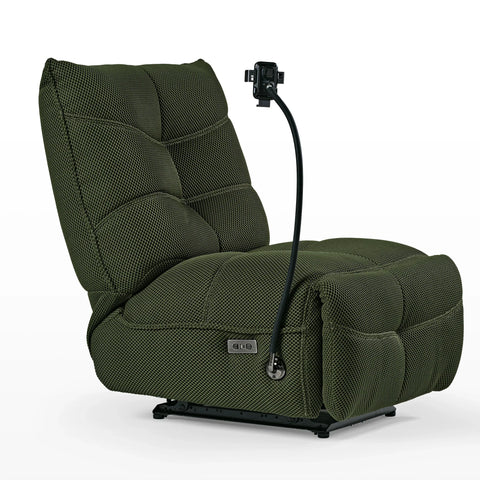
Advanced chairs may feature weight-sensitive tension that adjusts automatically based on the user's mass, or electric controls that allow for precision tilting at the touch of a button.
- The "Gotcha": Even with automatic systems, manual overrides are often present. If the chair feels too stiff, check for a "fine-tuning" dial that allows you to adjust the baseline resistance.
A Practical Protocol for Active Sitting
To maximize your investment in an ergonomic chair and protect your musculoskeletal health, adopt the following workday protocol. This routine integrates advice from Cornell University's Ergonomics Web, specifically their "20-8-2" rule (20 minutes sitting, 8 minutes standing, 2 minutes moving).
Step 1: The Morning Tune-Up
Every morning, reset your chair. Your body's needs can change based on your clothing (thickness of a sweater) or even your hydration levels (disc height).
- Unlock the tilt.
- Perform the "Core Test" to ensure tension is balanced.
- Set your monitor height so your gaze is slightly downward (about 15-20 degrees), which complements a slight recline. According to OSHA eTools: Monitors, this helps minimize neck strain.
Step 2: The "Deep Work" Anchor
When you begin a task that requires intense focus for more than 30 minutes:
- Recline to approximately 110 degrees.
- Engage the tilt lock at this intermediate position.
- Ensure your lumbar support is firmly in the small of your back.
Step 3: The "Phone/Meeting" Flex
During video calls or phone meetings:
- Disengage the tilt lock.
- Allow yourself to move freely. Lean back during listening phases and sit forward when speaking. This variation in "static load" is essential for long-term comfort.
Step 4: The Deep Recline Break
Once an hour, or during a short break, recline the chair to its maximum (usually around 135–145 degrees). This position significantly offloads the spine and is excellent for a "micro-reset." However, do not attempt to type or work in this position, as it will cause significant neck strain (craning forward to see the screen).
Logic Summary: This protocol is designed to transition the user between different "modes" of work, ensuring that no single muscle group is overtaxed for an extended period. It aligns with the "Hierarchy of Controls" model used by OSHA to mitigate workplace risks.
Addressing Common Pitfalls
Even with the best equipment, certain habits can undermine your ergonomic efforts.
- The "Perching" Habit: Many users sit on the edge of their seat, leaving a gap between their back and the chair. This renders the recline and tilt features useless. Always sit deep in the pocket of the chair so your sacrum is in contact with the backrest.
- The Feet-on-the-Base Mistake: Placing your feet on the five-star base of the chair instead of the floor (or a footrest) tilts your pelvis backward and rounds your spine. For the recline function to work correctly, your feet must provide a stable base of support.
- Ignoring the Armrests: As you recline, your arms move away from the desk. If your armrests aren't adjusted to follow this movement, your shoulders will "shrug" to reach the keyboard, leading to tension in the trapezius muscles.
Summary of Best Practices for Active Sitting
| Feature | Goal | Recommended Setting |
|---|---|---|
| Recline Tension | Equilibrium | Loose enough to move with a deep breath; tight enough to support neutral sitting. |
| Tilt Lock | Range Control | Unlocked for general tasks; locked at 105–115° for deep focus. |
| Lumbar Support | Curvature | Positioned in the natural curve of the lower back; should feel firm but not "poking." |
| Work Rhythm | Movement | Change positions every 20–30 minutes; use full recline for 2-minute "resets." |
By mastering the recline and tilt lock features, you transform your chair from a piece of furniture into a performance tool. The goal of ergonomics is not to find a single "perfect" position, but to facilitate a workday filled with healthy, supported movement.
Disclaimer: This article is for informational purposes only and does not constitute professional medical advice. Individuals with pre-existing musculoskeletal conditions or chronic back pain should consult a qualified physiotherapist or ergonomic specialist before adopting a new seating routine.
References
- BIFMA G1-2013 Ergonomics Guideline for Furniture
- CCOHS: Office Ergonomics - Sit/Stand Desk
- ISO 11226:2000 Evaluation of static working postures
- OSHA eTools: Computer Workstations - Neutral Working Postures
- WHO 2020 Guidelines on Physical Activity & Sedentary Behaviour
- The 2026 Workstation White Paper: Converging Ergonomic Science and Sustainable Engineering




Leave a comment