

The Ergonomic Challenge of Small Spaces
Working from home, an apartment, or a dorm room often means dealing with a fundamental conflict: the need for a productive workspace versus the reality of limited square footage. A large, traditional office chair can feel like an intruder, consuming precious floor space and clashing with your home decor. The common response is to compromise, resorting to a dining chair, a stool, or even the couch. While this saves space, it comes at a significant cost to your well-being.

Why Your Dining Chair Is a Back-Pain Machine
That temporary solution for your video call can quickly become a source of chronic discomfort. Most household seating is not designed for sustained, focused work. It lacks the support and adjustability needed to maintain a healthy posture, forcing your body into stressful positions. According to the U.S. Occupational Safety and Health Administration (OSHA), prolonged static postures are a primary risk factor for musculoskeletal disorders (MSDs)—a broad category of injuries affecting muscles, nerves, tendons, and spinal discs.
When you sit for hours without proper support, your spine loses its natural "S" curve. Your shoulders hunch forward, your lower back flattens, and pressure builds in your neck and lumbar region. This static load reduces blood circulation and leads to muscle fatigue, which is why you might feel that nagging ache in your lower back or stiffness in your neck by the end of the day.
The Myth of the Bulky Chair: Why Bigger Isn't Always Better
A common misconception in the search for comfort is that a bigger, more thickly padded chair is inherently more ergonomic. This often leads people to buy large "executive" chairs that, while visually impressive, are poorly suited for compact living. In a small space, an oversized chair doesn't just look out of place; it can actively work against you.
I've seen this firsthand. A client of mine chose a deep, plush chair for his small home office nook. The seat was so deep he couldn't sit back and keep his feet on the floor, so he spent his days perched on the front edge, completely disengaged from the backrest. His investment in "comfort" actually forced him into a forward slouch, exacerbating his back pain. A chair that is too large prevents movement, reduces your ability to get close to your desk, and can be just as harmful as one with no support at all.
Decoding Compact Ergonomics: Key Features for Maximum Support
The solution isn't to abandon ergonomics; it's to embrace smarter design. A well-designed compact chair delivers the full suite of ergonomic benefits in a smaller, more efficient package. It proves that comfort and support are a result of intelligent engineering, not sheer size.
Adjustability Trumps Size: The Core of Compact Comfort
The most critical element of any ergonomic chair is its ability to adapt to your body. Industry standards from organizations like the Business and Institutional Furniture Manufacturers Association (BIFMA) provide guidelines for creating furniture that fits a wide range of people, typically from the 5th percentile female to the 95th percentile male. A good compact chair achieves this through precise, targeted adjustments.
Here are the non-negotiable adjustments you should look for, along with some quick-fit numbers I use in the field to find a good match:
| Feature | Optimal Range | Why It Matters |
|---|---|---|
| Seat Height | 40–52 cm | Allows you to keep your feet flat on the floor with your knees at a roughly 90-degree angle, forming the foundation of a stable posture. |
| Seat Depth | 38–45 cm | Ensures you can use the backrest while leaving a 2–3 finger gap behind your knees. This prevents pressure on nerves and blood vessels. |
| Lumbar Support | 6–12 cm adjustable height | The support should align with the natural curve of your lower back (L3-L4 region) to prevent slouching and reduce spinal load. |
| Recline Tension | 100°–125° usable range | A smooth recline encourages dynamic sitting and micro-movements, which are vital for circulation and preventing stiffness. |

Smart Design for Small Footprints
Beyond core adjustments, the best compact chairs use clever design to maximize function while minimizing their physical footprint. One of the most effective strategies is an armless design. While armrests can be helpful, they also add significant width. An armless chair like the sleek Matt, Faux Leather Office Chair can slide completely under a desk, freeing up valuable floor space when not in use. This makes it perfect for bedrooms or living rooms where the workspace needs to disappear at the end of the day.

Look for a slim profile and breathable materials. A mesh backrest, for instance, provides excellent ventilation and support without the bulk of thick padding. The chair's base is also important; a five-star base with a narrow radius offers stability without becoming a tripping hazard. Finally, ensure the casters match your flooring—soft casters for hard floors and hard casters for carpet—to ensure smooth, quiet movement.
Your First Two Weeks: A Practical Guide to Adaptation
Switching to a truly ergonomic chair can feel strange at first, especially if you're used to unsupportive seating. It's not uncommon to experience mild stiffness as your postural muscles are re-engaged. This is a positive sign that your body is adapting to a healthier alignment.
Pro Tip: Embrace the Adaptation Period
I always tell my clients to expect a one to two-week adaptation period. Your body has to unlearn years of poor posture habits. To make this transition smooth, I recommend a progressive sitting strategy:
- Start with Focused Blocks: For the first week, aim for 50-75 minute sitting sessions.
- Take Active Breaks: After each session, get up for 5-10 minutes. Walk around, stretch, or do a few simple exercises. The World Health Organization's guidelines emphasize the importance of breaking up long periods of sedentary time.
- Listen to Your Body: Discomfort is a signal to move. A good ergonomic chair supports you, but it can't eliminate the need for regular posture changes.
Step-by-Step Setup for a Perfect Fit
To get the most out of your chair, you must adjust it to your body. A common mistake I see is people adjusting their desk first, then contorting themselves to fit. Always start with your chair. Follow this sequence, based on guidelines from ergonomic authorities like the Canadian Centre for Occupational Health and Safety (CCOHS).
- Feet on the Floor: Stand in front of your chair and adjust the seat height until it's just below your kneecaps. Sit down and ensure your feet are flat on the floor (or a footrest). Your thighs should be roughly parallel to the floor.
- Check Your Seat Depth: Sit all the way back. You should be able to fit 2-3 fingers between the back of your knees and the edge of the seat.
- Position Lumbar Support: Adjust the backrest or lumbar pillow so it fits comfortably into the curve of your lower back.
- Set Armrest Height (If Applicable): Your elbows should be at a 90-100 degree angle, with your forearms parallel to the floor. Your shoulders should be relaxed, not hunched.
- Bring the Desk to You: Only after your chair is set should you adjust your desk or keyboard tray to match your seated posture.
Creating Synergy: The Best Accessories for a Compact Workspace
A compact chair is the foundation, but the right accessories can transform a small corner into a fully functional and comfortable ergonomic ecosystem.
Reclaim Your Desk with a Keyboard Tray
In a small workspace, every square inch of desk surface is prime real estate. A Pull-out Keyboard Tray is one of my favorite solutions for decluttering. It slides your keyboard and mouse under the desk when not in use, instantly freeing up space for writing, reading, or other tasks. More importantly, it allows you to position your keyboard at the ideal height to maintain that neutral wrist and arm posture you established when setting up your chair.

The Power of a Footrest
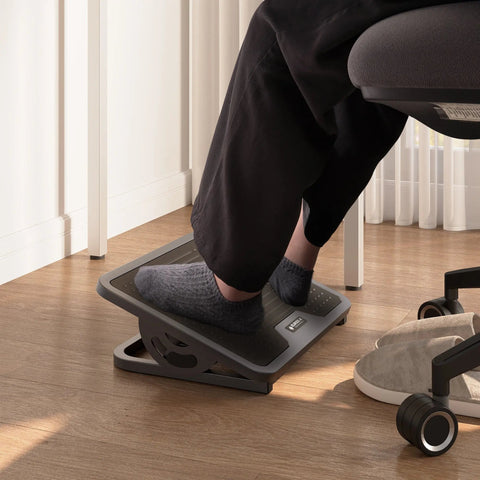
An ergonomic footrest is not just a luxury; it's an essential tool, especially in a compact setup. If you are a shorter individual, a footrest ensures your feet are properly supported even if you need to raise your chair to match a standard-height desk. For all users, an Adjustable Ergonomic Footrest promotes what's known as "active sitting." The ability to change the angle and rock your feet encourages blood circulation in your lower legs, fighting the fatigue and stiffness that comes from static postures. It’s a small addition that makes a huge difference in all-day comfort, pairing perfectly with a stylish and supportive chair like the Regal, PU Leather Home Office Chair.

Get Your Monitor to Eye Level
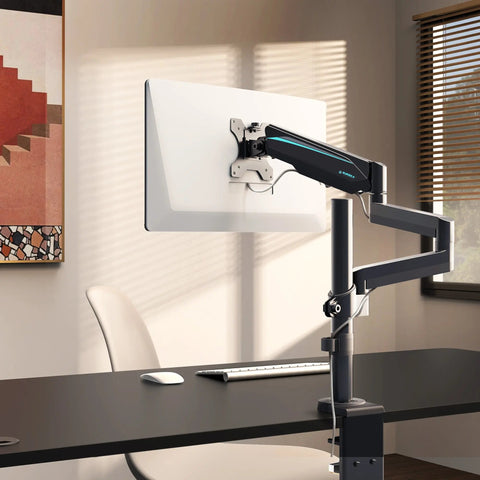
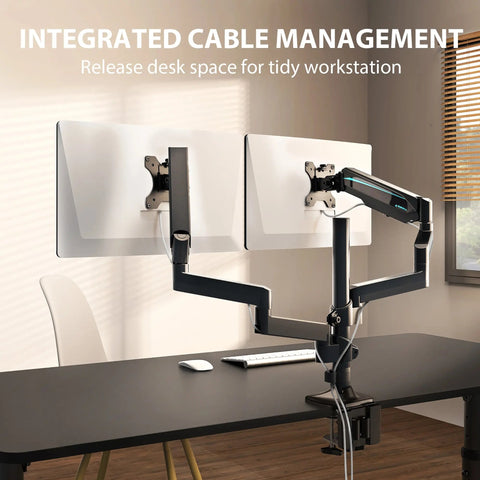
One of the most common and damaging ergonomic mistakes is working with a laptop on a desk or a monitor that is too low. This forces you to flex your neck forward, placing tremendous strain on your cervical spine. According to OSHA's workstation guidelines, the top of your monitor screen should be at or slightly below eye level. For most people, this is impossible without assistance. A simple monitor stand or even a stack of sturdy books is the fix. Raising your screen just a few inches can eliminate neck and shoulder pain almost immediately.
Key Takeaways: Big Comfort in Small Spaces
Creating a comfortable and productive workspace in a small home doesn't require you to sacrifice ergonomics. By choosing a well-designed compact chair and setting it up correctly, you can achieve full-featured support without the oversized footprint.
Here are the key principles to remember:
- Prioritize Adjustability Over Bulk: The best chair is one that fits your body. Focus on seat height, depth, and lumbar adjustments.
- A Compact Chair is a Specialized Tool: Designs with slim profiles, armless options, and breathable materials are purpose-built for smaller rooms.
- Your Body Needs Time to Adapt: Expect a brief adjustment period as your muscles learn to hold a healthy posture.
- Create an Ergonomic System: Pair your chair with accessories like a footrest and monitor stand to build a complete, supportive workstation.
Frequently Asked Questions (FAQ)
How much space should I have around my chair? Aim for at least 60-70 cm of clearance behind your desk to allow you to get in and out of your chair and move around without feeling cramped.
Are armless chairs truly ergonomic? Yes, for many people. The primary function of armrests is to support the forearms and reduce shoulder strain. However, in a small space, they can prevent you from getting close to your desk. An armless chair often promotes better posture by encouraging you to pull in close and use your desk for forearm support, while also saving significant space.
How do I know if a chair's seat depth is right for me? Sit all the way back in the chair so your lower back is touching the backrest. Slide your hand between the front edge of the seat and the back of your knees. If you can fit about two to three fingers in that gap, the depth is correct.
Can I use a compact chair for a full 8-hour workday? Absolutely. If the chair is truly ergonomic—meaning it has the proper adjustments and supports a neutral posture—it is suitable for full-time work. The key is to also practice healthy work habits, such as taking regular micro-breaks to stand and stretch.
Disclaimer: This article is for informational purposes only and does not constitute professional medical advice. You should consult a qualified professional, such as a physician or physical therapist, for advice tailored to your individual needs, especially if you have pre-existing health conditions.




Leave a comment