

Imagine a home office that not only fuels your productivity but also sparks your limitless creativity. Picture a workspace that is a true sanctuary—a seamless extension of your home’s modern decor, where every element is chosen with intention. Your office chair shouldn’t be a bulky, functional afterthought; it should be the centerpiece of this inspired environment, blending sophisticated design with uncompromising ergonomic support. This is where your best work begins.
For too long, we’ve been told to choose between a chair that looks good and a chair that feels good. We’re here to show you that you can have both. A thoughtfully selected office chair enhances your workflow, protects your well-being, and elevates your home’s aesthetic. It’s not just a piece of furniture; it’s an investment in your daily comfort and inspiration. In this guide, we’ll explore how to find the perfect ergonomic chair that complements your modern decor, transforming your workspace from merely functional to truly exceptional.
The Foundation of a Workspace Sanctuary: Core Ergonomic Principles
Before we dive into aesthetics, let’s build a foundation of comfort and support. An ergonomic chair is designed to work in harmony with your body, promoting a neutral posture that reduces stress on your muscles and spine. According to the U.S. Occupational Safety and Health Administration (OSHA), achieving a neutral posture is critical for preventing work-related musculoskeletal disorders. But what does that mean in practice? It comes down to a few key adjustable features.
Finding Your Fit: Seat Height and Depth
The first step to proper ergonomic alignment is setting your chair to the correct height. Your feet should rest flat on the floor with your knees bent at approximately a 90-degree angle. This stabilizes your pelvis and provides a solid base for your posture. Most quality office chairs offer a seat height range of about 16 to 21 inches, which accommodates most users.
Seat depth is just as crucial but often overlooked. When seated, you should have a gap of about two to four inches between the edge of the seat and the back of your knees. This prevents the seat from cutting off circulation to your lower legs. A common mistake is choosing a chair with a seat pan that’s too deep, forcing you to either slouch back to reach the lumbar support or perch on the edge with an unsupported spine. An ideal usable seat depth is between 15 and 18 inches.
The Secret to All-Day Comfort: Lumbar and Back Support
Your spine has a natural S-shaped curve, and the inward curve of your lower back (the lumbar region) requires dedicated support. Without it, we tend to slouch, which flattens the curve and strains the muscles and ligaments in our lower back. An ergonomic chair should have adjustable lumbar support that fits snugly into the curve of your back, encouraging a healthy posture.
Some chairs, like the elegant Galene, Faux Leather Office Chair, integrate this support into a gracefully contoured backrest. The key is that the support feels natural and holds your spine in alignment without forcing it into an unnatural position. High-back chairs also provide upper back and neck support, which is especially beneficial for those who spend long hours reading or in virtual meetings.

Relaxed Shoulders, Focused Mind: Armrest Alignment
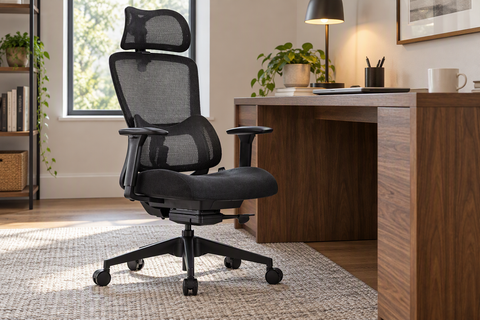
Properly adjusted armrests help reduce tension in your shoulders and neck. The goal is to set them at a height where your elbows can rest at a roughly 90-degree angle, allowing your shoulders to remain relaxed. If armrests are too high, they’ll force you to shrug your shoulders; if they’re too low, you’ll lean to one side.
A pro tip: always adjust your chair first, then bring your desk to the right height. If your armrests prevent you from getting close enough to your desk, consider lowering them or choosing a chair with adjustable or removable arms. This ensures your posture isn’t compromised by your setup.
Vision Casting: Matching Your Chair to Your Modern Decor
Now for the inspiring part: finding a chair that feels like it was made for your space. A modern home office is defined by clean lines, uncluttered surfaces, and a harmonious color palette. The right chair can tie the entire room together.
For the Minimalist: Clean Lines and Neutral Tones
A minimalist aesthetic thrives on simplicity and function. Look for chairs with a slim silhouette, understated colors like white, gray, or black, and high-quality materials. The Galene, Faux Leather Office Chair, with its smooth cream-colored faux leather and polished metal base, is a perfect example. It provides essential ergonomic support without adding visual clutter. Its design feels intentional and sophisticated, echoing the principles of minimalist decor.
For the Contemporary Enthusiast: Texture, Color, and Character
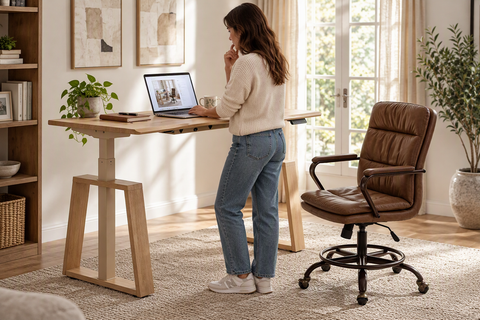
Contemporary design allows for more personality and texture. Here, you can play with materials like suede-style fabrics or chairs with unique stitching details. The Cameron, Ultra Soft Cushion Adjustable Office Chair brings a touch of retro charm with its segmented backrest and soft, inviting fabric. Available in rich brown or cool gray, it adds warmth and character to a room while its high back and spring-padded cushion deliver on comfort. This type of chair becomes a statement piece that complements other design elements, like a warm wood desk or metal shelving.

To make your chair feel fully integrated, pick one material accent—like the metal base or a wood finish on the armrests—and echo it elsewhere in the room. This simple trick makes the chair feel like a deliberate part of a cohesive design.
Material Matters: A Quick Comparison
Choosing the right material is a balance of aesthetics, comfort, and maintenance. Here’s a quick breakdown to help you decide:
| Material | Pros | Cons | Best For |
|---|---|---|---|
| Faux Leather | Sleek, elegant look; easy to clean; durable | Less breathable than mesh | Modern, minimalist, and executive-style offices. |
| Mesh | Excellent breathability; flexible support | Can feel less plush; may not fit all decor styles | Hot climates or users who prefer a cooler sitting experience. |
| Fabric/Suede | Soft, comfortable feel; wide range of colors/textures | Can be harder to clean; may retain heat | Creating a warm, inviting, and decor-forward workspace. |
Beyond the Chair: Curating Your Ergonomic Ecosystem
A great chair is the star, but the supporting cast is what creates a truly holistic workspace sanctuary. To maintain your well-being throughout the day, it’s important to introduce movement and ensure every part of your body is supported.
The Power of Movement: Sit, Stand, and Stretch
Ergonomists agree that the best posture is your next posture. Prolonged static positions, whether sitting or standing, can lead to discomfort. The World Health Organization’s guidelines emphasize the need to reduce sedentary time and interrupt long periods of static behavior. Many experts, including those at Cornell University's Ergonomics Web, recommend a rhythm of movement. A popular approach is the "20-8-2" rule: for every 30 minutes, sit for 20, stand for 8, and move or stretch for 2.
This doesn’t mean standing is a replacement for exercise. A systematic review from Cochrane found that sit-stand desks are effective at reducing sitting time, but the goal is to break up sedentary patterns, not to stand all day. Prolonged standing can cause its own issues, so balance is key.
Don’t Forget Your Feet: The Role of a Footrest
If your feet don’t rest comfortably on the floor once your chair is at the right height for your desk, a footrest is a non-negotiable accessory. It provides stability and promotes healthy circulation. The Adjustable Ergonomic Footrest is an excellent addition, offering an adjustable tilt from 0-20 degrees. This allows you to gently rock your feet, encouraging micro-movements that fight fatigue. The textured surface can also provide a gentle massage, relieving tension during a long day.
Common Misconceptions and Expert Solutions
Navigating the world of ergonomic chairs can be confusing. As a practitioner, I see people make the same well-intentioned mistakes. Let’s clear up a few things.
Myth Debunked: "Any Chair Is Fine as Long as I Take Breaks."
The Myth: Many believe that as long as they get up and walk around periodically, the quality of their office chair doesn’t matter much.
The Reality: While taking breaks is crucial, it doesn’t undo the damage caused by poor posture. According to guidelines from the Canadian Centre for Occupational Health and Safety (CCOHS), a properly adjusted chair is a foundational component of a safe workstation. An unsupportive chair forces your body into stressful positions for hours at a time. This can lead to cumulative strain on your muscles, discs, and ligaments, which a five-minute break can’t fully reverse. Think of it like this: you wouldn’t run a marathon in flip-flops just because you plan to rest afterward. Your chair is the equipment you use for the marathon of your workday.
Pro Tip: The Seat Depth "Gotcha"
A mistake I often see is people choosing a chair based on looks alone, only to find it incredibly uncomfortable. The most common culprit is a seat depth that doesn’t match their thigh length. This leads to persistent slouching as they try to reach the backrest. Always check the measurements. Your back should be in full contact with the lumbar support while leaving that 2- to 4-inch gap behind your knees. This single adjustment makes a world of difference in preventing lower back pain.
Setting Up Your Ergonomic Chair: A Step-by-Step Checklist
- Set Your Height: Sit down and adjust the seat height until your feet are flat on the floor and your knees are at a 90-degree angle. Use a footrest if needed.
- Check Your Depth: Slide back until your back touches the backrest. Ensure you have a 2- to 4-inch gap between the seat edge and the back of your knees.
- Align Lumbar Support: Adjust the lumbar support so it fits perfectly into the small of your back.
- Adjust Armrests: Lower or raise the armrests so your elbows are at a 90-degree angle and your shoulders are relaxed.
- Recline and Relax: Set the backrest angle to a comfortable position, typically between 100 and 110 degrees for active tasking.
Wrapping Up: Your Inspired Workspace Awaits
Your home office should be a place where you feel empowered, focused, and inspired. Choosing the right office chair is the most critical step in building that environment. By prioritizing a foundation of proven ergonomics, you protect your physical well-being and unlock deeper levels of concentration. And by selecting a design that seamlessly integrates with your modern decor, you create a workspace sanctuary that you’ll love spending time in.
You don’t have to compromise. Whether it’s the clean, sophisticated lines of the Galene chair or the warm, textured character of the Cameron, the perfect chair is waiting to transform your workflow and elevate your home.
Frequently Asked Questions (FAQ)
How do I know if a chair is truly ergonomic? Look for key adjustability features: seat height, seat depth, lumbar support, and armrest height. Certifications from bodies like the Business and Institutional Furniture Manufacturers Association (BIFMA) also indicate that a chair has been tested for safety and performance against industry standards.
How long does it take to get used to a new ergonomic chair? If you were previously using an unsupportive chair, it can take one to two weeks for your body to adjust to a proper posture. Some high-density foam cushions also have a break-in period of a few weeks to soften and conform to your body.
Is a high-back or mid-back chair better? This depends on your needs. A high-back chair provides head and neck support, which is ideal for long periods of sitting, reclining, or video conferencing. A mid-back chair offers excellent lumbar support and often has a smaller footprint, making it a great choice for smaller rooms or more active sitting.
Disclaimer: This article is for informational purposes only and does not constitute professional medical advice. If you have pre-existing health conditions, such as chronic back pain or a musculoskeletal disorder, please consult with a doctor or physical therapist to determine the best ergonomic setup for your specific needs.
References
- BIFMA G1-2013 Ergonomics Guideline for Furniture
- CCOHS: Office Ergonomics - Sit/Stand Desk
- Cochrane: Workplace interventions for reducing sitting at work (2018)
- Cornell University Ergonomics Web — Workstation Guides
- OSHA eTools: Computer Workstations - Neutral Working Postures
- WHO 2020 Guidelines on Physical Activity & Sedentary Behaviour




Leave a comment