

The Hidden Cost of an Unsupportive Chair
Feeling unfocused and uncomfortable while working from home? You might blame distractions or a heavy workload, but the real culprit could be your chair. An unsupportive chair does more than cause temporary aches; it actively undermines your productivity. This happens through a few key mechanisms.
First, there's the issue of musculoskeletal strain. When your chair doesn't support a neutral posture, your body compensates. You might slouch, lean forward, or cross your legs, all of which create static load on your muscles and spine. According to the U.S. Occupational Safety and Health Administration (OSHA), poor posture is a primary risk factor for developing musculoskeletal disorders (MSDs). These conditions, which affect muscles, nerves, and tendons, lead to persistent discomfort and can reduce your capacity for focused work.
Second, a bad chair restricts blood circulation. When a seat pan is too long or too hard, it can press against the back of your knees, compressing blood vessels. This not only causes numbness in your legs but also reduces overall blood flow, which can contribute to fatigue and a feeling of sluggishness. The World Health Organization's (WHO) guidelines emphasize reducing sedentary time, and a chair that causes discomfort actively discourages the micro-movements necessary for healthy circulation.
Finally, this physical discomfort directly translates to cognitive costs. When your brain is constantly receiving signals of pain or strain from your back, neck, or legs, it diverts mental resources away from your tasks. This constant, low-level distraction makes it harder to concentrate, solve complex problems, and maintain productivity throughout the workday. Investing in a proper ergonomic chair isn't about luxury; it's about removing a fundamental barrier to performance.
What Makes a Chair Truly Ergonomic?
An "ergonomic" chair is one designed to fit the human body and its movements, promoting a healthy posture and reducing physical stress. It goes far beyond a simple cushion and backrest. True ergonomic design is about adjustability, allowing you to customize the chair to your unique body shape and workstation setup. For a deeper look at the core components, our What Makes an Office Chair Truly Ergonomic? A Guide provides additional detail.
Here are the non-negotiable features of a high-quality ergonomic chair and why they matter.
| Feature | Ergonomic Purpose & Benefit |
|---|---|
| Adjustable Seat Height | Allows you to place your feet flat on the floor with your thighs roughly parallel to it. This stabilizes your pelvis and provides a solid foundation for your posture. The typical range for most adults is between 16 to 21 inches (40–53 cm). |
| Adjustable Seat Depth | Ensures you can sit all the way back, utilizing the lumbar support, while leaving a gap of 2-3 finger-widths between the seat edge and the back of your knees. This prevents pressure on nerves and blood vessels. |
| Lumbar Support | Supports the natural inward curve of your lower back (the lumbar spine). Quality chairs have height-adjustable lumbar support to fit the curve of your specific back, preventing slouching and reducing spinal load. |
| Adjustable Armrests | Allows your shoulders to remain relaxed and your elbows to rest at a comfortable 90-100° angle. They should be adjustable in height, width, and pivot to support your arms during different tasks without forcing shoulder shrugging. |
| Recline & Tilt Tension | Enables you to change your posture throughout the day. A slight recline of 100-110° can reduce pressure on the spine during focused work, while a deeper recline is useful for short breaks. Tilt tension should be set to support your body weight as you recline. |
| Swivel & Casters | Facilitates easy movement and access to different parts of your desk without straining or twisting your torso. |

Debunking a Common Myth: "If It's Comfortable, It's Ergonomic"
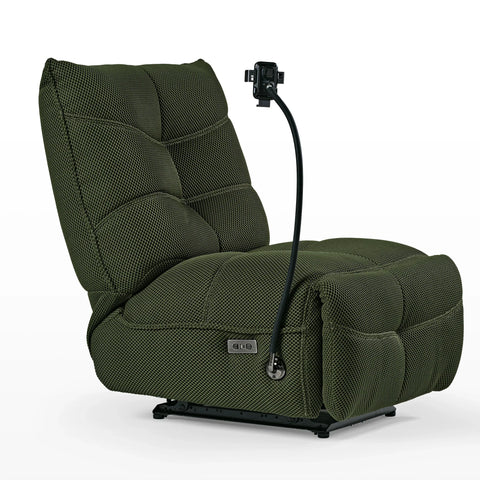
A common misconception is that any chair that feels comfortable for a few minutes is automatically ergonomic. A plush, soft chair might feel great initially, but it often lacks the underlying structure and adjustability to provide proper support over an eight-hour workday. These chairs can encourage slouching as your body sinks into them, leading to the very musculoskeletal strain you want to avoid. True ergonomic comfort comes from sustained, adjustable support that promotes a healthy posture, not from passive cushioning alone.
A Step-by-Step Guide to Perfect Posture
Owning an ergonomic chair is only half the battle; knowing how to adjust it is crucial for unlocking its benefits. Many users make the mistake of adjusting features by eye or feel, which often leads to a suboptimal setup. Follow this systematic approach, detailed further in our guide to adjusting your chair correctly, to create a personalized fit.
Expect an adaptation period of 1-2 weeks. If you have been sitting in a poor posture for years, a correctly adjusted ergonomic chair might feel strange or even slightly uncomfortable at first as your body adapts to a healthier alignment. Stick with it and make small, incremental changes.
-
Set Your Seat Height: Start here. Ignore the desk for now. Adjust the seat height until your feet are flat on the floor and your knees are at a roughly 90-degree angle, with your thighs parallel to the ground. A common mistake is setting the height too high, causing your feet to dangle, or too low, raising your knees and stressing your lower back.
-
Adjust the Seat Depth: Sit all the way back in the chair so your back is against the backrest. Slide the seat pan forward or backward until you have a gap of about two to three finger-widths (around 2-3 inches) between the front edge of the seat and the back of your knees. This prevents the seat from cutting off circulation.
-
Position the Lumbar Support: The support should fit right into the natural curve of your lower back (around the L3-L4 vertebrae, or belt level). If it’s adjustable, move it up or down in small increments. Sit and work for 15-20 minutes between adjustments to feel the effect before changing it again.
-
Set the Armrests: Adjust the armrests so your elbows can rest lightly on them at a 90 to 100-degree angle. Your shoulders should be relaxed, not hunched. If the armrests prevent you from getting close enough to your desk, lower them or, if possible, adjust them inward.
-
Fine-Tune the Recline: For focused work, a slight recline of 100-110 degrees is often more comfortable than sitting perfectly upright at 90 degrees, as it reduces pressure on the spinal discs. Set the recline tension so that it supports your weight but still allows you to move and change positions easily. Reserve deeper reclines for breaks.
Choosing the Right Chair for Your Home Office
When selecting a chair for a home office, you need a blend of professional-grade ergonomics and aesthetics that fit your space. Look for a chair with a wide range of adjustments to ensure it can be tailored to your body, especially if you are petite or tall.
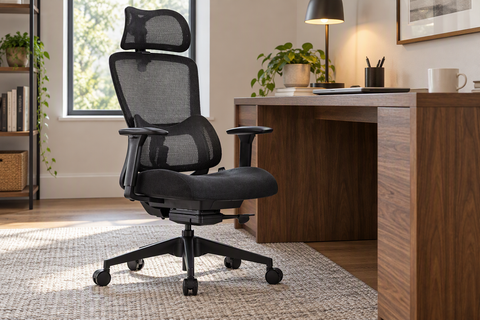
The Lira, Ergonomic Office Chair is an excellent example of a chair that balances these needs. It features a breathable mesh back to maintain airflow during long sessions, along with key adjustments like seat depth, 3D armrests, and a dynamic lumbar support system. Its modern silhouette is designed to complement a home environment without compromising on the performance needed for all-day work.

Beyond the Chair: Creating a Fully Ergonomic Workstation
Your chair is the foundation of an ergonomic workstation, but it works as part of a system. To truly optimize your setup for productivity and well-being, you must consider how your chair interacts with your desk, monitor, and keyboard.
According to Cornell University's Ergonomics Web, proper workstation setup involves aligning all your equipment to maintain a neutral posture. After setting your chair height correctly, your desk should be at a height where your forearms are parallel to the floor when typing. If your desk is too high, it can force you to shrug your shoulders, leading to neck and shoulder pain.
This is where accessories become essential. An Adjustable Keyboard Tray allows you to position your keyboard and mouse at the correct height and even at a slight negative tilt, which can help keep your wrists in a neutral position and prevent repetitive strain injuries. Likewise, your monitor should be positioned so the top of the screen is at or slightly below eye level, preventing you from craning your neck up or down.
By ensuring your entire workstation is adjustable, you create an environment that adapts to you, rather than forcing you to adapt to it. This holistic approach is key to preventing discomfort and staying focused, a concept that also applies when using standing desks, as detailed in The Business Case for Standing Desks.
Key Takeaways
Switching to a high-quality ergonomic chair is one of the most powerful investments you can make in your work-from-home productivity and long-term well-being. By providing proper support and encouraging a neutral posture, an ergonomic chair frees up both physical and mental resources that would otherwise be spent coping with discomfort.
Remember these core principles:
- Support is Not a Luxury: An unsupportive chair directly contributes to musculoskeletal strain and reduces blood circulation, leading to fatigue and a loss of focus.
- Adjustability is Key: A truly ergonomic chair must be adjustable to your unique body. Focus on seat height, depth, lumbar support, and armrests.
- Setup is Everything: Take the time to systematically adjust your chair to fit your body. Don't rely on what "feels" right for a few seconds.
- Think Holistically: Your chair is the foundation, but it works in concert with your desk, monitor, and keyboard to create a truly productive and comfortable workstation.
By prioritizing ergonomics, you are not just buying a piece of furniture; you are building a workspace that supports your health and enables you to perform at your best, day after day.
Disclaimer: This article is for informational purposes only and does not constitute professional medical advice. You should consult a qualified professional, such as a doctor or physical therapist, for any health concerns or before making significant changes to your work setup, especially if you have pre-existing conditions.
References
- Cornell University Ergonomics Web — Workstation Guides: https://ergo.human.cornell.edu/ergoguide.html
- OSHA - Ergonomics - Identify Problems: https://www.osha.gov/ergonomics/identify-problems
- WHO 2020 Guidelines on Physical Activity & Sedentary Behaviour: https://www.who.int/publications/i/item/9789240015128




Leave a comment