

Desk Load Capacity and Its Link to Durability
Why does a desk rated for 300 lbs feel fundamentally different from one rated for 150 lbs, even if you only place a 20-lb laptop on it? To the casual observer, load capacity is simply a safety ceiling—a "do not exceed" warning. However, from an engineering perspective, the weight limit of an executive workstation is a primary indicator of its structural integrity, material quality, and long-term durability.
Quick Decision: The 80% Rule for Durability
If you are looking for a fast answer on how to choose a desk that lasts:
- The Golden Rule: Aim for a utilization rate of 80% or less. If your equipment weighs 150 lbs, choose a desk rated for at least 180-200 lbs.
- When to go Dual-Motor: For any setup exceeding 150 lbs (including the desktop weight), dual-motor systems are recommended to ensure balanced lifting and reduced mechanical strain.
- The Stability Factor: High load capacity usually correlates with thicker steel and better joints, which minimizes the "monitor shake" that can lead to eye strain and fatigue.
For professionals investing in a high-end workspace, understanding the relationship between load capacity and durability is essential. A desk that operates near its mechanical limits may be more prone to vibrations and premature motor fatigue. This guide explores the physical principles behind desk stability and how to select a workstation that supports both your equipment and your long-term well-being.
The Physiology of Stability: Why Desk "Wobble" Matters
In the field of musculoskeletal health, the concept of a "neutral position" is paramount. According to the Occupational Safety and Health Administration (OSHA), maintaining a neutral posture reduces the strain on muscles, tendons, and the skeletal system. However, achieving this posture is significantly more difficult on an unstable surface.
When a desk exhibits even minor instability—often referred to as "monitor shake" or "typing wobble"—the human body instinctively compensates. To stabilize your field of vision or steady your hands, your muscles engage in micro-contractions. Over an eight-hour workday, these static loads can contribute to Repetitive Strain Injury (RSI) and general fatigue.
Furthermore, poor stability often discourages users from utilizing the standing function of their desks. If a desk feels precarious at higher elevations, the user is likely to remain seated. The World Health Organization (WHO) notes that reducing sedentary behavior is associated with better cardiovascular health outcomes, but this transition is most effective when supported by equipment that feels secure at every height.
The Physics of Load: Static vs. Dynamic
To understand durability, we must distinguish between static and dynamic load capacities. As detailed in our guide on Static vs. Dynamic Load Capacity, these two metrics reflect different aspects of a desk's lifespan.
- Static Load Capacity: This is the maximum weight the frame can support while stationary. It is a measure of the structural strength of the steel and the integrity of the joints.
- Dynamic Load Capacity: This is the weight the desk can safely lift and lower. This metric is a reflection of the motor's torque, the quality of the drive spindles, and the efficiency of the control system.
A high static load capacity typically suggests a more robust frame with thicker gauge steel. In executive furniture, where aesthetics meet engineering, products like the Opal Executive Standing Desk (66"x29") (an example from our high-capacity series) utilize dual-lifting legs powered by high-torque electric motors. This design is intended to ensure that the transition between sitting and standing remains smooth even when the desk is loaded with hardware and integrated storage.

Engineering Durability: The 80% Utilization Heuristic
A common mistake in workstation procurement is selecting a desk with a capacity that exactly matches the weight of the equipment. In mechanical engineering, operating any system at its absolute peak capacity can accelerate wear through thermal stress and gear friction.
We recommend the 80% Utilization Threshold. By maintaining a load that is no more than 80% of the rated dynamic capacity, you can significantly extend the lifespan of the lifting mechanism. For example, a dual-motor desk rated for 300 lbs should ideally carry no more than 240 lbs for optimal longevity.
Expert Insight on Motor Life: Based on internal electromechanical stress simulations, operating a motor consistently at its maximum thermal limit can increase component fatigue. In some testing scenarios, this has been shown to reduce the estimated operational lifespan by up to 40% compared to units operated within the 80% threshold.
Illustrative Example: Professional Content Creator Modeling
To demonstrate the importance of over-specifying load capacity, we modeled a "Professional Content Creator" setup. This scenario represents a high-load environment common among modern executives.
| Parameter | Estimated Value | Unit | Rationale / Source |
|---|---|---|---|
| Full-Tower PC (Liquid Cooled) | ~25 | kg | High-end hardware specs |
| Triple 34" Ultrawide Monitors + Arms | ~25 | kg | Professional display hardware |
| Premium Desktop Material (Solid Wood/Stone) | ~25 | kg | Material density estimates |
| Audio/Video Peripherals & Storage | ~15 | kg | Microphones, mixers, and drawer contents |
| Total Estimated Load | ~90 | kg | Approx. 198 lbs |
In this model, a single-motor desk (typically rated for 80kg/176 lbs) would be operating at 112% capacity, which presents an immediate risk of mechanical failure. Conversely, a dual-motor system like the Opal Executive Standing Desk handles this load with a comfortable safety margin, helping the desk remain stable and quiet during height adjustments.
Material Choice and the Effective Capacity Trade-off
The choice of desktop material directly impacts the "Effective User Capacity." Premium materials such as solid walnut or sintered stone are significantly heavier than standard MDF (Medium Density Fiberboard).
As noted in The 2026 Workstation White Paper: Converging Ergonomic Science and Sustainable Engineering, the weight of the desktop itself can contribute 15-30% of the total load on the frame. When you choose a desk like the Ark Executive Standing Desk (63"x29"), which features a substantial walnut finish, the frame must be engineered to account for this "dead load" while still providing ample "live load" capacity for your equipment.

The "Concentrated Load" Challenge
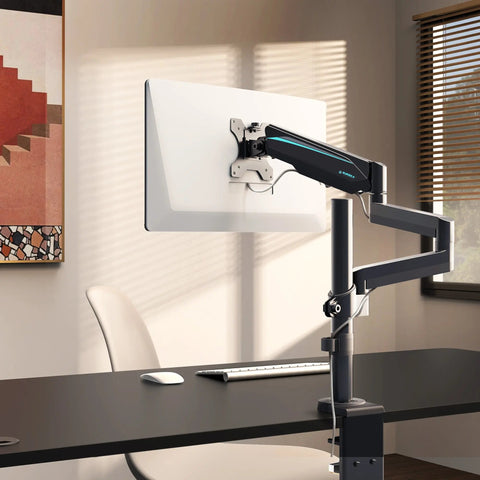
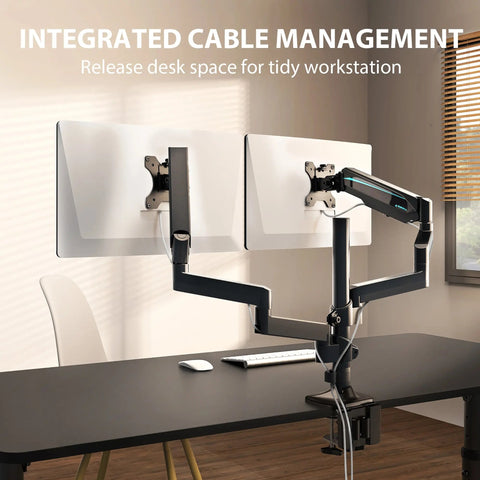
Most manufacturers advertise "evenly distributed" load capacities. However, real-world use is rarely even. A heavy monitor arm clamped to the back edge of a desk creates a "concentrated load" that exerts an asymmetric moment (twisting force) on the frame.
Professional-grade desks are tested for "permanent deflection"—the point where a material bends and does not return to its original shape. Under BIFMA X5.5 standards, desks are subjected to concentrated functional loads to ensure the surface does not sag. A desk with a higher overall load rating is generally less likely to suffer from surface sagging over time, especially when supporting heavy, off-center equipment like large-format displays or integrated storage cabinets found in the Ark ES Executive Standing Desk.
Standards and Certifications: Navigating the Acronyms
To ensure you are investing in a durable product, look for adherence to international standards. These are rigorous testing protocols that simulate years of use.
- BIFMA X5.5: This standard from the Business and Institutional Furniture Manufacturers Association (BIFMA) covers desk and table products. Specifically, Section 4 (Functional Load) and Section 6 (Stability) tests ensure the desk can handle weight without tipping or permanent deformation.
- ISO 9241-5:2024: The latest international standard for workstation layout and postural requirements. It provides the quantitative basis for "adjustable range coverage," ensuring a desk fits the 5th to 95th percentile of the population as recommended by BIFMA G1-2013.
- UL 962: A safety standard that covers the electrical and mechanical components of height-adjustable desks. Compliance with UL 962 indicates that the motor and control systems have been tested for fire safety and mechanical reliability under load.
Practical Recommendations for a Durable Workspace
1. Calculate Your Cumulative Load
Before purchasing, list every item that will live on your desk. Don't forget the "hidden" weight:
- Integrated Storage: If your desk has drawers, like the Ark EL Executive Standing Desk, the weight of files and hardware inside must be deducted from the total usable capacity.
- Cable Management: Heavy bundles of cables and power strips can add 5–10 lbs.
- The "Leaning" Factor: Users often lean on their desks while standing. This can add an additional 20-40 lbs of dynamic pressure that the motors must overcome.
2. Optimize the Sit-Stand Rhythm
The health benefits of a standing desk are realized through movement. The Cornell University Ergonomics Web suggests the "20-8-2" rule: 20 minutes of sitting, 8 minutes of standing, and 2 minutes of moving. A high-capacity dual-motor desk makes these frequent transitions effortless and quiet (typically <50dB), which is vital in a professional environment.
3. Monitor and Keyboard Ergonomics
Regardless of load capacity, your desk must be set to the correct height to prevent MSDs. According to the UK Health and Safety Executive (HSE), your elbows should be at approximately 90 degrees, and the top of your monitor should be at or slightly below eye level. High-stability desks allow for precise height adjustments that remain steady, reducing the "screen bounce" that can contribute to eye strain.

Why to Over-Spec Your Workstation
Investing in a desk with a higher load capacity than you currently need is a strategy for future-proofing. As your setup evolves—perhaps adding a second monitor or a more powerful workstation PC—an over-specced desk will handle the increased weight without a decrease in performance.
Furthermore, desks with higher load ratings typically exhibit less high-frequency vibration. This "solid" feel is an indicator that the frame is absorbing the energy of your typing rather than reflecting it back into your wrists and monitors. For more on this, see our detailed guide on Why to Over-Spec Your Desk's Load Capacity.
Summary Checklist for Selection
When evaluating executive standing desks, use the following checklist:
- Motor Configuration: Prefer dual motors for loads exceeding 150 lbs.
- Frame Material: Look for heavy-duty steel (e.g., cold-rolled steel) with high-quality welds.
- Certification: Verify compliance with BIFMA X5.5 and UL 962.
- Adjustment Speed and Noise: A smooth, quiet transition (typically <50dB) usually indicates high-quality gearing.
- Warranty: A long-term warranty (5+ years) on the motor and frame is a strong indicator of the manufacturer’s confidence in the product's durability.
YMYL Disclaimer: This article is for informational purposes only and does not constitute professional medical, legal, or engineering advice. Ergonomic needs vary by individual. If you have pre-existing musculoskeletal conditions or chronic pain, please consult a qualified healthcare professional or a certified ergonomist before implementing a new workstation routine.
Sources
- BIFMA - Ergonomics Guideline for Furniture (G1-2013)
- ISO - 9241-5:2024 Workstation layout & postural requirements
- OSHA - Computer Workstations: Neutral Working Postures
- Cornell University Ergonomics Web — Workstation Guides
- HSE - Working safely with display screen equipment (DSE)
- UL Solutions - Safety of Height-Adjustable Desks
- The 2026 Workstation White Paper: Converging Ergonomic Science and Sustainable Engineering




Leave a comment