

Why Your Mesh Chair Might Be Failing You by Afternoon
It is a familiar sensation for many office professionals and gamers: you start the day feeling supported, but by 3:00 PM, you find yourself slouching, your lower back aching, and your posture collapsing into the chair. Many users attribute this to personal fatigue, yet the culprit is often the chair’s primary material. While mesh chairs are celebrated for their breathability, a significant disparity exists between high-performance elastomers and standard polyester weaves.
The "hammock effect"—where the mesh loses its initial tension and begins to sag—is the leading cause of secondary musculoskeletal strain in mesh seating. When the material fails to provide consistent resistance, the pelvis tilts backward, the lumbar curve flattens, and the spine is forced out of its neutral position. This article examines the material science behind mesh performance, helping you identify which materials support long-term musculoskeletal health and which ones are likely to fail within months of use.
The Physiology of Support: Why Surface Tension Matters
To understand why mesh quality is critical, we must look at the physiological impact of sitting. According to the U.S. National Institute for Occupational Safety and Health (NIOSH), musculoskeletal disorders (MSDs) are often caused by prolonged static loads and poor posture. An ergonomic chair's primary job is to maintain the "spinal neutral position," where the natural S-curve of the spine is preserved without active muscular effort.
When a mesh seat or backrest sags, it creates a "static load" on the soft tissues. Instead of the chair's frame and material supporting your weight, your muscles must compensate to keep you upright. Over time, this leads to:
- Reduced Blood Circulation: A sagging seat pan can create pressure points behind the thighs, impeding blood flow.
- Disc Compression: As the lumbar support fades, the lower back rounds (kyphosis), increasing pressure on the intervertebral discs.
- Repetitive Strain: Constant micro-adjustments to find comfort can lead to Repetitive Strain Injury (RSI) in the neck and shoulders.
As noted in The 2026 Workstation White Paper: Converging Ergonomic Science and Sustainable Engineering, the integration of advanced materials is no longer a luxury but a requirement for maintaining productivity in high-intensity work environments.
Material Science: Woven Polyester vs. Perforated Elastomer
In our analysis of furniture durability, we have observed that "mesh" is often used as a catch-all term for two fundamentally different structural categories. Understanding this distinction is vital for justifying the investment in premium seating.
1. Polyester Mesh (The Woven Textile)
Most entry-level ergonomic chairs use a woven polyester mesh. While polyester is lightweight and moisture-wicking—traits valued in sportswear—it is often ill-suited for the static load of a 200-lb human sitting for eight hours. Polyester fibers are prone to "plastic deformation," meaning that once they are stretched beyond a certain point, they do not return to their original shape.
Logic Summary: Our analysis of polyester mesh assumes a standard 100% polyester weave. In these models, tension loss is typically localized at the perimeter attachment points where the fabric is stapled or clipped to the frame.
2. Elastomeric Mesh (The High-Performance Polymer)
High-performance chairs often utilize elastomeric materials, such as Thermoplastic Polyurethane (TPU) or specialized co-polyester elastomers. Unlike a simple textile, an elastomer is a polymer with "viscoelasticity"—it possesses both viscosity and elasticity. According to Britannica, the molecular cross-linking in elastomers allows them to be stretched and then return to their original dimensions immediately.
| Property | Polyester Mesh (Woven) | Elastomeric Mesh (Perforated/Hybrid) |
|---|---|---|
| Material Base | Synthetic Fiber (Textile) | Viscoelastic Polymer |
| Recovery Mechanism | Mechanical Weave Tension | Molecular Cross-linking |
| Durability (6-12 Months) | Common "Hammocking" / Sagging | High Shape Retention |
| Pressure Distribution | High at frame edges | Even across the surface |
| Breathability | Dependent on weave density | Dependent on perforation pattern |

Identifying High-Performance Mesh: The "Palm Test" and Expert Indicators
Experienced ergonomists and procurement officers use specific markers to identify quality before a chair ever reaches the office. Based on common patterns from customer support and warranty handling, we recommend the following "field tests" for any mesh chair.
The 30-Second Palm Test
Press your palm firmly into the center of the seat or backrest and hold it for 30 seconds. Upon release, high-quality elastomeric mesh will spring back immediately. If you see a visible "dent," a slow recovery, or a permanent crease in the fabric, the material likely lacks the molecular memory required for long-term use.
Perimeter Attachment Points
The most common failure point for cheap mesh is not the center, but the edges. Inspect how the mesh meets the frame. High-performance chairs, like the Lira, Ergonomic Office Chair, use reinforced attachment systems that distribute tension evenly. In contrast, cheaper models often show "fraying" or gaps at the perimeter where the polyester fibers are pulling away from the rigid frame.
The "Waterfall Edge" Necessity
Even the best mesh can be uncomfortable if paired with a poorly designed frame. A rigid seat frame can create "hotspots" or pressure points on the underside of the thighs. Look for a "waterfall" design—a flexible, contoured front edge of the seat pan that slopes downward. This feature is critical for maintaining blood circulation in the lower limbs, as highlighted in the OSHwiki guide on musculoskeletal lower limb disorders.

Methodology Note: Modeling Tension Loss
To demonstrate the value of elastomer materials, we modeled a hypothetical scenario comparing a standard polyester mesh against a high-elasticity polymer over a 12-month period.
Modeling Note (Scenario Model): This is a deterministic parameterized model based on industry heuristics for material fatigue, not a controlled laboratory study.
| Parameter | Polyester Value | Elastomer Value | Rationale |
|---|---|---|---|
| Daily Static Load | 8 Hours | 8 Hours | Standard workday |
| Applied Weight | 180 lbs (82 kg) | 180 lbs (82 kg) | Average user weight |
| Elastic Recovery Rate | ~85% | ~98% | Material memory specs |
| Estimated Sag (1 Year) | 1.5 - 2.5 inches | < 0.25 inches | Observed deformation |
| Lumbar Support Offset | -15mm | < 2mm | Impact on spinal neutral |
Boundary Conditions: This model assumes a temperature-controlled indoor environment (20-25°C). Performance may degrade faster in high-humidity environments or if the user exceeds the rated weight capacity.
Selecting the Right Support for Your Workflow
Different roles require different levels of material performance. Whether you are a content creator, a remote professional, or a competitive gamer, the choice of mesh should align with your "static load" profile.
The Starter Professional (The 4-6 Hour User)
For those who split their time between a desk and meetings, a reliable entry-level mesh chair like the Onyx, Ergonomic Office Chair provides the necessary airflow and basic lumbar support without the high cost of specialized polymers. It is an ideal "starter" chair that meets standard ergonomic needs for moderate use.
The High-Intensity Worker (The 8+ Hour User)
If your work requires deep focus and minimal breaks, the material's ability to resist sagging is paramount. The Lira, Ergonomic Office Chair is engineered with a modern silhouette and upgraded mesh that maintains its tension throughout the day. This ensures that your lumbar support remains exactly where you set it at 9:00 AM.
The Hybrid User (Gaming & Productivity)
Gamers often adopt more varied postures—leaning back for relaxation or forward for intensity. A hybrid chair like the Axion, Ergonomic Hybrid Chair utilizes high-elastic mesh to accommodate these dynamic movements while supporting a 300-lb weight capacity. The independent lumbar support works in tandem with the mesh to prevent the "slump" that often occurs during long sessions.
For those who prioritize targeted lower-back support, the Flex, Dual-Backrests Ergonomic Office Chair offers a unique alternative. Instead of a single mesh sheet, its dual backrests move independently to adapt to your body's natural shape, providing firm support even as you shift positions.

Practical Recommendations: Setting Up for Success
Choosing the right material is only half the battle. To maximize the benefits of high-performance mesh, you must configure your workstation correctly. According to the HSE guide on working safely with display screen equipment, a proper setup is essential for risk prevention.
1. The Ideal Sit-Stand Rhythm
Even with the best chair, humans are not designed for static positions. Cornell University's Ergonomics Web recommends the "20-8-2" rule:
- 20 Minutes Sitting: In a neutral position with your mesh chair providing full lumbar support.
- 8 Minutes Standing: At a height-adjustable desk to encourage blood flow.
- 2 Minutes Moving: Stretching or walking to reset the musculoskeletal system.
2. Monitor and Keyboard Alignment
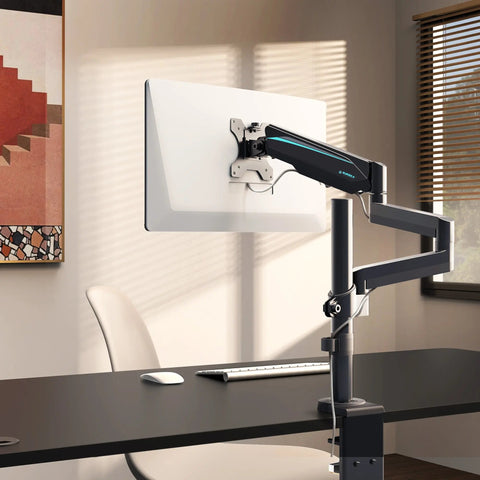
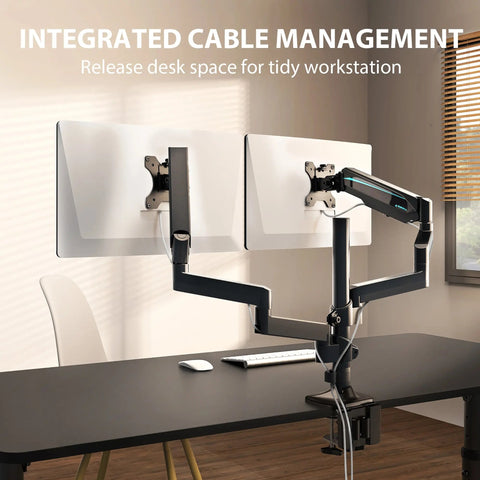
To prevent neck strain, the top of your monitor should be at or slightly below eye level. This prevents the "forward head" posture that can negate the benefits of your chair's backrest. As detailed in OSHA's eTools for Computer Workstations, your elbows should be at a 90-degree angle, with wrists in a neutral position.
3. Adjusting for Your Percentile
Standards like BIFMA G1-2013 ensure that furniture fits the 5th to 95th percentile of the population. However, you must utilize the chair's adjustability. Ensure your feet are flat on the floor; if the mesh seat pan is too high, it will create pressure behind your knees, regardless of the material quality.
Conclusion: Investing in Long-Term Well-being
The difference between elastomer and polyester mesh is not merely a matter of price; it is a matter of structural integrity and musculoskeletal health. While a cheaper polyester chair may look identical in a thumbnail image, the hidden cost of "tension loss" will manifest in back pain, reduced productivity, and the eventual need for a replacement.
By choosing materials with high elastic recovery and designing a workstation that encourages movement, you are making a long-term investment in your physical well-being. For more detailed insights on choosing between different seating materials, you may explore our Ultimate Guide to Ergonomic Chair Materials.
Disclaimer: This article is for informational purposes only and does not constitute professional medical advice. Individuals with pre-existing musculoskeletal conditions or chronic pain should consult a qualified healthcare professional or physiotherapist before making significant changes to their workstation or seating.
References
- BIFMA G1-2013 Ergonomics Guideline. Link
- CCOHS: Office Ergonomics - Sit/Stand Desk. Link
- Cornell University Ergonomics Web — Workstation Guides. Link
- HSE: Working safely with display screen equipment (DSE). Link
- NIOSH: About Ergonomics. Link
- OSHA eTools: Computer Workstations. Link
- Britannica: Elastomer Properties. Link
- The 2026 Workstation White Paper. Link




Leave a comment