

Ergonomic chair adjustments for back pain can help reduce desk-day strain when the chair fits your body, but they are not a cure for pain. Start with seat height, seat depth, and lumbar placement, then fine-tune armrests and recline. If pain is persistent, worsening, numb, or radiating, stop self-adjusting and get medical advice.

Why Chair Setup Affects Lower Back Comfort
For most remote and hybrid workers, lower back discomfort starts with small fit problems that build over a long day. OSHA's guidance on chair components and neutral positioning explains why seat height, seat depth, and lumbar support matter together: when one is off, you are more likely to slump, reach forward, or hold tension in the back and shoulders.
That is why ergonomic chair adjustments for back pain are usually worth checking before you assume the chair itself is the only problem. In practical terms, better setup often helps more than sitting "straighter" by force. A chair can still miss the mark if it is set too high, too deep, or with lumbar support sitting in the wrong spot.
If you want a deeper setup walkthrough, A Full Guide to Ergonomic Chair Adjustments is a useful next step. But if pain keeps getting worse, or you notice numbness or symptoms that travel down the leg, background ergonomics resources note to get evaluated by a healthcare professional instead of relying on chair changes alone.
Set the Chair for Neutral Spine Support
The goal is not a rigid posture. It is a supported posture that lets your spine relax instead of working against the chair.
Seat Height and Floor Contact
Start with seat height. OSHA notes that your feet should rest flat and your knees should stay in a comfortable bend, because a seat that is too high or too low can pull the body out of a supported position. If your feet dangle, use a footrest or lower the chair. If your hips are being pushed above your knees, raise the desk-side support or adjust the chair downward if possible.
Seat Depth and Thigh Support
Seat depth is easy to overlook, but it can change pressure fast. The GSA ergonomic seat adjustment guide recommends supporting the thighs without pressing into the back of the knees. A good check is whether you can fit a few fingers between the front edge of the seat and the back of your knees. If not, the seat may be too deep for your legs.
Lumbar Height and Curvature
Lumbar support should meet the natural curve of the lower back, not sit too low on the pelvis or too high near the ribs. OSHA's chair guidance ties lumbar support to maintaining the spine's natural shape, which matters because the wrong height can feel like support at first but still let you collapse over time.
That is why ergonomic chair adjustments for back pain often feel subtle at first and more obvious after an hour or two. If the lower back feels braced but not jammed, you are closer to the right position. If it feels like the support is pushing you forward or disappearing, move it again.
Recline Angle and Tension
A gentle recline can reduce the feeling of being locked upright for hours, especially when the chair still supports the lower back. OSHA's workstation guidance treats recline as part of a supported seating position, not as a replacement for fit. For focused work, a slight recline often feels better than a perfectly vertical posture that you keep fighting all day.

Match Armrests, Monitor, and Desk Height
Armrests, monitor height, and desk height can either help your back settle or make it work harder. In real use, this is where many setups fail: the chair may fit well, but the rest of the desk forces you to lean, shrug, or reach.
- Armrests should let your shoulders relax. If they are too high, you may shrug and tense your neck. If they are too low, your elbows may drift outward and your upper back may work harder.
- Forearms should rest without lifting your shoulders. A good armrest setting supports the arms lightly so you are not holding them up with your upper back.
- The monitor should not pull you forward. If the screen is too low or too far away, people often lean toward it without noticing.
- Desk height should match the chair, not fight it. If your keyboard reach is awkward, you may slide forward and lose lower back support.
For shoppers comparing chair options, 1D to 4D armrest support matters most when your desk setup changes often or when shoulder tension is part of the problem too. If the issue is mostly back support, fix the seat and lumbar first, then return to armrests.
If your workspace also contributes to neck or shoulder strain, Beyond the Back: Ergonomics for Neck & Shoulder Health can help you separate chair problems from monitor or desk problems. That split matters, because back pain is sometimes a chair issue, but sometimes it is a desk-height issue wearing a chair mask.
Choose the Right Chair Features for Your Body
If you are buying or comparing chairs, focus on features that change fit, not just features that sound premium. BIFMA's standards overview is useful background here because durability and ergonomic performance are not the same thing. A chair can be sturdy and still not fit your body well.
| Feature | Why It Matters For Back Comfort | Best Fit Condition |
|---|---|---|
| Adjustable seat depth | Helps avoid pressure behind the knees and keeps you from sliding forward | Best if your leg length is shorter or you share a chair |
| Adjustable lumbar support | Lets the lower back support land where your curve actually is | Best if you need targeted lower-back support |
| Recline with lock positions | Helps reduce static pressure during long sessions | Best if you alternate between focus work and short recovery breaks |
| Adjustable armrests | Helps keep shoulders relaxed and reduces hunching | Best if your desk height, keyboard use, or shoulder comfort changes often |
| Fit range and weight capacity | Confirms whether the chair is sized for your body, not just marketed for comfort | Best if you need a better match for height or body type |
Office Chairs & Gaming Chairs is a useful browse path if you are comparing multiple support styles at once. For a home-office-specific starting point, Home Office Chairs keeps the search focused on daily desk use rather than general seating.
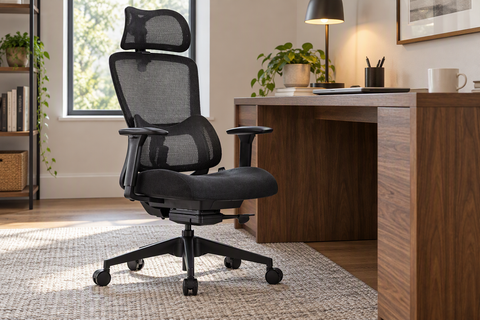
Some chairs are better when you need more targeted lumbar tuning. Lark, Adjustable Lumbar Ergonomic Office Chair has adjustable lumbar support, seat depth range, and 3D armrests, which makes it a practical fit if your main issue is dialing in lower-back support in a home office. It is less compelling if you need a much larger seat or a different body-size range.
If you need broader support and a higher weight capacity, Hoss, Big & Tall 500LBS Capacity Ergonomic Office Chair is the more relevant product page to check. Its larger seat and higher capacity make it the stronger fit when the main problem is that standard chairs feel too narrow or too short for your frame.
For shoppers who want a single chair that balances work and rest, Nico, Mesh Ergonomic Office Chair is worth reviewing because it combines adjustable seat depth, 3D armrests, and multiple recline lock positions. That kind of setup helps if you move between focus work and short breaks, but it still needs the right seat height and desk match to feel right.
When This Setup Breaks Down
If your chair fit is reasonable but pain still gets worse after short sitting periods, the chair may not be the main issue. The same is true if numbness, sharp pain, or pain that radiates down the leg keeps showing up. In that case, chair tweaks are no longer the right next step; medical evaluation is.
Build a Back-Friendly Daily Setup
- Set seat height first, then check whether both feet stay flat and your knees feel relaxed.
- Slide the seat depth so the front edge is not pressing behind your knees.
- Move lumbar support until it meets the lower back curve instead of floating too low.
- Set armrests so your shoulders drop naturally, not up by your ears.
- Use a mild recline if it helps you sit longer without stiffness.
- Recheck the setup after shoes, desk height, or shared-desk changes.
- Stand up and reset posture every so often instead of locking into one position for hours.
- Stop and adjust immediately if a setting causes pinching, numbness, or sharper pain.
For a quick refresh after a long day or a shared desk shift, How to Adjust Your Lumbar Support for Maximum Comfort is a practical reference. If your routine includes standing breaks, Active Standing: Micro-Movements to Reduce Lower Back Pressure can help you avoid staying in one static posture too long.
Related Resources
- How to Adjust Your Lumbar Support for Maximum Comfort
- Professional Set: Aero Pro Standing Desk, Chair & Accessories
- Office Chairs & Gaming Chairs
- The 5 Best Office Chairs for Back Pain Relief
FAQs
Q1. How Do I Adjust an Ergonomic Chair for Lower Back Pain?
Start with seat height, then seat depth, then lumbar support. After that, fine-tune recline and armrests. That order matters because the chair has to fit your legs and lower back before smaller adjustments can help. If you feel worse after adjusting it, back off and reset one change at a time.
Q2. What Chair Features Help Most With Back Support?
Look for adjustable lumbar support, seat depth, recline with lock positions, and armrests that move enough to match your desk. These features matter most when your discomfort changes through the day or when one chair has to fit multiple body types. Durability alone does not guarantee comfort.
Q3. Can a Reclining Chair Help Reduce Back Strain?
A gentle recline can help reduce the feeling of static pressure during long sitting periods, especially if the lower back still stays supported. It is most useful when you alternate between focused work and short breaks. Recline is less helpful if the seat fit is already wrong.
Q4. Why Does Seat Depth Matter for Posture Support?
Seat depth affects whether your thighs are supported without pressure behind the knees. If the seat is too deep, you may slide forward and lose lower-back support. If it is too shallow, your thighs may not feel supported. Adjustable depth helps more when the chair needs to fit different leg lengths.
Q5. When Should I Stop Adjusting My Chair and Get Medical Advice?
If your pain keeps worsening, becomes numb, or starts radiating, stop trying to solve it with chair settings alone. That is especially important if discomfort is persistent after the chair is set correctly. A healthcare professional can help check for causes that ergonomics cannot fix.
The Right Setup Is the One You Can Keep
The best ergonomic chair adjustments for back pain are the ones you can repeat every day without fighting the chair. If the setup fits your legs, supports your lower back, and keeps your shoulders relaxed, you are in the right direction. If the pain keeps intensifying or starts spreading, stop adjusting and get medical help.




Leave a comment