

The Physiological Link Between Seating and Cognitive Performance
Why does mental focus often evaporate by 3:00 PM, even when the workload remains constant? For many professionals, the answer lies not in cognitive fatigue, but in the physiological strain of a poorly configured workspace. When the body is forced into a non-neutral posture, the brain must divert significant metabolic resources to manage micro-discomfort and maintain musculoskeletal stability.
The relationship between physical health and output is explored deeply in The 2026 Workstation White Paper: Converging Ergonomic Science and Sustainable Engineering, which posits that a workstation is a performance tool, not just furniture. According to the U.S. Occupational Safety and Health Administration (OSHA), poor posture and repetitive tasks are primary risk factors for Musculoskeletal Disorders (MSDs). These conditions don't just cause pain; they create a constant "background noise" of discomfort that actively degrades concentration and decision-making quality.
The Science of the "Neutral Position"
To understand why a chair can boost productivity, one must understand the "neutral position." This is the posture where the body is most efficient, placing minimal stress on muscles, tendons, and the skeletal system.
Spinal Lordosis and Lumbar Support
The human spine is not straight; it follows a natural S-curve. The lower portion, known as the lumbar region, has an inward curve called lordosis. According to the Cleveland Clinic, maintaining this curve is essential for preventing disc compression.
A common mistake observed in office environments is setting lumbar support too high. This creates pressure points against the thoracic spine rather than supporting the lower back. Practitioners find the most effective position is when the lumbar pad rests in the space between the rib cage and the pelvis. This allows the Exis, Ergonomic Office Chair to adapt to the user's unique spinal geometry, reducing the static load on the lower back muscles.

The Popliteal Factor and Blood Circulation
Seat depth is another critical, yet often overlooked, variable. If a seat is too deep, it presses against the back of the knees—the popliteal area. This pressure can restrict blood circulation to the lower legs, leading to swelling and fatigue.
Expert Heuristic: A reliable rule of thumb for seat depth is to maintain a gap of 2-3 fingers' width between the back of the knee and the seat edge. This ensures proper thigh support without compromising vascular flow.
Quantifying the ROI: A Tall Professional Scenario Model
To demonstrate the tangible impact of ergonomic seating, we modeled a specific high-demand scenario. This deterministic parameterized model examines the "Tall Professional Power User"—a 193cm (6'4") male in a tech management role.
Methodology & Assumptions
This analysis uses anthropometric data aligned with BIFMA G1-2013 Ergonomics Guidelines and metabolic constants from the Compendium of Physical Activities.
| Parameter | Value | Unit | Rationale |
|---|---|---|---|
| User Height | 193 | cm | 95th percentile male height |
| Daily Standing Time | 240 | min | Recommended sit-stand variation |
| Hourly Wage | 65 | USD | Professional tech/management rate |
| Productivity Coefficient | 0.12 | ratio | Conservative estimate of focus gain |
| Annual Work Days | 250 | days | Standard full-time year |
Modeling Results
Under these parameters, the model yields the following insights:
- Productivity Value Gain: ~$7,800/year. This is calculated by multiplying the daily work hours by the productivity coefficient (0.12) and the hourly wage. The gain represents reduced cognitive fatigue and fewer micro-breaks taken to alleviate pain.
- Metabolic ROI: An annual calorie deficit of ~49,875 kcal, equivalent to ~14 lbs of fat loss per year, simply by facilitating the transition between sitting and standing.
- The Ergonomic Gap: A standard 29-inch desk is typically 2.38 inches too low for a user of this height, forcing a 100° elbow angle and resulting in trapezius strain.
Logic Summary: This model assumes that by removing the "discomfort barrier," a professional can maintain peak "flow state" for 12% longer each day. While results vary based on individual Basal Metabolic Rate and task complexity, the financial payback period for high-end ergonomic equipment is often less than three months.
Beyond the Chair: The Ergonomic Ecosystem
A chair does not function in isolation. To achieve the 90-110 degree elbow angle recommended by OSHA eTools, the chair must often be raised higher than users expect.
The Role of the Keyboard Tray
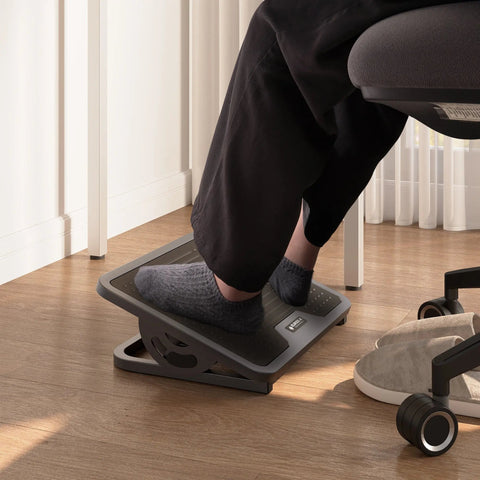
When the chair is raised to align the user's elbows with the desk, their feet may no longer rest flat on the floor, which is a requirement for stable posture according to ISO 9241-5:2024. Integrating an Adjustable Keyboard Tray allows the user to bring the input devices down to their natural lap level, maintaining neutral shoulder positioning even if the desk surface is fixed.

Visual Geometry and Neck Strain
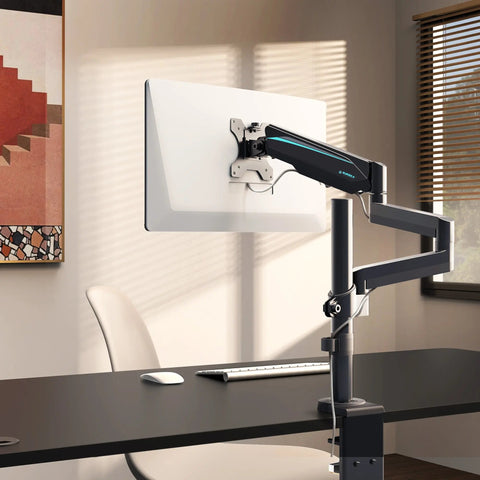
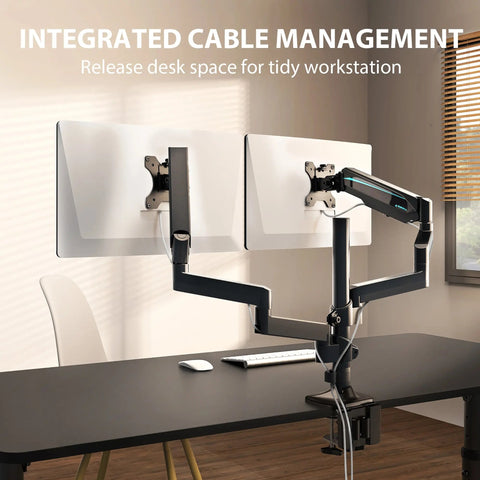
Neck pain is frequently caused by improper monitor height. The HSE (UK) guidelines for Display Screen Equipment (DSE) suggest the top of the screen should be at or slightly below eye level. For multi-monitor setups, a Dual Monitor Arm is essential to prevent repetitive neck rotation, which OSHA identifies as a primary cause of cervical strain.
Practical Recommendations for the Workday
To maximize the productivity benefits of your ergonomic investment, follow these evidence-based protocols:
- The 20-8-2 Rhythm: Developed by Cornell University Ergonomics Web, this recommends sitting for 20 minutes, standing for 8 minutes, and moving/stretching for 2 minutes.
- Recline Tension Calibration: Set the recline tension so that leaning back requires slight, intentional pressure. You should not feel like you are "fighting" the chair, nor should it "dump" you backward. This prevents static muscle fatigue in the core.
- Material Selection: Mesh backs, like those on the Exis, Ergonomic Office Chair, provide superior breathability for 8+ hour shifts. However, for those who prefer a more "enveloping" feel, the Cameron, Ultra Soft Cushion Adjustable Office Chair uses segmented padding to distribute pressure across the upper and lower back.

Summary of Impact
Investing in a high-performance ergonomic chair is a strategic move for any professional. By aligning the workstation with the body's natural biomechanics, you reduce the physiological cost of work. This leads to:
- Enhanced Focus: Less mental energy spent on managing physical pain.
- Reduced Fatigue: Improved circulation and reduced static load.
- Long-term Health: Prevention of chronic MSDs that can truncate a career.
As the World Health Organization (WHO) 2020 Guidelines emphasize, reducing sedentary time and interrupting static postures are vital for cardiovascular health. An ergonomic chair is the foundation of this healthy, high-performance movement.
Disclaimer: This article is for informational purposes only and does not constitute professional medical advice. Individuals with pre-existing musculoskeletal conditions or chronic pain should consult a qualified healthcare professional or occupational therapist before making significant changes to their workstation setup.
References
- BIFMA G1-2013 Ergonomics Guideline for Furniture
- OSHA eTools: Computer Workstations - Neutral Working Postures
- Cornell University Ergonomics Web — Workstation Guides
- ISO 9241-5:2024 Workstation layout & postural requirements
- Cochrane: Workplace interventions for reducing sitting at work
- WHO 2020 Guidelines on Physical Activity & Sedentary Behaviour




Leave a comment