

Professional creators—illustrators, digital editors, and industrial designers—often find themselves trapped in a physiological paradox. The creative process demands intense focus, which frequently leads to hours of static posture. Whether leaning forward to refine a charcoal sketch or reclining to review a color-graded video sequence, the body is subjected to significant mechanical stress. Many professionals report worsening back pain in the late afternoon, often dismissing it as a byproduct of hard work. However, this discomfort is frequently the result of a fundamental mismatch between the human body and the furniture intended to support it.
The transition from traditional physical media to digital editing suites has complicated ergonomic requirements. A chair that supports an upright typing position may fail spectacularly when the user leans over a drafting table or a digital tablet. This article examines the biomechanical requirements of multi-disciplinary creative work and provides a technical framework for selecting seating that preserves musculoskeletal health without compromising the creative flow.
The Physiology of the Creative Pivot
The primary health concern for creators is the development of Musculoskeletal Disorders (MSDs). According to the U.S. Occupational Safety and Health Administration (OSHA), core risk factors include excessive force, repetitive tasks, and poor posture. For creators, "static load"—holding a single position for an extended period—is the most pervasive hazard.
When a creator leans forward to sketch, the lumbar spine often loses its natural "S" curve, transitioning into a "C" shape. This increases intradiscal pressure and strains the posterior ligaments. Conversely, digital editing often involves prolonged sitting, which the World Health Organization (WHO) identifies as a major sedentary risk factor. The ISO 11226:2000 standard specifies that static working postures should be evaluated based on duration and joint angles; for the spine, even slight deviations from a neutral position can lead to muscle guarding and fatigue if maintained for over 20 minutes.
A common misconception in creative studios is that a "locked" or rigid recline provides the best support. In reality, the most effective seating for creators allows for a slight, continuous pelvic tilt of 5 to 15 degrees. This dynamic movement reduces disc pressure by up to 40% compared to a rigid 90-degree seat. Without this flexibility, the body compensates through "micro-movements" that can actually increase lumbar disc contact forces by 15-20% if the chair is inherently unstable, according to research published in ScienceDirect.
The Multi-Disciplinary Paradox: From Canvas to Screen
Creators rarely perform a single task. Their workflow typically involves three distinct "zones" of activity, each requiring a different ergonomic profile.
- The Drafting Zone (Forward Leaning): Used for sketching, tablet work, or physical prototyping. The chair must support a forward-tilt position to keep the lumbar spine engaged while the torso leans toward the work surface.
- The Interaction Zone (Upright): Used for digital editing, typing, and standard computer use. This requires a neutral spinal position where the ears, shoulders, and hips are vertically aligned.
- The Review Zone (Reclined): Used for reviewing footage, reading, or conceptualizing. The chair must provide graduated resistance to support the weight of the upper body without losing contact with the lower back.
A significant oversight in many "standard" ergonomic chairs is armrest width and adjustability. For creators using large digital tablets, standard armrests often cause "elbow splay," which strains the rotator cuff. The HSE guide on Display Screen Equipment (DSE) emphasizes that armrests should not prevent the user from getting close to the desk. For the creator, this means armrests must either retract fully or pivot outward to accommodate a tablet-centric workflow.

Technical Benchmarks: The Science of Fit
To ensure a chair is truly versatile, it must adhere to industry standards that account for a wide range of body types. The BIFMA G1-2013 Ergonomics Guideline provides dimensions intended to fit the 5th to 95th percentile of the population. However, for creators at the ends of this spectrum, standard furniture often fails.
The Petite Creator Case Study: A Data-Driven Analysis
We simulated the ergonomic challenges of a petite female creator (155cm / 5'1") in a compact studio. Standard drafting chairs and fixed-height desks often create an "ergonomic gap" that forces unstable postures.
| Metric | Ideal Height (155cm User) | Standard Furniture | Ergonomic Gap |
|---|---|---|---|
| Seat Height | 40.25 cm (15.85 in) | 45.7 cm (18 in) | +5.45 cm |
| Desk Height (Sitting) | 63.5 cm (25 in) | 73.6 cm (29 in) | +10.1 cm |
| Viewing Distance | 109 cm (42.93 in) | 61 cm (24 in) | -48 cm |
Note: Values estimated based on ANSI/HFES standards for 5th percentile female stature and THX 40° field of view requirements.
As demonstrated, a standard 29-inch desk creates a 4-inch height gap for a petite creator. This forces the user to either sit with feet unsupported—increasing pressure on the thighs—or raise the chair and reach upward, causing chronic shoulder tension. For these users, chairs with a high range of seat-depth adjustment and lower minimum seat heights are essential.
Engineering Solutions for Dynamic Workflows
Modern ergonomic engineering addresses these creative challenges through specialized components. When selecting a chair for a multi-device workflow, creators should look for features that facilitate transitions between the three zones of work.
Dynamic Lumbar and Dual Backrests
Traditional chairs often feature a single, rigid backrest. For creators who frequently shift weight while sketching, a dual-backrest system, such as that found in the Flex, Dual-Backrests Ergonomic Office Chair, offers superior adaptability. These backrests move independently, responding in real-time to the user's lateral and vertical movements. This reduces the need for "muscle guarding"—the subconscious tensing of muscles to stabilize the spine—which EU-OSHA identifies as a precursor to chronic pain.
Graduated Mesh Resistance
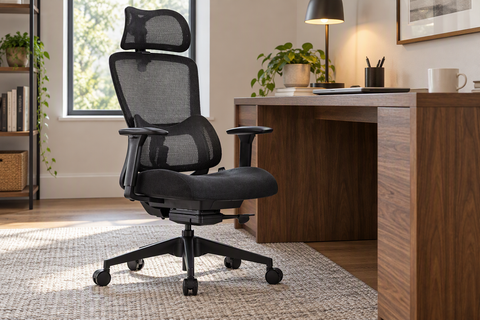
Mesh backs are often praised for breathability, but their true ergonomic value lies in "graduated resistance." Unlike fixed foam panels that can create pressure points, high-quality mesh accommodates subtle spinal shifts. The Onyx, Ergonomic Office Chair utilizes this principle to maintain lumbar contact even as the user moves between an upright editing position and a slight forward lean. This is critical for maintaining what the 2026 Workstation White Paper calls "postural integrity in transition."

4-Level Adjustable Support
For creators with specific spinal conditions like hyperlordosis, "auto-following" lumbar supports can sometimes be counterproductive. In these cases, a fixed but highly adjustable system is preferable. The Exis, Ergonomic Office Chair provides a 4-level adjustable lumbar system. This allows the user to set a predictable, firm support level that reduces muscle strain during long editing sessions.
Implementation: The Professional Setup Guide
Investing in a high-quality chair is only the first step. Proper configuration is required to achieve a "neutral working posture," as defined by OSHA's eTools for Computer Workstations.
The "3-Zone" Workstation Test
To validate your setup, perform the following check:
- Upright Alignment: Adjust the chair so your feet are flat on the floor (or a footrest) and your knees are at a 90-degree angle. Your lower back should be firmly against the lumbar support.
- The Sketching Lean: Lean forward into your sketching or tablet position. Does the seat pan tilt slightly to follow your pelvis? If the chair remains rigid, you are likely compressing your abdominal organs and straining your lower back.
- The Recline Review: Recline to review your work. Does the lumbar support maintain contact with your spine? If a gap appears, the chair lacks the dynamic range needed for creative versatility.
Visual Ergonomics and Monitor Placement
A common failure in creator setups is monitor height. If you are using a chair with a high recline, your monitor must be able to move with you. Using a Single Monitor Arm allows you to adjust the screen's height, depth, and tilt. According to the Canadian Centre for Occupational Health and Safety (CCOHS), the monitor should be positioned so the top line of text is at or slightly below eye level. This prevents the "turtle neck" posture often seen in editors working on fixed stands.

Maintenance and Longevity
Professional creators should view their seating as a critical piece of studio equipment, similar to a high-end camera or workstation. To maintain the ergonomic benefits:
- Check Fasteners: Avoid chairs with proprietary fasteners that are difficult to repair. Standardized components ensure that gas lifts and casters can be replaced, extending the chair's lifespan.
- Monitor Mesh Tension: Polypropylene mesh can lose up to 40% of its tension over two years of heavy use. Regularly inspect the "rebound" of your chair's backrest to ensure it still provides adequate resistance.
- Humidity Control: If using leather or high-density foam, maintain studio humidity between 45-55% to prevent material degradation.
Beyond the Chair: The Integrated Workflow
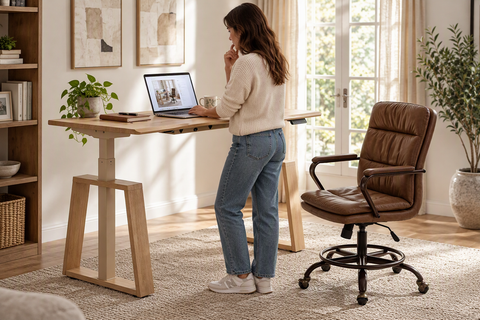
While a versatile chair is foundational, it should be part of a broader ergonomic strategy. Incorporating a sit-stand rhythm—such as the "20-8-2" rule (20 minutes sitting, 8 minutes standing, 2 minutes moving) recommended by Cornell University—can significantly reduce the risks associated with static loads. For more on integrating these habits, see our guide on using a standing desk to fight a sedentary life.
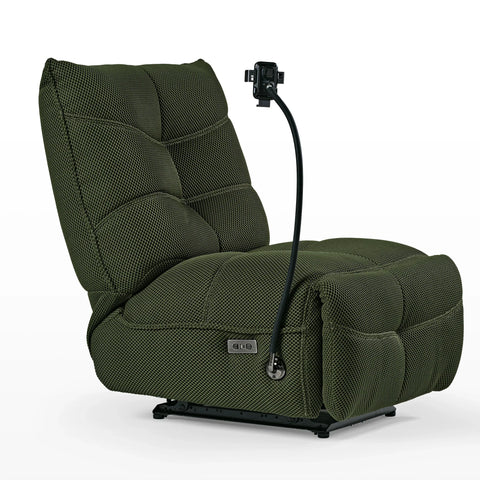
Furthermore, pairing your seating with the correct desk is vital for maintaining a cohesive and ergonomic look. Whether you are a gamer-turned-creator looking for sit-stand ergonomics or a professional designer, the goal remains the same: a workspace that supports the body so the mind can focus on the work.

Professional Disclaimer
This article is for informational purposes only and does not constitute professional medical advice, diagnosis, or treatment. The ergonomic recommendations provided are based on general industry standards and may not be suitable for individuals with pre-existing musculoskeletal conditions or chronic pain. Always seek the advice of a physician, physical therapist, or other qualified health provider with any questions you may have regarding a medical condition or the physical setup of your workspace.
Sources
- BIFMA G1-2013 Ergonomics Guideline for Furniture
- CCOHS: Office Ergonomics - Sit/Stand Desk
- Cornell University Ergonomics Web — Workstation Guides
- HSE: Working safely with display screen equipment (DSE)
- ISO 11226:2000 Evaluation of static working postures
- OSHA eTools: Computer Workstations - Neutral Working Postures
- WHO 2020 Guidelines on Physical Activity & Sedentary Behaviour
- The 2026 Workstation White Paper: Converging Ergonomic Science and Sustainable Engineering




Leave a comment