

The Hidden Cost of Engineering Fatigue: Beyond the Standard Cubicle
The afternoon slump in an engineering hub is rarely a matter of low caffeine; it is often a physiological response to structural inefficiency. For technical leads and facility managers, the procurement of workstations is frequently viewed as a capital expense rather than a performance optimization. However, the misconception that a "standard" desk and chair suffice for high-intensity coding environments overlooks the significant impact of Work-related Musculoskeletal Disorders (WMSDs).
According to the U.S. Occupational Safety and Health Administration (OSHA), core risk factors such as repetitive tasks, excessive force, and poor posture are the primary catalysts for workplace injuries. In software development, these factors manifest as "static load"—the physical strain of maintaining a single position for hours. This load restricts blood circulation and leads to localized muscle fatigue, particularly in the cervical and lumbar regions. When an engineering team relies on equipment that lacks professional-grade adjustability, the result is not just physical discomfort, but a measurable decline in cognitive throughput and code quality.
The Physiological Mechanics of the Developer’s Desk
Understanding the "why" behind ergonomic failure requires a look at the body’s response to prolonged computer work. The human spine is designed for movement, yet the modern workstation often enforces a "static sitting" posture that increases intradiscal pressure.
Static Load and Blood Circulation
Prolonged sitting causes blood to pool in the lower extremities, reducing the oxygenation of muscle tissues in the back and neck. This is compounded by "monitor slouch," where the head drifts forward to focus on small text, placing up to 60 pounds of pressure on the cervical spine. As noted in the European Agency for Safety and Health at Work (EU-OSHA) research on static sitting, this behavior is a leading contributor to chronic back pain and long-term musculoskeletal degradation.
The Neutral Position
The objective of professional ergonomics is to maintain a "neutral position." This involves keeping the joints naturally aligned to minimize stress on muscles, tendons, and the skeletal system. According to ISO 9241-5:2024, a workstation must allow for frequent postural changes while supporting the 5th to 95th percentile of the population. For engineering teams, where talent is recruited globally, designing for this range is critical to ensure that both a 150cm developer and a 195cm systems architect can work without strain.

The Core Components of a High-Performance Hub
To address these physiological challenges, procurement must move beyond generic office furniture toward solutions designed for high-density, high-focus work.
Dynamic Seating and the Lumbar Support Paradox
Traditional chairs often feature a single, rigid backrest that fails to account for the micro-movements of a developer switching between deep coding and collaborative review. A highly effective solution is the Flex, Dual-Backrests Ergonomic Office Chair, which utilizes an innovative dual-backrest design. This system allows the two halves of the backrest to move independently, providing targeted support to both sides of the lower back in real-time.
By adhering to ANSI/BIFMA X5.1 standards for durability and structural adequacy, such chairs ensure that the ergonomic benefits remain consistent over years of heavy use. The independent movement of the dual backrests encourages "active sitting," which helps mitigate the risks of static load by facilitating micro-movements that promote blood flow.
Sit-Stand Integration: Task-Based vs. Time-Based
While the Cochrane Library’s systematic review confirms that sit-stand desks significantly reduce sedentary time, the most common mistake in engineering hubs is a rigid, time-based transition (e.g., "stand every 30 minutes").
Observations from high-performance environments suggest that a task-based transition is more sustainable. Developers naturally find that standing is conducive to active tasks like code reviews, debugging sessions, or stand-up meetings, while sitting is preferred for deep, focused coding sprints. This organic movement aligns with the World Health Organization (WHO) 2020 Guidelines, which emphasize interrupting long periods of static behavior to improve cardiovascular health. Setting Up Your Standing Desk for Peak Productivity provides further insight into balancing these rhythms.
Precision Peripheral Deployment
The most frequent oversight in engineering hub setup involves the "visual axis"—how monitors are positioned relative to the eyes and neck.
The Monitor Arm Heuristic: Preventing "Sagging Screens"
Engineering teams often use two or three large, high-resolution monitors. A common failure point is the use of single-pivot arms that cannot support the weight of modern displays over time.
Expert Heuristic: For long-term stability, ensure the combined weight of the monitors is at least 20% below the arm's rated capacity. This buffer accounts for the dynamic load placed on the gas springs during frequent repositioning.
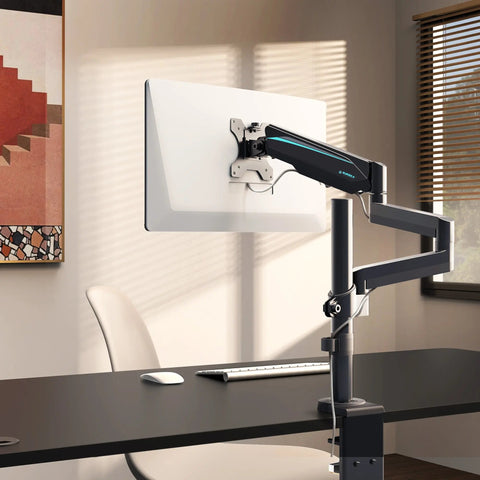
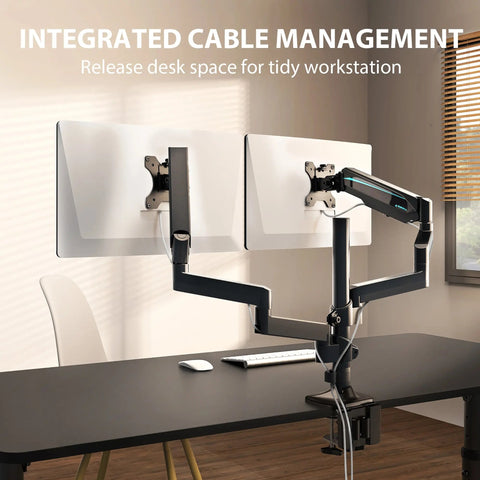
For a dual-monitor setup, the Dual Monitor Arm provides the necessary 3-section adjustability to maintain the top of the screens at eye level, as recommended by Safe Work Australia. For single-screen auxiliary stations, the Single Monitor Arm offers similar precision, allowing for full motion rotation and tilt to eliminate glare and neck strain.
Infrastructure and Cable Management: The Conduit Strategy
In a professional hub, a "rat's nest" of cables is more than an aesthetic issue; it is a safety hazard and a barrier to maintenance. Experienced facility managers employ a "conduit-first" strategy:
- Permanent Infrastructure: Run all fixed cables (Power, Ethernet) through dedicated conduit before desks are positioned.
- Device-Specific Trays: Use under-desk trays only for the cables that move with the height-adjustable desk.
- Tension Loops: Ensure enough slack is provided at the desk's maximum height to prevent port damage during transitions.
Scenario Analysis: Standard vs. Specialized Hubs
Not all engineering workstations are created equal. Depending on the specific role, the ergonomic requirements shift.
| Parameter | Standard Software Dev | Hardware / Lab Engineer |
|---|---|---|
| Primary Focus | Screen-based coding | Physical prototyping & testing |
| Desk Type | Standard Sit-Stand | ESD-safe adjustable workbench |
| Monitor Needs | Dual/Triple horizontal | Single high-res + scope space |
| Seating Logic | Dynamic lumbar (e.g., Flex Chair) | High-adjustability stool or task chair |
| Acoustic Needs | High (Deep work focus) | Moderate (Collaborative lab space) |
Logic Summary: This modeling assumes that software developers spend ~90% of their time in computer-focused tasks, whereas hardware engineers require significant desktop "real estate" for physical tools, necessitating different weight-bearing and surface-material considerations.
The Definitive Engineering Hub Checklist
To ensure a new hub meets the highest standards of health and productivity, use the following checklist derived from BIFMA G1-2013 and ISO 9241-5 principles.
1. Seating & Support
- [ ] Chair Adjustability: Seat height allows feet to rest flat on the floor or a footrest; seat depth provides 2-3 inches of clearance behind the knees.
- [ ] Lumbar Support: Adjustable to the natural curve of the lower spine. For dynamic support, consider the Flex, Dual-Backrests Ergonomic Office Chair.
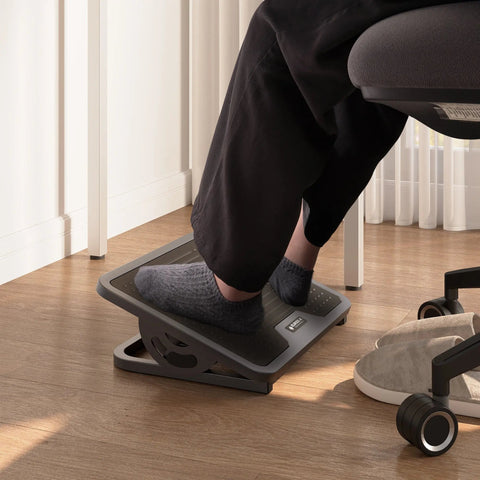
- [ ] Footrest Integration: If the desk height prevents feet from touching the floor, an Adjustable Ergonomic Footrest is used to maintain circulation and reduce pressure on the thighs.
2. Work Surface & Layout
- [ ] Desk Height Range: Meets the BIFMA range (typically ~570mm to ~1230mm) to accommodate both sitting and standing for the majority of users.
- [ ] Leg Clearance: Minimum of 20 inches of width and 15 inches of depth at knee level.
- [ ] Safety Standards: Desks meet UL 962 for electrical and mechanical safety.
3. Visual & Input Precision
- [ ] Monitor Height: Top of the screen is at or slightly below eye level.
- [ ] Viewing Distance: Between 20 to 40 inches (roughly an arm's length).
- [ ] Keyboard/Mouse Position: Elbows at a 90-degree angle with wrists in a neutral, straight position.
Methodology & Modeling Note
The recommendations provided in this guide are based on a synthesis of international ergonomic standards (ISO, BIFMA, OSHA) and practical field observations from large-scale engineering hub deployments.
Modeling Parameters for a Standard Workstation:
| Parameter | Value or Range | Unit | Rationale / Source Category |
|---|---|---|---|
| Population Coverage | 5th - 95th | Percentile | BIFMA G1-2013 |
| Monitor Weight Buffer | ~20 | % | Field Heuristic (Mechanical Longevity) |
| Sit-Stand Rhythm | 20:8:2 | Minutes | Cornell University 20-8-2 Model |
| Armrest Height | 180 - 280 | mm | ISO 9241-5 |
| Lumbar Support Height | 150 - 250 | mm | CSA Z412 Standard |
This model assumes a standard office environment with ambient lighting between 300-500 lux. It does not account for specialized cleanroom or heavy industrial manufacturing constraints.
Investing in Long-Term ROI
As detailed in The 2026 Workstation White Paper: Converging Ergonomic Science and Sustainable Engineering, the convergence of health-driven design and professional durability is the new standard for corporate infrastructure. For B2B decision-makers, the goal is to create an environment where the furniture "disappears"—allowing developers to focus entirely on their work without the distraction of physical strain. By following a rigorous, evidence-based checklist, organizations can protect their most valuable asset: the health and focus of their engineering teams.
Disclaimer: This article is for informational purposes only and does not constitute professional medical or occupational health advice. The ergonomic recommendations provided are general guidelines. Individuals with pre-existing musculoskeletal conditions or chronic pain should consult a qualified healthcare professional or a certified professional ergonomist before implementing significant changes to their workstation setup.




Leave a comment