

This Christmas, give a gift that extends far beyond the holiday season. For the partner who spends their days working from home, the gift of an ergonomic workspace is an investment in their daily comfort and long-term well-being. Moving beyond traditional presents, a standing desk or a set of thoughtful ergonomic accessories can fundamentally transform their work routine, showing just how much you care about their health.
Many of us have settled into home office setups that prioritize convenience over comfort, often leading to nagging aches and pains. This guide will walk you through why an ergonomic gift is so meaningful and how to choose the perfect one for your partner.
The Hidden Toll of the Home Office
That familiar afternoon backache or persistent neck strain is more than just a minor annoyance. It's often a sign of a workstation that is actively working against the body. According to the U.S. National Institute for Occupational Safety and Health (NIOSH), work-related musculoskeletal disorders (MSDs) are a leading cause of discomfort and lost productivity. These issues arise from risk factors common in many home offices, including awkward postures and prolonged static positions.
When your partner sits for hours with their monitor too low, their neck cranes forward. When their chair lacks proper support, their spine slumps. These static loads place continuous stress on muscles, tendons, and ligaments. The World Health Organization's 2020 Guidelines emphasize the importance of reducing sedentary time and interrupting long periods of static behavior to counter these effects. A typical office setup often encourages the exact opposite.

Debunking a Common Myth: Standing Isn't a Magic Bullet
A common misconception is that the goal is to simply replace sitting with standing. However, prolonged static standing comes with its own set of problems, including lower limb fatigue and back discomfort, as highlighted by resources from EU-OSHA on prolonged static standing. The real key to ergonomic health is not choosing between sitting or standing; it's about embracing dynamic movement. The ability to transition between postures throughout the day is what truly alleviates the strain of static work.
The Science of Movement: Why Ergonomic Furniture Works
Ergonomic solutions like standing desks are not just furniture; they are tools designed to facilitate healthy movement. A systematic review from Cochrane found that sit-stand desks can significantly reduce sitting time by nearly two hours per day. This simple change introduces postural variety, which is critical for musculoskeletal health.
By alternating between sitting and standing, your partner can:
- Reduce Static Load: Shifting positions redistributes pressure on the spine and engages different muscle groups.
- Improve Blood Circulation: Movement prevents blood from pooling in the lower limbs, which can reduce swelling and fatigue.
- Boost Energy and Focus: Many users report feeling more alert and productive when they break up long periods of sitting.
For a deeper dive into the health benefits, our article on using a standing desk to fight a sedentary life provides more context.
A Practical Guide to Choosing the Right Ergonomic Gift
Giving an ergonomic gift requires a bit of thought. It’s a personal item that needs to fit your partner’s body and workspace. Here’s how to make a smart choice.
The Centerpiece: A Quality Standing Desk
A standing desk is the foundation of an active workspace. When selecting one as a gift, look beyond the basic up-and-down function.
- Motor System: Dual-motor desks provide smoother, quieter, and more powerful adjustments, which is essential if your partner has a heavy setup with multiple monitors. A desk like the Ark Executive Standing Desk (63"x29") is built to handle substantial equipment with stability.
- Height Range: Ensure the desk’s height range accommodates both your partner's ideal sitting and standing postures. A good desk should comply with BIFMA guidelines to fit a wide range of users.
- Memory Presets: This feature is a must-have for a shared gift. It allows your partner to save their preferred sit and stand heights, making transitions effortless with a single button press.
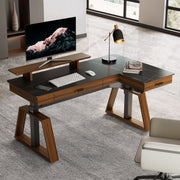
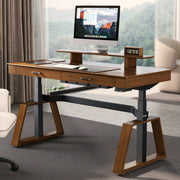
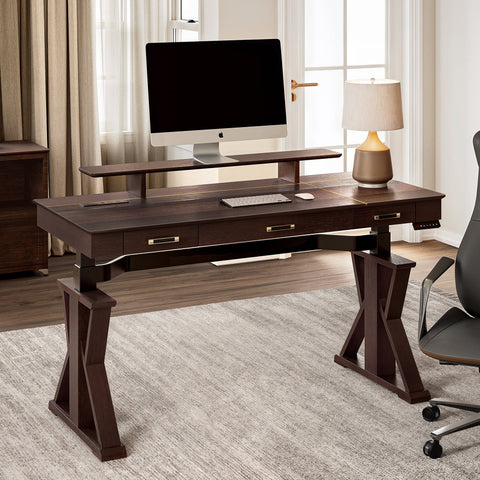
- Aesthetics and Materials: A gift should also be beautiful. Options like the Faux Saddle Leather Adjustable Standing Desk (55"x23") combine premium materials with ergonomic functionality, creating a piece of furniture they will be proud to have in their home.
Pre-Purchase Measurement Checklist
Before you buy, do some quick recon to ensure a perfect fit. This avoids the common mistake of choosing a desk that doesn’t fit the space or the user.
| Measurement | Why It Matters | How to Check |
|---|---|---|
| Available Space | Ensure the desktop fits comfortably in the intended room. | Measure the length and width of the area where the desk will go. |
| Doorway/Stairwell Width | The desk components must be able to get into the room. | Measure the narrowest doorway or passage on the way to the office. |
| User's Elbow Height | Determines the ideal standing desk height for neutral wrists. | While your partner is standing, estimate the distance from the floor to their elbow. |
| Equipment Weight | The desk's motor must be able to lift the full setup. | Estimate the total weight of monitors, computer, speakers, and other gear. Choose a desk with a load capacity at least 1.5x this weight. |
Essential Accessories for a Complete Ergonomic System
To truly elevate a workspace, a few key accessories can make a world of difference.
- Monitor Arm or Stand: According to OSHA's workstation guide, the top of the monitor should be at or slightly below eye level. A monitor arm or a riser like the Carbon Fiber Dual Monitor Stand is the easiest way to achieve this, preventing forward slouching and neck strain.
- Ergonomic Footrest: A footrest isn't just for shorter individuals. An Adjustable Ergonomic Footrest provides a stable surface for feet when sitting, which helps maintain a neutral spinal position. Its textured surface can also provide a gentle massage, promoting circulation.

Pro Tip: The Surprising Impact of an Anti-Fatigue Mat
While a standing desk enables movement, an anti-fatigue mat makes standing for longer periods comfortable. Research shows these mats do more than just provide cushioning. A study on individuals prone to standing-induced pain found that an anti-fatigue mat reduced low back discomfort by approximately 50%. The cushioning encourages subtle, unconscious movements and weight shifts, which improves circulation and reduces muscle fatigue. This is a small addition that delivers a significant improvement in comfort.
Setting Up for Success: A Gift That Keeps on Giving
The final step is ensuring the gift is used correctly. Include a "setup" card with these simple instructions, derived from expert ergonomic practices.
First, find the right heights. For a comprehensive walkthrough, your partner can read our guide on finding the ideal ergonomic standing desk height.
- Set Seated Height: Adjust the chair so feet are flat on the floor and knees are at roughly a 90-degree angle. Bring the desk down until elbows are also at a 90-degree angle with wrists straight.
- Set Standing Height: Stand on the floor (or anti-fatigue mat) and raise the desk until the elbows are at that same 90-degree angle.
- Save Presets: Save these two positions into the desk’s memory presets.
One of the most common setup mistakes I see is neglecting cable management. Ensure there is enough slack in all monitor and power cords to accommodate the desk's full range of motion without pulling anything off the desk.
Sample Sit-Stand Schedule for Beginners
Adopting a sit-stand routine takes time. It's best to start slow and build up duration. This approach, often called the "20-8-2" rule, is a great starting point.
| Time in Hour | Activity | Duration |
|---|---|---|
| 0-20 min | Sit | 20 minutes |
| 20-28 min | Stand | 8 minutes |
| 28-30 min | Move/Stretch | 2 minutes |
| 30-50 min | Sit | 20 minutes |
| 50-58 min | Stand | 8 minutes |
| 58-60 min | Move/Stretch | 2 minutes |
As your partner gets used to standing, they can gradually increase the standing intervals to 15, 20, or even 30 minutes at a time.
Wrapping Up: An Investment in Their Daily Well-being
This Christmas, you can give a gift that actively improves your partner's health, comfort, and productivity every single workday. An ergonomic standing desk or a thoughtful accessory is a powerful way to show you care. It’s a daily reminder that you support their well-being, helping them feel better long after the holidays are over.
Frequently Asked Questions (FAQ)
How long should you stand at a standing desk each day?
There's no single magic number. The goal is to alternate between sitting and standing. A good starting point is to stand for 15-20 minutes out of every hour and gradually increase as you feel comfortable. Listen to your body and avoid prolonged periods in any single posture.
Is a standing desk a good gift if my partner already has back pain?
For many, alternating between sitting and standing can help alleviate back pain caused by static postures. However, if your partner has a pre-existing or chronic condition, it is essential for them to consult with a doctor or physical therapist to ensure a standing desk is an appropriate choice for their specific needs.
What's the most important feature to look for in a standing desk?
Stability and a proper height range are the most critical features. A dual-motor system ensures the desk can lift equipment smoothly without wobbling, which is crucial for focus and safety. The height range should be sufficient to accommodate both a correct seated and standing posture for the user, aligning with ergonomic principles.
Disclaimer: This article is for informational purposes only and does not constitute professional medical advice. Please consult a qualified healthcare professional for personalized advice, especially if you have pre-existing health conditions.
References
- U.S. National Institute for Occupational Safety and Health (NIOSH) - About Ergonomics
- World Health Organization (WHO) 2020 Guidelines on Physical Activity & Sedentary Behaviour
- EU-OSHA - Musculoskeletal disorders and prolonged static standing
- Cochrane Library - Workplace interventions for reducing sitting at work (2018)
- OSHA eTools: Computer Workstations - Monitors
Leave a comment