

Giving a teenager a study desk for Christmas can feel unexciting compared with gadgets or games. Yet for many families, afternoons end the same way: slumped posture, sore necks, and tired eyes after hours of homework or screen time. An ergonomic, height‑adjustable study desk quietly tackles those daily problems and supports long‑term health.
This guide explains how to choose and set up an ergonomic study desk gift for teens in Christmas 2025, focusing on posture, eye comfort, and real‑world usability in family homes.
Why an Ergonomic Study Desk Is a Smart Christmas Gift for Teens
The hidden cost of long homework sessions
Teenagers often spend several hours a day seated for schoolwork, devices, and hobbies. The EU‑OSHA feature on prolonged static sitting at work highlights that long, fixed sitting increases the risk of musculoskeletal disorders (MSDs), reduced circulation, and fatigue.
For teens, this often shows up as:
- Neck and shoulder tightness from leaning toward a low laptop or phone
- Lower‑back discomfort from rounded, unsupported sitting
- Eye fatigue from screens that are too close or too high/low
According to the World Health Organization’s 2020 Guidelines on Physical Activity and Sedentary Behaviour, adults should reduce sedentary time and interrupt long periods of static behavior; the same principle applies to adolescents who are building lifelong habits.
Why posture and vision matter during adolescence
Adolescence is a period of rapid growth. Anthropometric studies of secondary‑school students show that desk height that exceeds seated elbow height by more than about 3–4 cm leads to a sharp increase in discomfort and awkward postures (for example, the Yola Metropolis study summarized in this research). This is because the shoulders must elevate and wrists bend to reach a surface that is too high, amplifying strain.
The same applies to vision. The Canadian Centre for Occupational Health and Safety’s sit‑stand guidance notes that the top line of the screen should sit at or slightly below eye level and at arm’s length to limit neck flexion and eye strain, especially during static computer work, as explained by CCOHS.
A well‑chosen ergonomic desk gives teenagers a neutral posture baseline:
- Elbows at roughly 90° (±10°) with relaxed shoulders
- Hips and knees close to 90° with feet supported
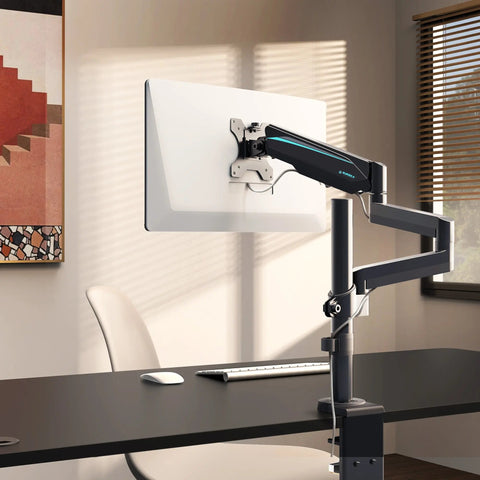
- Screen at eye level and at arm’s length
That baseline does not guarantee perfect posture, but it removes many of the built‑in constraints of poorly sized furniture.

Myth‑busting: What a Standing Desk Can (and Cannot) Do for Teens
Common misconception: a sit‑stand desk “fixes” teen posture and pain
A frequent belief is that buying a height‑adjustable desk will automatically solve back and neck pain. Evidence in children and adolescents is more cautious. A recent summary of school‑based standing desk research in 8–15‑year‑olds found that these desks reduced classroom sitting time by around 60–90 minutes per day but produced little clear improvement in pain or posture outcomes over follow‑ups shorter than a year, and reviewers emphasized there is “little information” on long‑term musculoskeletal effects (see the analysis referenced in Standing desks in schools: what are the effects?).
That does not make sit‑stand desks useless; it changes how parents should use them. The desk is a tool for reducing static sitting and enabling movement. Posture improves when teens actually alternate positions, adjust monitor placement, and reduce slouched phone use.
Pro Tip: the main posture problems are often phone angle and slouching
Another overlooked factor is device behavior. Observational studies report that mobile phone use above roughly 10 hours per week is associated with more than double the odds of neck pain in adolescents, and incorrect sitting posture multiplies low‑back pain odds more than threefold. In practice, this means that a new desk without changes to phone viewing angle, screen distance, or “lying on the bed to study” habits will have limited impact.
For a Christmas study‑desk upgrade to truly help, pair the furniture with simple rules:
- No studying long‑term on the bed or couch
- Phone elevated to eye level during reading (use stands or holders)
- Short breaks every 20–30 minutes to reset posture
Standing is not exercise
The WHO guidelines on physical activity emphasize that even with standing, teenagers still need moderate‑to‑vigorous activity across the week. Standing reduces static sitting but does not substitute exercise. Parents should see a height‑adjustable desk as one part of a broader movement‑friendly lifestyle, not the entire solution.
How to Choose a Teen‑Friendly Ergonomic Study Desk for Christmas 2025
Selecting a desk for a teenager is different from buying an adult office desk. Growth, shared rooms, and device use patterns all matter.
1. Prioritize size and adjustability over features
The BIFMA G1 ergonomics guideline is designed to fit roughly the 5th to 95th percentile of adults, and the same principles apply to older teens. For home use, that translates into two key geometric priorities:
- Desk height range: Aim for a minimum seated height of around 60 cm or lower and enough travel to reach at least 120 cm for standing. This typically covers most teens from about 150–185 cm in height.
- Depth: Provide at least 60–70 cm of work‑surface depth so a monitor can sit at arm’s length (roughly 45–70 cm) while still leaving space for books and a keyboard.
A practical rule from both research and practitioner experience: desk height around 0.26–0.30 × body height, with 0.28 as a realistic target. If a teen is 165 cm tall, that yields a sitting desk height of about 46–50 cm to match elbow level; most height‑adjustable desks will need to be at the lower end of their range to achieve this.
2. Use elbow height as your main measurement
Before you buy:
- Ask your teen to sit on a chair with feet flat and thighs roughly level.
- Measure from the floor to the underside of the elbow with the elbow bent at 90°.
- This measurement is your target desk height.
Allow ±2–3 cm for personal preference and keyboard thickness. This approach is consistent with guidelines from OSHA’s Computer Workstations eTools, which describe neutral working postures with relaxed shoulders and roughly 90° joint angles.
3. Stability and safety: what parents should look for
A desk’s load rating (for example, 100 kg) is not the whole safety story. Real‑world stability depends on frame geometry, column design, and compliance with standards such as EN 527‑2 and ANSI/BIFMA X5.5 for desks.
Standard tests in these frameworks apply downward and horizontal forces at the front edge—on the order of 180–220 N—to confirm that the desk does not tip or deflect excessively. In everyday terms, this approximates a teenager leaning hard on the desk or a heavy textbook stack at the edge.
Our analysis shows that frames with wider feet, three‑stage lifting columns, and anti‑collision sensors generally perform better in these stability tests than narrow, two‑stage frames, even when the static load rating is similar. When evaluating a product page, look for:
- Mention of testing to ANSI/BIFMA or EN standards
- Anti‑collision technology
- Clear maximum load rating with some margin above your expected equipment weight
4. Sustainable and long‑lasting choices
Electric sit‑stand desks contain steel, motors, and MDF or particleboard tops, all of which carry a carbon footprint. Life‑cycle assessments of typical steel–MDF desks estimate around 80–120 kg CO₂‑equivalent for production. Extending the desk’s service life by 5–10 years or choosing designs that can be reused or passed down can reduce annualized impact by 30–60%.
For a Christmas gift, that means:
- Choosing a neutral style that will suit your teen from middle school through university
- Preferring robust frames and repairable components over short‑lived bargain options
- Considering sustainably sourced wood surfaces (for example, FSC‑certified materials)
Comparison: teen study desk priorities vs. adult home‑office desk
| Feature / Priority | Teen Study Desk (Christmas Gift) | Adult Home‑Office Desk |
|---|---|---|
| Minimum height | As low as ~60 cm or below to match shorter users | Often 65–70 cm is sufficient |
| Depth | 60–70 cm minimum for books + monitor at arm’s length | 70–80 cm often preferred for dual monitors |
| Adjustability range | Wide, to accommodate growth over 5–10 years | Focused on current user height |
| Stability | Essential due to leaning, fidgeting, and shared use | Important, but usually less dynamic loading |
| Aesthetics | Neutral, clutter‑resistant, compatible with bedroom décor | May prioritize executive or minimal design |
| Accessories | Monitor riser, footrest, cable management for safety | Similar, plus document holders and additional storage |
How to Set Up a Teen’s Ergonomic Study Desk (Step‑by‑Step)
Once you have the right desk, setup is what determines whether it actually protects posture and vision. The following process adapts points from CCOHS’s sit‑stand desk guide, OSHA’s neutral posture recommendations, and front‑line experience with family study spaces.
Step 1: Start from the feet and chair
- Adjust the chair so feet rest flat on the floor.
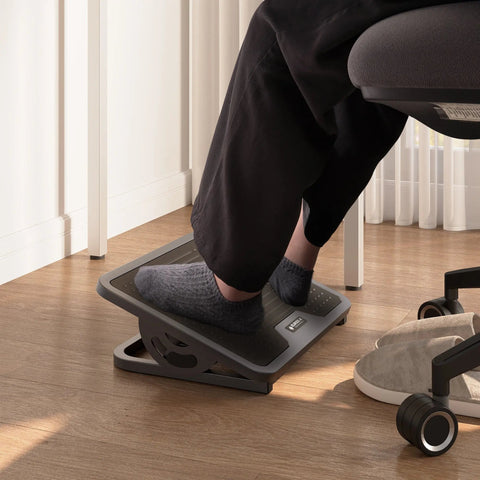
- Hips and knees should be around 90°. If the teen is short and the chair cannot go lower, add a low‑profile footrest to support the feet.
- Ensure there is 2–3 fingers’ width between the front of the seat and the back of the knees to avoid pressure.
Feet support is critical. Without it, the pelvis tilts backward, the lower back rounds, and the student slumps, even at a perfectly adjusted desk height.
Step 2: Set desk height for sitting
- With the teen seated upright, arms by the side, bend elbows to 90°.
- Raise or lower the desk until the keyboard surface is level with the underside of the elbows.
- Check that shoulders are relaxed and not hunched.
For teens using laptops, this is where many setups fail. If the laptop keyboard is on the desk and the screen must be raised for eye level, the arms end up too high. The solution is simple: use an external keyboard and mouse at elbow height and raise the laptop on a stand.
Step 3: Position monitors to protect neck and eyes
According to OSHA’s monitor guidelines, the screen should sit directly in front of the user, at roughly arm’s length, with the top line of text at or slightly below eye level. For a teen’s study desk:
- Place the monitor 45–70 cm away, depending on screen size and vision.
- Align the center of the monitor with the teen’s midsagittal plane to avoid twist.
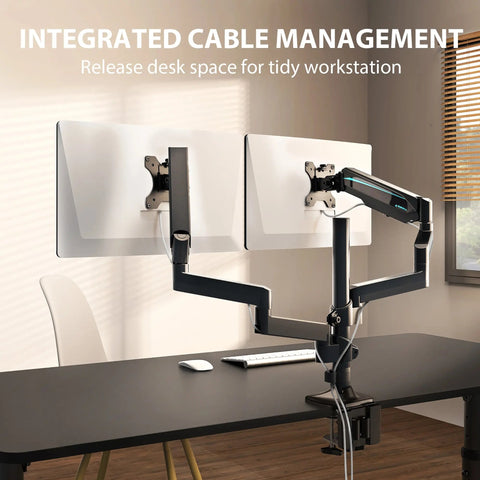
- For dual monitors, place the primary screen directly in front and the secondary slightly angled.
For laptops, always use a riser plus external keyboard and mouse to maintain neutral neck posture.
Step 4: Introduce standing gradually
The Cornell Ergonomics group recommends a “20–8–2” pattern for adults: in each 30‑minute period, 20 minutes sitting, 8 minutes standing, and 2 minutes moving. For teenagers new to standing desks, a gentler starting point works better.
A practical progression:
- Week 1–2: 15–20 minutes standing per hour of homework
- Week 3–4: 25–30 minutes standing per hour, divided into short bouts
- Week 5 onward: Adjust based on comfort, aiming to alternate postures several times per hour
Standing too long at first often causes foot and lower‑back fatigue and leads teens to abandon the feature. Encourage short, frequent position changes instead of long stretches.
Step 5: Manage cables and loads for safety
A typical teen setup may include:
- 1–2 monitors
- Laptop or desktop PC
- Desk lamp
- Charging hubs
Our performance analysis of home setups shows that these components often total 20–30 kg. Parents should add a safety margin of about 25% when comparing to the desk’s maximum load rating to ensure motors and frame remain within comfortable limits.
Add 20–30 cm of slack to all cables to avoid strain when raising or lowering the desk and use cable trays or clips to prevent tripping and accidental unplugging.
Quick setup checklist for teens
Use this list on Christmas Day when assembling the desk:
- Measure seated elbow height and set desk height to match.
- Adjust chair so feet are flat; add a footrest if needed.
- Place the monitor at arm’s length, with the top slightly below eye level.
- Use an external keyboard and mouse if the teen studies on a laptop.
- Tidy and secure cables with at least 20–30 cm of slack for height changes.
- Confirm total equipment weight and compare with desk load rating, aiming to stay at least 25% below the limit.
- Program 2–4 memory presets (for example, sitting, standing, shared use).
Choosing Between Different Desk Styles for Teens
Within the category of height‑adjustable study desks, there are multiple configurations. Parents often ask whether a compact rectangle is enough or whether larger forms make sense for multi‑purpose use.
Straight vs. L‑shaped or wing‑shaped desks
- Straight desks are ideal for smaller bedrooms, single‑monitor study setups, and teens who primarily use a laptop plus one screen.
- L‑shaped desks create distinct zones—for example, one side for computer work and the other for textbooks, art, or projects. This can help teens who like to spread out materials while keeping the main screen area uncluttered.
- Wing‑shaped or curved desks wrap slightly around the user, allowing everything to stay within easy reach while maintaining correct monitor distance. For teens who both study and game or create content, this can be an efficient, space‑optimizing option.
Example: a wing‑shaped standing desk for large setups
For a teenager who uses dual monitors, a desktop PC, and multiple accessories, a wing‑shaped standing desk with an integrated keyboard tray and monitor risers can make a practical all‑in‑one gift. The Aero Pro Wing‑Shaped Standing Desk (72"x23") offers:
- A large 72‑inch surface with a curved front edge so screens and input devices stay within comfortable reach
- Electric height adjustment with memory presets to match sitting and standing heights
- A dedicated keyboard tray, monitor risers, cup holder, and headphone hooks to keep the main surface clear
For teens who share the space with siblings or who also use the desk for creative work and gaming, this layout can reduce clutter and support better wrist and shoulder posture by positioning devices correctly.

Real‑World Christmas Scenarios: Matching the Desk to Your Teen
Scenario 1: The compact room with a single monitor
A 14‑year‑old with a small bedroom, one 24‑inch monitor, and a school laptop needs a footprint‑efficient solution. In this case:
- Prioritize a straight sit‑stand desk with at least 60 cm depth and a low minimum height.
- Add a slim monitor riser to reach eye level.
- Use a clamp‑on lamp to save surface space.
With an appropriate chair and footrest, this creates a focused study zone without dominating the room.
Scenario 2: The multitasker: homework, gaming, and content creation
Older teens (16–18) often run demanding, multi‑monitor setups for schoolwork, gaming, and creative projects. They benefit from:
- A wider or wing‑shaped sit‑stand desk for dual monitors and a desktop PC
- A slide‑out keyboard tray that keeps wrists neutral and frees space for writing
- Integrated cable management to avoid tangles and tripping hazards
Here, a desk with higher load capacity and robust dual‑motor lifting becomes particularly important for stability.
Scenario 3: Shared family study corner
Some families create a shared study corner rather than a dedicated teen bedroom desk. In such setups:
- Program memory presets for each user’s sitting and standing heights.
- Install a neutral, softly lit backdrop to avoid distractions on video calls.
- Use under‑desk storage or mobile carts for each child’s materials, so surface ergonomics stay consistent even as users rotate.
Expert Warning: Don’t Expect Furniture Alone to Transform Health
Evidence from adult workplaces, such as the Cochrane review of workplace interventions on sitting time, shows that height‑adjustable desks reduce sitting by roughly 84–116 minutes per day but offer limited direct proof of long‑term health outcomes without accompanying behavior changes, as summarized by the Cochrane Library. School‑based research in younger populations mirrors this: desks change sitting time, not habits by themselves.
Parents can significantly amplify the benefit of a Christmas ergonomic desk gift by:
- Encouraging short breaks every 20–30 minutes (stand, stretch, walk)
- Setting household norms around screen use and phone posture
- Regularly revisiting desk height as the teen grows (every 6–12 months)
This blend of ergonomic equipment (an “engineering control” in OSHA’s hazard control framework) and behavior changes (“administrative controls”) offers more robust protection against MSDs than any single approach.
Wrapping Up: Making an Ergonomic Desk a Meaningful Christmas 2025 Gift
A height‑adjustable, ergonomic study desk can be a thoughtful Christmas 2025 gift that supports a teen’s posture, eye comfort, and productivity throughout secondary school and beyond. Its real value comes from:
- Matching desk geometry to the teen’s body dimensions, especially elbow height and monitor distance
- Choosing a stable, safety‑tested frame with an appropriate height range and load capacity
- Setting up the workstation carefully and teaching healthy use patterns
Parents who pair this investment with simple behavioral habits—standing in short bouts, limiting high‑angle phone use, and checking the setup a few times per year—help their teenagers build healthier study routines that can last well into adulthood.
Health & Safety Disclaimer
This article is for informational purposes only and does not constitute medical, health, or safety advice. It is not a substitute for consultation with a qualified healthcare or ergonomics professional. Individuals with existing musculoskeletal, vision, or other health conditions should seek personalized guidance before making major changes to their workstation or activity patterns.
References
- Prolonged static sitting at work: health effects and good practice advice
- WHO 2020 Guidelines on Physical Activity and Sedentary Behaviour
- CCOHS: Office Ergonomics – Sit/Stand Desk
- OSHA eTools: Computer Workstations – Neutral Working Postures
- OSHA eTools: Computer Workstations – Monitors
- Cochrane Review: Workplace interventions for reducing sitting at work
- Anthropometrics and Ergonomics of Secondary School Students in Four Yola Metropolis
- Standing desks in schools: what are the effects?
- OSHA: Ergonomics – Solutions to Control Hazards




Leave a comment