

Imagine unwrapping a gift this Christmas that doesn’t just look beautiful in your home office, but quietly supports cleaner indoor air and healthier workdays for years to come.
That is the promise of a low‑emission, ergonomically designed standing desk.
Health‑conscious remote workers and eco‑minded gift‑givers are moving away from disposable gadgets and towards investment pieces that elevate daily life. In this guide, we’ll walk through how to choose a low‑emission sit‑stand desk as a meaningful Christmas 2025 gift, how to read certifications with confidence, and how to set it up as a true “workspace sanctuary” for the whole family.

Why “Low‑Emission” Matters for a Christmas Desk Gift
The hidden side of new furniture: VOCs and off‑gassing
Most new desks and cabinets release volatile organic compounds (VOCs) from composite wood, adhesives, and finishes. These emissions are highest during the first days and gradually decline. Indoor air specialists see this “new furniture smell” as a warning sign, not a luxury.
Installers and facilities managers often unbox wood‑based furniture and let it ventilate for 48–72 hours in a well‑ventilated area before use. As a gifting strategy, this is powerful: you can assemble and air out the desk before Christmas morning so the recipient enjoys the surprise without the initial emission spike.
Standing desks as a health‑supporting tool, not a cure‑all
From a health perspective, the biggest benefit of a sit‑stand desk is reducing long, unbroken periods of sitting. A 2018 review in the Cochrane Library found that sit‑stand desks typically reduce workplace sitting time by about 84–116 minutes per day. That is a substantial behavioral shift.
However, the same review emphasized that evidence for long‑term health outcomes remains limited. The desk is a tool, not a guarantee. To make the gift truly valuable, pair it with habits like reminders to change posture, short walking breaks, and simple stretches.
The World Health Organization’s 2020 guidelines on physical activity underline this point: adults are encouraged to achieve 150–300 minutes of moderate activity per week and to reduce sedentary time, especially prolonged sitting. Standing is not exercise, but a height‑adjustable desk makes it easier to interrupt static sitting and move more naturally during the day.
A gift that quietly supports musculoskeletal health
For many remote workers, the first signs of strain show up as tight shoulders, sore lower backs, or aching wrists. According to the NIOSH overview of ergonomics, poor posture, awkward reaches, and static loading are major risk factors for work‑related musculoskeletal discomfort.
A well‑designed sit‑stand desk can address these risk factors by:
- Allowing neutral joint angles (roughly 90° elbows, relaxed shoulders)
- Keeping the keyboard and mouse close to the body
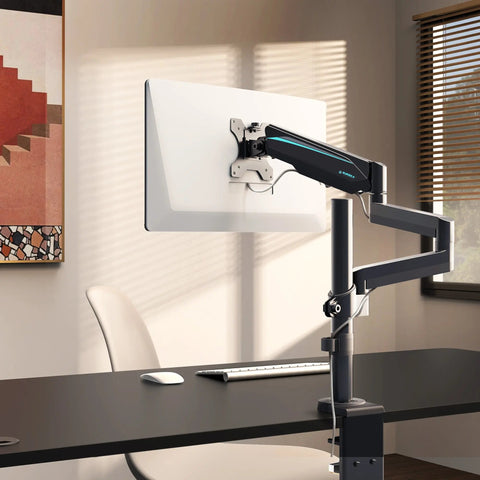
- Pairing with a monitor riser or arm for eye‑level viewing
- Encouraging frequent posture changes between sitting and standing
When you give a low‑emission standing desk, you’re gifting both cleaner air and a more supportive foundation for everyday work.
How to Read Low‑Emission and Ergonomic Certifications
Key emission and sustainability labels to look for
Eco‑minded buyers often face a confusing wall of logos and green leaves. Instead of trusting vague “eco” labels, focus on clear, verifiable standards:
- FSC® (Forest Stewardship Council): For desks that use wood or veneer, the FSC certification signals that the wood was sourced from responsibly managed forests with environmental and social safeguards.
- UL GREENGUARD / GREENGUARD Gold: The UL GREENGUARD program certifies low chemical emissions, with GREENGUARD Gold applying stricter limits aimed at sensitive spaces like schools and healthcare environments. When a desk or storage system carries this mark, it means its VOC emissions are tested against established indoor air quality criteria.
- Formaldehyde and composite wood standards: For composite wood, experienced procurement teams look for CARB Phase 2, EPA/TSCA Title VI, or E0/E1 formaldehyde emission levels on spec sheets. These are measurable, enforceable thresholds—far more reliable than generic “green” badges.
Expert Warning – “Eco” does not always mean low‑VOC
Real‑world audits show that “eco” furniture sometimes focuses on recycled content or reclaimed wood while using finishes with relatively high VOC emissions. Our analysis of industry practice, supported by work such as the MSR Design report on the embodied carbon of commercial furniture, confirms that sustainability claims often emphasize materials and carbon while downplaying emissions. Always check the specific emission standard or certification, not just the marketing headline.
Ergonomic standards that signal thoughtful design
Low emissions are only half the story. For a standing desk to feel good day after day, it should align with established ergonomic guidelines:
- BIFMA G1‑2013 Ergonomics Guideline for Furniture: This industry guideline sets recommended furniture dimensions that accommodate roughly the 5th to 95th percentile of the adult population. A sit‑stand desk designed with BIFMA G1 in mind typically offers a height range that suits most users when sitting and standing.
- ISO 9241‑5:2024: The ISO standard on workstation layout and postural requirements defines neutral joint angles and layouts that minimize strain for VDT (computer) work.
- OSHA and CCOHS workstation guidance: The OSHA Computer Workstations eTool on desks and the CCOHS sit‑stand desk guide both stress that the work surface should allow relaxed shoulders, elbows near the body, and wrists straight while typing.
When a product page references these standards—or provides dimensions clearly aligned with them—it is signaling that the design is meant to fit real human bodies, not just look good in photos.
Common misconception: “If it’s solid wood, it must be healthier”
This is a partial truth at best. Solid wood can reduce the need for formaldehyde‑containing resins found in some particleboard, but finishes, adhesives, and edge treatments still affect VOC emissions. Sintered stone and tempered glass may have lower emissions from the substrate, yet their supporting structures and adhesives still matter.
An eco‑conscious choice compares:
- Substrate type (solid wood, veneer over plywood, particleboard)
- Confirmed emission standard (e.g., CARB compliant, E0/E1)
- Independent certifications (such as GREENGUARD)
Rather than assuming one material is always “healthier,” use the spec sheet to verify.
Choosing the Right Low‑Emission Standing Desk as a Gift
Start with the recipient: work style, space, and sensitivity
Before falling in love with a desk photo, map the real‑world scenario.
Ask yourself:
- How much space do they have? A compact office off a hallway has different needs than a full‑size study.
- How do they work? One laptop and a notebook, or multiple monitors and reference documents?
- Any sensitivities? If someone is sensitive to smells or has respiratory concerns, low‑emission certifications and a careful off‑gassing plan become even more important.
Scenario 1: The design‑loving remote professional
If your recipient is a manager, homeowner, or creative who values tactile materials and refined details, a desk that blends ergonomic function with rich textures is usually the best fit.
The Faux Saddle Leather Adjustable Standing Desk (55"x23") is a strong example of this category. Its faux saddle leather desktop is crafted with nanoscale tailoring technology and a wood‑leather patchwork design that feels warm and soft to the touch while remaining waterproof and durable. Soft‑close drawers keep daily essentials organized without slamming, and fine‑ground corners avoid sharp edges.
From a health perspective, the integrated monitor riser helps bring the screen closer to eye level, supporting the neutral neck posture recommended in the OSHA monitor guidelines. Anti‑collision technology helps the desk stop and rebound when it encounters an obstacle, which is especially important in compact home offices where cabinets and walls are close by.
This kind of desk works well for:
- Remote professionals who work 6–8 hours at a screen
- Style‑conscious recipients who want their workspace to blend into the home
- Givers who value low‑emission materials and thoughtful details over flashy extras
Scenario 2: The power user who needs multiple zones
Some knowledge workers—and many home‑based consultants—run full multi‑monitor setups, host online meetings, and manage paperwork all from one room. For them, a larger, corner‑filling desk with smooth power adjustment becomes a daily anchor.
An L‑shaped adjustable desk like the L‑Shaped Standing Desk with Accessories Set (60"x23") creates distinct zones: one side for focused deep work with dual monitors, the other for handwritten notes, sketching, or even a secondary laptop.
From an ergonomic standpoint, this design shines when combined with:
- Dual motors with a typical travel speed around 1" per second, allowing smooth transitions between sitting and standing in roughly 17 seconds
- Generous weight capacity (e.g., around 220 lbs) to safely support monitors, arms, and accessories
- Integrated accessories like a slide‑out keyboard tray, cup holder, and headphone hooks to keep the primary work surface clear
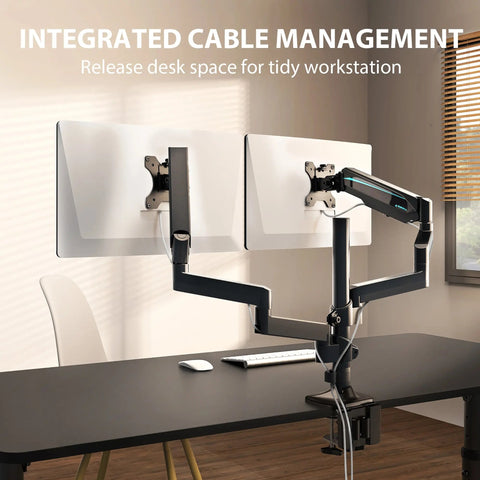
When you pair such a desk with low‑emission wood components and careful cable management, you create a workstation that supports movement, organization, and cleaner air throughout long, demanding days.
Comparing desk types for eco‑minded gifting
Use this table as a quick decision tool:
| Recipient profile | Ideal desk style | Key health & eco advantages | Limitations to consider |
|---|---|---|---|
| Design‑focused remote worker in a mid‑size room | 50–65" executive‑style sit‑stand desk with drawers | Balanced footprint, integrated storage, refined materials; easy to align with BIFMA G1 height ranges | Limited multi‑monitor width compared with very large setups |
| Heavy multitasker or shared home office | L‑shaped electric standing desk with accessories | Distinct zones for work and personal use; strong cable management; can reduce desktop clutter and awkward reaches | Requires more corner space; higher material use may increase embodied carbon |
| Senior leader or home‑based executive | Large executive sit‑stand desk with cabinet set | Expansive surface for documents and devices; under‑desk cabinets reduce need for separate storage units | Needs a dedicated room; often heavier, so plan ahead for delivery and off‑gassing |
Pro Tip – Look beyond “average” carbon numbers
Research such as the MSR Design 2025 analysis of commercial furniture shows that “average desk” embodied carbon figures can hide major differences in materials, adjustability, and transport distances. Two similarly‑sized desks can differ by 25–40% in embodied carbon depending on substrate, metal content, and shipping path. When possible, favor desks that combine durable materials with long service life and avoid frequent replacement.
Setting Up Your Gift Desk for Healthy Sit‑Stand Work
A sit‑stand desk only delivers its health and comfort benefits when it is set up correctly. The good news: once you know a few anchor points, the process is straightforward.
Step‑by‑step ergonomic setup
Based on combined insights from OSHA’s neutral posture guidelines and the CCOHS sit‑stand desk guide, here is a practical setup checklist:
-
Adjust the chair first (for sitting)
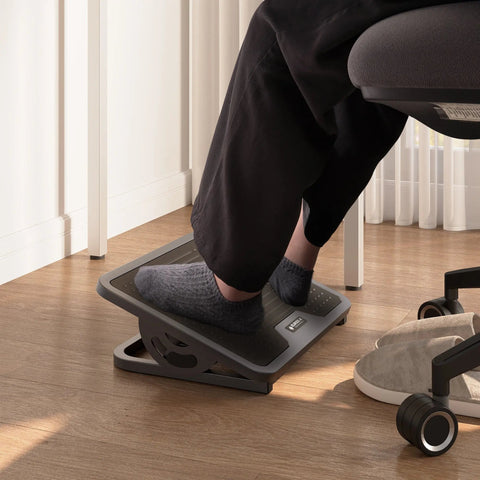
- Feet flat on the floor (or on a footrest), thighs roughly parallel to the floor.
- Hips slightly higher than knees to reduce lower‑back load.
-
Set desk height for keyboard use
- While sitting, bend your elbows to about 90°, relax your shoulders, and place your hands over the keyboard.
- Raise or lower the desk until your forearms are roughly level and your wrists are straight.
-
Position the monitor
- Top line of text at or slightly below eye level, as recommended by CCOHS, at roughly an arm’s length distance.
- Use a monitor riser or the desk’s integrated shelf so you don’t have to crane your neck down.
-
Tune the standing height
- Stand upright with shoulders relaxed, elbows again around 90° over the keyboard.
- Adjust the desk so your wrists stay neutral—no bending up or down.
-
Fine‑tune accessories
- Keep the mouse close to the keyboard to avoid reaching, aligning with the OSHA recommendations on mouse placement.
- Use a document holder between the keyboard and monitor if you refer to printed material frequently.
According to the Cornell University Ergonomics guidance, a practical rhythm for many people is “20‑8‑2”: about 20 minutes sitting, 8 minutes standing, and 2 minutes moving for each half‑hour cycle. As a starting point, many ergonomists use a simpler 1:1 ratio—30–45 minutes sitting, then 30–45 minutes standing—then adjust based on comfort.
Reducing fatigue during standing sessions
To make standing sessions enjoyable rather than tiring:
- Add an anti‑fatigue mat to reduce pressure on the feet and lower limbs.
- Shift weight from one leg to the other; small micro‑movements help circulation.
- Avoid locking the knees; a slight bend keeps muscles engaged.
- Choose supportive footwear instead of barefoot on hard floors.
The OSHwiki article on prolonged static standing notes that static standing can strain the lower limbs and back if maintained for long periods. This is why alternating between sitting and standing—and keeping sessions moderate—is so important.
A simple family‑friendly sit‑stand schedule
For a household where multiple family members use the same desk, this example schedule often works well during a typical 8‑hour remote workday:
- Morning (9:00–11:30): Alternate 30 minutes sitting, 30 minutes standing, with a 5‑minute walk or stretch each hour.
- Midday (11:30–13:30): Mostly sitting for focused tasks, but stand for 10–15 minutes immediately after lunch.
- Afternoon (13:30–17:00): Use standing blocks for meetings or calls; sit for detailed writing or analysis.
Standard workplace observations show that this kind of routine can reduce total static sitting time by 25–35% compared with all‑day sitting, which aligns well with the reductions seen in the Cochrane review.
Making the Gift Truly “Green”: Practical Gifting Tips
Plan the off‑gassing and assembly
To make Christmas morning as fresh as it is magical:
- Unbox early: Assemble the desk 2–3 days before gifting in a ventilated space such as a spare room or garage.
- Ventilate smartly: Open windows or use exhaust fans; avoid filling the room with scented candles or sprays, which only mask odors.
- Wipe surfaces: A simple wipe‑down with a damp, lint‑free cloth can remove some residual manufacturing dust and residues.
This mirrors the best practice used by facilities managers who handle large batches of wood‑based furniture: ventilate first, then move into everyday spaces.
Think in ecosystems: accessories that support ergonomics and sustainability
While the desk is the hero gift, a few purposeful accessories can elevate the entire setup without clutter:
- Monitor arms or risers to achieve ISO‑aligned viewing heights without stacking random boxes under screens.
- Cable trays and under‑desk organizers to prevent dangling cords and tripping hazards.
- Task lighting that reduces eye strain and allows lower ambient lighting, especially helpful for evening deep work.
When adding accessories, practitioners recommend checking that:
- The total load (monitors, arms, risers) stays well within the desk’s rated capacity.
- CPU holders and cable lengths are compatible with the full travel range, so nothing strains when the desk moves.
Minimize the footprint of the gift itself
A truly green Christmas desk gift also considers packaging and shipping:
- Favor products that use FSC‑certified or recycled cardboard and limited plastic.
- Consolidate shipments where possible instead of multiple small parcels. Heavy desktops shipped as a single piece often require more protective material; a design that balances protection with efficient packaging can reduce both damage and waste.
- Keep the desk in service for many years by choosing a design with classic lines and durable surfaces, rather than short‑lived trends.
Wrapping Up: A Gift that Reshapes Everyday Life
A low‑emission, height‑adjustable desk is more than furniture. It is an invitation to move more, breathe easier, and treat daily work with the same care usually reserved for special occasions.
By focusing on verified low‑emission certifications, ergonomics grounded in standards like BIFMA G1 and ISO 9241‑5, and thoughtful setup, you transform a Christmas present into a long‑term wellness investment.
Whether you choose a tactile, leather‑topped executive desk or a spacious L‑shaped workstation with integrated accessories, the real magic lies in how it supports the routines, posture, and focus of the person who receives it. This Christmas, you have the chance to give a workspace sanctuary—one that looks beautiful, feels comfortable, and respects the air your family breathes.
Frequently Asked Questions
Is a standing desk really healthier than a traditional desk?
A sit‑stand desk is not a medical device, but it can significantly reduce total sitting time. The Cochrane review on workplace sitting found reductions of roughly 84–116 minutes of sitting per workday. Long‑term health outcomes depend on overall activity levels, posture, and other habits.
How long should someone stand at a sit‑stand desk each day?
Guides from Cornell University’s Ergonomics Web suggest alternating between sitting and standing throughout the day, often using patterns such as “20‑8‑2” or a 1:1 ratio of sitting to standing. Individuals with existing conditions should consult a healthcare professional before making major changes.
Does standing count towards my weekly exercise goals?
No. The WHO 2020 physical activity guidelines clarify that adults should still aim for 150–300 minutes of moderate‑intensity physical activity per week. Standing helps break up sedentary time but does not replace walking, cycling, or other exercise.
What should I do if the recipient already has back or neck pain?
A good sit‑stand desk and ergonomic setup can help many people feel more comfortable, but existing pain should be evaluated by a qualified healthcare professional such as a physician or physiotherapist. They can tailor advice on desk height, posture, and movement.
How can I learn more about styling and using a standing desk effectively?
For inspiration on arranging a small home office around an adjustable desk, you can explore guides like Stylish Standing Desk Designs for Small Home Offices and practical setup advice in Setting Up Your Standing Desk for Peak Productivity.
Disclaimer: This article is for informational purposes only and does not constitute medical, safety, or professional ergonomic advice. Individuals with existing health conditions or concerns about musculoskeletal pain, respiratory issues, or other medical conditions should consult a qualified healthcare professional before making significant changes to their workstation, posture, or activity levels.
Sources
- Cochrane: Workplace interventions for reducing sitting at work (2018)
- World Health Organization – 2020 Guidelines on Physical Activity and Sedentary Behaviour
- NIOSH – About Ergonomics
- OSHA eTools: Computer Workstations
- Cornell University Ergonomics Web – Ergonomic Guidelines
- UL GREENGUARD Certification
- FSC Certification
- ISO 9241‑5:2024 – Workstation layout and postural requirements
- BIFMA G1‑2013 Ergonomics Guideline for Furniture
- MSR Design – Embodied Carbon Footprint of Commercial Furniture (2025)
- OSHwiki – Musculoskeletal disorders and prolonged static standing




Leave a comment