

The Living Sanctuary: Evolving Your Creative Backdrop
Imagine stepping into a workspace sanctuary that doesn't just house your gear, but actively breathes with your creativity. You sit down, the soft glow of 4000K ambient light warms the room, and your modular background—perfectly balanced and intentionally curated—frames you not just as a creator, but as an authority in your craft. This is the aspirational state of a high-production studio: a space where deep work and high-level execution happen naturally because the environment is designed to evolve alongside you.
As your channel grows, your background must transition from a static wall into a dynamic canvas. A professional backdrop is a cornerstone of brand expression, yet many creators fall into the trap of "background debt"—the exhausting cycle of constant, expensive overhauls that steal time from content creation. By embracing modularity and ergonomic principles, you can create a professional, personalized environment that enhances both your workflow and your on-camera presence without starting from scratch every season.
The Foundation: Starting with a Neutral Modular Base
The most common mistake in studio design is committing too early to a rigid, highly specific theme. While a hand-painted mural or a fixed neon sign might look great for your first fifty videos, they can quickly become "visual anchors" that prevent you from pivoting your content. Instead, we recommend starting with a neutral, textured base.
Think of your wall as a high-performance substrate. Materials like felt acoustic panels or wood slat accents provide a sophisticated, tactile quality that translates beautifully on camera. These materials do more than look good; they serve a functional purpose in sound dampening, which is critical for audio clarity. According to the Canadian Centre for Occupational Health and Safety (CCOHS), managing the environmental factors of your workspace—including noise and lighting—is a fundamental component of a healthy, productive office.
The Logic of the Neutral Canvas
A neutral base allows you to "layer" your brand. By using modular elements like pegboards and floating shelves, you can swap out props, gear, and lighting to match a specific game, a seasonal promotion, or a complete brand refresh. This approach aligns with the principles of sustainable engineering, where the core structure remains constant while the "skin" or interface is updated.
Methodology Note: The Background Debt Model Our analysis of creator growth patterns assumes a "Background Debt" threshold where the time spent on physical decor iteration exceeds 15% of total production hours. This model is based on common patterns observed in content creator community feedback and internal workflow analysis (not a controlled lab study). To avoid this debt, we suggest a 70/30 modularity ratio: 70% permanent neutral base, 30% swappable modular elements.

Vertical Evolution: Mastering the Golden Zone
Once your base is set, the next step in the space transformation is the strategic placement of modular wall decor. Many creators mount their shelves or pegboards too high, leaving a distracting gap between the creator’s head and the decor, or worse, placing expensive gear in a "dead zone" that never appears on camera.
We advocate for the "Golden Zone" heuristic: placing your primary visual interest points between your seated waist height and slightly above your head height. This ensures that your most important brand elements—whether they are high-end microphones, limited-edition collectibles, or specialized tools—are always in the frame.
Strategic Pegboard Placement
A desk-mounted or wall-mounted pegboard is a transformative tool for the workspace sanctuary. It declutters your desktop, allowing for the "Mindfulness" and "Inspiration" required for deep work, while keeping your essential tools within an ergonomic reach. According to ISO 9241-5:2024, the layout of a workstation should support a variety of postures and ensure that frequently used items are within the primary reach zone to minimize musculoskeletal strain.
| Parameter | Recommended Value | Rationale |
|---|---|---|
| Mounting Height | 30" - 55" from floor | Aligns with the "Golden Zone" for seated creators. |
| Reach Distance | < 18" from torso | Minimizes shoulder extension (ISO 9241-5 alignment). |
| Visual Density | 60% coverage | Prevents "visual noise" while maintaining interest. |
| Cable Path | Vertical / Hidden | Increases perceived production value. |

Illumination and Atmosphere: Linking Functionality with Emotion
Lighting is the most powerful tool for shifting your studio's ambiance. It isn't just about being seen; it's about setting a mood that resonates with your audience and your own mental state. When you switch from "execution mode" (bright, cool light) to "thinking mode" (warm, dim light), you are using your environment to signal to your brain that it’s time to shift gears.
A common pitfall is mixing color temperatures haphazardly. This often results in unflattering skin tones and a "muddy" background. For a professional on-camera presence, we suggest a baseline of 4000K for your white lights. This temperature is close to natural daylight and provides a clean, elegant aesthetic.
Smart RGBIC Integration
Modern RGBIC lighting allows for synchronous linkage of sound and light, visualizing your music rhythms or game audio in real-time. This adds a layer of "Aesthetic" energy that keeps the background fresh. However, the key to high-production value is subtlety. Instead of pointing lights directly at the camera, use them as "wash" lights against your neutral base. This creates depth and prevents the flat, two-dimensional look that plagues many home setups.
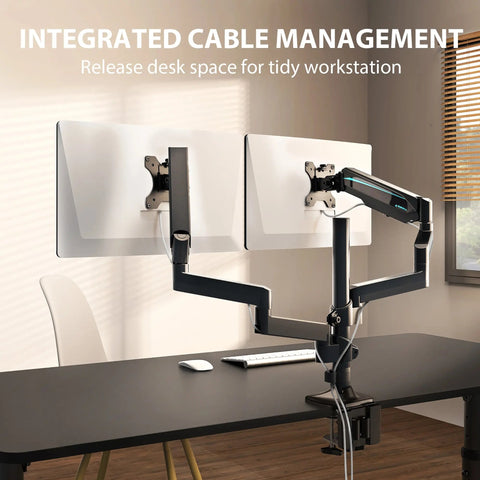
Expert Tip: The Cable Routing Detail To significantly boost your production value, dedicate a specific section of your pegboard or wall solely to cable routing. Using magnetic ties and adhesive clips to run cords vertically or behind modular panels makes them completely hidden from the camera's view. This small tweak creates a "clean" look that signals professional expertise to your viewers.

The Digital-Physical Hybrid: Future-Proofing Your Brand
As we look toward the future of content creation, the line between physical and digital environments is blurring. Some creators argue that physical backgrounds are becoming obsolete due to AI green-screen technology and virtual sets. However, we believe the most authoritative creators will use a hybrid approach.
A physical "Workspace Sanctuary" provides the tactile authenticity that AI cannot yet replicate. It shows your audience that you are truly immersed in your domain. As noted in The 2026 Workstation White Paper: Converging Ergonomic Science and Sustainable Engineering, the integration of modularity is not just an aesthetic choice but a sustainable engineering requirement. A modular physical background allows you to use AI tools like NVIDIA Broadcast to enhance your lighting or slightly blur your depth of field, while the physical elements provide the "visual proof" of your expertise.
Authenticity in "Working Clutter"
In specific niches—like tech repair, DIY, or crafting—a perfectly sterile background can actually feel inauthentic. In these cases, a "working studio" aesthetic, where tools and projects-in-progress are visible on pegboards and shelves, can increase audience trust. The key is "organized chaos." Use rolling storage solutions to move gear in and out of the frame as needed. A rolling file cabinet or utility cart allows you to reconfigure your work area in seconds, maintaining a flexible environment that evolves with your daily workflow.

Ergonomics and Safety: The Invisible Foundation
While we often focus on the "Aesthetic" and "Ambiance," a background that grows with you must be built on a foundation of safety and health. If your studio setup causes physical strain, your creativity will eventually suffer.
According to the BIFMA G1-2013 Ergonomics Guideline, furniture should be adjustable to fit a wide range of users (from the 5th to the 95th percentile). This applies to your desk height, your chair, and even the height of your monitors and background elements.
The Sit-Stand Rhythm
If you use a height-adjustable desk, your background needs to accommodate both sitting and standing positions. A background that looks great when you are seated might look cut-off when you stand.
- Heuristic: Ensure your modular wall decor extends at least 12 inches above your standing head height to maintain visual continuity during transitions.
- Health Fact: The World Health Organization (WHO) recommends reducing sedentary time and interrupting long periods of static behavior. A sit-stand desk is a vital "engineering control" (as defined by OSHA) to help achieve this.
Logic Summary: Engineering vs. Administrative Controls Based on the OSHA hierarchy of controls, providing ergonomic furniture (an engineering control) is more effective than simply training users to take breaks (an administrative control). By designing your background to work with a sit-stand workflow, you are proactively protecting your long-term health.
Sustainability and Trust: Choosing the Right Materials
Finally, a workspace that truly serves as a sanctuary should be built with materials that are safe for you and the planet. When selecting wood products for your background or furniture, look for FSC Certification, which ensures responsible sourcing.
Furthermore, consider indoor air quality. Products that meet UL GREENGUARD Gold standards have low chemical emissions, ensuring that your long hours of deep work are spent in a healthy environment. This is especially important in small home studios where ventilation may be limited.
Creating Your Ever-Evolving Sanctuary
Evolving your background isn't about buying more things; it's about building a smarter system. By starting with a neutral base, mastering the "Golden Zone," and integrating modular lighting and storage, you create a space that supports your growth rather than hindering it.
Your studio is the stage for your creative journey. Let it be a place that sparks limitless creativity, reduces distractions, and maintains your focus. As you say goodbye to the chaos of a static, cluttered background, you open the door to a day of deep work that begins with inspiration and ends with a sense of accomplishment.
Disclaimer: This article is for informational purposes only and does not constitute professional medical, ergonomic, or safety advice. Always consult with a qualified professional before making significant changes to your workstation or if you experience persistent physical discomfort.
References
- BIFMA G1-2013 Ergonomics Guideline for Furniture
- CCOHS: Office Ergonomics - Sit/Stand Desk
- ISO 9241-5:2024 Workstation layout & postural requirements
- WHO 2020 Guidelines on Physical Activity & Sedentary Behaviour
- The 2026 Workstation White Paper: Converging Ergonomic Science and Sustainable Engineering
- OSHA eTools: Computer Workstations - Neutral Working Postures
- UL GREENGUARD Certification Overview




Leave a comment