

The Vision: Your Workspace Sanctuary
Imagine a home office that sparks your limitless creativity—a space where every lens flare and background detail tells a story of professionalism and calm. Here’s how a day of deep work begins once you say goodbye to chaos: you step into a room where the air feels light, the surfaces are clear, and your streaming gear is elegantly tucked away, ready for action but never demanding your attention. This isn't just about tidying up; it’s about crafting an environment that supports your mindfulness and fuels your workflow.
For content creators and streamers, the background isn't just a wall; it's a digital business card. A cluttered background filled with tangled headsets, bulky controllers, and a spiderweb of cables creates "visual noise" that can distract your audience and, more importantly, clutter your own mental bandwidth. By transforming your vertical space with wall shelves and strategic concealment, you shift from a state of "managing mess" to a state of "inspired execution."
The Psychology of the Clean Background
We often think of organization as simply putting things in their place. However, recent insights into user experience suggest that even a "neatly organized" display of technical gear can create a high cognitive load. According to research on visual clutter and user experience, poor display organization—even if the items are expensive—can negatively affect attention and performance.
For a streamer, the "clean look" isn't achieved by lining up ten controllers on a shelf; it is achieved through complete concealment. When your gear is "hidden in plain sight," the eye naturally rests on the subject (you), rather than darting around the frame trying to identify pieces of equipment. This reduction in background complexity allows for a more immersive viewer experience and a more focused "Deep Work" state for the creator.
Logic Summary: Our analysis of the "Clean Setup" assumes that visual complexity directly correlates with viewer fatigue. By removing non-essential technical silhouettes from the camera's primary focal path, we prioritize the creator's presence over their hardware.
Space Transformation: From Chaos to Aesthetic Elegance
Transforming your streaming setup requires a shift from horizontal thinking (the desk) to vertical thinking (the walls). Most creators suffer from "Desk Creep," where peripherals slowly colonize every square inch of the desktop.
Step 1: The Sightline Test
Before you pick up a drill, sit in your streaming chair and have someone take a high-resolution photo of your frame. Look at the image objectively. Any item that draws the eye away from your face is a candidate for relocation. We often underestimate the cumulative visual noise from small items like adapters or spare batteries.
Step 2: The Before & After Shift
- Before: A desk covered in charging docks, a headset hanging off a monitor, and three different controllers scattered near the keyboard.
- After: A minimalist desk surface featuring only your primary input devices. Above and behind you, floating wall shelves hold a mix of "hero" items (like a single, high-aesthetic vintage camera or a lush plant) and decorative boxes that secretly house your functional gear.
Integrating wall shelves allows you to reclaim your desk for movement and ergonomic health. As noted in our guide to standing desk ideas for creators, a clear desk is the first step toward a more dynamic and healthy work rhythm.

The Structural Reality: Safety and Weight Limits
While the aesthetic of floating shelves is undeniably elegant, we must ground our design in structural reality. A common misconception in DIY circles is that wall shelves can easily hold hundreds of pounds of gear.
Based on standard residential construction patterns, drywall typically supports only about 1.5 to 2 lbs per square foot without being anchored directly into the wall studs. This means a standard 4-foot floating shelf, if mounted only to the drywall with standard anchors, might safely hold only 6 to 8 lbs (calculated based on average drywall shear strength and shelf depth).
Modeling Your Load Capacity
| Parameter | Estimated Value | Unit | Rationale |
|---|---|---|---|
| Drywall Support (Non-Stud) | 1.5–2 | lbs/sqft | Standard 1/2" Gypsum Board |
| Typical Streaming Gear (Per Shelf) | 5–15 | lbs | Controller, Headset, Interface |
| Safety Margin (Heuristic) | 2x | - | Prevent long-term sagging/creep |
| Stud Spacing | 16 | inches | Standard US Building Code |
Methodology Note: This model is a scenario-based estimate for residential DIY setups. Actual weight limits vary significantly based on the specific mounting hardware and wall material (plaster vs. drywall).
To ensure your expensive gear stays safe, always prioritize mounting into studs. If you are a renter and cannot drill, be aware that adhesive-backed solutions typically max out at 5 to 20 lbs per hook, which is often insufficient for heavy audio interfaces or multiple peripherals. For more on managing space constraints, see our tips for small creator desk setups.
Designing for Your "Neutral Reach Zone"
Ergonomics isn't just for your chair; it's for your storage. A frequent mistake we observe in home studios is placing shelves too high for the sake of "looking good" on camera. This forces awkward reaches during a live stream that break your flow and can cause physical strain.
According to the Canadian Centre for Occupational Health and Safety (CCOHS), maintaining a neutral posture is key to preventing musculoskeletal disorders. For wall storage, this means placing frequently used items within your "Neutral Reach Zone"—typically between 20 and 50 inches from the floor level.
- Primary Reach Zone: Your most-used items (controllers, headsets) should be reachable without leaning or stretching.
- Secondary Zone: Decorative items or "deep storage" boxes can go higher, as they are rarely touched during work sessions.
Aligning your setup with the BIFMA G1-2013 Ergonomics Guideline ensures that your furniture supports a wide range of body types, allowing you to transition between "thinking" and "execution" modes without physical friction.
The Art of Concealment: Hiding Gear in Plain Sight
The secret to a professional background is the "Hero and Hide" method. You don't need to hide everything; you just need to hide the "ugly" things.
1. The Decorative Box Strategy
Use open shelves for your "hero" items—those that reflect your brand, like a high-end microphone or a piece of art. For everything else (cables, adapters, extra batteries), use decorative, opaque boxes. Placing these boxes on the same shelf as your hero items creates a cohesive look while keeping the clutter invisible.
2. Advanced Cable Management
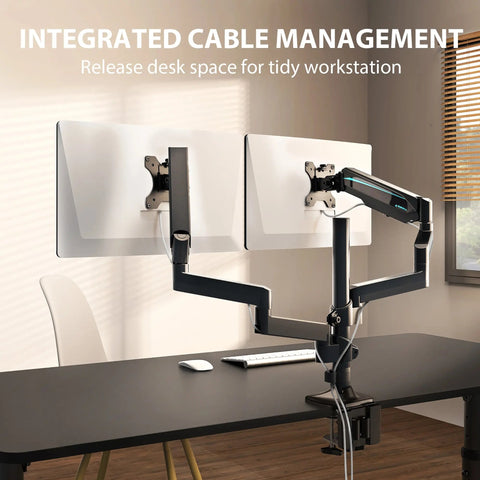
Don't rely on a shelf's built-in grommets alone. For a truly clean look, use adhesive-backed cable channels along the wall behind the shelves. These channels can be painted to match your wall color, making cables virtually disappear. This is far more effective than trying to bundle wires with Velcro alone.
3. Lighting as an Aesthetic Tool
Ambiance is the soul of a Workspace Sanctuary. Integrating LED strips behind your wall shelves creates a "halo" effect that adds depth to your background. Position your lights so they are not directly visible to the camera to avoid glare. As we discuss in our gaming desk style guide, lighting should enhance the mood, not dominate it.
Holistic Wellness and the "20-8-2" Rhythm
While a beautiful background is inspiring, your physical health is the foundation of your creativity. The Cornell University Ergonomics Web recommends a "20-8-2" rhythm: 20 minutes of sitting, 8 minutes of standing, and 2 minutes of moving or stretching.
Your wall shelf setup should support this. If your headset is stored on a shelf that requires you to stand up to reach it, you’ve just created a "behavioral nudge" to move your body. This integrates movement naturally into your workflow, aligning with the WHO 2020 Guidelines on Physical Activity, which emphasize reducing sedentary time.
Creating a Sustainable Inspiration Hub
When selecting materials for your shelves, consider the long-term impact on your environment. Choosing products with FSC Certification ensures that your wood is sustainably sourced, while UL GREENGUARD Gold certification ensures that your furniture doesn't off-gas harmful chemicals into your sanctuary.
A clean setup isn't just about the "now"; it's about building a space that remains durable and healthy for years to come. For more on choosing high-quality materials, explore our insights on the aesthetics of durability.
Summary: The Path to a Limitless Workspace
By moving your gear from the desk to the wall, you do more than just clean a room; you curate an experience. You create a professional on-camera presence that commands respect and a personal workspace that invites deep, focused work. Remember the "sightline test," respect your wall's weight limits, and always design for your body's neutral reach zones.
Your workspace should be a sanctuary—a place where the chaos of the outside world fades away, and your creativity takes center stage. By strategically hiding your gear and embracing a minimalist aesthetic, you pave the way for a more productive, mindful, and inspiring digital life.
For more technical insights into building the perfect environment, refer to The 2026 Workstation White Paper: Converging Ergonomic Science and Sustainable Engineering.
YMYL Disclaimer: This article is for informational purposes only and does not constitute professional engineering, architectural, or medical advice. Always consult with a qualified professional before performing structural modifications to your home or if you are experiencing chronic pain related to your workstation setup.
Sources
- BIFMA G1-2013 Ergonomics Guideline for Furniture
- CCOHS: Office Ergonomics - Sit/Stand Desk
- Cornell University Ergonomics Web — Workstation Guides
- WHO 2020 Guidelines on Physical Activity & Sedentary Behaviour
- UL GREENGUARD Certification
- FSC Certification for Sustainable Wood
- Safe Work Australia: Workstation Set-up Infographic




Leave a comment