

For multinational corporations, the pursuit of a standardized global office is often interrupted by a complex web of regional regulations. A seating solution that meets every safety requirement in North America may inadvertently fail a compliance audit in the European Union. This discrepancy is not merely a matter of paperwork; it represents fundamentally different engineering philosophies regarding stability, durability, and user safety.
When a global procurement team selects furniture for thousands of employees across borders, the stakes extend beyond simple comfort. Failure to reconcile these standards can lead to "dual inventory" costs—where separate product lines must be maintained for different regions—and significant liability risks. Understanding the technical nuances between major regulatory regimes is essential for facility managers aiming to build a high-performing, compliant, and healthy workplace.
The Physiology of Sedentary Risk: Why Standards Matter
The primary driver behind ergonomic standards is the prevention of Work-related Musculoskeletal Disorders (WMSDs). According to the U.S. Occupational Safety and Health Administration (OSHA), core risk factors include excessive force, repetitive tasks, and poor posture. In a modern office environment, the most pervasive risk is the "static load"—the physical strain of maintaining a single posture for extended periods.
Prolonged static sitting leads to a cascade of physiological issues. It restricts blood circulation, increases pressure on the intervertebral discs, and causes muscle fatigue in the trapezius and lumbar regions. As noted in the EU-OSHA research on musculoskeletal disorders and prolonged static sitting, these conditions are not just individual health concerns but significant economic burdens, impacting productivity and increasing absenteeism across the workforce.
To mitigate these risks, ergonomic furniture is designed to facilitate a "neutral position." This is a posture where joints are naturally aligned, minimizing stress on muscles, tendons, and the skeletal system. Achieving this across a diverse global workforce requires furniture that can adapt to a wide range of body types, moving beyond the "one-size-fits-all" approach that often characterizes budget-grade office equipment.
The Regulatory Divide: ANSI/BIFMA vs. EN/ISO
The global regulatory landscape for office seating is dominated by two primary frameworks: the North American ANSI/BIFMA standards and the European EN/ISO standards. While both aim to ensure safety and durability, they operate under different legal and philosophical mandates.
1. ANSI/BIFMA (North America)
The ANSI/BIFMA X5.1 standard is a voluntary consensus guideline. It focuses on performance and durability testing, such as backrest strength and base stability. In the U.S. market, BIFMA compliance is a high-quality benchmark and a prerequisite for most corporate bids, but it is not a legal requirement for market entry. Stability testing in this framework focuses heavily on backward tilt, reflecting a design culture that prioritizes reclining comfort.
2. EN 1335 and ISO 9241 (Europe)
In contrast, the European EN 1335-1:2020 standard often carries the force of law through the CE marking framework. These standards are typically more prescriptive regarding dimensions and stability. For instance, European standards frequently require rigorous forward and lateral stability tests that some BIFMA-certified chairs may not pass without structural modification.

The "Stability Gap"
A common pitfall for global teams is assuming that a chair passing BIFMA is "safe enough" for all regions. Technical analysis shows that a chair optimized for BIFMA’s backward stability may fail the EN 1022 forward stability requirements. This "stability gap" often forces manufacturers to produce region-specific variants, increasing warehousing costs and complicating global spare parts inventory.
| Feature | ANSI/BIFMA X5.1 (US) | EN 1335 / ISO 9241 (EU) |
|---|---|---|
| Legal Status | Voluntary Consensus | Often Mandatory (CE Mark) |
| Stability Focus | Primary focus on backward tilt | Forward, Side, and Backward |
| Dimensions | 5th to 95th Percentile (US) | Specific Classifications (A, B, C) |
| Durability | High-cycle load testing | High-cycle + safety margins |
| Philosophy | Performance-based | Safety and Health-based |
Note: Values and comparisons are based on standard industry compliance assessments.
Anthropometric Inclusion: Designing for the 95th Percentile
A critical challenge in global standardization is accommodating the full spectrum of the human population. The BIFMA G1-2013 Ergonomics Guideline recommends furniture dimensions that cover the 5th to 95th percentile of the population. However, "average" furniture often fails the outliers.
Consider the requirements of a 95th percentile male (approx. 189 cm or 6'2"). For this user, a standard fixed desk height of 29 inches (73.6 cm) is inadequate. Technical calculations indicate that a tall user requires an ergonomic sitting desk height of approximately 78.19 cm (30.8 inches). A fixed desk creates a nearly 2-inch gap, forcing the user into a kyphotic (slumped) posture to reach the keyboard.
When standing, the requirement jumps to 116.04 cm (45.7 inches). This demonstrates why adjustable-height workstations are no longer a luxury but a compliance necessity for inclusive workplace design. As explored in The 2026 Workstation White Paper: Converging Ergonomic Science and Sustainable Engineering, the integration of high-range adjustability is the only way to bridge the anthropometric gap across diverse global regions.
The ROI of Compliance: Productivity as a Strategic Driver
While procurement managers often focus on the upfront cost of furniture, the true Return on Investment (ROI) is found in health outcomes and productivity gains. According to a systematic review by Cochrane: Workplace interventions for reducing sitting at work, sit-stand desks can significantly reduce daily sedentary time by 84 to 116 minutes.
The financial impact of this shift is measurable. Using a conservative model for a multinational corporation with 1,000 employees:
- Assumed Productivity Uplift: 15% (based on industry benchmarks for ergonomic improvements).
- Average Wage: $45/hour.
- Usage: 3 hours of standing/active work per day.
- Annual Value Gain: Approximately $5,062 per employee.
- Enterprise Total: Over $5 million in annual productivity value.
In this scenario, a premium, dual-certified standing desk costing $1,500 pays for itself in approximately 3.6 months. Beyond productivity, compliance with standards like the UK HSE DSE guidelines reduces the risk of legal claims and long-term disability costs associated with musculoskeletal injuries.

The Global Procurement "Super-Spec": A Roadmap
To avoid the "dual inventory" trap, experienced procurement managers develop a "Super-Spec"—a single set of requirements that satisfies the strictest elements of both US and EU standards. This approach simplifies global rollouts and ensures that every employee receives the same level of protection.
Essential Components of a Global Super-Spec:
- Synchronized Tilt Mechanism: Preferred in the EU, this mechanism ensures the backrest and seat move in a fixed ratio, maintaining the angle of the hips and supporting the spine during movement.
- Seat Depth Adjustment: This is a key differentiator for user fit. It allows both petite (5th percentile) and tall (95th percentile) users to maintain proper circulation in the lower limbs by adjusting the space between the seat edge and the back of the knees.
- Independent Lumbar Support: Must meet zone-based pressure distribution tests. Look for systems that offer both height and depth adjustability to accommodate varying spinal curvatures.
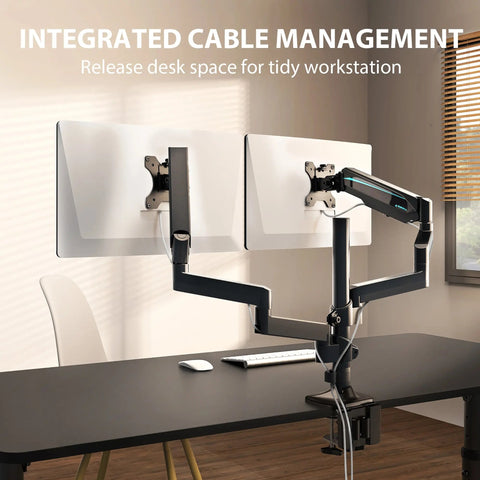
- Dual-Motor Capacity for Desks: For corporate environments with heavy equipment (dual monitors, CPUs), single-motor systems often operate at 100% capacity, risking failure. A dual-motor system provides a safety buffer, aligning with ANSI/BIFMA X5.5 durability standards for heavy-duty use.
- Verified Test Reports: Do not rely solely on certificates. Demand full test reports that detail the specific force applications and failure criteria for both ANSI/BIFMA X5.1 and EN 1335.
Practical Workstation Configuration Guide
Even the most advanced ergonomic chair will fail to deliver benefits if it is not configured correctly. According to the Canadian Centre for Occupational Health and Safety (CCOHS), proper setup is a multi-step process that begins with the user's posture.
The Step-by-Step Setup:
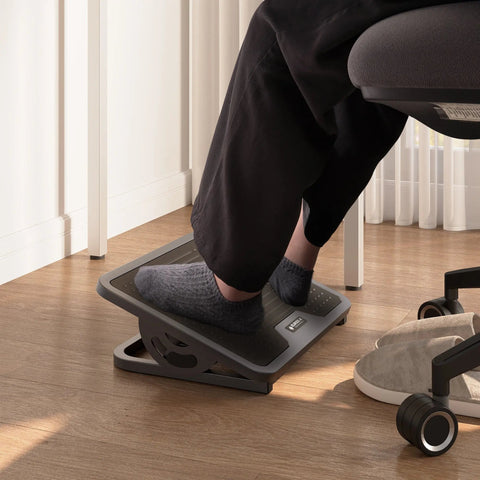
- Seat Height: Adjust the chair so your feet are flat on the floor and your knees are at a 90-degree angle. If the desk is too high and cannot be lowered, use a footrest to maintain this angle.
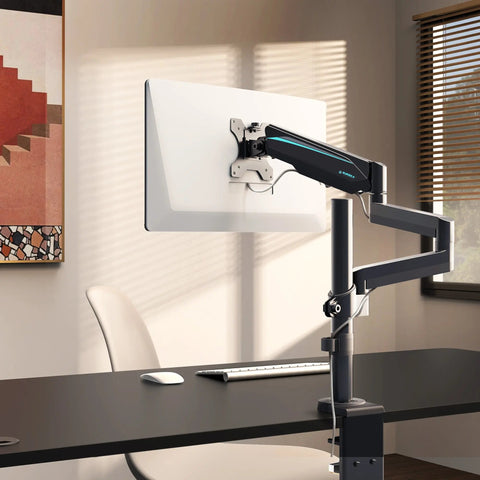
- Monitor Alignment: Following the OSHA eTools for Monitors, the top line of text should be at or slightly below eye level. The screen should be at arm's length to minimize eye strain.
- Keyboard and Mouse: Your elbows should be at a 90-degree angle, with wrists in a neutral, straight position. Avoid resting your wrists on hard edges; use a palm support only during breaks, not while typing.
- The Sit-Stand Rhythm: Avoid the "standing all day" trap. Cornell University’s Ergonomics Web recommends the 20-8-2 rhythm: 20 minutes of sitting, 8 minutes of standing, and 2 minutes of moving or stretching.

Bridging the Gap for Future Workspaces
As organizations transition to activity-based working and flexible layouts, the definition of "office furniture" is expanding. However, the underlying principles of musculoskeletal health remain constant. Whether a company is deploying traditional task chairs or modern standing workstations, the goal is to eliminate the physical friction of work.
By prioritizing dual-certified equipment and implementing rigorous user training, multinational corporations can turn compliance from a bureaucratic hurdle into a strategic advantage. A standardized, ergonomic workplace is not just about meeting a regulation—it is about protecting the most valuable asset of any global enterprise: its people.
Disclaimer: This article is for informational purposes only and does not constitute professional medical, legal, or workplace safety advice. Specific ergonomic requirements may vary based on individual health conditions and local labor laws. Always consult with a qualified ergonomist or medical professional before making significant changes to your workstation or physical routine.
References
- BIFMA G1-2013: Ergonomics Guideline for Furniture. Link
- ISO 9241-5:2024: Workstation layout & postural requirements. Link
- CCOHS: Office Ergonomics - Sit/Stand Desk. Link
- Cochrane Library: Workplace interventions for reducing sitting at work (2018). Link
- OSHA: Computer Workstations eTool. Link
- EU-OSHA: Musculoskeletal disorders and prolonged static sitting. Link
- HSE: Working safely with display screen equipment (DSE). Link




Leave a comment