

For human resources professionals, facilities managers, and procurement officers, the selection of office furniture has evolved from a simple matter of aesthetics and budget into a critical component of corporate risk management. In an era where sedentary work dominates the professional landscape, the physical toll on employees is no longer a peripheral concern; it is a direct driver of corporate liability. Workplace injuries, specifically Musculoskeletal Disorders (MSDs), represent a significant portion of workers' compensation claims and long-term disability costs.
The "Duty of Care" owed by an employer includes providing a safe working environment, which extends to the ergonomic integrity of the equipment provided. When furniture fails—either through mechanical collapse or by inducing chronic strain—the financial and legal repercussions can be staggering. This article examines the physiological mechanisms of workplace injury, the technical rigor of BIFMA (Business and Institutional Furniture Manufacturers Association) standards, and how certified seating serves as a primary engineering control to mitigate corporate liability.
The Physiology of the Static Load: Why Seating Matters
The human body is biomechanically designed for movement, yet the modern office environment demands prolonged periods of relative stillness. This state, known as "static loading," places continuous stress on the musculoskeletal system. Unlike dynamic movement, which facilitates blood circulation and nutrient exchange in spinal discs, static sitting leads to the compression of the lumbar region and the restriction of blood flow to the lower limbs.
According to the EU-OSHA research on musculoskeletal disorders, prolonged static sitting is a primary risk factor for the development of chronic back pain. When a user sits in a non-ergonomic chair, the natural "S-curve" of the spine often collapses into a "C-curve." This misalignment increases intradiscal pressure, particularly in the L4 and L5 vertebrae. Over time, this pressure can lead to disc herniation, nerve impingement, and Repetitive Strain Injuries (RSI).
Furthermore, the World Health Organization (WHO) 2020 Guidelines emphasize that reducing sedentary time is vital for cardiovascular health. However, for many corporate roles, "standing all day" is not a viable alternative. The solution lies in maintaining a "spinal neutral position"—a posture where the joints are naturally aligned, minimizing stress on the muscles, tendons, and skeletal system. Achieving this position consistently across a diverse workforce requires furniture that meets rigorous, scientifically-backed adjustment standards.
The BIFMA Standard: A Technical Shield Against Failure
In the $46 billion office furniture market, BIFMA certification is the gold standard for safety, durability, and functional adequacy. While many consumer-grade chairs prioritize visual appeal, BIFMA-certified seating undergoes a battery of stress tests designed to simulate a decade of heavy use.
A critical insight for procurement departments is the "40% certification gap." Despite the clear benefits, current market data suggests that only about 40% of office furniture products carry formal BIFMA certification. This leaves a majority of products in a "safety gray area." According to the Consumer Product Safety Commission (CPSC), approximately 17,800 injuries occur annually due to falling or unstable furniture.
For seating, the ANSI/BIFMA X5.1 standard defines the requirements for general-purpose office chairs. Key tests include:
- The 125,000 Cycle Seat Test: A machine repeatedly drops a heavy weight onto the seat to ensure the foam and support structures do not fail.
- The Backrest Strength Test: Applies significant horizontal force to the backrest to ensure it can withstand a user leaning back suddenly without snapping.
- The Caster and Base Durability Test: The chair is cycled over a hard surface with obstacles for thousands of rotations to ensure the structural integrity of the base.

When a chair fails these tests in a real-world setting, it usually manifests as a failed gas cylinder (leading to sudden drops) or a broken base (leading to falls). For a corporation, such a failure is not just a maintenance issue; it is a foreseeable hazard. Utilizing non-certified seating can weaken a company’s defense in a negligence lawsuit, as it suggests a failure to adhere to recognized industry safety benchmarks.
Deep Experiment: The Risk of "One Size Fits All" Procurement
To understand the liability exposure of standard procurement, we modeled two common workplace scenarios using the BIFMA G1-2013 Ergonomics Guideline.
Scenario A: The 95th Percentile Tall User
In bulk procurement, companies often purchase fixed-height desks and chairs with limited travel ranges. We simulated a user standing 195cm (approx. 6'5"), representing the 95th percentile of the male population.
| Metric | Required Dimension (Ergonomic) | Standard "Bulk" Furniture | The Liability Gap |
|---|---|---|---|
| Seated Desk Height | 80.5 cm (31.7") | 73.7 cm (29.0") | -6.8 cm (2.7") |
| Max Seat Height | 53.3 cm (21.0") | 48.2 cm (19.0") | -5.1 cm (2.0") |
| Lumbar Support Height | Adjustable to 25 cm | Fixed or Low Range | Inadequate Support |
Note: Values estimated based on standard industry anthropometric models and common procurement specifications.
In this scenario, the 2.7-inch negative gap forces the tall user to slump forward to reach the keyboard. This posture creates a documented biomechanical stressor. If this employee develops a chronic back condition, the employer’s choice of non-adjustable, non-compliant furniture becomes a central point of liability.
Scenario B: The Heavy-Duty Battlestation
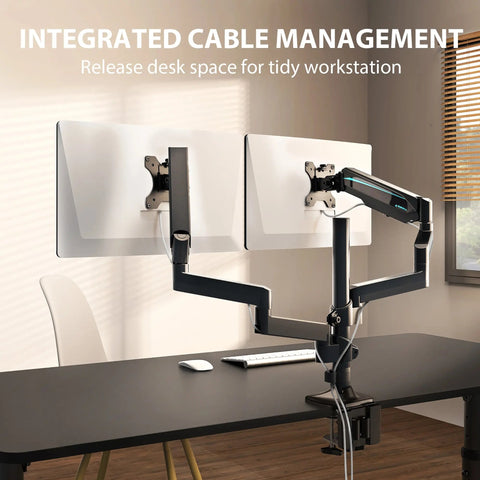
Many modern roles (engineers, traders, designers) require multiple monitors and high-performance hardware. We modeled a setup weighing 92.5kg (including a liquid-cooled PC and three 34" monitors). Using a standard height-adjustable desk with a single-motor (often rated for only 80kg) puts the system at 115.6% of its rated capacity. This exceeds the 80% safety margin recommended for mechanical longevity, risking sudden motor failure or structural collapse.
The Economic Case for Certified Seating
The Mississauga Board of Trade reports that the hidden costs of workplace injuries—including lost productivity, training replacements, and increased insurance premiums—far outweigh the initial purchase price of ergonomic equipment. In fact, work-related MSDs are estimated to cost the economy approximately $55 billion annually.
When justifying the budget for BIFMA-certified seating, procurement should shift the framing from "unit cost" to "cost per employee per day" over the warranty period.
ROI Calculation Model:
- Cost of Premium BIFMA Chair: $600
- Expected Service Life: 10 Years (Warranty Period)
- Cost per Working Day: ~$0.23
- Cost of a Single Workers' Comp Claim (Back Strain): $15,000 - $40,000+
Investing an extra $0.10 per day in a higher-standard chair serves as a form of insurance against a five-figure claim. Furthermore, as noted in The 2026 Workstation White Paper: Converging Ergonomic Science and Sustainable Engineering, high-quality engineering reduces the "replacement cycle" of furniture, providing long-term sustainability and cost-avoidance benefits.

Practical Recommendations for Facilities and Procurement
To effectively minimize liability, corporate decision-makers should move beyond basic compliance and implement a proactive ergonomic strategy.
1. The "5-Point Check" for Seating Selection
When evaluating vendors, use this heuristic to identify chairs that truly mitigate risk:
- Independent Lumbar Adjustment: Must allow for both height and depth adjustment to fit different spinal curvatures.
- Seat Depth Adjustment (Seat Slider): Essential for ensuring users of different heights have proper thigh support without cutting off circulation behind the knees.
- Synchronized Tilt Mechanism: The backrest and seat should move in a fixed ratio, keeping the feet on the floor and the spine supported during recline.
- 4D Armrests: Adjustment for height, width, depth, and pivot to prevent shoulder strain and carpal tunnel syndrome.
- Verified BIFMA Registry: Ensure the product is listed in the BIFMA Compliant® Product Registry.
2. Implement the "20-8-2" Rhythm
Even the best chair cannot negate the risks of total immobility. Following the Cornell University Ergonomics Web guidelines, employees should be encouraged to follow a 30-minute cycle:
- 20 Minutes of sitting in a neutral posture.
- 8 Minutes of standing at a height-adjustable workstation.
- 2 Minutes of movement or stretching.
3. Standardize the Setup Process
Providing the equipment is only half the battle. According to the Canadian Centre for Occupational Health and Safety (CCOHS), a chair only provides ergonomic benefits if it is adjusted correctly to the user.
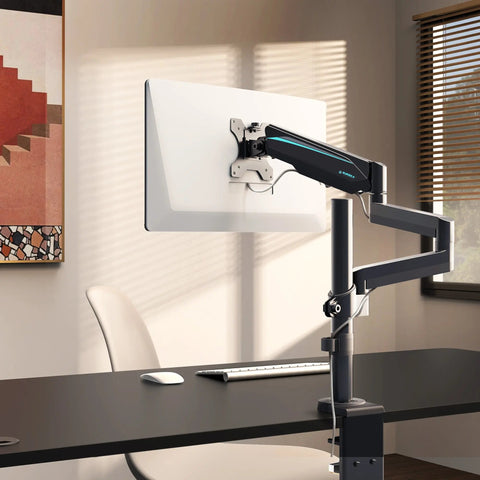
- Monitor Height: The top line of text should be at or slightly below eye level to prevent neck extension.
- Keyboard Position: Elbows should be at a 90-degree angle, with wrists in a neutral, straight position.
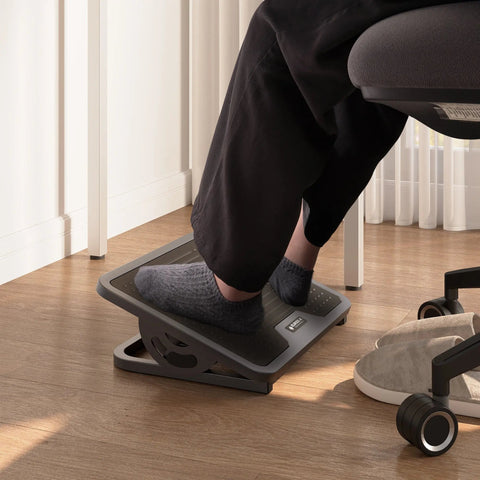
- Foot Placement: Feet must remain flat on the floor or on a footrest to stabilize the pelvis.
Strategic Risk Mitigation
In the modern corporate environment, ergonomics is a pillar of operational safety. While BIFMA certification is not a total legal shield, it serves as powerful evidence that an organization has exercised due diligence in its procurement process. By selecting seating that meets these rigorous standards, companies do more than just improve comfort; they protect their most valuable assets—their people—and insulate themselves from the significant financial risks of workplace injury.
For more detailed insights into selecting specific chair types, consider reviewing our Ergonomic Office Chair Buyer's Guide or exploring the differences in Executive vs. Ergonomic Chair configurations.
Disclaimer: This article is for informational purposes only and does not constitute professional medical, legal, or financial advice. The ergonomic recommendations provided are general guidelines. Individuals with pre-existing musculoskeletal conditions or chronic pain should consult a qualified healthcare professional or a certified ergonomist before making significant changes to their workstation setup.
Sources
- Business and Institutional Furniture Manufacturers Association (BIFMA) - Ergonomics Guideline
- Canadian Centre for Occupational Health and Safety (CCOHS) - Sit/Stand Desk Guide
- Occupational Safety and Health Administration (OSHA) - Computer Workstations eTool
- EU-OSHA - Musculoskeletal Disorders and Prolonged Static Sitting
- Cochrane Library - Workplace interventions for reducing sitting at work
- ISO 9241-5:2024 - Workstation layout and postural requirements




Leave a comment