

Maintaining a premium workstation is often viewed through the lens of aesthetic preservation, but for the modern professional, it is a matter of structural integrity and long-term musculoskeletal health. A common frustration among home office users is the "afternoon haze"—that mysterious film or collection of micro-scratches that appears on a desktop after only a few months of use. Often, this is not a failure of the material itself, but a result of applying general-purpose cleaning logic to specialized ergonomic surfaces.
Whether your workspace features a rich oak veneer, a high-tech carbon fiber finish, or a minimalist glass top, the way you care for these surfaces directly impacts the longevity of your investment. According to the BIFMA G1-2013 Ergonomics Guideline, the physical dimensions and surface quality of furniture must accommodate a wide range of users to maintain safety and comfort. When surfaces degrade, it can lead to tactile discomfort, increased friction during task performance, and even a psychological "friction" that hampers productivity.
The Science of Surface Degradation
To understand proper care, one must first understand the physiological and physical principles of material wear. Most premium desktops are engineered to balance durability with tactile comfort. However, materials like wood veneers and certain laminates are porous or chemically sensitive.
The primary enemy of a clean desk is not just dust, but "micro-abrasion." When a user wipes a surface with a standard paper towel or a rough cotton cloth, they may be dragging microscopic particles across the finish. Research from Direct Supply indicates that microfiber cloths are 99.54% effective at trapping dirt and bacteria at a microscopic level using water alone, whereas traditional materials often redistribute these particles, creating fine scratches that dull the finish over time.
Furthermore, the "static load" of your equipment—monitors, PC towers, and peripherals—creates pressure points where chemical reactions can occur. If a cleaning agent is not fully pH-neutral, it can become trapped under a monitor base, slowly eating away at the sealant or veneer finish through a process of chemical leaching.
Material-Specific Maintenance Protocols
Different materials require distinct chemical and mechanical approaches. Using a "one-size-fits-all" glass cleaner across your entire setup is one of the most common mistakes in home office maintenance.
1. Natural Wood and Matte Veneers
Premium wood surfaces, such as oak or walnut veneers, are prized for their vintage charm and natural texture. However, they are highly sensitive to moisture and harsh solvents. A common mistake is using all-purpose cleaners or glass cleaners on matte wood veneers; these can strip the protective oils or create hazy, permanent streaks.
- The Protocol: Use a dedicated wood cleaner like Murphy Oil Soap or a pH-neutral solution.
- The Technique: Always wipe in the direction of the wood grain. This prevents the cleaning solution from being forced into the pores of the wood, which can cause swelling or "checking" (fine cracks).
2. Tempered Glass and RGB Surfaces
Glass desktops offer a sleek, modern aesthetic and are often integrated with lighting systems. While glass is non-porous and scratch-resistant, it is a magnet for fingerprints and static-charged dust.
- The Protocol: For tempered glass, practitioners note that you should use a dry microfiber cloth first to remove abrasive dust before any liquid is applied. This prevents the dust from acting like sandpaper when you begin the wet-wipe phase.
- The Technique: Avoid ammonia-based cleaners, which can damage the adhesive layers if your desk features integrated LED components.
3. Laminates and Carbon Fiber Textures
Laminates are designed for high-intensity use, but their weakness lies in the seams. Even a small amount of water seeping into the edges can cause the internal Medium-Density Fibreboard (MDF) to swell, a condition that is usually irreversible.
- The Protocol: Use a slightly damp cloth and immediately follow with a dry one. For carbon fiber textures, avoid wax-based polishes which can fill the "weave" of the texture and create a greasy, uneven sheen.
4. Sintered Stone
Sintered stone is virtually scratch-proof and heat-proof, making it one of the most durable options available. However, its longevity depends on the integrity of its sealant. According to the 2026 Workstation White Paper: Converging Ergonomic Science and Sustainable Engineering, sustainable engineering requires choosing materials that do not necessitate harsh chemical interventions.
- The Protocol: A pH-neutral cleaner is essential. Acidic solutions, such as vinegar or lemon-based sprays, will degrade the surface sealant over several months, eventually leaving the stone vulnerable to deep staining.

Deep Insight: The "Alex Chen" Workspace Simulation
To demonstrate how maintenance needs scale with workspace complexity, we simulated a high-demand scenario involving a hybrid creative professional. This "Glass Box" logic helps reveal how structural choices affect cleaning efficacy.
Scenario Parameters:
- User Profile: 183cm tall designer (Alex Chen).
- Setup: Solid wood desktop (22kg) + Dual 34-inch monitors and PC (43kg).
- Total Load: 65kg.
| Metric | Single Motor System | Dual Motor System | Impact on Maintenance |
|---|---|---|---|
| Motor Utilization | 81.25% | 54.17% | Lower utilization reduces micro-vibrations, preventing "dust settling" in mechanical joints. |
| Mechanical Stability | Moderate | High | Stable surfaces allow for more vigorous cleaning without risking monitor wobble or equipment shifts. |
| Max Height Reach | 48 inches | 52 inches | Higher reach requires 25% more cable slack to prevent tension spills during height transitions. |
| Carbon Footprint | Baseline | -14.78kg CO2/year | Premium systems with high-efficiency standby modes support a sustainable, "green" cleaning philosophy. |
Note: Values estimated based on common industry rates and theoretical mechanical limits.
Structural Stability and Spill Prevention
Expertise in desk care extends beyond the surface to the "skeleton" of the workstation. One of the most significant insights from pattern recognition in high-end furniture is that overloading compromises cleaning efficacy. When a desk operates at 81.25% of its motor capacity, the subtle vibrations during adjustment can cause fine particles to migrate into the motor housing or the leg columns, leading to grinding sounds and mechanical wear.
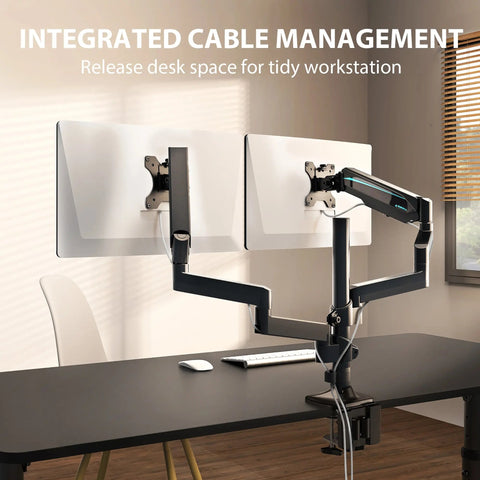
Furthermore, cable management is a primary factor in spill prevention. According to the Canadian Centre for Occupational Health and Safety (CCOHS), a well-organized workstation is essential for safety. We recommend a minimum of 25% routing slack for all cables. This prevents "snagging" when the desk moves to its maximum height—a common cause of tipped coffee mugs or water bottles.
The single most effective preventative measure for any material is the use of a dedicated desk pad or a full-surface mousepad. This takes the brunt of daily abrasion, skin oils, and minor spills, acting as a sacrificial layer that preserves the premium material beneath.

Ergonomic Rhythms and the "Clean Break"
Maintaining your desk should be integrated into your ergonomic routine. The Cornell University Ergonomics Web recommends the "20-8-2" rule: for every 30 minutes of work, sit for 20, stand for 8, and move for 2.
We suggest using that 2-minute movement window to perform a "Micro-Clean."
- Minute 1: Clear the surface of any immediate debris or coffee rings.
- Minute 2: Use a dry microfiber cloth to wipe the "high-touch" zones (the area where your wrists rest).
This prevents the buildup of skin oils and acidic sweat, which are surprisingly effective at breaking down wood finishes and laminate adhesives over time. As noted by the Occupational Safety and Health Administration (OSHA), identifying and controlling workplace hazards—including poor hygiene and cluttered surfaces—is a key engineering control for maintaining a healthy workspace.
Environmental Integrity and Indoor Air Quality
For those who have invested in premium furniture, the health of the indoor environment is often a top priority. Many high-end desks are UL GREENGUARD Gold Certified, meaning they have low chemical emissions. However, using harsh, aerosolized cleaners can negate these benefits by introducing Volatile Organic Compounds (VOCs) back into your home office.
To maintain the environmental integrity of your space:
- Avoid Aerosols: Use pour-on or spray-bottle cleaners that produce larger droplets, which are less likely to be inhaled.
- Check for FSC Certification: If your desk uses wood, ensure you are cleaning it with products that do not contain petroleum distillates, which can be harmful to both the wood and the user.
- Ventilation: Always clean in a well-ventilated room, especially when dealing with specialized stone or wood sealants.

Maintenance Checklist for Long-Term Value
To ensure your workstation remains a benchmark of professional quality, follow this structured maintenance schedule:
Daily:
- Wipe high-touch areas with a dry microfiber cloth.
- Check for and immediately remove any liquid spills, especially on laminate seams.
Weekly:
- Perform a damp-wipe using a pH-neutral cleaner.
- Dust the monitor bases and cable trays to prevent "dust blankets" that can cause electronics to overheat.
Monthly:
- Inspect the mechanical joints and leg columns for debris.
- Check cable tension at the maximum standing height to ensure no wires are being pulled taut.
- Re-tighten any bolts that may have loosened due to the "static load" and frequent height adjustments.
Bi-Annually:
- For natural wood, apply a high-quality furniture wax or oil (if recommended by the manufacturer) to replenish the moisture barrier.
- Deep-clean the desk pad or mousepad to remove accumulated skin oils.
A Note on Professional Care
While this guide provides a rigorous framework for maintenance, always consult your specific manufacturer's manual for warranty-sensitive instructions. For those with chronic musculoskeletal concerns, maintaining a clean and friction-free workspace is not just about aesthetics—it is a component of a comprehensive ergonomic strategy. As highlighted by EU-OSHA, the remote work environment requires proactive risk assessment, and a well-maintained desk is the foundation of that effort.
YMYL Disclaimer: This article is for informational purposes only and does not constitute professional medical, legal, or furniture-engineering advice. Ergonomic requirements vary significantly based on individual physical conditions. If you suffer from pre-existing musculoskeletal disorders or chronic back pain, please consult a qualified physiotherapist or occupational health professional before making significant changes to your workstation setup or activity rhythm.
Sources
- BIFMA G1-2013 Ergonomics Guideline for Furniture
- CCOHS: Office Ergonomics - Sit/Stand Desk
- Cornell University Ergonomics Web — Workstation Guides
- OSHA eTools: Computer Workstations - Neutral Working Postures
- UL GREENGUARD Certification Overview
- The 2026 Workstation White Paper: Converging Ergonomic Science and Sustainable Engineering




Leave a comment