

The modern professional spends an average of 1,800 hours per year at a desk. While much attention is paid to the digital tools of work, the physical environment—the workstation itself—often remains an afterthought until health issues arise. Many remote workers find their focus deteriorating by mid-afternoon, often accompanied by a dull ache in the lower back or tension in the neck. These are not merely symptoms of fatigue; they are physiological responses to a workspace that may be failing both the user and the environment.
The concept of a "sustainable home office" extends beyond simple recycling. it encompasses the intersection of musculoskeletal health, indoor air quality, and the ecological footprint of the materials used. This guide examines the technical requirements of a high-performance, healthy workstation, grounded in the latest ergonomic standards and material science.
The Physiology of the Static Load
The human body is designed for movement, yet the modern workstation often demands prolonged static postures. This results in what kinesiologists call "static loading," where muscles remain in a state of constant contraction to maintain a position. According to the ISO 11226:2000 standard on the evaluation of static working postures, these positions can lead to reduced blood circulation, localized muscle fatigue, and increased pressure on intervertebral discs.
When blood flow is restricted by static load, the delivery of oxygen and the removal of metabolic waste products (like lactic acid) are impaired. Over time, this contributes to Work-related Musculoskeletal Disorders (MSDs). The U.S. Occupational Safety and Health Administration (OSHA) identifies excessive force, repetitive tasks, and awkward postures as the primary risk factors for these conditions.
A frequent misconception is that standing is a universal cure for sitting. However, research from EU-OSHA on prolonged static standing indicates that standing for extended periods without movement can lead to lower limb disorders, including venous insufficiency and plantar fasciitis. The objective is not to replace sitting with standing, but to facilitate dynamic movement.
Material Health: The VOC Challenge
The most critical material choice for indoor air quality is the desktop surface, as it represents the largest exposed surface area in a home office. Many conventional desks are manufactured using composite woods held together by adhesives that emit Volatile Organic Compounds (VOCs), such as formaldehyde.
Formaldehyde is a colorless gas that can cause respiratory irritation and is classified as a known carcinogen. The U.S. Environmental Protection Agency (EPA) notes that concentrations of many VOCs are consistently higher indoors (up to ten times higher) than outdoors. For the remote professional, who may spend 8–10 hours a day in a confined home office, this exposure is significant.
To mitigate these risks, users should look for specific certifications. UL GREENGUARD Gold Certification is one of the most rigorous standards, requiring lower total VOC emission levels to ensure products are safe for use in environments like schools and healthcare facilities. Furthermore, the The 2026 Workstation White Paper: Converging Ergonomic Science and Sustainable Engineering emphasizes that selecting EPA-certified composite wood or solid wood with low-VOC finishes is essential for maintaining long-term cognitive function and respiratory health.
Comparing Sustainable Desktop Materials
Choosing a material involves balancing durability, environmental impact, and aesthetic requirements. The following table compares common sustainable materials used in modern ergonomic furniture:
| Material | Durability | Sustainability Profile | Indoor Air Quality (VOCs) | Maintenance |
|---|---|---|---|---|
| Solid Wood (Walnut/Oak) | High | Renewable if FSC Certified | Very Low (with natural finishes) | Requires periodic oiling; sensitive to humidity |
| Bamboo | Very High | Rapidly renewable; high carbon sequestration | Low (depends on adhesive quality) | High resistance to moisture and scratches |
| Sintered Stone | Exceptional | Natural minerals; zero-waste manufacturing | Zero VOCs | Heat, scratch, and chemical resistant |
| EPA-Certified MDF | Moderate | Uses recycled wood fibers | Low (must meet TSCA Title VI) | Susceptible to water damage if not sealed |
The Case for Bamboo and Solid Wood
Bamboo is technically a grass, not a wood, and can be harvested in 3–5 years compared to decades for hardwoods. Research published by the National Institutes of Health (NIH) highlights that bamboo significantly reduces carbon emissions when used as a structural material. However, because bamboo desktops are made of strips glued together, the quality of the adhesive is paramount.
Solid wood remains a benchmark for longevity. A well-maintained solid wood top can last decades, reducing the need for replacement and thus lowering its lifetime carbon footprint. According to BIFMA (Business and Institutional Furniture Manufacturers Association), durability is a core pillar of sustainability; a product that does not need to be replaced is inherently more eco-friendly than a "green" product with a short lifespan.

The Engineering of Stability and Efficiency
For a sit-stand desk, the frame is as important as the top. Most sustainable frames are constructed from steel, which is 100% recyclable. The environmental impact of steel is often offset by its recyclability and the fact that high-quality steel frames can support multiple desktop upgrades over a lifetime.
The Dual-Motor Advantage
Stability is a prerequisite for ergonomics. A wobbly desk at standing height forces the user to subconsciously tense their muscles to stabilize their arms, leading to neck and shoulder strain. In heavy-duty setups—such as those used by streamers or engineers—the load capacity of the motor system is critical.
A simulation of a "power user" setup (including dual ultrawide monitors, a liquid-cooled PC, and a solid wood top) revealed a total weight of approximately 81 kg. A single-motor system, typically rated for 80 kg, would operate at 101% capacity, increasing the risk of mechanical failure and noise. A dual-motor system, generally rated for 120 kg, operates at a safer 67% utilization, ensuring smoother transitions and greater longevity.
Energy Footprint and Standby Power
While the energy used to move the desk is minimal, standby power consumption adds up. A simulation found that a desk with a 0.5W standby mode consumes only 12 kWh/year. In contrast, a generic model with a 5W standby mode uses significantly more. Choosing high-efficiency electronics can save an estimated 14.8 kg of CO2 annually per desk—a small but meaningful contribution when scaled across the global remote workforce.
Ergonomic Precision: The 5th to 95th Percentile
A sustainable office must also be inclusive. The BIFMA G1-2013 Ergonomics Guideline provides dimensions to accommodate the 5th percentile (shorter) to the 95th percentile (taller) of the population.
For a tall user (e.g., 195 cm or 6'5"), a standard 29-inch fixed desk is approximately 2.7 inches too low for seated work, forcing a slumped posture. Conversely, the ideal standing height for this user is 119.5 cm (47 inches). A desk that fails to reach these heights or lacks the stability to remain steady at its apex is not an ergonomic solution.

Practical Recommendations for a Healthy Workspace
To maximize the benefits of a sustainable, ergonomic setup, users should implement the following evidence-based practices:
- The 20-8-2 Rhythm: Developed by Cornell University Ergonomics Web, this rule suggests 20 minutes of sitting, followed by 8 minutes of standing, and 2 minutes of moving or stretching. This cycle prevents the onset of static load.
- Monitor Alignment: According to the Canadian Centre for Occupational Health and Safety (CCOHS), the top line of text on your monitor should be at or slightly below eye level. This prevents "tech neck" caused by looking down or tilting the head back.
- Neutral Wrist Posture: When typing, your wrists should remain straight, not tilted up or down. The OSHA eTools for Computer Workstations recommend a keyboard height that allows your elbows to be at an open angle (90 to 110 degrees).
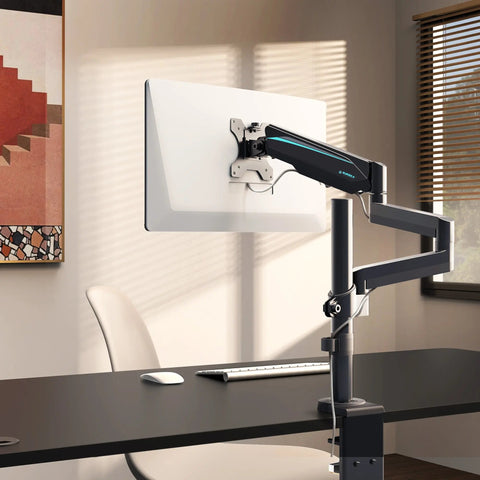
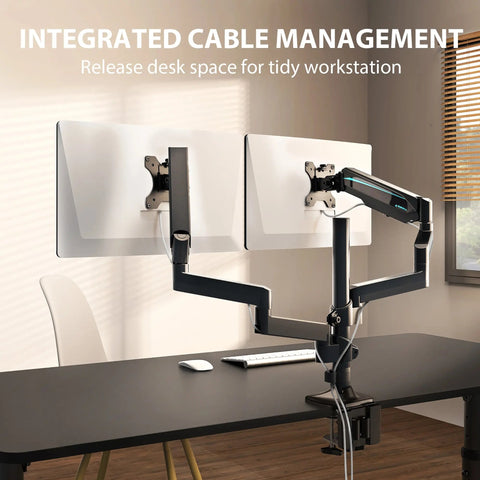
- Use a Monitor Arm: For desks with sustainable surfaces like bamboo or solid wood, a monitor arm can free up desk space and allow for precise adjustments. Ensure the mount is compatible with the desktop thickness to avoid structural damage.

Maintenance and Longevity of Natural Materials
To ensure a sustainable desk remains in use for its full intended lifespan, proper maintenance is required:
- Surface Protection: Natural wood and bamboo are susceptible to water rings. The use of coasters and a desk pad is a non-negotiable requirement for long-term preservation.
- Hardware Checks: Periodically tighten the bolts on the steel frame. Vibrations from the motors can occasionally loosen fasteners over time, which can compromise stability.
- Cable Management: Avoid "cable tension" at max height. Ensure all cables have enough slack to reach the desk's highest setting without pulling on ports or the frame.
The Holistic View of Productivity
Investing in a sustainable home office is a strategic decision that affects professional longevity. By selecting materials with low VOC emissions, such as those meeting GREENGUARD Gold standards, and choosing hardware that supports the full range of human movement, professionals can create an environment that fosters both health and high-level focus.
As remote work continues to evolve, the integration of ergonomic science and sustainable engineering will remain the blueprint for the high-performance home office.

YMYL Disclaimer: This article is for informational purposes only and does not constitute professional medical, legal, or health advice. The ergonomic recommendations provided are general guidelines. Individuals with pre-existing musculoskeletal conditions, chronic back pain, or other health concerns should consult a qualified physiotherapist or medical professional before making significant changes to their workstation or work habits.
Sources
- ISO 11226:2000 - Evaluation of static working postures
- BIFMA G1-2013 Ergonomics Guideline for Furniture
- Canadian Centre for Occupational Health and Safety (CCOHS) - Sit/Stand Desk Guide
- Cochrane Library: Workplace interventions for reducing sitting at work
- Cornell University Ergonomics Web — Workstation Guides
- U.S. EPA - Volatile Organic Compounds' Impact on Indoor Air Quality
- UL GREENGUARD Certification Overview
- OSHA eTools: Computer Workstations - Neutral Working Postures
- The 2026 Workstation White Paper: Converging Ergonomic Science and Sustainable Engineering




Leave a comment