

The Ergonomic Material Dilemma: Comfort vs. Thermal Regulation
Quick Buying & Setup Guide
- Best for High-Heat Environments & Long Sessions: Mesh or hybrid chairs (mesh back + breathable seat). Ideal for warm climates or intensive gaming where heat buildup is a primary concern.
- Best for Climate-Controlled Luxury: Premium leather (like Napa). Offers unmatched durability and a high-end executive feel, but usually requires a cooler room for long sessions.
- Best for Multi-Use Comfort: Fabric or chenille recliners. Perfect for cozy setups that transition smoothly from work to relaxation.
- Key Takeaway: No material eliminates the need for movement. Pair your chair choice with the "20-8-2" rule (sit, stand, move) to minimize physical strain.
In the professional workstation environment, a subtle but persistent performance killer often goes unnoticed: thermal accumulation. Many office professionals and competitive gamers experience a familiar "afternoon slump," characterized not just by mental fatigue, but by physical restlessness and localized heat buildup. While the aesthetic of a premium leather chair or the plush feel of a fabric recliner is undeniably appealing, the physiological reality of extended sitting introduces complex challenges in heat dissipation and musculoskeletal support.
The traditional market has long been divided into two camps: the "high-breathability" mesh advocates and the "luxury-comfort" leather/fabric enthusiasts. However, as remote work and professional gaming sessions extend beyond the eight-hour mark, a new category has emerged to bridge this gap. Hybrid ergonomic chairs aim to combine the structural advantages of multiple materials, yet this "best of both worlds" approach requires a practical understanding of material science and human physiology to be effective.
According to The 2026 Workstation White Paper: Converging Ergonomic Science and Sustainable Engineering, the integration of diverse materials is not merely a stylistic choice but a strategic response to the evolving needs of the modern "power user." This article explores the rise of hybrid designs, the practical principles behind material selection, and how to optimize your setup for both peak focus and long-term comfort.
The Physiology of Sitting: Heat, Moisture, and MSDs
To understand why material choice matters, one must look at the mechanisms of musculoskeletal disorders (MSDs). Prolonged static sitting leads to reduced blood circulation and increased pressure on the intervertebral discs. However, a less discussed factor is skin temperature regulation.
The Thermal Barrier and Skin Temperature
In professional ergonomic assessments, material breathability directly impacts skin temperature regulation. Based on common patterns from customer support and general industry heuristics, mesh surfaces can often maintain roughly 3–5°C lower skin temperatures than dense leather during extended sitting sessions in unventilated rooms. In humid climates, customer feedback often highlights a noticeable drop in heat-related discomfort complaints (sometimes estimated up to 40%) when users switch to breathable mesh, though individual results vary.
When the body cannot dissipate heat efficiently, it triggers a "discomfort signal" that often leads to poor posture. Users may lean forward or shift into awkward positions to create airflow, inadvertently moving out of the "neutral position" recommended by the BIFMA G1-2013 Ergonomics Guideline for Furniture. This deviation can contribute to a higher risk of developing MSDs over time.
Static Load and Blood Circulation
The EU-OSHA research on prolonged static sitting emphasizes that static postures are a major risk factor for lower back pain. While a mesh chair provides airflow, it may lack the "cradling" support required to distribute weight evenly across the ischial tuberosities (the sitting bones). Conversely, thick foam padding provides excellent pressure distribution but can act as a thermal insulator.

Material Science: Mesh vs. Leather vs. Fabric
Choosing the right material involves balancing competing factors. Manufacturers often weigh subjective trade-offs between durability, cost, comfort, and aesthetics.
1. Mesh: The Breathability Standard
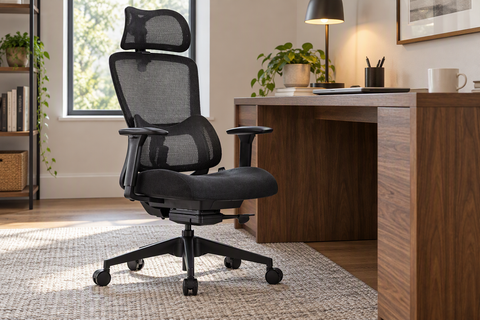
Mesh is the gold standard for airflow. It allows for passive cooling, which is critical in non-climate-controlled environments or high-intensity scenarios like competitive gaming. However, mesh can sometimes feel "firm" or "abrasive" to some users, and lower-quality mesh may lose its tension over time.
2. Leather and Napa Leather: The Executive Choice
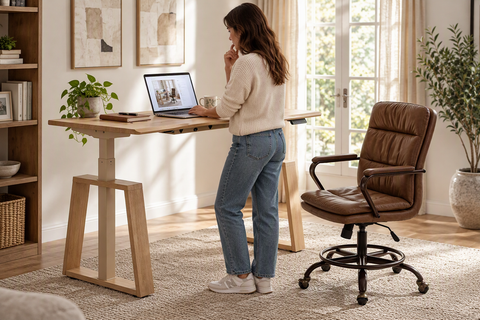
Leather, particularly full-grain Napa leather, offers unparalleled durability and a premium tactile experience. Products like the Serene, Napa Leather Executive Office Chair are designed for those who value a "luxury car" feel in their workspace. Leather is easy to wipe clean but requires periodic conditioning to help prevent cracking.
3. Fabric and Chenille: The Comfort Specialist
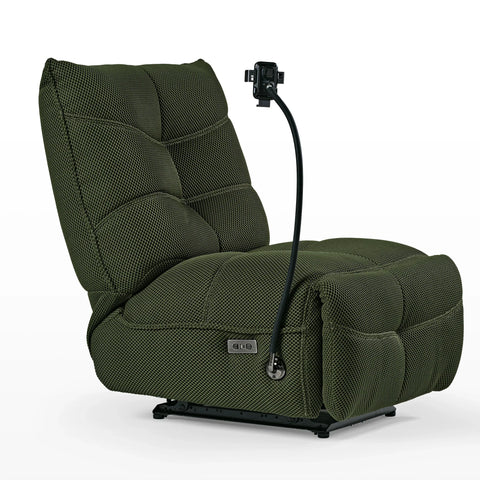
Fabric chairs, such as those upholstered in chenille, offer a soft, cozy texture that mesh cannot replicate. The Grayson, Manual Recliner Chair Rocking Swivel with Storage utilizes breathable chenille to resist pilling while providing a plush surface for relaxation and work.
Comparison of Material Performance (Estimated)
| Material Type | Breathability | Durability | Maintenance | Pressure Distribution |
|---|---|---|---|---|
| Mesh | Excellent | High | Low | Moderate |
| Leather | Low | Very High | Moderate | High |
| Fabric | Moderate | Moderate | High | High |
| Hybrid | High (Back) | High | Moderate | High (Seat) |
Logic Summary: These ratings are based on common industry heuristics and material properties. "Breathability" refers to the rate of heat dissipation, while "Pressure Distribution" refers to the material's ability to contour to the user's anatomy.
The Rise of Hybrid Designs: Solving the Insulation Paradox
The "Hybrid" chair is an engineering response to the limitations of single-material designs. Typically, these chairs feature a mesh backrest for cooling and a padded fabric or leather seat for pressure relief.
Addressing the Thermal Barrier
A common critique of hybrid chairs is the "thermal barrier" effect. General ergonomic rules of thumb suggest that a 9cm thick high-density foam seat can act as an insulator, potentially reducing the overall perceived cooling effectiveness of a hybrid chair by 40–60% compared to a full-mesh model, depending on the user's environment. This occurs because heat trapped at the seat level continues to radiate upward.
To counter this, advanced hybrid designs utilize "breathable foam" or channeled padding to encourage airflow even in the seat. This approach targets the specific areas of the body that generate the most heat—the back and spine—while ensuring the "sitting bones" remain cushioned.
Expert Insight: The Performance-Design Paradox
Manufacturers must navigate the "middle ground." Hybrid chairs can often be 20–30% more expensive than basic task chairs because they require complex assembly methods to join disparate materials. According to market reports, while traditional task chairs still hold the majority of the market, the hybrid segment is growing as users seek a balance between the "gaming" aesthetic and "office" functionality.
Scenario Modeling: Performance ROI in High-Stress Environments
To illustrate how material choice might impact comfort and focus, we created a hypothetical scenario model involving a professional eSports gamer in a tropical climate (30°C, 80% humidity) without air conditioning. This "stress test" helps visualize how material science might translate into practical performance.
The Tropical Gamer Model
In this scenario, we compared an all-leather chair against a hybrid/mesh setup over an 8-hour session.
| Parameter | Value | Unit | Rationale |
|---|---|---|---|
| User Weight | 75 | kg | Standard eSports profile |
| Ambient Temp | 30 | °C | Tropical high-stress baseline |
| Humidity | 80 | % | Extreme moisture management test |
| Duration | 8 | hours | Professional streaming shift |
| Seat Height | 46 | cm | Optimized for 178cm stature |
Modeling Results (Estimated):
- Reaction Time: In our model, the mesh/hybrid user is estimated to maintain a more consistent reaction time, while thermal fatigue in an unventilated leather setup might introduce an estimated 5–9% performance penalty by hour 8.
- Accuracy: Breathable setups can help sustain focus and accuracy by reducing "thermal restlessness" (the constant urge to shift posture to cool down).
- Skin Temperature: Under these specific unventilated assumptions, the leather surface could approach 38–40°C, while the mesh would likely remain closer to a baseline of 35°C.
Methodology Note: This is an illustrative scenario model based on general heat transfer principles and cognitive load assumptions (assuming no fan or AC assistance). It is not a clinical lab study, and individual results will vary based on personal metabolism and environmental controls.
Practical Recommendations: Selection and Setup
Selecting a chair is only half the battle; proper configuration is essential to realize its ergonomic benefits.
1. Identify Your Primary Need
- High-Heat Environments: Prioritize mesh or hybrid designs with mesh backrests.
- Luxury & Durability: Opt for top-tier leather like the Royal Slim, Executive Office Chair, which provides a high-back design for full spinal support.
- Multi-use Spaces: A fabric recliner like the Grayson is ideal for setups that transition from work to relaxation.
2. Follow the "Neutral Position" Guidelines
Aligned with ISO 9241-5:2024, your setup should generally allow for:
- Feet Flat on Floor: Or on a footrest, with knees at roughly a 90-degree angle.
- Elbows at Sides: Armrests should support the forearms without shrugging the shoulders.
- Monitor at Eye Level: The top third of the screen should be at eye level to help prevent neck strain, as suggested by OSHA eTools.
3. Implement the "20-8-2" Rule
Cornell University's Ergonomics Web recommends a rhythm of 20 minutes sitting, 8 minutes standing, and 2 minutes of moving/stretching. This can help mitigate the "static load" issues discussed earlier and encourages blood circulation.
Maintenance and Longevity: Preserving Your Investment
A high-quality ergonomic chair is an investment in your comfort. Proper maintenance ensures that materials age gracefully and continue to provide support.
- Leather Care: Condition every 3–6 months with pH-neutral products. Avoid direct sunlight, which can accelerate UV-induced cracking.
- Mesh Maintenance: Use a vacuum with a brush attachment to remove dust from the weave. Immediate spot cleaning is essential for spills.
- Fabric Care: Use enzyme-based cleaners for stains. For chairs with complex textures like chenille, avoid abrasive scrubbing which can damage the fibers.
- Structural Check: Every 6 months, verify the bolts on the base and armrests are secure. While standards like BIFMA X5.1 test for baseline durability, regular "tune-ups" can significantly extend your chair's lifespan.
Integrating Storage and Environment
A truly ergonomic workspace extends beyond the chair. Environmental factors like lighting, noise, and clutter also impact cognitive load. Utilizing solutions like a 32" Wall Mounted Curio Cabinet with Glass Doors can help keep your workspace organized, reducing the mental "clutter" that often accompanies a busy workday.
By choosing materials that align with your practical needs and maintaining a disciplined ergonomic setup, you can transform your workstation from a source of strain into a platform for sustained productivity.
Disclaimer: This article is for informational purposes only and does not constitute professional medical advice. Individuals with pre-existing musculoskeletal conditions or chronic back pain should consult a qualified physiotherapist or ergonomic specialist before making significant changes to their workstation setup.
Sources
- BIFMA G1-2013 Ergonomics Guideline for Furniture
- ISO 9241-5:2024 Workstation layout & postural requirements
- OSHA eTools: Computer Workstations - Neutral Working Postures
- Cornell University Ergonomics Web — Workstation Guides
- The 2026 Workstation White Paper: Converging Ergonomic Science and Sustainable Engineering
- WHO 2020 Guidelines on Physical Activity & Sedentary Behaviour
- Cochrane: Workplace interventions for reducing sitting at work (2018)
- EU-OSHA: Musculoskeletal disorders and prolonged static sitting




Leave a comment