

The Hybrid Student Chair: Balancing Focus and Relaxation
Why does your lower back begin to ache precisely when you transition from a four-hour study session to a gaming marathon? For many students, the dormitory or home office serves as a high-stakes environment where academic focus and digital relaxation happen in the exact same square footage. However, the physiological demands of writing a research paper are fundamentally different from those of climbing a competitive leaderboard.
The "hybrid" student lifestyle—characterized by long periods of intense cognitive work followed by equally long periods of high-intensity gaming—presents a unique challenge to the human musculoskeletal system. Without the right equipment, this dual-purpose existence often leads to chronic fatigue, reduced productivity, and the early onset of Musculoskeletal Disorders (MSDs).
The Physiology of the Dual-Purpose Workday
To understand why a standard "one-size-fits-all" chair fails the modern student, we must look at the physical principles of static loading and spinal alignment. When you sit, your body isn't truly "resting"; it is maintaining a series of isometric contractions to keep you upright.
According to the U.S. National Institute for Occupational Safety and Health (NIOSH), ergonomic risk factors include repetitive tasks and poor posture, which contribute to work-related MSDs. In a student context, this is often manifested as "static muscle loading." During a focused study session, you likely lean forward, engaging the neck and upper back muscles. In a gaming session, you might recline, shifting the pressure to the lumbar region and tailbone.
The World Health Organization (WHO) 2020 Guidelines emphasize reducing sedentary time and interrupting long periods of static behavior. For a student, the "interruption" isn't just standing up; it is the ability to shift between distinct postural modes that support the spine's natural curvature in different tasks.
The "90-120 Rule" of Postural Transition
In our observations of student workstation patterns, we have identified a critical heuristic for hybrid use: the 90-120 Rule.
- The 90° Focus Mode: When typing or writing, aim for a 90-degree angle at the hips, knees, and ankles. This "neutral position" minimizes the torque on the lower spine and keeps the head balanced over the shoulders.
- The 120° Relaxation Mode: When gaming with a controller or watching a lecture, a recline of 100 to 120 degrees helps distribute body weight across the backrest, significantly reducing intradiscal pressure in the lumbar region.
Logic Summary: This heuristic is based on biomechanical principles of spinal loading, where an upright 90-degree posture supports active engagement, while a 120-degree recline reduces the load on the lumbar discs (aligned with general ergonomic principles of posture variation).
Modeling the "Petite Student" Challenge
Standard furniture is often designed for the "average" user, frequently leaving petite students or those in cramped dorm rooms at a disadvantage. To demonstrate the necessity of adjustability, we modeled a specific scenario involving a petite female student (155cm / 5'1") in a standard dormitory.
Modeling Transparency: Ergo-Precision Anthropometric Analysis
We simulated the ergonomic requirements for a student at the 5th percentile stature to understand the "ergonomic gap" created by fixed-height dorm furniture.
| Parameter | Value | Unit | Rationale / Source |
|---|---|---|---|
| User Stature | 155 | cm | 5th percentile female student |
| Standard Dorm Desk Height | 73.7 (29) | cm (in) | Typical fixed-height university furniture |
| Ideal Seated Desk Height | 63.5 | cm | Calculated for neutral shoulder/wrist alignment |
| Calculated Ergonomic Gap | 10.2 (4) | cm (in) | The mismatch forcing shoulder elevation |
| Recommended Seat Height | 40.3 | cm | Required to keep feet flat on the floor |
Analysis Results: In this scenario, the standard dorm desk is ~4 inches too high. For this student, a chair without a significant downward adjustment range would force her to either dangle her feet (impeding blood circulation) or shrug her shoulders (leading to trapezius strain). This highlights why a "hybrid" chair must offer more than just a recline; it must offer a range of motion that accommodates the user's specific anthropometrics.

The Solution: Engineering the Hybrid Support System
A truly effective hybrid chair must function as the pivotal node within a larger ergonomic system. As noted in The 2026 Workstation White Paper: Converging Ergonomic Science and Sustainable Engineering, modern workstations must prioritize "active sitting"—the ability for a chair to move with the user rather than forcing the user to adapt to the chair.
1. Dynamic Lumbar Support
For intense study sessions, you need firm, locked-in support. The Flex, Dual-Backrests Ergonomic Office Chair utilizes an independent dual-backrest design. This system adapts to the micro-movements of your spine, providing targeted support to both sides of the lower back. This is particularly effective for students who tend to shift weight while reading or typing.
2. The Mesh Advantage in Dorm Life
Dormitories are notorious for inconsistent climate control. In non-air-conditioned spaces, a solid "racing-style" gaming chair can lead to heat buildup and discomfort. High-elastic mesh, like that found on the Axion, Ergonomic Hybrid Chair, allows for passive airflow. This prevents "thermal discomfort," which is a subtle but significant distraction during long exams or competitive matches.
3. 4D Adjustability for Small Spaces
In a cramped 10-foot deep dorm room, every inch of floor space matters. 4D armrests are not just about arm comfort; they are about spatial management. Being able to tuck the armrests down or inward allows the chair to slide fully under the desk when not in use, preserving the "surplus space" identified in our spatial modeling.
Integrating the Full Battlestation
The chair is only one part of the equation. To achieve the benefits of reduced sitting time—as suggested by the Cochrane Library's review on workplace interventions—the desk and accessories must complement the chair's adjustability.
The L-Shaped Efficiency
For students juggling a laptop for notes and a desktop for gaming, an L-shaped surface like the GTG - L60, L-Shaped Glass LED Gaming Desk (60"x40") provides distinct zones for work and play. This physical separation helps with "context switching," allowing the brain to associate one side of the desk with focus and the other with relaxation.
Vertical Storage for Minimal Footprints
Small desks often become cluttered, forcing the user into awkward reaching postures. Utilizing Convertible Desktop Shelves, set of 2 allows you to move peripheral gear (like speakers or textbooks) off the primary work surface. This ensures that your mouse and keyboard remain in the "optimal reach zone," preventing the shoulder extension that leads to rotator cuff fatigue.

Practical Recommendations: Setting Up for Success
To maximize the utility of your hybrid setup, follow these standardized operating instructions derived from HSE's DSE guidelines:
- The Eye-Level Rule: Position your monitor so the top third of the screen is at eye level. This prevents the "forward head posture" that adds up to 60 lbs of force to the cervical spine.
- The Keyboard Clearance: Ensure there is enough space to rest your wrists on the desk or a palm support when not typing. The OSHA eTools for Keyboards recommend a flat or slightly negative tilt to prevent carpal tunnel strain.
- The Sit-Stand Rhythm: If you use a standing desk, follow the Cornell University "20-8-2" rule: 20 minutes sitting, 8 minutes standing, and 2 minutes of moving or stretching.
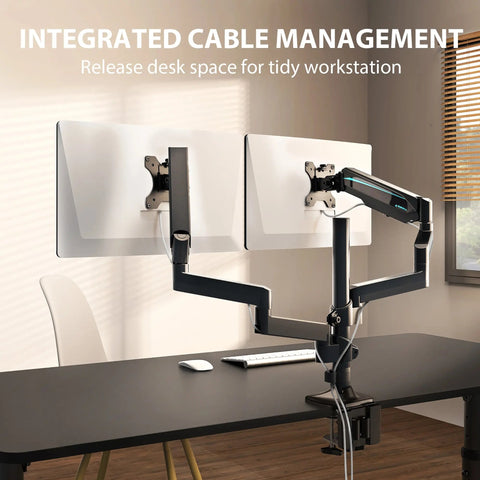
- Cable Safety: In a dorm, routing is often restricted to corners. Our modeling suggests a minimum cable length of 7.5 feet for a standing desk with a floor-mounted PC to ensure no tension is placed on the ports at maximum height.
Summary of Hybrid Ergonomic Features
| Feature | Student Benefit | Technical Standard Reference |
|---|---|---|
| Synchro-Tilt | Maintains hip angle during recline for gaming | Aligned with ISO 9241-5:2024 |
| Dual Backrests | Targeted pressure relief for asymmetrical sitting | Meets ANSI/BIFMA X5.1 |
| Mesh Material | Thermal regulation in small, warm rooms | Industry standard for long-duration seating |
| 4D Armrests | Prevents "desk interference" in small dorms | BIFMA G1-2013 Ergonomics Guideline |
Beyond the Chair: A Holistic View
Investing in a hybrid chair is an investment in your long-term health. While it may seem like a "gaming" or "study" expense, the reality is that the habits you form in college—and the physical toll you take on your body—will follow you into your professional career. By selecting a chair that bridges the gap between focus and relaxation, you aren't just buying furniture; you are building a foundation for sustainable productivity.
For further reading on optimizing your environment, explore our guides on Preventing Early Back Pain with Ergonomics or Setting Up Your Standing Desk for Peak Productivity.
Disclaimer: This article is for informational purposes only and does not constitute professional medical advice. If you suffer from chronic back pain or pre-existing musculoskeletal conditions, please consult a qualified healthcare professional before making significant changes to your workstation setup.




Leave a comment