

The Ergonomic Architecture of High-Velocity Coding
For professional software developers and DevOps engineers, the keyboard is more than a peripheral; it is the primary interface for creative expression and system management. Within this community, Vim and Emacs power users represent a specific class of "high-velocity" inputters. Unlike standard office workers, these professionals rely on complex modal switches, rapid-fire shortcut sequences, and a heavy reliance on the home row.
However, this high-performance workflow often comes at a physiological cost. Many developers find their productivity hampered by a dull ache in the wrists or a sharp tingling in the fingers by mid-afternoon. According to the 2026 Workstation White Paper: Converging Ergonomic Science and Sustainable Engineering, modern workstation design must move beyond aesthetics to address the coupled system of anthropometrics and input performance.
The central debate for the keyboard-centric developer often boils down to a single question: Should the keyboard sit on the desktop, or is an under-desk keyboard tray the superior choice for long-term musculoskeletal health? This article explores the biomechanical principles of neutral positioning, the specific risks of Vim-style input, and how to architect a workstation that supports deep work without physical compromise.
The Biomechanics of Modal Switching: Why Vim Users are at Risk
To understand the choice between a desktop and a tray, we must first examine the physiological demands of terminal-based work. Vim users frequently execute commands like Esc, Ctrl-[, and complex colon sequences. These movements often require "ulnar deviation"—the act of bending the wrist toward the pinky finger—and "wrist extension," where the hand is angled upward toward the forearm.
The Occupational Safety and Health Administration (OSHA) identifies these repetitive tasks and poor postures as core risk factors for Musculoskeletal Disorders (MSDs). When the wrist is extended, the carpal tunnel—a narrow passageway of ligament and bone at the base of the hand—becomes compressed. This pressure can lead to Carpal Tunnel Syndrome (CTS), characterized by numbness and loss of grip strength.
For Vim users, the "Escape" key is a frequent target. If the keyboard is placed too high or too far away, hitting Esc requires a repetitive reach that strains the extensor muscles. Furthermore, the rapid, forceful modal switches common in high-level coding can exacerbate these issues if the input platform is unstable or poorly angled.
Methodology Note: Our analysis of Vim-specific strain assumes a "keyboard-only" workflow where the user minimizes mouse movement but maximizes modifier key usage (Ctrl, Alt, Shift). This model highlights the accumulation of micro-trauma from static load and repetitive reaching.
Desktop Placement: Stability vs. Height Constraints
Placing a keyboard directly on the desktop is the default for most developers. This configuration offers maximum stability, which is critical for those who use heavy, high-end mechanical keyboards.
The Stability Advantage
As noted in our practitioner observations, dynamic stability is often overlooked in standard ergonomic guides. A solid desktop provides a zero-wobble surface, ensuring that every keystroke and modal switch is registered with precision. For developers who "hammer" their keys during intensive debugging sessions, this rigidity prevents the micro-delays associated with a flexing keyboard tray.
The Height Conflict
The primary drawback of desktop placement is the fixed height. Most standard desks are 29 inches high, which is often too tall for the average user to maintain a neutral elbow angle (90–110 degrees). To compensate, users often raise their chairs, which can lead to feet dangling and restricted blood circulation in the legs—a concern highlighted by the World Health Organization (WHO) regarding sedentary behavior.
If you choose the desktop, a height-adjustable desk like the Aero Pro Wing-Shaped Standing Desk (72"x23") becomes essential. It allows you to lower the entire work surface to a level that aligns with your seated elbow height, mitigating the need for a separate tray while maintaining a spacious, stable area for dual-monitor setups.

The Keyboard Tray: The Science of Negative Tilt
An ergonomic keyboard tray is designed to address the "height gap" between the desk and the user's natural arm position. Beyond just lowering the keyboard, the most significant technical advantage of a tray is the ability to achieve a "negative tilt."
Understanding Negative Tilt
Negative tilt means the keyboard slopes downward, away from the user. While many users instinctively tilt their keyboards up using the integrated feet, this actually increases wrist extension. A negative tilt of 10–15 degrees allows the wrists to remain in a perfectly straight, neutral position while typing.
According to the Canadian Centre for Occupational Health and Safety (CCOHS), maintaining this neutral alignment is the most effective way to reduce the risk of Repetitive Strain Injury (RSI). The Pull-out Keyboard Tray from Eureka Ergonomic is specifically designed to facilitate this, providing a dedicated space that clears the desk surface for reference materials or a secondary input device like a trackball.
The "Pinky Test" for Centering
For Vim users, centering the keyboard is non-negotiable. If the tray is too far away or misaligned, you will fail the "Pinky Test": If your pinky finger drags or lifts excessively while reaching for the Shift or Ctrl keys, your tray is poorly positioned. A tray with lateral adjustability allows you to center the "HJKL" home row directly in front of your dominant typing posture, reducing shoulder rotation.
Modeling the "Tall Developer" Scenario
To demonstrate the coupled nature of these ergonomic variables, we modeled a specific scenario involving a 190cm (6'3") tall software developer. This persona represents the 95th percentile of the population and faces a "double ergonomic penalty" when using standard furniture.
| Parameter | Value | Unit | Rationale / Source |
|---|---|---|---|
| User Height | 190 | cm | 95th Percentile Male (ANSI/HFES 100-2007) |
| Ideal Seated Desk Height | ~71 | cm | Based on elbow-to-floor ratio |
| Standard Desk Height | 74 | cm | Industry standard (29 inches) |
| Height Mismatch | +3 | cm | Forced shoulder elevation / wrist extension |
| Estimated Strain Increase | ~40 | % | Increase in carpal tunnel pressure at 20° extension |
Logic Summary: For a tall developer, a standard desk is actually too low for standing but often too high for seated work if they want to maintain a 90-degree elbow angle. Without a keyboard tray or a highly adjustable standing desk, this user is forced into a permanent state of shoulder elevation, which cascades into tension in the trapezius and neck muscles.
In this scenario, using a Faux Saddle Leather Adjustable Standing Desk (55"x23") provides the necessary vertical range to solve the height mismatch. By lowering the desk surface during seated sessions and raising it to the exact millimeter for standing, the developer can maintain neutral joint angles throughout the day.
Practical Recommendations for a Vim-Optimized Setup
Architecting a healthy workstation requires a systematic approach. We recommend the following sequence, aligned with the HSE Display Screen Equipment (DSE) checklist:
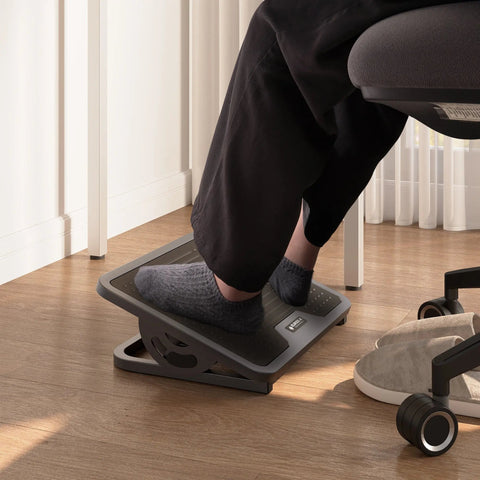
- Set the Foundation: Adjust your chair height so your feet are flat on the floor and your thighs are parallel to the ground. If your desk is too high to allow this, use a footrest.
- Determine Input Height: With your shoulders relaxed, bend your elbows to 90–110 degrees. Your keyboard should be placed exactly at this height. If using the Pull-out Keyboard Tray, adjust it so your forearms are parallel to the floor.
- Apply Negative Tilt: Adjust your tray or keyboard stand to a 10–15 degree negative tilt. This counteracts the natural tendency to rest the heels of the palms on the desk, which creates "contact stress" on the carpal tunnel.
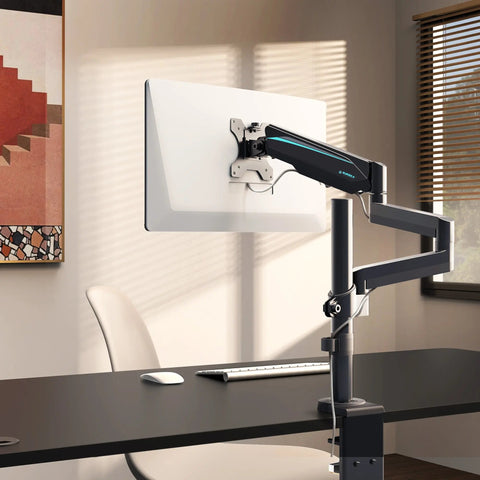
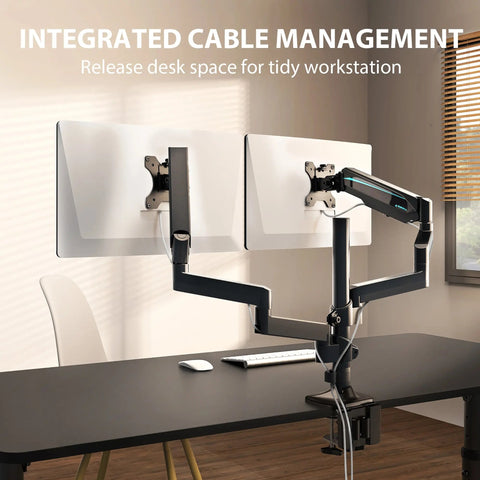
- Position the Monitor: Use a Single Monitor Arm to place the top of the screen at or slightly below eye level. This prevents the "tech neck" associated with looking down at a laptop or looking up at a poorly positioned display.
- The Sit-Stand Rhythm: Follow the "20-8-2" rule popularized by Cornell University: sit for 20 minutes, stand for 8 minutes, and move or stretch for 2 minutes.
Addressing the Split Keyboard Conflict
A common "gotcha" for ergonomic enthusiasts is the weight and size of split mechanical keyboards (e.g., ErgoDox or Moonlander). Many standard keyboard trays have weight limits near 11 lbs. While a keyboard alone rarely hits this limit, the combination of a heavy aluminum chassis, custom keycaps, and integrated wrist rests can lead to tray instability.
If you use a split keyboard, ensure your tray mounting hardware is robust. Any wobble during active typing breaks deep-work focus and leads to "compensatory muscle tension," where your body subconsciously tenses to stabilize your hands against the moving platform. In these cases, a wide, stable standing desk like the Aero Pro Wing-Shaped Standing Desk (72"x23") may be preferable to a tray, as it provides the necessary surface area for both halves of the keyboard while maintaining rock-solid stability.
Final Decision Matrix: Tray or Desktop?
Choosing the right setup depends on your specific hardware and physiological needs.
- Choose a Keyboard Tray if: You have a fixed-height desk that is too tall, you struggle with wrist extension (upward bending), or you need to free up desk space for physical notebooks or hardware prototypes.
- Choose Desktop Placement if: You use a height-adjustable standing desk that can go low enough for seated work, you use a heavy split mechanical keyboard, or you prioritize absolute platform stability for high-speed modal switching.
Regardless of your choice, the goal remains the same: protecting the longevity of your hands. By applying the principles of neutral positioning and the "20-8-2" movement rhythm, you can ensure that your Vim workflow remains a source of productivity rather than a source of pain.
Disclaimer: This article is for informational purposes only and does not constitute professional medical advice. If you are experiencing chronic pain, numbness, or symptoms of RSI, please consult a qualified physical therapist or medical professional.
Sources
- BIFMA G1-2013 Ergonomics Guideline for Furniture
- CCOHS: Office Ergonomics - Sit/Stand Desk
- OSHA eTools: Computer Workstations - Neutral Working Postures
- Cornell University Ergonomics Web — Workstation Guides
- The 2026 Workstation White Paper: Converging Ergonomic Science and Sustainable Engineering
- ISO 9241-5:2024 Workstation layout & postural requirements




Leave a comment