

Standing for Standups: Using Desk Height to Time Scrums
Summary/Action Point: Standing desks can naturally compress daily scrum meetings to under 15 minutes by leveraging physiological urgency and memory presets. This guide provides a framework for using desk height as a tactical timer to improve team focus and ergonomic health.
In the high-pressure environments of software development and DevOps, the "Daily Scrum" is intended to be a lean, 15-minute synchronization point. However, teams frequently encounter "meeting drift," where concise updates devolve into deep-dive technical troubleshooting or protracted status reports. This drift does more than consume billable hours; it reinforces sedentary patterns that can contribute to Musculoskeletal Disorders (MSDs).
A sophisticated solution emerging in high-performance coding environments is the use of height-adjustable desk transitions as a physical and cognitive timer. By synchronizing the transition to a standing position with the start of the meeting, teams leverage physiological cues to maintain brevity.

The Physiological Cost of the Static Load
Key Takeaway: Prolonged sitting creates a "static load" on the spine; interrupting this with a standing transition signals a shift from deep work to transient, efficient communication.
The primary health concern in modern office work is the "static load"—the physical stress on muscles and joints caused by maintaining any single posture for an extended duration. According to OSHwiki (EU-OSHA), prolonged static sitting can lead to reduced blood circulation and increased pressure on the intervertebral discs.
When a developer remains seated through a series of tasks and then continues to sit through a standup meeting, the body remains in a state of high spinal compression. The World Health Organization (WHO) 2020 Guidelines emphasize that interrupting long periods of sedentary behavior is critical for reducing cardiovascular risk and improving metabolic health.
Transitioning to a standing position for a scrum meeting serves two functions: it provides a "micro-break" for the musculoskeletal system and introduces a subtle physical urgency. Unlike sitting, which encourages a relaxed state, standing requires active engagement of the core and lower limb muscles. This shift in physiological state signals to the brain that the current activity is a transient transition rather than a deep-work session, often encouraging more concise communication.
Desk Height as a Behavioral Engineering Tool
Key Takeaway: Using standing desks as "Engineering Controls" reduces meeting friction. Memory presets allow for a one-touch transition that acts as a cognitive anchor for the meeting start.
In professional DevOps environments, engineering efficiency often comes down to "reducing friction." Using a standing desk as a meeting timer is an application of "Engineering Controls"—a high-tier strategy in the OSHA Hierarchy of Controls for addressing workplace hazards.
The 15-Minute Compression Effect
Based on common patterns observed in agile teams, implementing a "standing-only" rule for daily scrums often results in meetings naturally concluding within 10-15 minutes. This occurs because the physical act of standing creates a subtle social pressure to be efficient. While sitting allows for a comfortable "lean back" posture, standing keeps the team physically present and focused.
Memory Presets as Cognitive Anchors
A common failure point in adopting sit-stand transitions is the "fumble factor"—the time spent manually adjusting desk height. To mitigate this, teams utilize memory preset features found on professional-grade desks like the Ark Executive Standing Desk (63"x29").
By dedicating a specific memory button to "Scrum Height," the transition becomes a one-touch operation. This tactile action serves as a ritualistic signal that the meeting has begun. For a seamless workflow, this height should be pre-calibrated to the user's neutral standing position, typically 10-15 inches above their seated height, ensuring the elbows remain at a 90-degree angle as recommended by BIFMA G1-2013 Ergonomics Guidelines.
Anthropometric Precision: The "Tall Developer" Scenario
Key Takeaway: Taller professionals (190cm+) require specific vertical ranges and dual-motor stability to avoid neck flexion and equipment "wobble" at maximum extension.
Standard office furniture is often designed for the "50th percentile" user, frequently leaving taller professionals at a significant ergonomic disadvantage. For a developer standing 190cm (approximately 6'3"), a standard fixed-height desk is physically impossible to use without significant neck flexion.
The following model illustrates the requirements for a 190cm developer using parameters derived from ANSI/HFES 100-2007 standards.
Modeling Note: Tall Developer Ergonomics (190cm)
Logic Summary: This scenario models a 95th percentile male stature to determine the specific "gap" between standard furniture and ergonomic requirements.
Parameter Value (Example) Unit Rationale User Stature 190 cm 95th Percentile Male (ANSI/HFES) Standing Desk Height 116.5* cm Elbow height + shoe correction Standard Desk Deficit ~43 cm Difference from 74cm (29") fixed desk Battlestation Weight ~86 kg Triple 34" Ultrawide + Liquid Cooled PC Motor Requirement Dual type Required for stability at max extension *Estimated value based on standard limb proportions; individual measurements vary. Desk stability claims are based on manufacturer specifications for dual-motor lift capacity.
For these users, the Zen Pro Series Executive Standing Desk provides the necessary vertical range. At heights exceeding 110cm, single-motor desks may exhibit "monitor wobble." A dual-motor system ensures that even a heavy setup remains stable, allowing the developer to focus on the sprint board rather than a shaking screen.
Practical Implementation: The 20-8-2 Framework
Key Takeaway: Use a 20-8-2 rhythm (sit-stand-move) to maximize metabolic benefits and prevent "standing fatigue."
To maximize the benefits of a sit-stand workstation, we recommend the "20-8-2" rhythm developed by Cornell University Ergonomics Web. This framework suggests:
- 20 Minutes Sitting: For deep focus and complex architectural work.
- 8 Minutes Standing: For scrums, code reviews, or checking Jira.
- 2 Minutes Moving: Stretching or walking to promote blood circulation.
Checklist for Scrum Setup
- Preset Calibration: Set standing height so the monitor's top third is at eye level and the keyboard allows for neutral wrists.
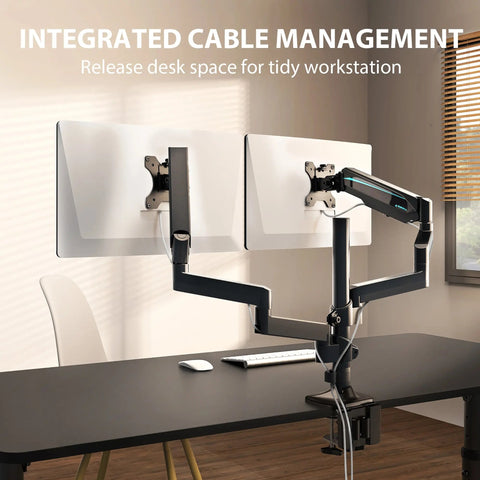
- Cable Management: Ensure your cable spine has enough slack for the full vertical transition. Cable tension at maximum height is a common cause of port damage.
- Footwear/Surface: If standing on hard floors, consider an anti-fatigue mat. Prolonged standing on hard surfaces can lead to "standing fatigue," which research suggests can be counterproductive if not managed.
- Chair Ingress: Use a chair that allows for easy exit to facilitate the "quick stand" required for a prompt meeting start.
The Economics of Ergonomics: Calculating ROI
Key Takeaway: Ergonomic investments can pay for themselves through productivity gains and metabolic health.
Investing in high-performance furniture like the Ark X Executive Standing Desk can yield quantifiable Return on Investment (ROI) through productivity gains. A systematic review by the Cochrane Library confirmed that sit-stand desks significantly reduce sitting time by an average of 84 to 116 minutes per day.
Hypothetical Productivity Model (For Illustration Only)
If a standing desk transition improves daily focus by a conservative 10% (equivalent to 48 minutes of "deep work" saved from fatigue-related distractions), the annual value gain for a developer earning $50/hour is significant.
- Calculation Logic: 0.8 hours saved/day * 250 work days * $50/hour = $10,000 potential value.
- Conservative ROI: Even at a 3.75% efficiency gain ($3,750/year), the desk typically pays for itself within the first 12 months.
Theoretical Metabolic Impact
Standing for 3 hours a day (including standups and periodic work) burns approximately 142 extra calories compared to sitting (estimated for an 80kg/175lb individual using standard MET values). Over a standard work year, this equates to approximately 35,000 calories, or the metabolic equivalent of roughly 10 pounds of fat loss annually, assuming diet and other activities remain constant.
Integrating Into a Holistic Environment
The goal of a high-performance workspace is to create a "flow state." As detailed in The 2026 Workstation White Paper, the modern workstation is a tool for maintaining physiological and psychological equilibrium.
By using desk height as a tactical tool for scrum management, teams do more than just shorten meetings. They actively engineer a culture of health and efficiency. The physical transition becomes a "hard reset" for the body and a "soft start" for the meeting, ensuring the team remains as agile as the software they build.
YMYL Disclaimer: This article is for informational purposes only and does not constitute professional medical advice. The ergonomic recommendations provided are based on general industry standards and scenario modeling. Individuals with pre-existing musculoskeletal conditions, chronic pain, or cardiovascular issues should consult a qualified healthcare professional or occupational therapist before implementing a new sit-stand routine.
Sources and Authoritative References
- BIFMA G1-2013: Ergonomics Guideline for Furniture
- CCOHS: Office Ergonomics - Sit/Stand Desk
- Cochrane Library: Workplace interventions for reducing sitting at work
- Cornell University: Ergonomics Web Workstation Guides
- EU-OSHA: Musculoskeletal disorders and prolonged static sitting
- OSHA eTools: Computer Workstations - Neutral Working Postures
- WHO: 2020 Guidelines on Physical Activity & Sedentary Behaviour
- ISO 9241-5:2024: Workstation layout & postural requirements




Leave a comment